
Visiting Prague for the first time in 2026 – A local’s travel tips & info you need
All the practical information you need to know before visiting Prague in 2026, inc. top attractions, how to get around, local currency, how to stay safe, where to eat and stay as recommended by a local Czech person living in Prague.
If you are travelling to Prague for the first time, I’m sure you have plenty of questions in your head about your trip.
In this blog post, I wanted to round up all the practical information you should know before you travel to Prague even if you are visiting only for one day.
Prague is one of my favourite places to be right now and I hope you’ll enjoy exploring this historic and beautifu city as much as I do.
PIN TO KEEP FOR LATER

So what do you need to know before you travel to Prague for the first time?
Prague’s Location: The Heart of Central Europe (Not the East!)
Prague is the capital of the Czech Republic. If you look at a map of Europe, Prague is right in the centre, which is why some Czech people find it slightly insulting when visitors say ‘Prague is in Eastern Europe’.
The term is more likely to refer to the political division of Europe before 1989, than the geographical location, but I would still say, that Prague is in the heart of Europe, not in the East.
READ MORE
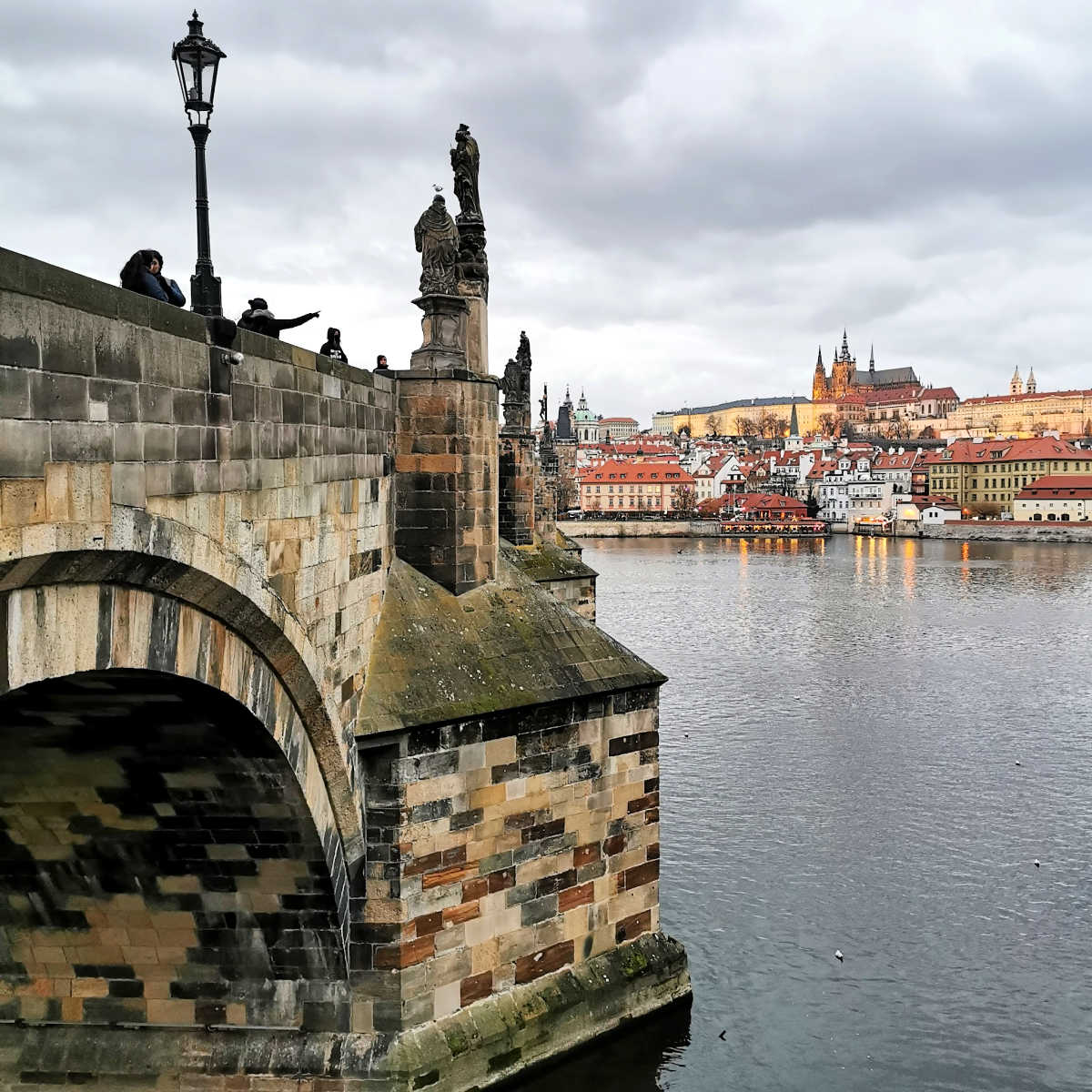
Why Prague Should Be on Your 2026 Bucket List
I’m biased, so of course, I’ll say, yes, Prague is definitely worth visiting, but in all fairness, it depends on what you are looking for from your trip. If you like history, walking or eating you’ll love Prague!
There are also plenty of green spaces like Stromovka or Letna Park, and beautiful gardens like hidden baroque Vrtba Garden or Grebovka Park with its own vineyard.
On the other hand, if you want to go somewhere off the beaten track, Prague could be a great base from which you can explore less visited towns and historical places in the Czech Republic, like for example Pardubice town, which is only 60 minutes by train.

Is Prague tourist friendly?
On the whole, I would say, ‘Yes, Prague is very welcoming to tourists and visitors. Most younger people will have a basic understanding of English, German or Spanish and you’ll find most restaurants in the centre with an English or German menu.

What to pack for your trip to Prague
This will very much depend on whether you are visiting Prague in summer or winter and also what activities you are planning to do.
I tend to go more for casual wear, since I walk everywhere and spend a lot of time outdoors. But, if you are planning to visit the theatre or go to a swanky restaurant or night club, you’ll want to pack some smart and pretty clothes and high heals.
Prague is a walking city, but the pavements are a nightmare for high heels, so make sure you bring sturdy, cushioned trainers.
Most Czech people prefer to wear casual (or smart) comfortable clothes in a western Europe style (jeans, t-shirts and sport shoes etc).
- Summer: It gets surprisingly hot. Pack linen, light dresses and sunblock.
- Winter: It’s a damp, biting cold. You’ll need a proper coat, gloves, and a thermal layer if you’re planning to stand around the Christmas markets.
READ MORE
What’s the best season to visit Prague?
The best time to visit Prague is in the spring (like April for Easter, May for slightly warmer weather and flowers in bloom or June when it’s great weather and the schools are still in session) or autumn (September is still warm and October is definitely more quiet), as the weather is nice and warm and Prague is less busy than in summer.
Going offseason completely, like for example in January, February, March or November is fine too, bearing in mind that the winter weather in Prague is often very cold and there are not that many things happening.
For a medieval fairytale town with a Christmas atmosphere and to experience the charming Christmas Prague Markets, you can also visit in early December up to the 6th of January. It’s also a great time to learn more about Czech Christmas traditions and with a bit of luck experience Prague in a snow.
Summer is usually the busiest part of the year, and Prague can get very hot (with several heatwaves) and overcrowded in the centre. The Prague summer weather can be also very changeable with varying temperatures.
July and August is also a school holiday, and most Czechs leave Prague to spend their summer in the countryside or even abroad at the seaside.
It’s also traditionally time when most road works and repairs are carried out in Prague with roads sometimes closed, and trams and buses are diverted.
READ MORE
Entry Requirements: Visas and the New 2026 EU Rules
This depends on where you are travelling from, but in most cases, you’ll not need a visa to visit as a tourist.
Czech Republic is part of the European Union, which means that if you can enter the European Union without visa, you can freely travel to Prague as a tourist.
Your stay is usually limited to 90 days. If you intend to study or work in Prague, then you’ll need a visa from the beginning of your stay.
As of late 2025, the EU has introduced the EES. Travellers from non-EU countries (like the UK or USA) now need to have their fingerprints and facial images scanned at the border. There is no extra cost for this and you don’t need to do anything in advance, but it means that boarder control (both coming in and leaving Prague) can take a lot longer than before.
Planning Your Itinerary: How Many Days Do You Really Need?
As a minimum, I would suggest 2-3 three days, as anything less will feel very rushed and the chances are that most places you visit will turn in to a bit of a blur.
Two to three days is enough to visit the Prague Castle, walk in the centre and across the Charles Bridge, stop for a coffee or lunch and visit one or two museums. You can also visit the Jewish Quarter, spend a few hours exploring the Vysehrad Castle or take a leisurely boat trip on Vltava river.
If you are visiting just for one day, then I would suggest to maximise your time by getting up super early and not visiting any tourist attractions inside. Walk around and experience the city on the foot and see as much as you can.
READ MORE
- 1-7 days Prague travel itinerary ideas >>
- The best 3 days Prague itinerary by a local >>
- 5 days itinerary: Explore Prague beyond the centre >>

What shall I see in Prague?
There are so many amazing places to see in Prague, but here are some of the must-see attractions in Prague: Prague Castle, Charles Bridge, Old Town Square, Jewish Quarter, St. Vitus Cathedral and Wenceslas Square.
I recommend that you start planning your Prague trip by asking yourself what you actually want to see and what interests you and then plan your itinerary based on that.
What I’m saying is that just because everyone mentions Prague Castle as the place to visit, you can easily spend a whole day just there and if it’s not something you are particularly interested in, it might be better to just walk around the castle grounds on the outside and then move on to something you actually want to see.
READ MORE

Is Prague walkable?
Yes, Prague is a great town to walk around to see all the different tourist sights. The pedestrianised centre doesn’t have much a public transport, so you need to walk there anyway. Walking is also a great way to get to Prague Castle and explore the gardens around the Castle hill.
As I mentioned before, Prague has quite a lot of cobbled stones and the streets & pavements are quite hard to walk on, so bring a suitable shoes for walking! I found that soft padded trainers are the best for me, rather than an actual walking shoes which I keep for my hiking trails in the Czech countryside.
READ MORE
- Practical tips for walking in Prague + 5 easy walks from the centre >>
- Self-guided walking tour of David Cerny sculptures in Prague >>
Safety in Prague: Local Advice on Pickpockets and Scams
Whilst Prague is getting safer and the Global Peace Index often ranks the Czech Republic in the top 10 safest countries worldwide, I think, it’s still important to be couscous and use a common sense when you are out and about.
Prague is incredibly safe for solo travellers, but the pickpockets near the Astronomical Clock are professionals. Keep your bag in front of you in crowded areas.
Traditional taxi services are still hit and miss, so it’s better to use Bolt or Liftago app.
There is also no need to change money the traditional way (and pay high exchange rate), as most places accept card payment these days. Also, be wary of “Money Exchange” booths offering 0% commission—always check the actual rate on your phone first.
READ MORE
Do people speak English in Prague?
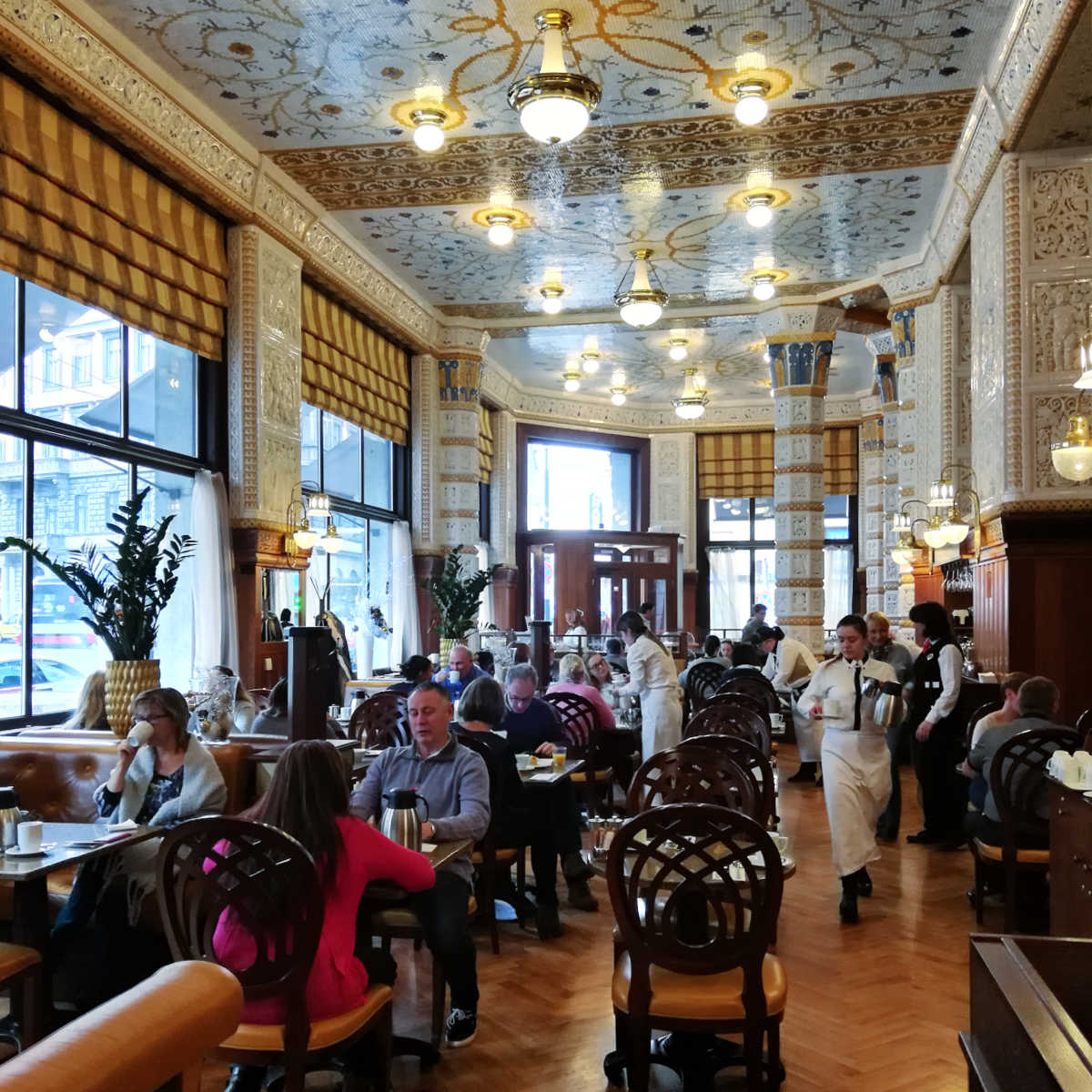
Yes, especially younger Czechs do speak fluent English. Most restaurants and cafes in the centre have their menus translated into English, so you shouldn’t have any problems placing your order.
The official currency: Czech Crown
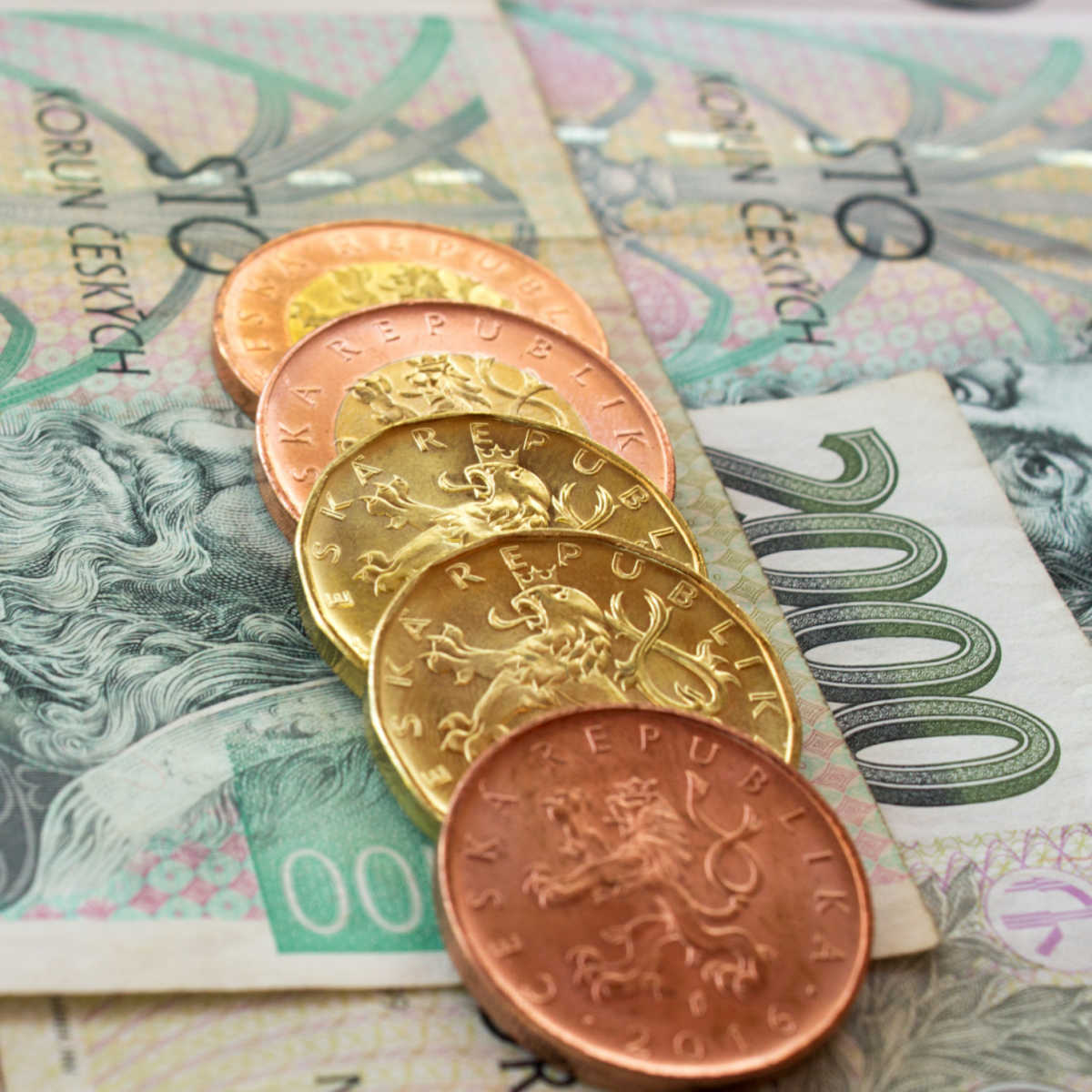
Although the Czech Republic has been in the European Union since 2005, the official currency is still Czech crown. If you are paying by cash, you will need to pay with Czech Crowns, but most places now accept major debit or credit cards, so you don’t need to worry if you run out your Czech money.

Can I use my debit or credit card to pay for things in Prague?
Yes, all shops, restaurants and most tourist attractions accept all major cards and you can pay for your bills including any tips safely with a debit or credit card. But it’s always handy to have some cash as small street food stalls, travel tickets or small coffee places might not always have card machines.
There are plenty of ATM around Prague, where you can take money out. These are free to use, but you should check with your bank how much they charge for money withdrawals abroad.
Personally, I find that the bank charges are much smaller than changing cash currencies and it’s much safer to carry around just what you need and not a whole of your holiday money.
Avoid the “Euronet” machines (the blue and yellow ones). They charge extortionate fees, instead look for bank-affiliated machines like KB, ČSOB, or Česká spořitelna.
READ MORE
What daily budget do I need for my trip to Prague?
This really depends on whether you are after a budget holiday or a luxury weekend away. Since, there is no limit to what you can spend in Prague, let’s just stick to the basics to give you an idea of what to budget for.
90 min public transport ticket 50 kc
Coffee 60-95 CZK (but fancy coffees can be up to 150 CZK)
Cake 60-95 CZK
Soft Drink – 30-40 CZK (but you can safely drink tap water in Prague, if you travel on the budget)
Museum Entrance 180-350 Kc
Accommodation 2000 – 3500 Kc for 2 people per night (based on a basic hotel or private accommodation)
Breakfast 150-295 CZK (not including drinks)
Lunch – main course 160 – 300 CZK
Dinner – main course 230 – 500 CZK
READ MORE

Staying in touch, phone calls & WIFI
It’s worth checking with your phone provider before you travel to Prague, what are your data allowances in Europe and how much would you be charged for phone calls, texts or data when you are travelling.
Some phone providers will offer upgrades, which might be worth it depending on how long your are travelling to Prague for.
If you are on a budget, I would recommend to have a way of getting in touch with your friends or family via social media apps (e.g. chat box function in Facebook) or Whatup app. This way, you only need to use your own phone data (or public wifi) to get in touch.
Talking about wifi connections in Prague… it’s actually surprisingly easy to find and it works well too!
Apart from your hotel or accommodation, you’ll be able to find wifi connections in any larger shopping centre, coffee shops, restaurants, large museums, airport, trains and the underground (this is still a little patchy).
READ MORE

Authentic Czech Food: What to Eat (and What’s Just for Tourists)
Whilst you can find pretty much any kind of food and world cusine in Prague, I’m going to recommend that you try some of the food traditional to Prague and the Czech Republic.
One thing I should also mention that some of the very traditional foods are very heavy on meat, potatoes, dumplings and very light on vegetables!
Saying that you can usually pick something from the traditional menu, that’s fairly healthy (like have the traditional goulash and leave out the dumplings).
If you are O.K with meat, then traditional beef goulash is the best way to experience a typical Czech food. If you prefer not meat food, try the fried cheese (Smazeny Syr) with boiled potatoes or chips (fries) and mayonaise.
Fried schnitzel (Smazeny Rizek) is also popular with boiled potatoes and pickled cucumber.
If you have a sweet tooth, head over to the nearest bakery or sweet shop (cukrarna) for traditional Czech cakes (kolace) with different fillings or small cakes such as ‘vetrnik’, ‘spicka’ or ‘puncovy rez’. You can’t go wrong with any of these!
And of course, everywhere in the centre of Prague you won’t be able to miss Trdelnik – the sweet bread pastry baked on a hot coal. The plain cinnamon and sugar is actually pretty good, but you will have the option to add different toppings and fillings.
Trdelnik is not actually Czech food, so if you fancy something slightly more authentic, try the ‘livance’ – light pancakes with cream cheese and plum jam. You can get them at most farmer’s markets and I’ve also seen them in the little shop in Celetna Street – as you walk from the Old Town Square towards the Black Madona Cubism House and coffee place.
If you are traveling to Prague during festive time, you can also try the different Christmas foods and drinks that are specially made during this time of year, such as fried carp and potato salad, sweet Chrismas brioche style bread (vanocka) or the many types of Christmas cookies.
READ MORE
- The best traditional self-service canteens in Prague >>
- The best ice-cream places in Prague >>
- Popular farmers markets in Prague >>

Navigating Prague: A Local’s Guide to Trams, Metro, and Apps
Prague has a very good public transport system, including underground (Metro), good tram network , buses, trains, river ferries and even one cable car!
A single 50 Kc ticket will last for any journey up to 90 minutes and it’s valid on any means of transport.
You can buy you ticket on any tram or bus, but the easiest (and since the beginning of 2026 when they prices slightly risen – cheapest) is to buy your tickets on a phone via Lítačka app. The Litacka app is also useful for planning your journeys, check connections and you can even see exactly where your tram is.
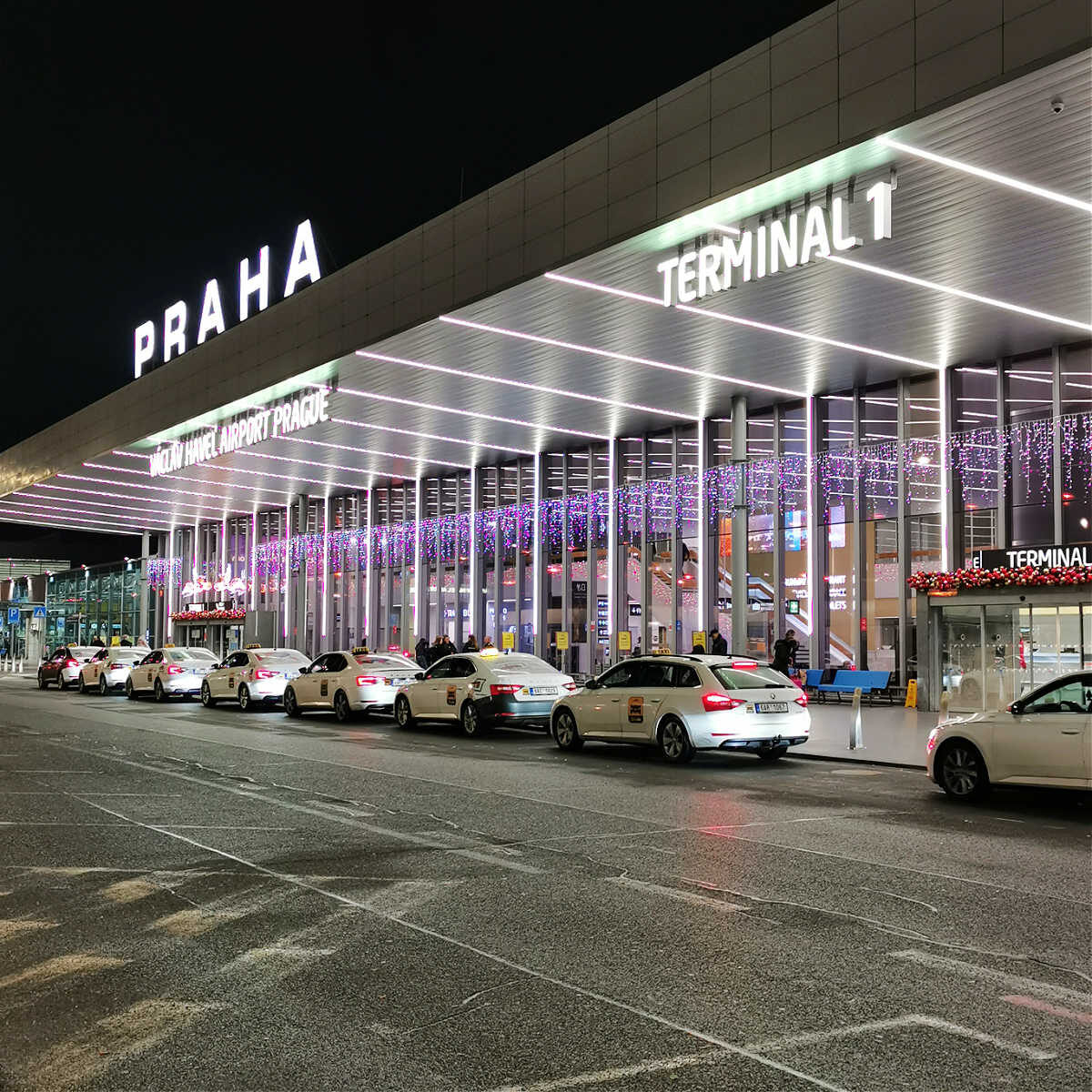
It’s easy to get around even when you arrive by plane and need to get from the Vaclav Havel Airport to the centre. The 59 Trolleybus (formerly the 119 bus) from the airport it is now a high-capacity electric vehicle, that departs the airport every few minutes.
If I know that I’m going to be making more than 3-4 journeys in one day, I buy 24 hr ticket (about 150 Kc). It’s actually valid for 24 hrs, which is quite good as you can start it at any time during the day and it’s still valid the next day.
No matter what ticket you have, make sure you stamp it in the machine when you first enter the public system and keep it safely with you. Plain clothes ticket inspectors can stop you any time and ask you to produce your ticket (and fine you if you don’t!).
If you are travelling from the Main Train Station, you can buy your train ticket directly there or use an app on your smart phone.
The most used tram is tram route no. 22 which can take you from the centre to the Prague Castle and other tourist attractions. You can also use the historic 42 tram, which also goes up to Prague Castle. If you prefer to explore the town history outside the centre of Prague, then the tram number 9 is one of my favourite routes to take you around.
You can find all the long distance busess (both national and international) at the Praha Florenc Bus Station, close to the Prague historic centre and other major train stations.
Using taxi, Uber, Bolt or Liftago
Apart from using public transport you can also use private taxi cabs or Uber, Bolt or Liftago apps, which are often cheaper than traditional taxis. I find that recently the Bolt app become the best value and the drivers more reliable than Uber, but that could be just my personal experience.
To use Uber, Bolt or Liftago, you’ll need to first upload the app to your smart phone, create an account and then put in your destination.
The good thing is that you can see the price of your trip beforehand and you also pay directly through the app, so there is no need to change money.
PLAN YOUR TRIP

Best areas to stay in Prague
If you are coming for a long weekend, I think, it’s best to stay somewhere fairly centrally, so that you can start exploring Prague the minute you leave your hotel. The accommodation cost will be, of course higher, than if you stay on the outskirts of Prague.
If you are a light sleeper, check that your hotel is not on a busy road or in a noisy area with night clubs next to the hotel, like for example on Wenceslas Square.
I personally like to stay slightly off the centre, for example in Vinohrady, Smichov, Karlin or Zizkov or similar Prague districts that are not that busy and more residential.
It’s still only a few minutes by Prague’s public transport – tram or underground to the centre, but because these areas are mainly residential areas, it’s nice and quiet there.
Prague’s best parks, secret gardens & green Spaces
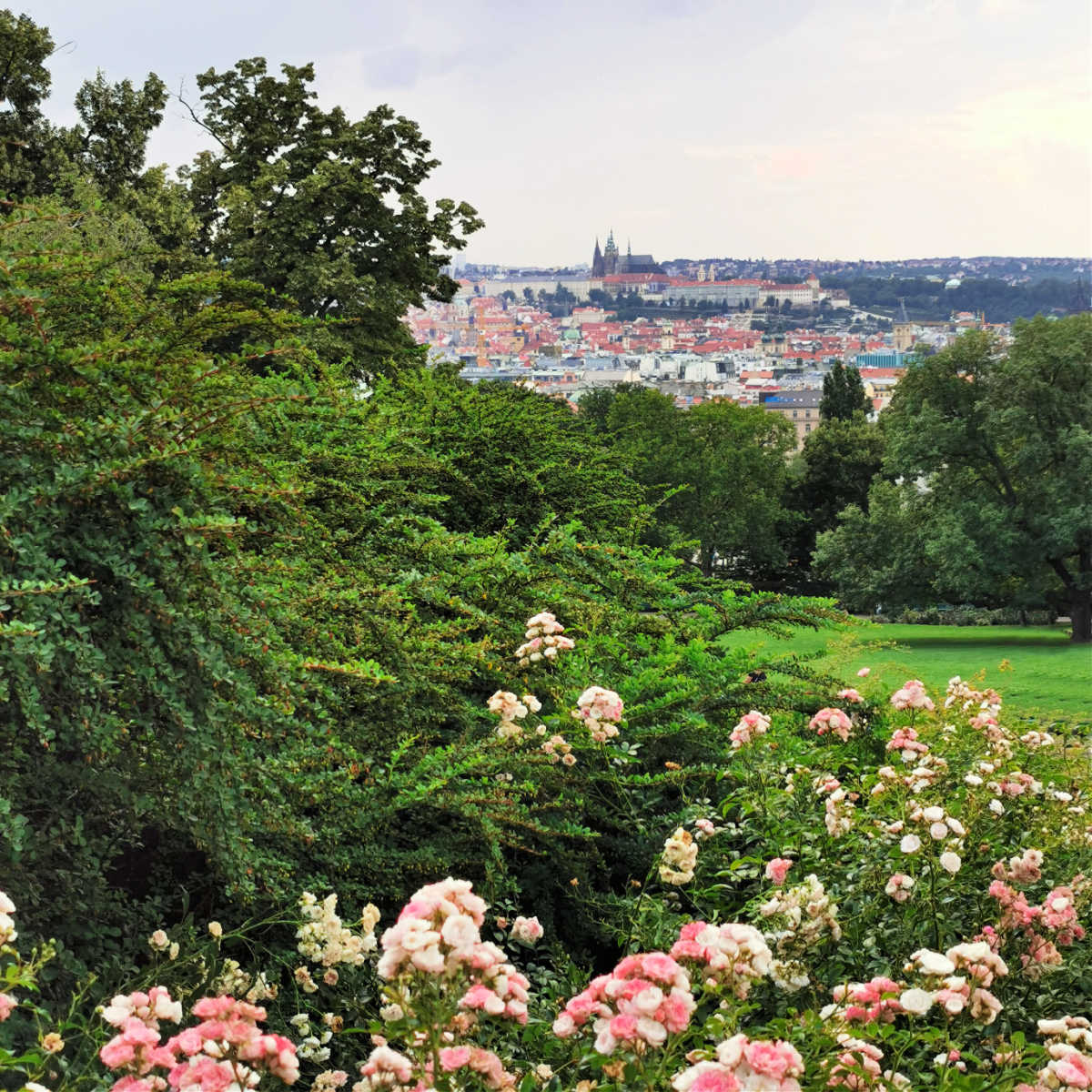
Whilst it might look like Prague is just full of historic buildings, narrow streets and restaurants, it also has a surprisingly high number of gardens, including botanical gardens, parks and green spaces.
Some gardens, like the Prague Gardens, Vrtba Garden or Pruhonice have entrance fees, but most parks are free and open all year round.
My favourite green space close to the centre is Kampa Island (just off the Charles Bridge) or the Shooter’s Island (close to the National Theatre).
If you fancy a longer walk on the top of the Prague hills, you can start your walk at Kinsky Square (Prague 5), walk up the Kinsky Garden and then walk through Petrin Hill with beautiful views of Prague following the Hunger Wall to Strahov Monastery and the Prague Castle. There are amazing views of Prague from the top of the Petrin Lookout Tower on the top of the Petrin Hill.
Afterwards, you can walk through Chodkovy Orchards (Garden), cross the busy tram lines and carry on walking on Letna Park all the way to Strosmayer’s Square in Prague 7.
This blog post was originally written on 1 April 2021 and last updated on 12 January 2026
PIN TO KEEP FOR LATER


