
Stromovka Park – 6 Best Things to See, Walks & Visitor Guide
Stromovka Park is one of the largest parks in Prague at just over 90 hectares and although it’s not exactly in the centre of Prague, it’s only a short tram ride away.
You will find the park is on the banks of the Vltava river, nestled between the industrial Holesovice area and the residential area of Bubenec on the other. It’s about a 15-20 minutes ride from the centre of Prague by tram.
I often visit it, because it’s perfect for an afternoon stroll with plenty to see and do. I like to checkout any new exhibitions at the nearby Exhibition Area, have a picnic in the park or walk all the way to Prague ZOO or Botanical Gardens on the other side of the Vltava River.
There are also plenty of shorter walks, places to explore to rest and relax, to have a coffee or even to borrow a book and read it on one of the many park benches.
PIN TO KEEP FOR LATER

History
Stromovka Park was originally part of a hunting ground used by the royal family back in the 13 century. The king Premysl Otakar II established it as a deer park in around the 1268. The park was used for hunting and recreation for most of the 13-16th century, but in 17th and 18th century the park was used for military purposes, as a camping site.
King Rudolf II extended the park and established the central lake, which was only recently renovated and re-planted. The park was open to the public in 1804, a century earlier than other Prague parks like Kinsky Garden or Havlickovy Park (Grebovka).
The park was badly damaged in the Prague floods of 2002, but was renovated to its original glory and re-opened only a year later.
MORE PARKS
- Pruhonice Park & Chateau – A great trip from Prague >>
- Vrtba Garden – a baroque gem in the centre of Prague >>
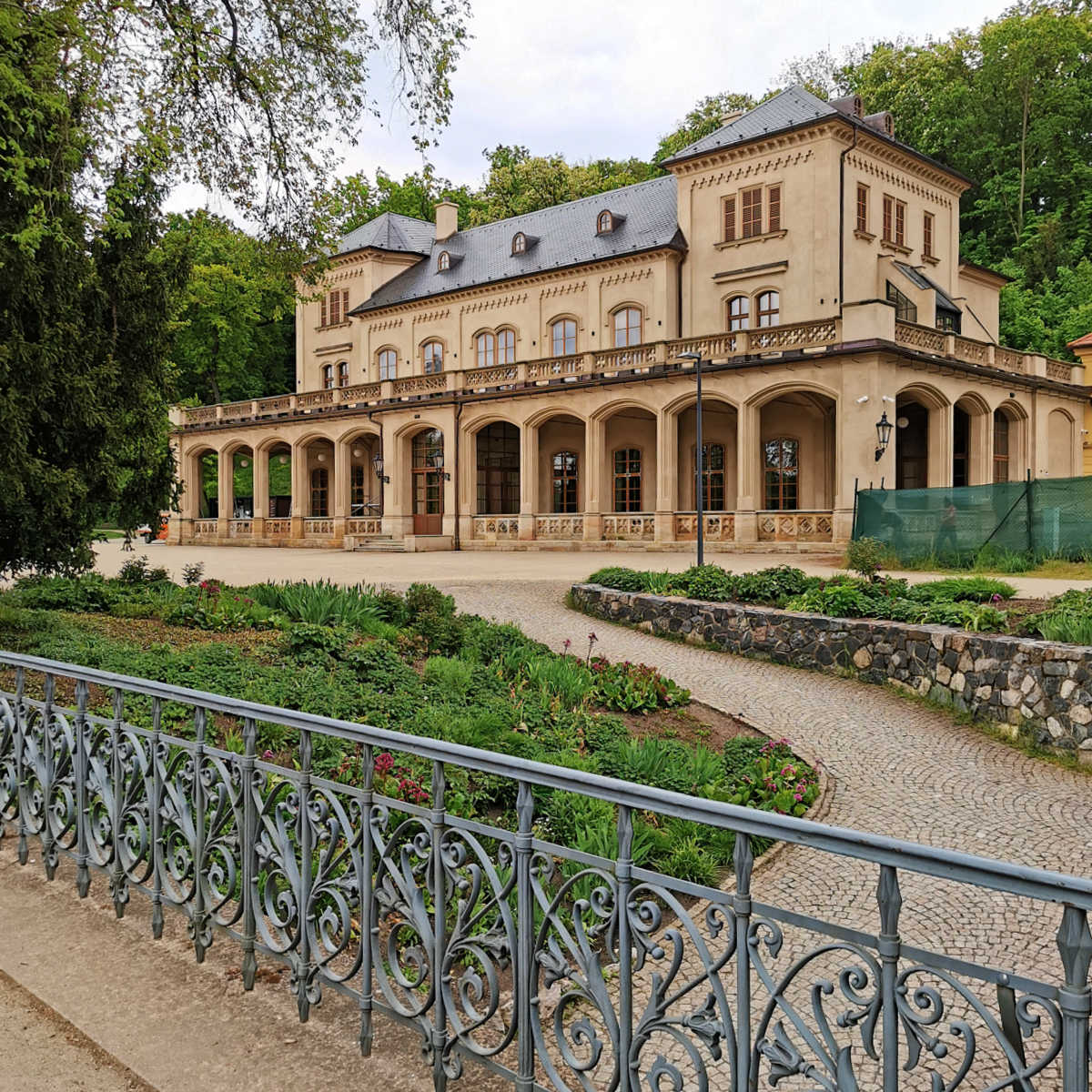
What to see in Stromovka park
1. Planetarium
The Prague Planetarium is right at the entrance to the park and is one of the largest and most advanced planetariums in the world. It was designed and built by Czech architect Jaroslav Frágner and officially opened to the public on November 20, 1960.
The planetarium was closed in April 2023 for a major renovation and reopened on June 14, 2025, after the biggest upgrade in its history. The renovation cost about 12 million euros and introduced Europe’s first fully digital LED dome, measuring 22 meters across and made up of over 12,000 LED panels with 45 million tiny lights. This new system makes the viewing of the ‘stars’ much clearer than traditional projection domes. The planetarium now uses advanced Digistar software to show realistic images of stars, planets, and galaxies, so it almost feel like traveling through the space itself.
Opening Hours: Monday: Closed, Tuesday – Friday: 8:30 AM – 6:30 PM, Saturday – Sunday: 9:30 AM – 7:00 PM
Ticket Prices: Adults: 299 CZK, Children (1–15 years), students, seniors: 229 CZK, Family ticket (2 adults + 2 children): 869 CZK, Children under 1 years: Free
MORE PARKS IN PRAGUE

2. Stromovka Park Lakes
The lakes were originally created in the 13th century, around the time when King Přemysl Otakar II established Stromovka as a royal game reserve. They were used to supply water to the royal hunting grounds and to decorate the landscape around the royal summerhouse – the Letenský letohrádek.
The lakes were rebuilt several times, but eventually become quite neglected.
During the 2014 and 2018 the lakes were completely cleaned, rebuilt and the natural water flow restored by reconnecting them with the Vltava River through a new underground channel.
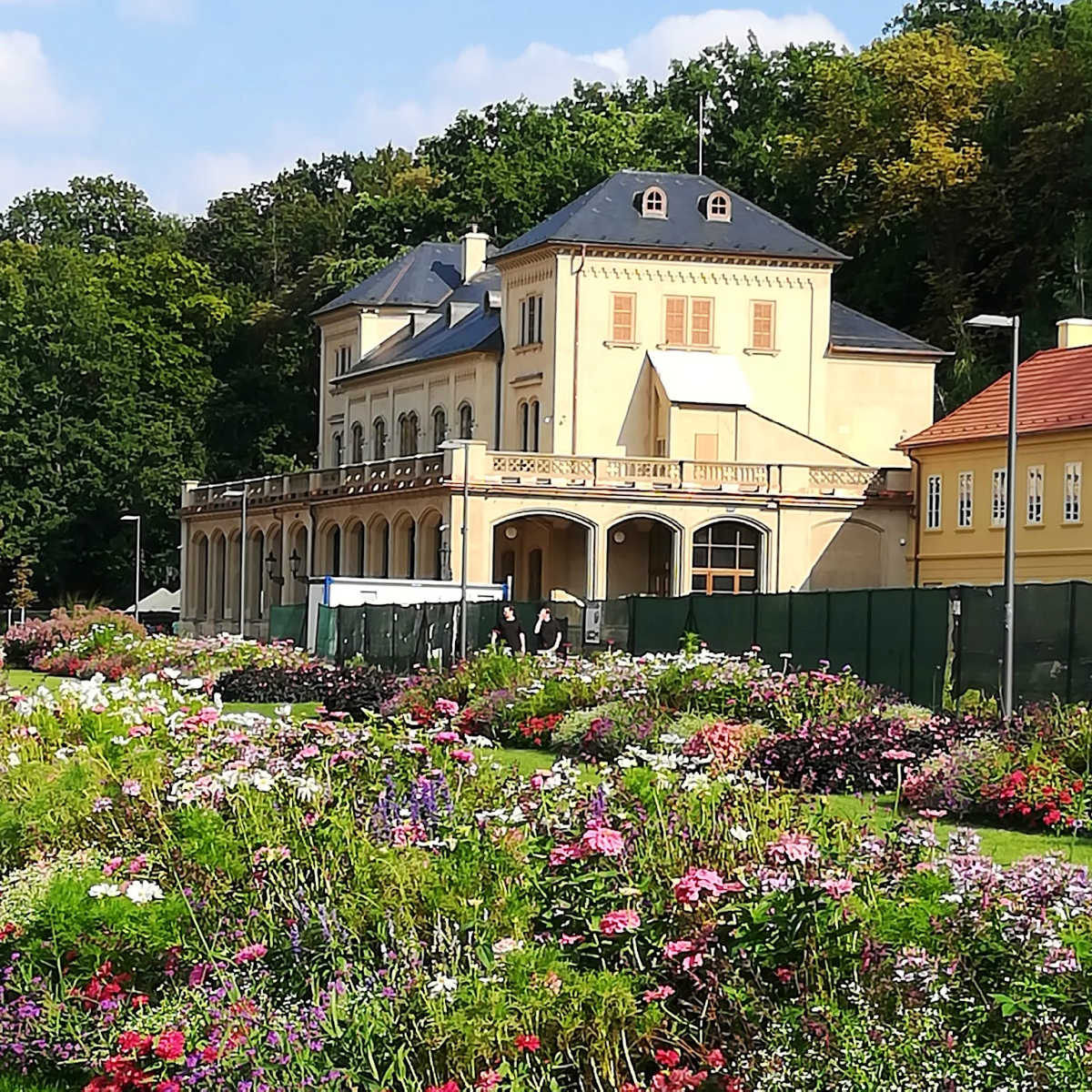
3. Schlechtova Villa
This large building was built as a restaurant with a large entertaining hall, where dances were held.
It was originally a Royal Hall built at the end of the 17th century and later re-built and adapted for use as a restaurant. The last building additions were done in a neo-Gothic style by Bernard Gruber in 1855. This style was particularly popular in mid 19th century.
By the end of the 19th century to the beginning of the Second World War the restaurant was run by Vaclav Slechta.
It’s been closed to the public for a long time due to repairs, but it looks like it’s now nearly finished and will re-open once more. There are beautiful flower beds in-front of the building and you can get refreshments from the side kiosk.
My great aunt recalls in her diary from 1933, that once she went dancing there with my grandmother (who was 3 years younger) and two boys they knew back then. They had a lovely time dancing in the Schlechtova ballroom, but they were told by the parents they must return by 9 pm!
My great aunt writes, that they paid for their refreshments bill at 9 pm and since she knew they were already late, she suggested the quickest way home to Smichov. But the boys thought they knew better and decided on a different route.
The problem was that the boys didn’t live in Prague (only studied there), and they got lost so badly they didn’t arrive back home until about 2 am. What I think makes this whole thing worse, is that they didn’t have money for the tram so they walked all the way.
I can’t possibly imagine walking in dancing shoes for 5 hours on cobblestones and dusty town streets!

4. Rudolf II tunnel
The tunnel, known in Czech as Rudolfova štola is one of Prague’s most fascinating and little-known historical engineering works, hidden beneath Letná Hill and connected to Stromovka Park.
It was built in the late 16th century, during the reign of Emperor Rudolf II, between 1582 and 1593 to supply water from the Vltava River to the royal fish ponds in Stromovka Park, which at that time was his private park.
The tunnel is about 1,100 meters (1.1 km) long and runs 45 meters below the large Letná Park hill. It was carved directly into the rock, partly by hand, and lined with stone and brick to prevent collapse and water leakage.
At the time, the tunnel allowed water to flow naturally by gravity from the river into the park’s ponds, maintaining the water level for fish breeding and ornamental purposes. Engineers believe it was one of the most advanced hydraulic systems in Central Europe during the Renaissance.
Over the centuries, the Rudolf II Tunnel fell into disuse, was rediscovered, and then restored several times. It was reopened in the 19th century to help regulate water in the park’s lakes and again renovated in the 20th century to prevent flooding.
You can still trace the tunnel’s entrance near Čechův Bridge on the Vltava River, and see the exit in the park, near the lakes.
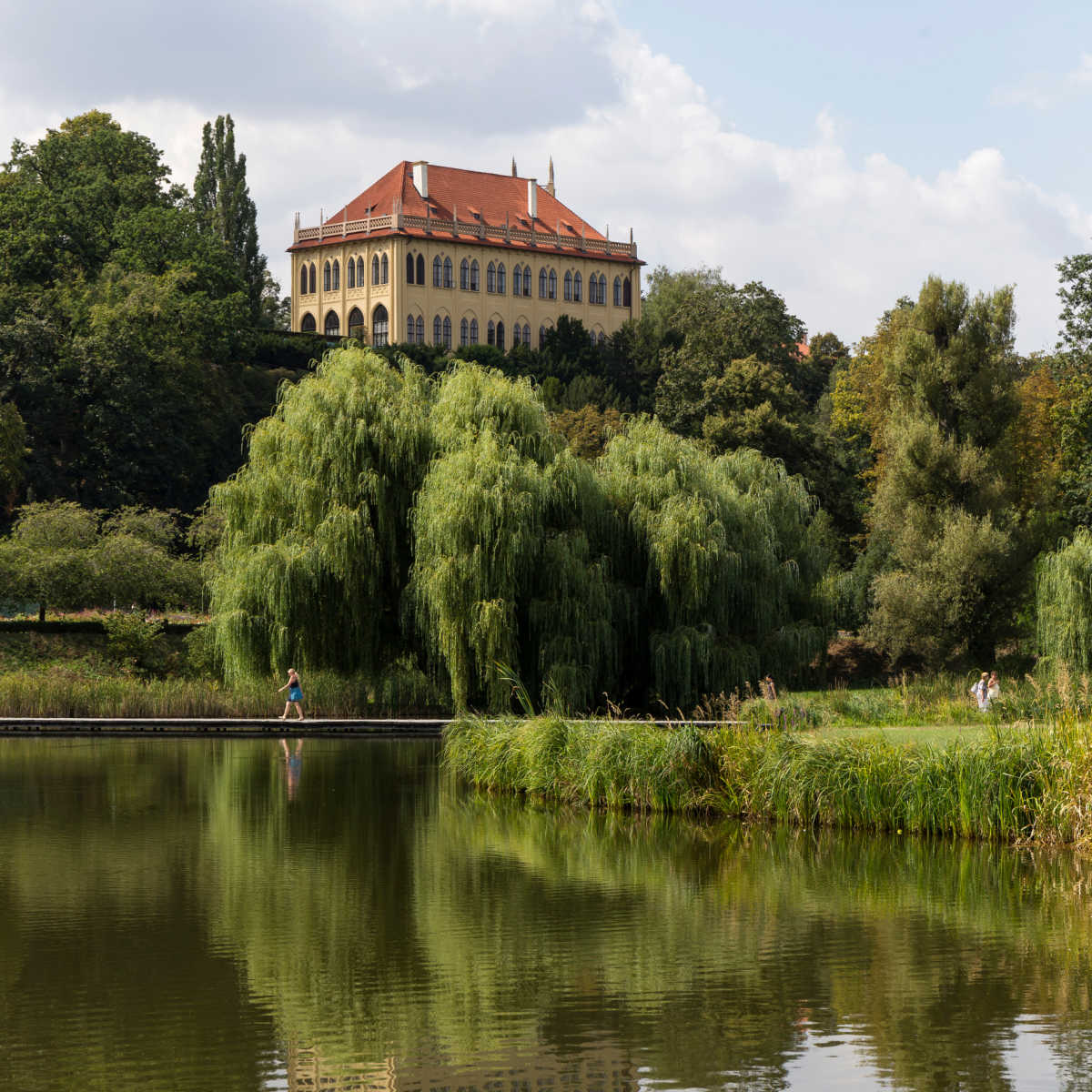
5. Governor’s Summer House (Mistodrzitelsky Letohradek)
Originally built in 1495 for the Vladislav Jagellonsky king, this was the original hunting lodge. It was re-built at the end of 16th century by Rudolf II. It’s now used as an archive of the National Museum, so it’s rarely open to the public.
6. The park gate
Located on the further side of the park toward the Bubenec, this Renaissance-style gate is a great reminder of how important (and royal!) the park once was. It’s worth walking through the gate and into the few streets around, as it gives you the sense of how Prague looked in the olden times.

Location
Stromovka Park, Prague 7 – main entrance from U Vystaviste or any street from Bubenec – there are no gates or walls to prevent access from around the whole park.
How to get to stromovka from the centre of Prague
The nearest tram stop is called Vystaviste Holesovice and trams number 12, 17 and 24 stop here.
From the Old Town Square walk to Staroměstská tram stop (about a 5-minute walk) and take tram number 17 in the direction of Vozovna Kobylisy.
The tram journey takes about 20 minutes and you can use just the regular 30 or 90 minutes tram ticket to get there (depending on where you are coming from).
If you fancy my ‘top hill walk’ through Bubenec, you can also take Metro Line A (green) from Staroměstská to Hradčanská (2 stops) and then walk (there is also tram number 12 that takes you to Výstaviště Holešovice if you don’t want to walk).

My favourite walk from Hradcanska through Bubenec to Stromovka park
There is no immediate underground station, but if you wanted to, there is a nice town walk from Hradcanska. As you walk down the hill to the Stromovka, you can see all the beautiful 19th and beginning of the 20th-century townhouses.
Many were built for noble families and over the years a great number of famous people lived there. Some large houses are now used as embassies or museums. If you manage to weave around to the street called ‘Ke Staremu Bubenci’ you’ll appear behind the Governor’s Summer House and you’ll be able to admire the beautiful views across Prague and see Prague Zoo & Botanical Gardens.
On a clear day and especially in the morning you can hear the elephants calling out from the ZOO across the river. From the Governor’s Summer house you only need to use the steps and steep paths to get to the bottom of the hill and you’ll find yourself in Stromovka Park

Opening Times & Entrance Fee
The Stromovka Park is completely free and open all day long (no gates or locked areas)
Refreshments
There are several places where you can get refreshments in the park.
Vozovna Restaurant was originally the shed depot from a tramline that connected Stromovka with Letna Park. It’s great for tea, coffee and snacks and there are both indoor and outdoor sitting areas.
Slechtova Villa
Until the main restaurant opens in the main villa, there is an outdoor sitting area with a refreshment booth serving simple hot snacks, drinks and homemade ice-cream. The ice-cream is made by a local ice-cream maker and last time we tried Raspberry & Buttermilk Icecream which was just out of this world!
There is also a small little refreshments booth as you walk into the park close to the Planetarium and then several cafes and bars at Vystaviste.
Facilities
There are quite a few mobile toilets placed around the park. The Vozovna Restaurant has a toilet facilities for their customers.
Children’s Playgrounds
Children’s playgrounds include rope climbing, swings and the usual kiddies playground roundabouts. There are about three different areas in the park that you can explore
Sport
There is also one of the best inline skating paths in the Prague because it’s quite long and completely flat. Perfect for beginners and children too.
You’ll also see a lot of people cycling and running – there are separate lanes for walkers, which makes it even easier for everyone to enjoy the park.

What else you can see nearby
If you have time after exploring Stromovka Park, there are plenty of great places nearby worth visiting. Right next to the park is Výstaviště Praha, a large area with the beautiful Industrial Palace, the Lapidarium Museum, and the famous Křižík Fountain, which has colourful light and music shows in the evening.
Only a few stops by a tram is the Holešovice Market, a former meat market that is now full of food stalls, cafés, and independent shops.
You can also visit the Museum of Czech Literature in Bubeneč, located in a historic villa surrounded by gardens, or the Old Water Treatment Plant, where you can see how Prague’s water system worked more than a hundred years ago.
Art lovers will enjoy the National Gallery in the Trade Fair Palace, which has one of the best collections of modern and contemporary art in Central Europe.
Across the river in Troja, you’ll find the Prague Zoo and Botanical Gardens, both great places to enjoy nature and see animals and plants from around the world.
This blog post was originally written on 13 October 2021 and last updated on 2 November 2025


