
How to travel on Prague public transport: The Easy to follow Guide (2026)
Prague public transport is fairly easy to navigate and use. The centre is well connected with the outer boroughs and you’ll find that you can get to one place by various different types of public transport. This makes it quite easy if you get lost because there is always a tram or a bus to take you back to the centre.
The whole of Prague operates a so-called integrated public transport, which means that you only need one ticket and you can use the tram, bus, underground (metro), train, water ferry or cable car for your journey as long as it’s within the ticket time restriction.
I use the Prague public transport all the time and especially trams are my favourite way of getting around the town. But, I hope that even if you are completely new to Prague, my guide will help you to get around the town without any problems.
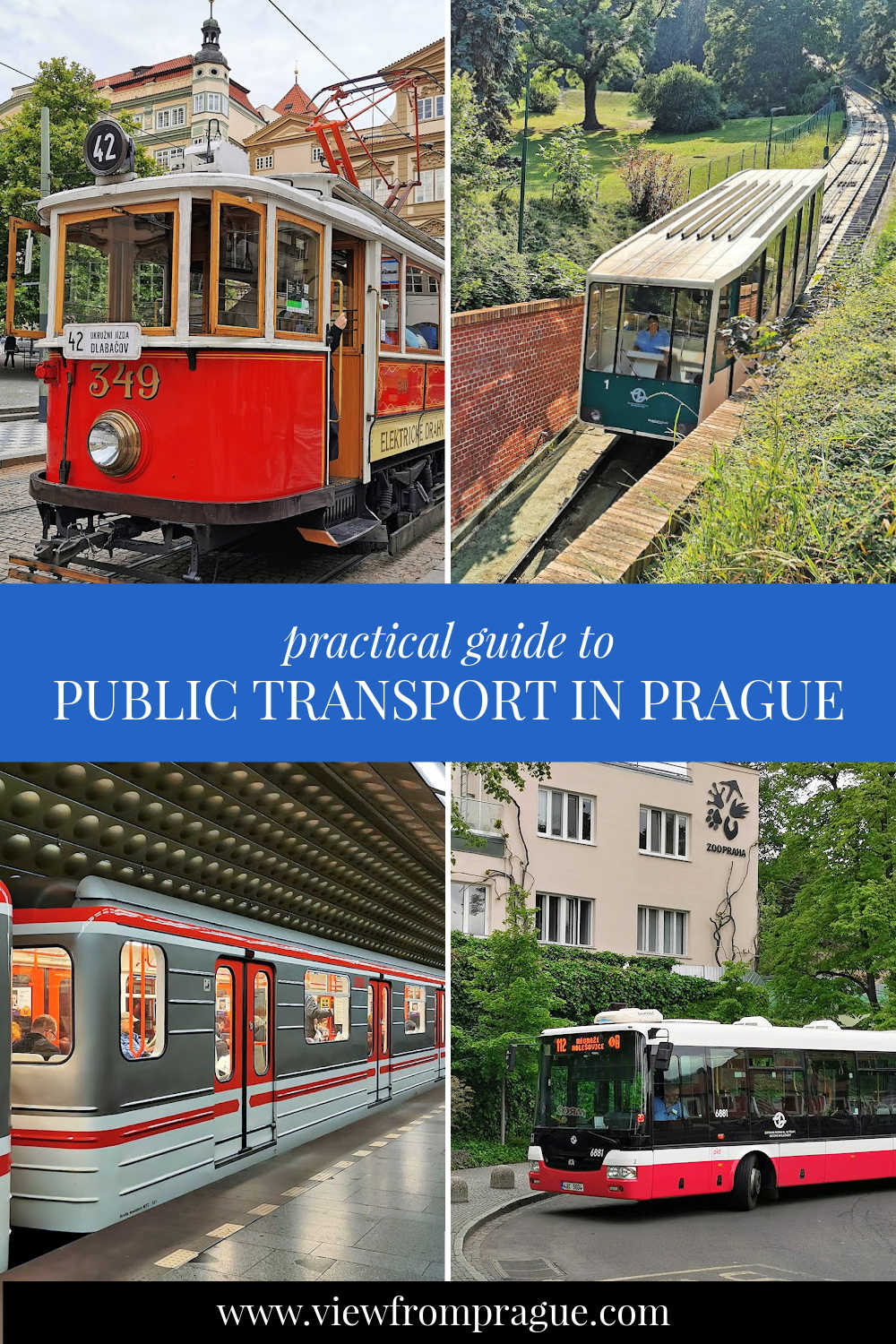
PIN TO KEEP FOR LATER
What’s new for 2026?
Public transport price increases
Starting January 1, 2026, Prague is implementing a significant update to its integrated transport (PID) tariff. The main change is a price increase for short-term and single-trip tickets, while the cost of long-term season passes (coupons) for Prague residents remains the same (see below).
The new pricing structure is designed to incentivize digital purchases, making tickets bought through the PID Lítačka mobile app the cheapest option.
119 Trolleybuses to Vaclav Havel Airport
From March 2024 Prague has a new trolleybuses, yay! They were specially commissioned to replace the 119 airport bus and they are spacious and long with plenty of space for luggage and more importantly with easy access, so you don’t need to climb any stairs.
The new trolleybuses follow the same route as the previous 119 bus and will take you from the Vaclav Havel airport to the underground station – Veleslavin, where you can get a direct metro to the centre. They start from the same place as the previous 119 bus (right outside the airport) and cost the same 50 CZK for 90 min as before.
Complete Re-furbishments of Petrin Funicular
The Petrin Cable car is currently being completely re-furbished and updated. The estimated re-opening is scheduled for early 2026. In the meantime, there are other ways to get to Petrin Hill that are easy to follow and you get to see this part of Prague in a complete different way.
Tram 22, 23 & 42 update from 21st of March – 17th of July 2026 – The Pražský Hrad and Kralovsky Letohradek stops are currently closed for track repairs, please continue to Prasny Most stop for Prague Castle (13 minutes walk up hill) or to Brusnice (for New World Area & Loretta Church) or to Pohorelec stop and walk down to Prague Castle instead.
The types & Prices of public transport tickets in Prague for 2026
Single-trip tickets will vary in price depending on how you buy them. Paper and SMS tickets will be more expensive than digital ones.
| Ticket Type | PID Lítačka App | Paper Ticket | SMS Ticket |
| 30-minute | 36 CZK | 39 CZK | 42 CZK |
| 90-minute | 46 CZK | 50 CZK | 55 CZK |
| 24-hour | 140 CZK | 150 CZK | 150 CZK |
| 72-hour | 340 CZK | 350 CZK | 350 CZK |
Short time ticket – 39 CZK (paper ticket)
This ticket is valid for 30 minutes from validation time. This ticket is perfect if you need to travel few stops or don’t want to walk up the hill to Prague Castle.
Longer time ticket – 50 CZK (Paper Ticket)
This ticket is valid for 90 minutes from validation time, which is plenty for any interchanges you need to make, travel across the whole Prague or get from the airport to the centre.
Day ticket – 150 CZK (paper ticket)
If you know that you are going to be using public transport during your stay ( personally I think it’s the best way to get around the town), you can also buy multi day tickets.
The great thing about these is that you validate them at the beginning and they are valid for 24 hrs or 72 hrs. This means that if you buy the ticket at 2 pm one day, it’s valid until 1.59 pm the next day, giving you in effect 2 days worth of travelling.
There is no restriction on this ticket. It is valid any time (peak, off-peak, night time), which makes it such a great value.
3 day ticket – 350 CZK (Paper Ticket)
The three-day ticket works in exactly the same way as the one day ticket. If you are in Prague for more than 4 days, I think it’s worth planning your days, so that you get the most out of your travel card ticket.
For example, visiting the whole of Prague Castle can take the best part of the day, which means you only need a short term ticket to get to the top of Prague Castle by tram.
But if you fancy visiting different places, or Prague parks, smaller musems or cafes, it’s worth planning them together and then get a longer ticket such as the one-day or three-day ticket.

Monthly ticket – 1000 CZK (price stays the same for 2026)
The monthly ticket (valid for any consecutive 30 days) might look like too much money, but even if you are in Prague for 2 weeks, it’s still cheaper than buying individual tickets.
The best thing about this ticket is that you don’t need to have any ID proof or ap to buy this ticket and you can also share it with other people (if you are not traveling yourself). This is a paper ticket, which you will need to carry with you at all times when you travel.
More importantly for the sum of approx £33 (1000 CZK) you can use any tram, bus or train within the greater Prague public transport system and you don’t need to worry about getting tickets every time you want to catch a tram or remembering to get off because you’ve run out of time on your ticket.
Monthly Ticket – 550 CZK (price stay the same for 2026)
This monthly ticket is only available if you download the PID app to your phone and upload your photo. This ticket used to be for people living in Prague only, but now it’s open to anyone, including foreign tourists. It’s pretty simple to do, but I’d suggest to do this in plenty of time before you want to take the first bus or tram connection.
If you are asked for ticket by the ticket inspector you will need to show them your e-ticket which will be in your PID app. This means you will need access to the internet and more importantly have a roaming switched on.
It’s best to check if your mobile provider includes the Czech Republic in your free data so that you don’t incur unexpected roaming charges.

Prague public transport free travel
Parent & Child under 3 years old
One adult accompanying a child under the age of 3 is entitled to travel for free on metro, trams, and buses. This is a brilliant help for parents, as you do not need to buy a ticket for yourself as long as the toddler is with you.
To use this benefit, you must carry a valid form of identification for the child, such as a passport or a national ID card, to prove their age to an inspector.
Please keep in mind that this rule only applies to one person per child; if another adult is joining you, they will still need their own ticket.
The pram is free when the child is inside and you don’t need to pay extra.
The free travel is not valid on the Airport Express bus or special historic tram lines, where standard fares are required.
Children under 15 years
Children under 15 also travel for free, though those between 10 and 15 should carry some form of ID with a photo and date of birth, such as passport.
Seniors over 65 years
Seniors aged 65 and over can travel for free on most public transport, including the metro, trams, and buses. To benefit from this, you simply need to carry a valid passport or an EU national identity card to prove your age to an inspector. You don’t need to buy a ticket.
It is worth noting that while travel is free for older seniors, special routes like the Airport Express (AE) bus and certain historic trams are not included, and you may still need a small ticket for very large pieces of luggage.
Prague public transport concessions – children, students & senior citizens
Teenagers 15-18
Teenagers aged between 15 and 18 are classified as “Juniors” in the Prague transport system and are eligible for significant discounts on long-term passes, though they must pay the full adult fare for short-term single tickets.
While a standard 30-minute ticket will cost 39 CZK on paper or 36 CZK via the app from January 2026, a monthly pass for this age group remains a bargain at just 130 CZK.
The best part is that teenagers do not need to be students to get this “Junior” rate; they only need to prove their age using a valid passport or national ID card.
If your teenager plans to be in the city for more than a few days, it is often much cheaper to buy a monthly electronic pass through the PID Lítačka app rather than paying for individual daily tickets at the full adult price.
Students
Students (up to 26 years) only receive a discount on a monthly travel card, but it’s pretty much the same cost as a day travel card (130 CZK for a month or 120 CZ for a day – not discounted).
So if you are staying in Prague only for a few days, it’s still worth getting the monthly ticket as it will be much cheaper). You will need to purchase the ticket via the PID app.
Senior Citizens
If you are age 60-65 you are entitled 50% off the regular ticket price – 19 CZK for 30 minutes ticket, 25 CZK for 90 minutes and 75 CZK for 24 hrs travel card.
The monthly travel card will cost you only 130 CZK, but you will need to purchase this one via the PID app, as the paper one will require you to have a specially pre-approved card by the public transport for which you would need a photo and Czech ID and proof that you live in the Czech Republic, which of course you won’t have.
AE bus from the Vaclav Havel Airport to the centre (Main Train Station)
The tickets are 200 CZK (100 CZK concessions) and no further discounts are offered. Free travel doesn’t apply here (but don’t worry you can use all the other buses – 59, 191 and 100 from the airport for the regular public transport tickets)
Luggage & Dogs: Transporting a dog or large piece of luggage will cost 23 CZK via the app or 25 CZK via a paper ticket.

How to buy and use the public transport tickets
Yellow Ticket Machines (large machines)
Tickets can be bought in yellow vending machines at the entrance of any underground (metro) station.
Once you buy your ticket, make sure you validate it in the smaller yellow ticket machine on any bus or at the bus stop. The machine stamps it with a date and time and you have either 30 or 90 minutes to get to your destination, including any changes.
You don’t need to validate the ticket again when you change, say from a bus to a tram, just keep it in your pocket somewhere safe.
Ticket Machines (inside the trams)
You can also buy ticket on the trams and buses, but you need to use your payment card for this. The ticket machines inside the trams and buses are easy to use, you just select the type of ticket you need and tap your card. The ticket is valid straightaway (which makes sense as you are already on the bus or tram).

The PID app (on your smart phone)
Alternatively you can also download the PID app to your phone and purchase e-ticket. Once you do that you also need to active the ticket in the app to indicate that you are starting your journey.
There is 1 minute delay before you can hop on the tram to prevent people from buying tickets only when they see the ticket inspector. That’s all well and good, but if you are not aware of this and buy your ticket and not activate it and then wait 1 minute, you might still get a fine from the ticket inspector.

Ticket Inspectors
A word of warning! The ticket inspectors are always dressed in plain clothes (not uniforms) and do regular spot checks. To prove they are official staff, they will show you a small metal badge, often hidden in their palm before they flip it open.
They are generally quite professional, but they do not make exceptions for tourists who have made a mistake, so it is best to be prepared and always keep your ticket handy until you have finished your journey.
It is important to remember that if you are using a paper ticket, you must stamp it in the yellow machines as soon as you board a tram or enter the metro station.
If you prefer using the PID Lítačka app, make sure you activate your ticket at least one minute before you hop on, as inspectors are quite keen and will check that the digital countdown has finished.
The penalty for traveling without a valid ticket is increasing in 2026. Paying on the spot will now cost 1,200 CZK (up from 1,000 CZK), and if paid after 15 days, it rises to 2,000 CZK

My favourite saving tip
If you know that you are going to be using public transport all the time whilst you are in Prague, you can buy the daily, 3 daily or monthly tickets directly at the Prague airport. The office is open every day until 8 pm and there is one office in each terminal.
I used to buy the first single ticket to get to the centre of Prague, where I would get my monthly travel card, but now I buy it directly at the airport. It’s not just about saving 50 CZK, but it’s more about having the flexibility of going out and hopping on the tram without worrying if my travel ticket is still valid or not.
Travelling by Prague Trams
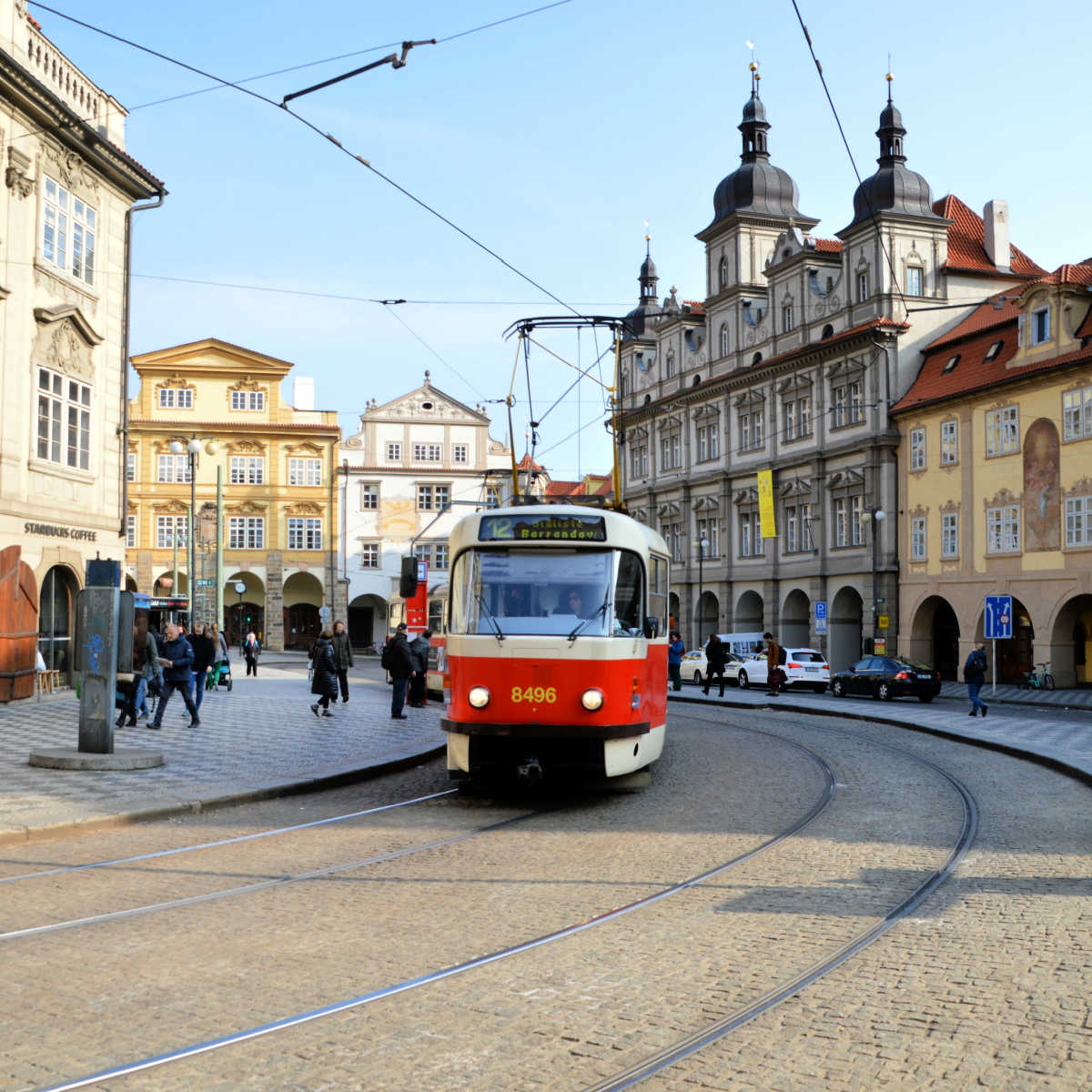
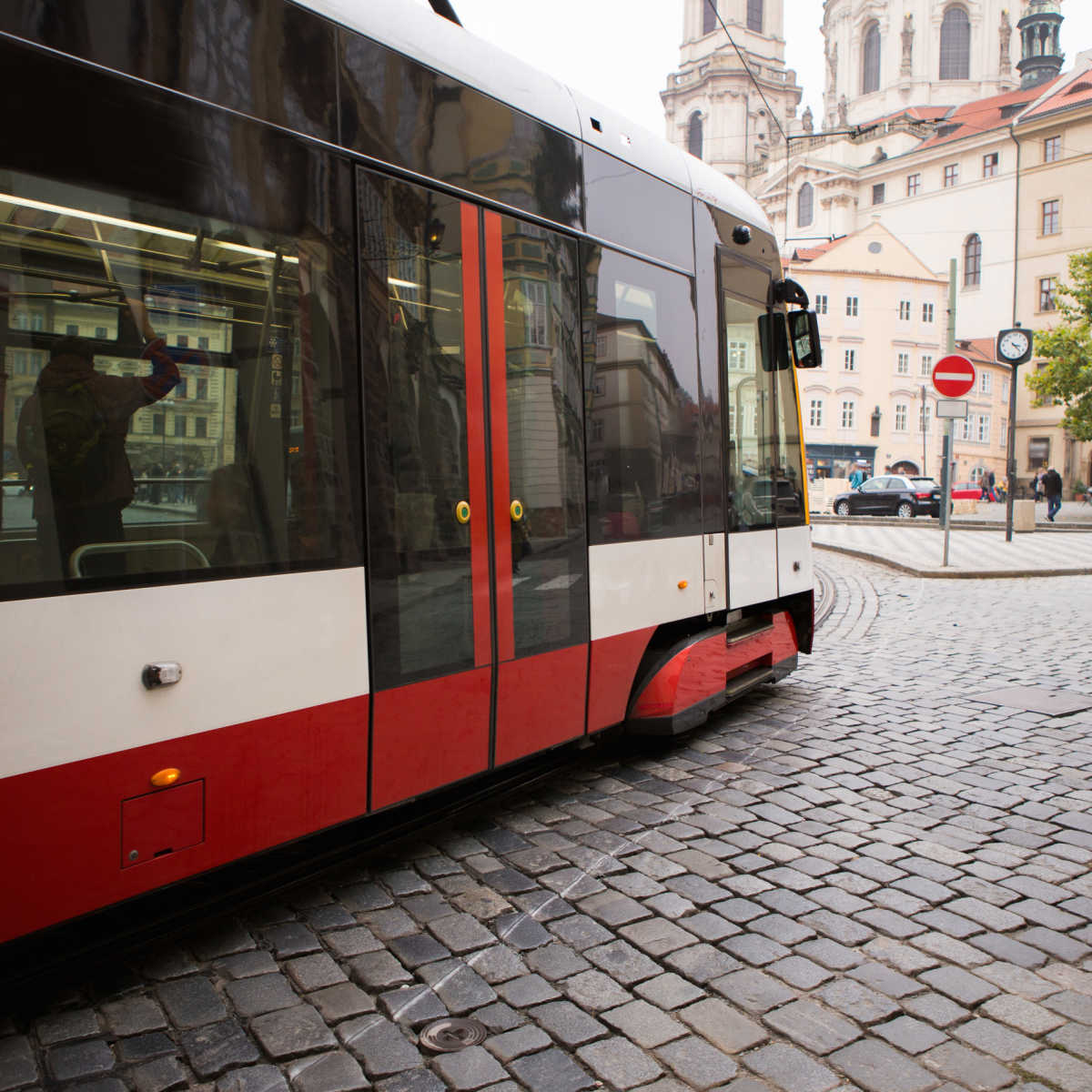
Travelling by tram is one of the easiest ways of getting around in Prague. They are frequent and interconnected in many places. The distances between stops are usually very short – you can sometimes see the next stop ahead, so even if you forget your stop, you can easily walk back or hop on the next tram going back.
There are several different tram routes and the numbers start from 1-26 for day time trams and 91-99 for night trams (between midnight to 4-5 am). The night time trams use the same tracks as the day time trams but join up several routes together. They usually interconnect in the middle (Narodni and Vodickova Street) and you can change to get the tram you need.
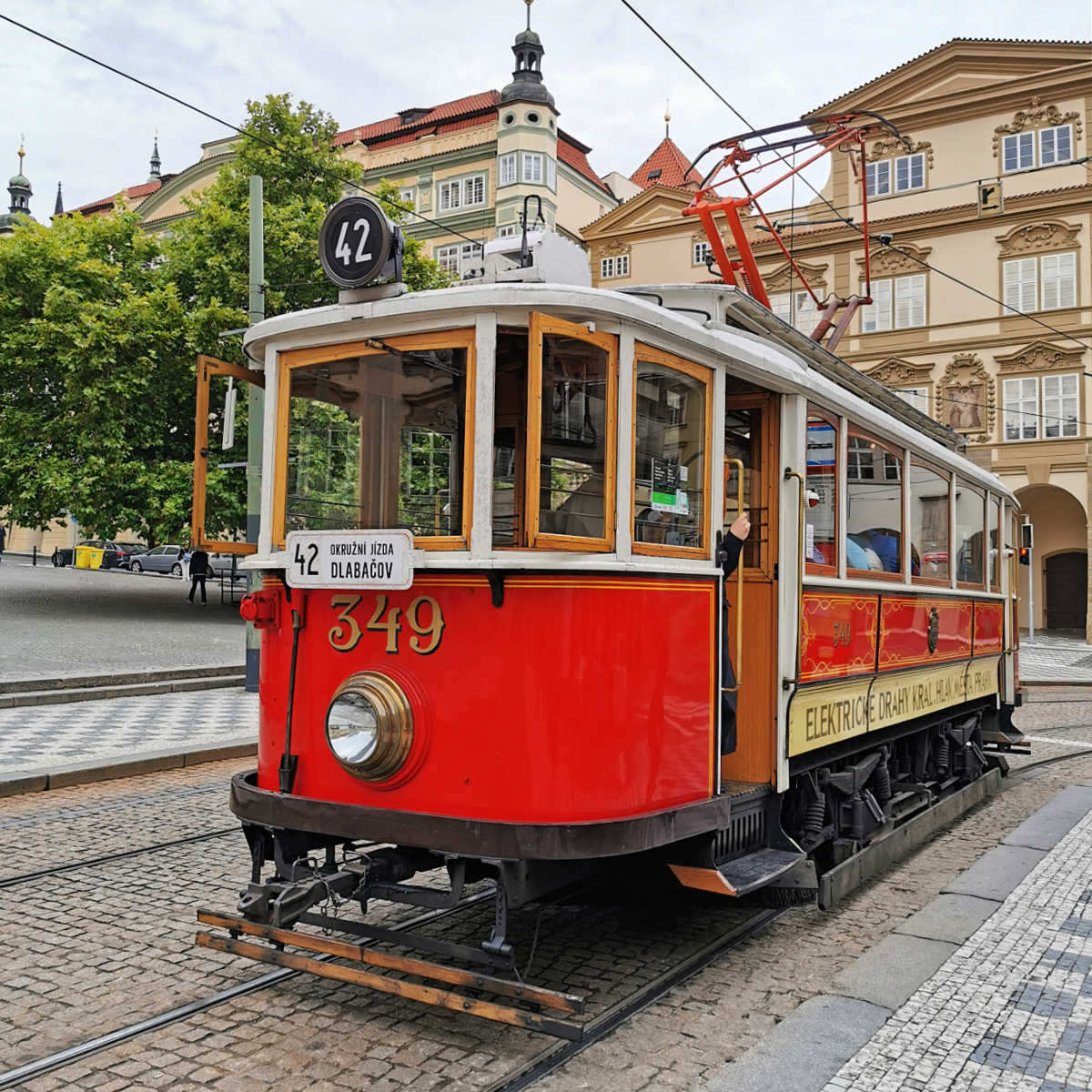
The only difference is the historic tram no. 42, which has it’s own timetable, circular route and public transport tickets are not valid. You will need to buy a separate ticket, which is 350 CZK (valid for the day) directly from the tram ticket inspector dressed in a historic costume on each tram.
READ MORE:
- The full guide to Prague tram network >>
- Tram 22 route – The self-guided tour of historic Prague >>
- Tram 9 route – Explore the less visited parts of Prague >>
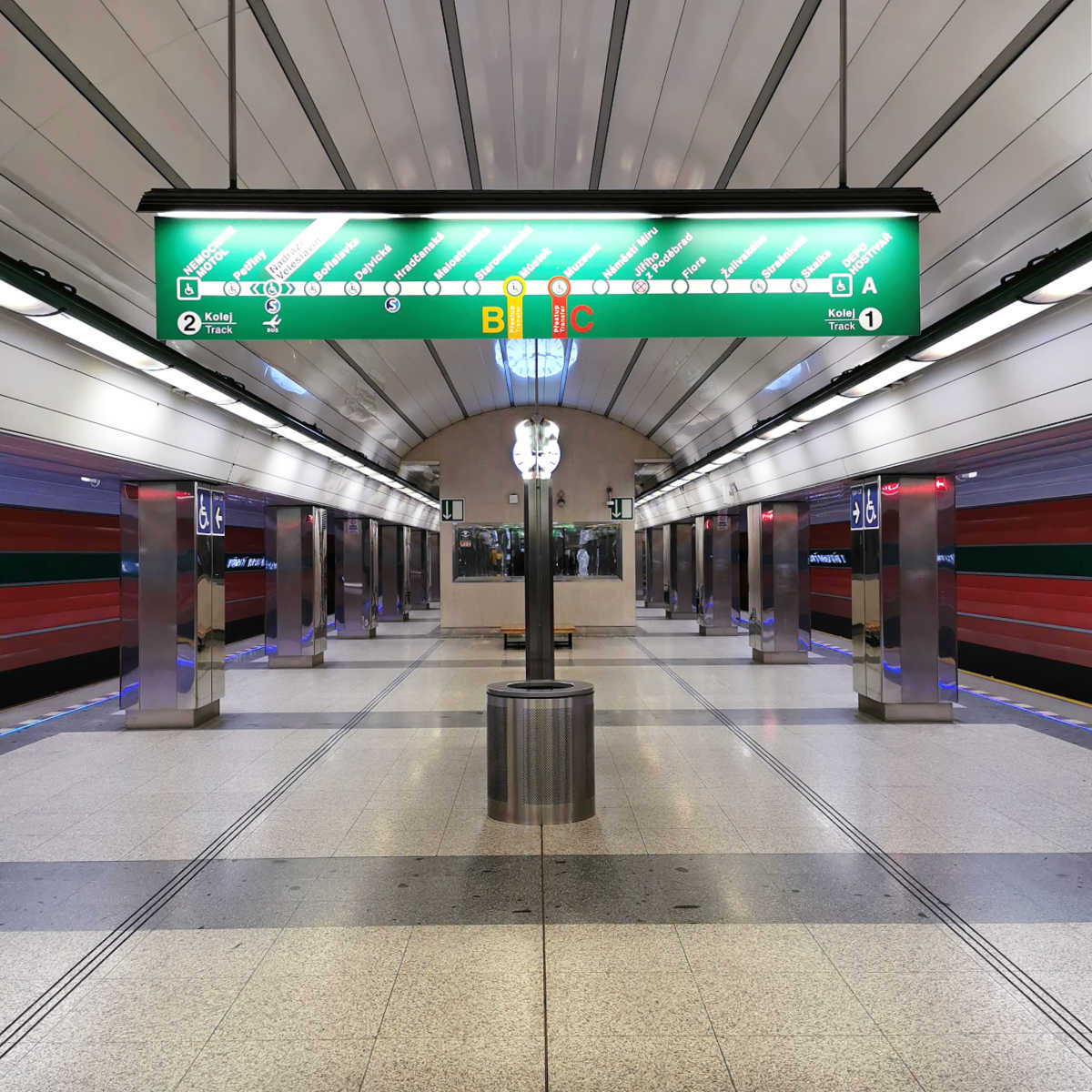
Travelling by Prague Underground (Metro)
Prague underground has only three lines – Line A, B, C and it’s a quick and easy way to get across the whole of Prague. The three lines intersect in the middle and you can easily change to A, B or C regardless on which line you are.
It’s usually quicker to cover longer distances by underground and then change to a tram for the last few stops to get you wherever you need to go.
The metro (underground) opens at 5 am and closes at 12 midnight. The last train leaves from the last stop by midnight, so if you are a few minutes late past midnight you might still be able to get your train.
READ MORE
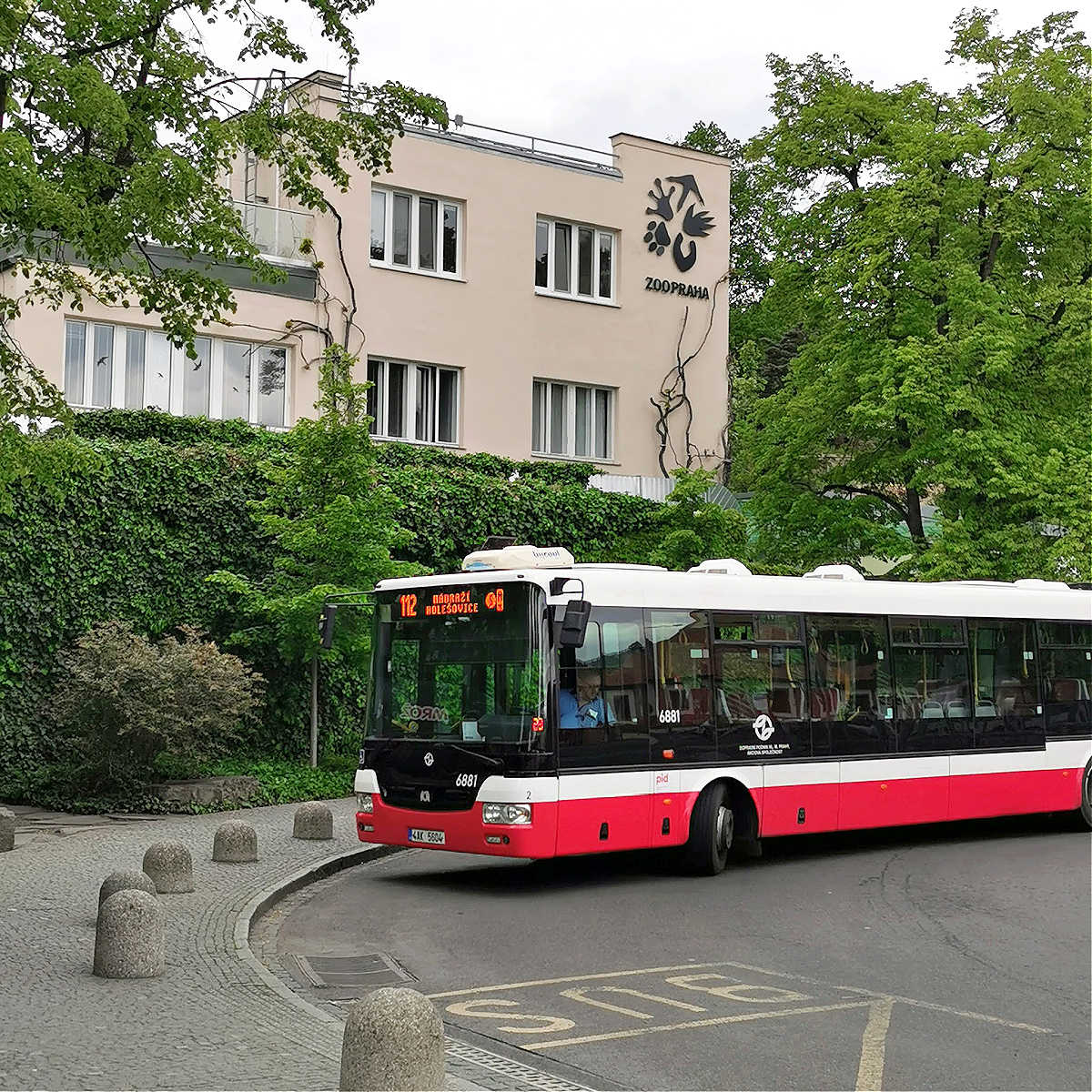
Travelling by bus
You will only find one or two small types of buses in the centre as the rest are more on the outskirts of Prague or where the trams can’t go (anywhere up the hills!).
You can buy a ticket inside the bus or sometimes at the bus stop. The same ticket is valid on the bus as it is on the tram or underground. You probably won’t really need to use the buses, unless you are thinking of visiting Prague ZOO where the only transport that takes you directly to the main entrance is the Prague bus.
One thing that’s worth mentioning is that buses beginning with 300 numbers are outer Prague buses. They usually start within the Prague zone, but quickly leave the zone valid on your regular ticket.
You can easily buy tickets on these buses from the bus driver or purchase the tickets via the PID app. This for example happens on the bus to Pruhonice Park, Melnik or when you travel to Terezin by bus.
On many suburban bus lines in Prague and the surrounding region, you no longer have to wait in line to show your ticket to the driver, as you can now board through any door if you already have a valid ticket. All the buses that have this new rule have notices on the front of the bus to indicate this – both in Czech and English language.
READ MORE
- The full guide to Florenc Main Bus Station in Prague >>
- How to get to Liberec by bus (easy day trip from Prague) >>
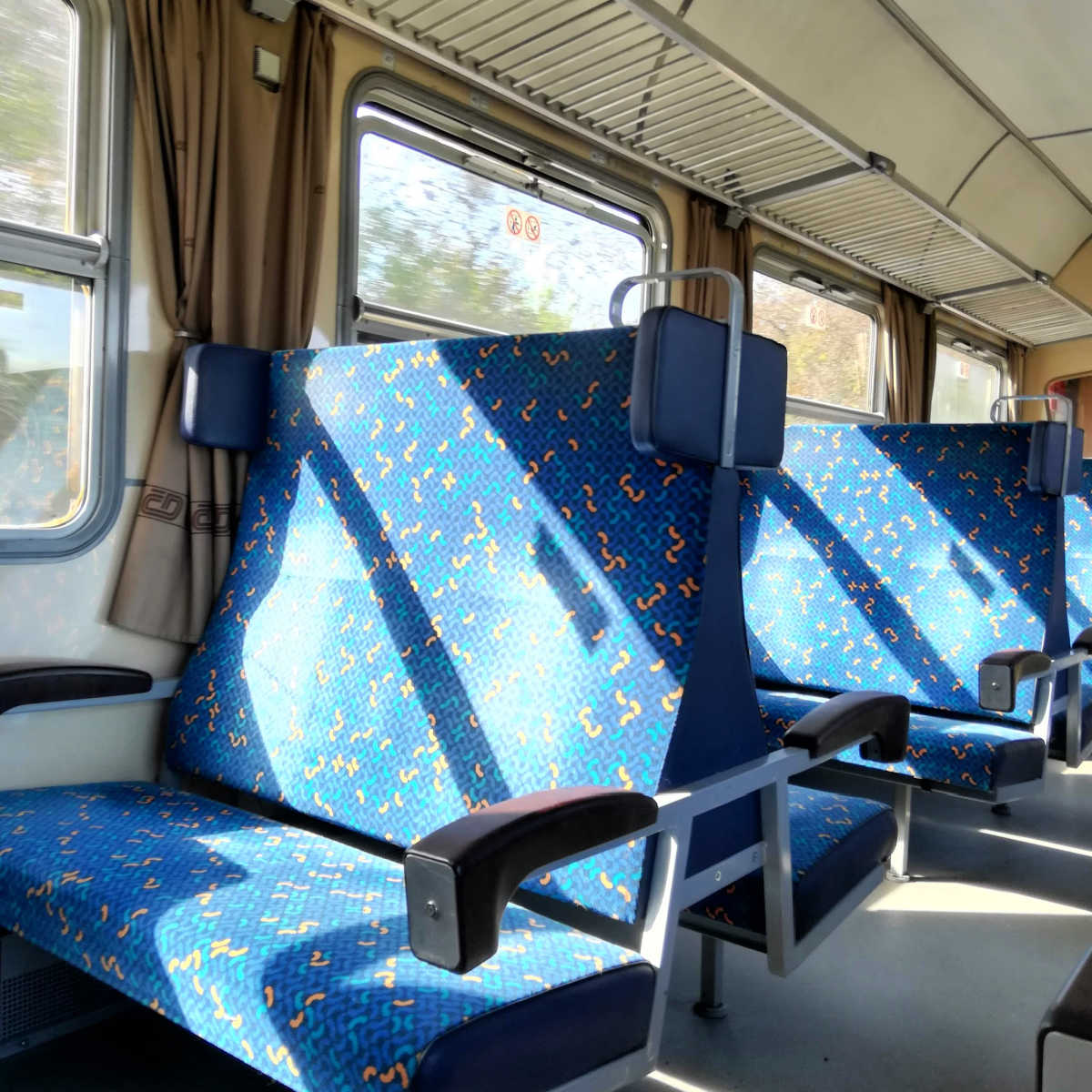
Travelling by train
The chances are that you probably won’t be travelling on the trains within the Prague travel zone as trams, underground and buses are much more convenient.
Saying that, if you are into train history and want to see the outskirts of Prague with some beautiful countryside, I recommend my favourite ride on the Semmering Train, which will take you from the Main Train Station all the way to Prokop Valley in Prague 5.
If you fancy a day out from Prague, you can start your day at one of Prague’s main stations and buy your train ticket directly there.
Most trains leave from the Main Train Station (Praha – Hlavni Nadrazi) and only a few start from Masarykovo Train Station (Masarykovo Nadrazi).
Other Prague train stations are linked with either Main station or Masarykovo Train Station, but in most instances you will only need the Main station to start your journey from.
READ MORE
- How to get to Karlstejn Castle on public transport >>
- The best way to get to Kutna Hora by public transport >>
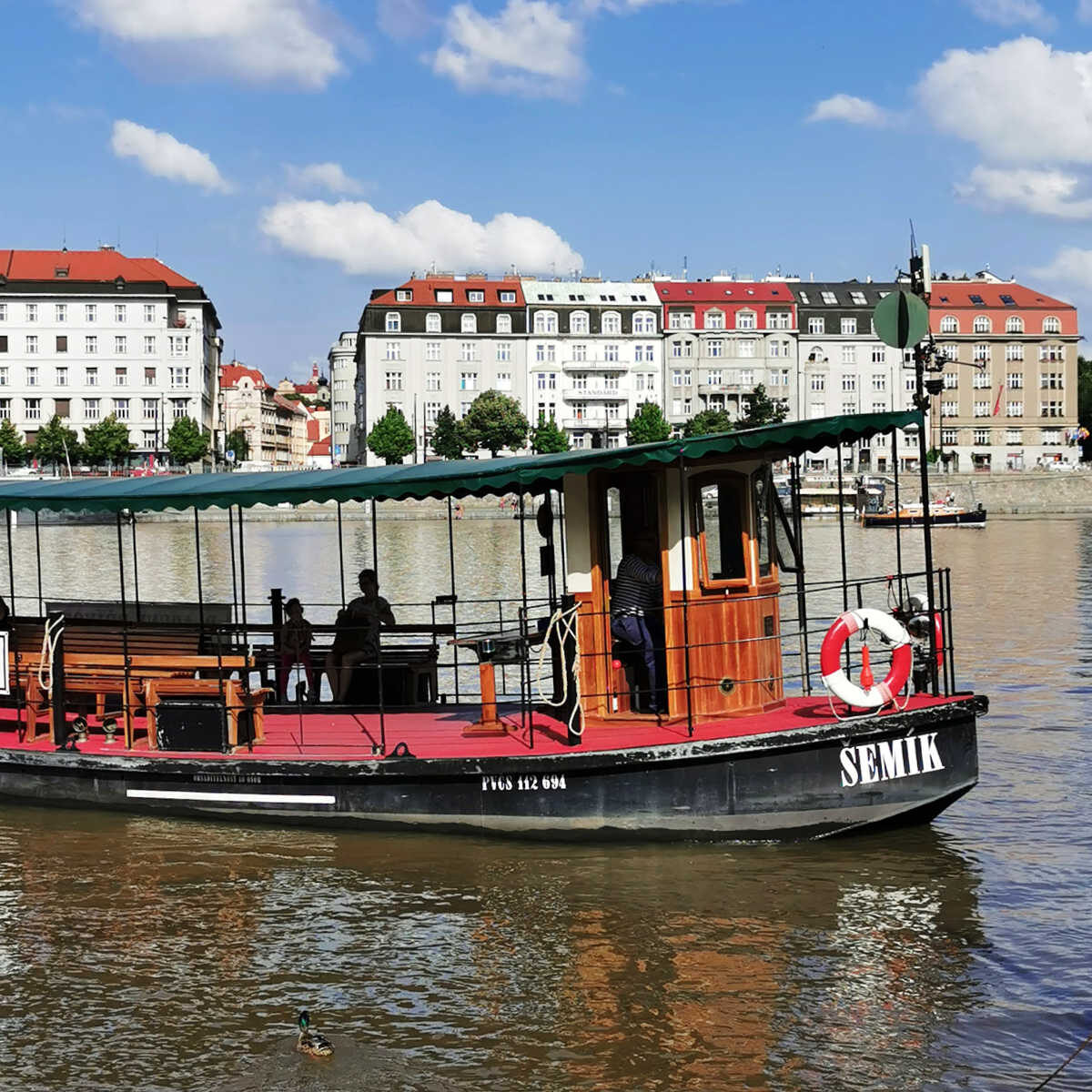
Travelling by water ferry
One of my recent discoveries is that you can use the regular public transport tickets to travel on the water ferry! I mean, how cool is that!
There are 6 water ferries connecting the Vltava river banks and the Vltava Islands at different points across the town. They are usually in the places that are not that well connected via other means of transport or there are no bridges over Vltava River nearby.
Four out of the six river ferries operate only in the summer time (March – October), but two remain open all year (these are not in the centre of Prague, but in Sedlec – Zamky and V Podbabe – Pohori)
Year-Round Ferry Lines
- P1: Sedlec – Zámky: This ferry is in the north of the city and connects Prague 6 and Prague 8. It is very popular with cyclists and hikers heading towards the Drahaň Valley.
- P2: V Podbabě – Podhoří: This is the most frequent ferry, running every 15 minutes. it connects Podbaba (near the end of the tram line) to Podhoří, which is a very short walk from the lower entrance of the Prague Zoo and the Troja Botanical Garden.
Seasonal Ferry Lines (Late March – October)
- P3: Lihovar – Dvorce: This line connects the Smíchov (near the Lihovar tram stop) with the Podolí area on the opposite bank, right near the Žluté lázně riverside recreational area.
- P4: Dostihová – Belárie: Located further south, this ferry links the horse racing grounds in Chuchle with the Modřany district in Prague 4.
- P5: Císařská louka – Výtoň – Náplavka: This popular route connects the Císařská louka island with the popular Náplavka embankment (near the Výtoň tram stop) and the Smíchov side of the river.
- P6: Lahovičky – Nádraží Modřany: This southern ferry provides a handy link between the residential area of Lahovičky and the Modřany train station.
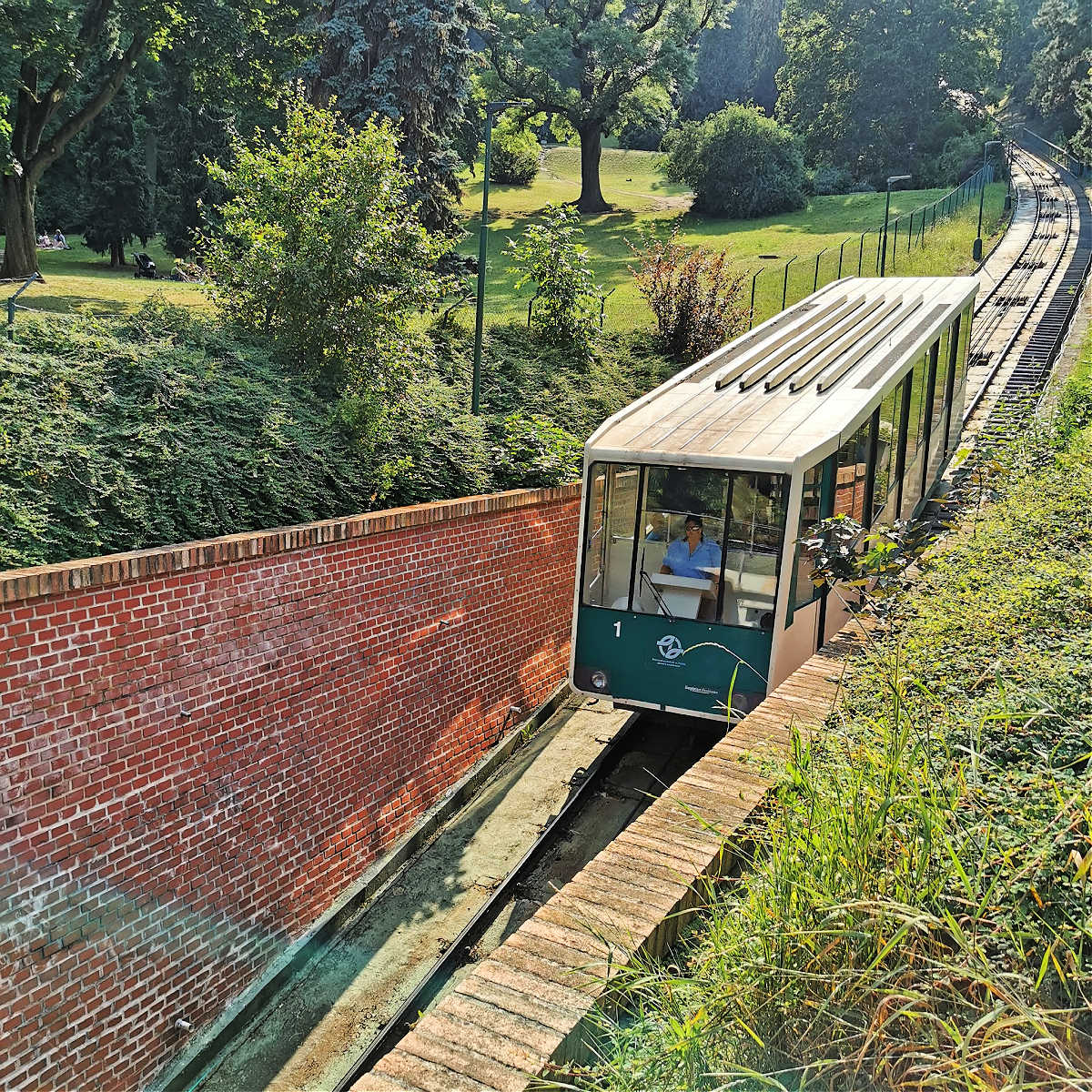
Using the Petrin Hill Cable Car (re-opening 2026)
The cable car is currently under reconstruction and will re-open late 2026.
The Petřín cable car is getting a brand-new look, and it sounds absolutely wonderful! A talented Czech designer named Anna Marešová came up with a sleek, modern style that will be ready for everyone to enjoy by the summer of 2026.
The new carriages will have massive windows and even a glass roof, so you can get an amazing view of the city and the castle as you glide up the hill.
My favourite part is a super cute detail: when the two cars pass each other halfway, one car “winks” its headlights, and the other one “blushes” by turning its inside lights red! This fun little design feature is a nod to Petřín which is being known as a romantic spot for couples. On top of looking great, the new cars are designed to be much more practical, with extra space for prams and better access for people in wheelchairs.
Petrin Cable Car is a great way to travel up the Petrin Lookout tower and Petrin Park. You’ll find the cable car at Ujezd as you get off the trams no 9, 12 or 22.
The tickets requirements have recently changed and unless you have the day, three days or 30 days travel card, the regular tickets are not valid and you need to purchase a separate ticket (60 CZK) valid on the cable car only. You need to buy 60 CZK ticket for both journeys up and down, but most people will probably use the cable car to just go up the hill.
You can see that if you plan to use the Petrin cable car, it’s definitely worth paying for the day travel card, which is 150 CZK and then use it for the rest of the day.
This blog post was originally written on 23 October 2021 and last updated on 17 January 2026


