
The complete guide to Prague’s 10 districts + What to see in each
Prague is officially split into 10 main areas, which then break down into 22 individual districts. If you really want to get technical, those are further divided into 57 municipal parts and a whopping 112 smaller local areas!
Most people only ever see the very centre, places like Malá Strana (Lesser Town) or the Old Town (Staré Město), when they’re first researching their trip. Those areas are absolutely beautiful, but the reality is that they can get very overcrowded (again!).
One of my favourite things to do is to go slightly off the beaten path, you’ll find that some of the best visitor attractions, quirky museums, and local restaurants aren’t actually in the centre at all.
It is absolutely fine to see the famous sights, but once you’ve done that, I really recommend heading a few stops further on the tram and see the real Prague.
PIN TO KEEP FOR LATER

Prague areas numbers & How they work
The different districts of Prague are numbered to identify and organize the administrative divisions of the city. The numbering system was introduced in 1960 when Prague was reorganized into ten administrative districts, each with its own local government and mayor.
The districts are numbered 1-10 and are arranged in a circular pattern around the city center. District 1 is the oldest and most central district, which includes the historic Old Town and Lesser Town areas. As the district numbers increase, they move further away from the city centre.
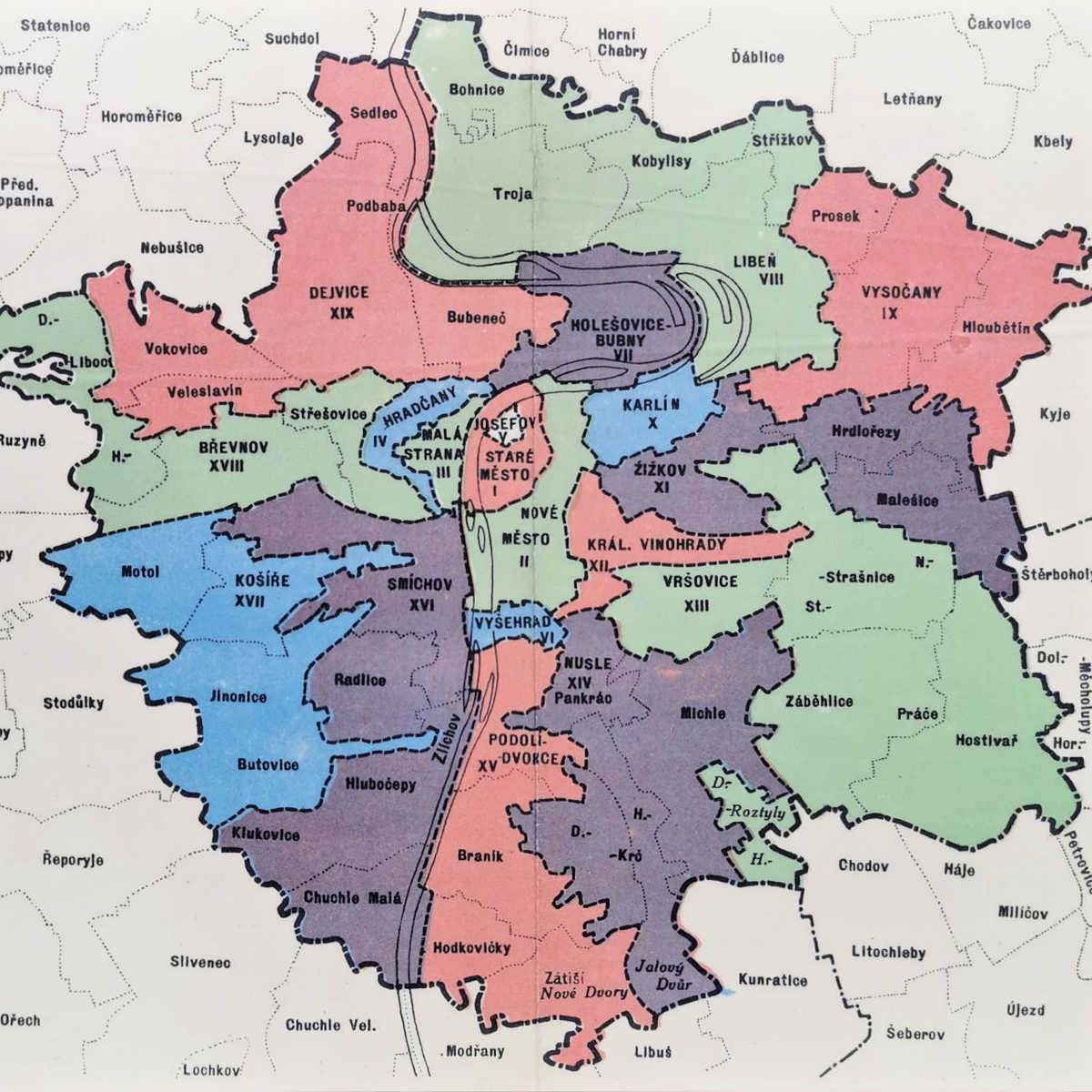
Prague has grown over the recent years and it now incorporates 22 individual districts. These are grouped together to form 10 main districts, which have their own history, centres and very different feel.
The 22 individual administrative districts are further divided into 57 municipal parts and then 112 smaller local areas.
This is mainly based on how Prague developed and the individual areas, villages or homesteads that eventually become part of Prague.
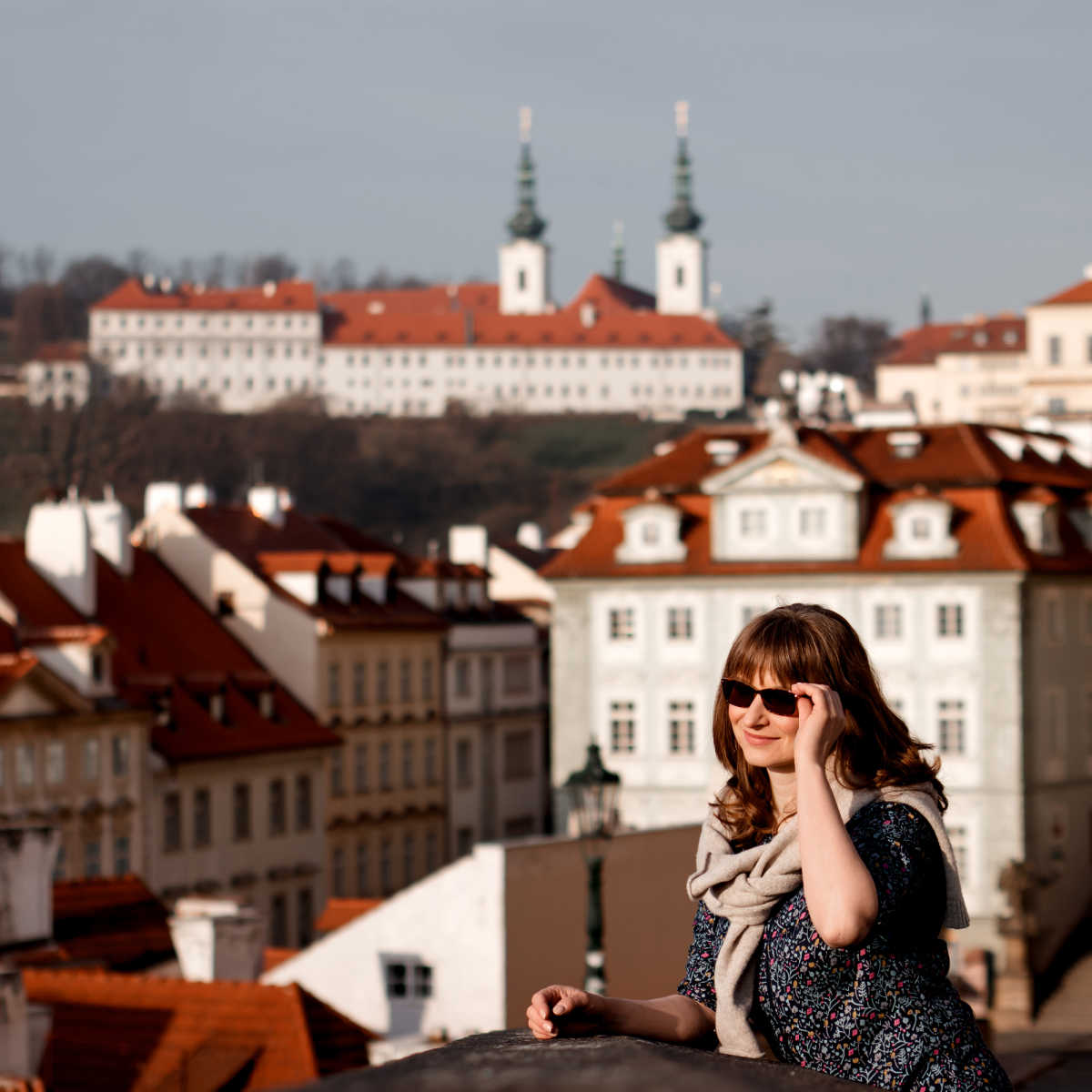
Prague 1 -including Mala Strana (The Lesser Town), Stare Mesto (The Old Town), Josefov, Hradcany
The centre of Prague is easy accessible by foot, trams and underground (metro) and it’s where you find the main tourist attractions, such as the Old Town Square with it’s historic clock, Charles Bridge and other famous bridges across the Vltava River that flows in the middle of the town.
On the top of the hill, you’ll see the Prague Castle complex and the streets below the castle hill are full of amazing palaces, houses and hidden gems, like Vrtba Garden. Opposite the Prague Castle hill you’ll see the Petrin Hill with it’s famous Petrin Lookout Tower, which is great to visit any time of the year.
It’s one of my favourite places for a summer picnic when the evenings are nice and warm. There is a great view of the whole Prague from several points in the Petrin Hill Gardens and it’s particularly pretty especially at sunset.
If you have just one day in Prague you’ll probably want to stay around Prague 1 or 2 to keep central and make the most from your Prague trip.
The centre of Prague gets very overcrowded with visitors and tourists and can be quite expensive when it comes to eating out. But since Prague is very walkable is easy enough to walk a few streets away from the centre and eat at a local self-service canteen with traditional Czech food.
One place that is tucked away from the busy thoroughfare is a Kampa Island, which is easily reachable by the steps on the side of the Charles Bridge.
The Old Town Square is perfect for a self-guided walk around Franz Kafka’s places in Prague, including his birthplace and where he worked, lived, met with his friends and created his work.
My favourite hidden gems: You’ll find the best escape from the crowds at Vojanovy Sady; it’s the city’s oldest partially preserved garden and it’s full of fruit trees and roaming peacocks. If you’re near the Malostranska Underground Station, do look for the Wallenstein Garden with its very unusual dripstone wall, more peacocks and beautiful palace. For a bit of peace, head to the Clementinum Library or find the narrowest street in Prague tucked away near U Lužického semináře.
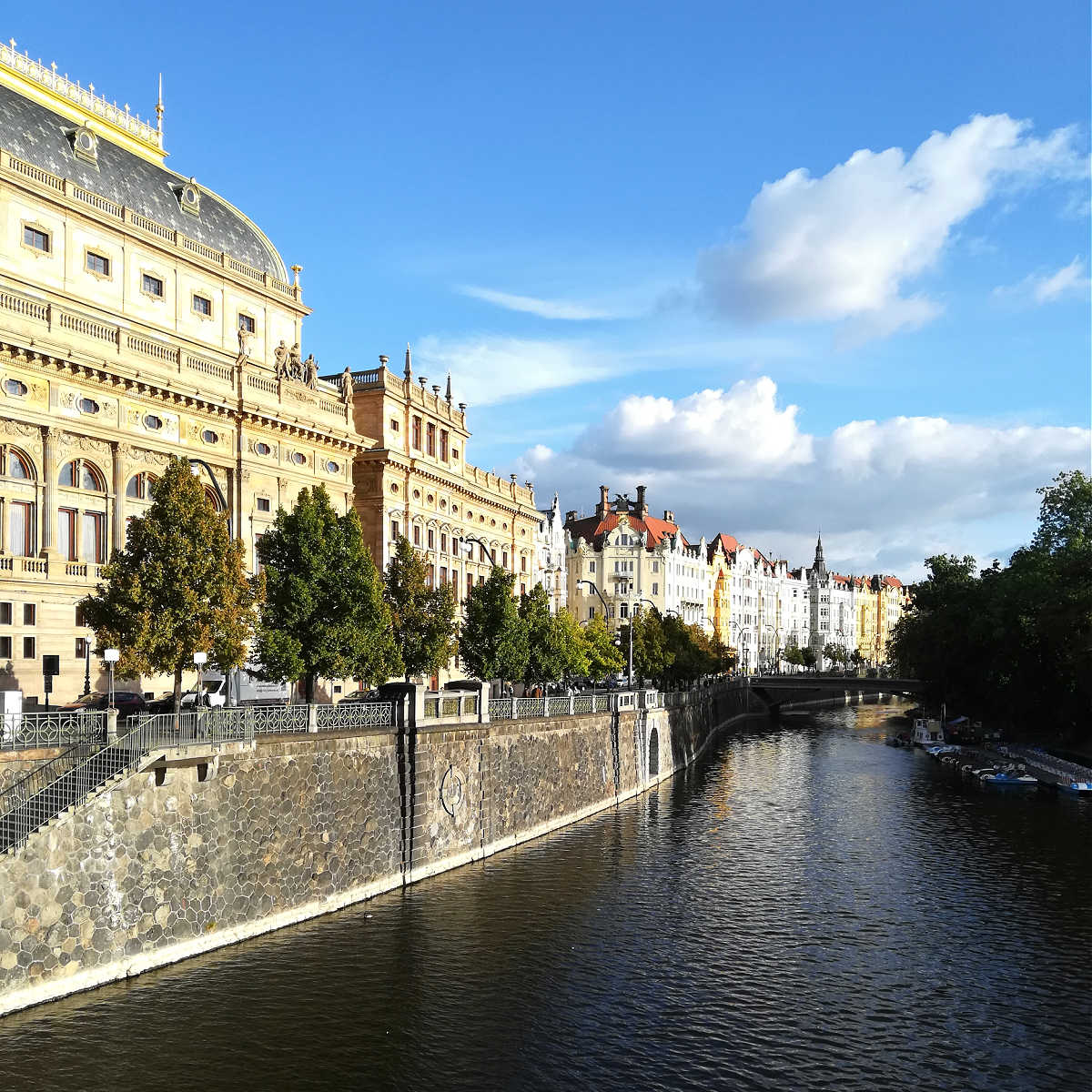
Prague 2 – includes Nove Mesto (New Town), Vysehrad, Nusle and Vinohrady
The New Town stretches towards Vinohrady, which you can reach by walking up the Wenceslas Square. Wenceslas Square is know for shopping (all the main mid market shops have their flagship stores here – such as Marks & Spencer, Bata (shoes), Primark, Luxor (books), Sephora (cosmetics) etc. You can also find quirky shopping passages with theatres, art cinemas and unusual shops, restaurants and bars.
You’ll find a lot of trendy cafes great for breakfast and restaurants in Vinohrady, which makes it worth it to travel slightly further from the centre.
There are some amazing town houses in the area with their own history and feel. There are also plenty of green spaces and parks for picnics, such as Grebovka Park with it’s own vinyard.
Prague 2 also stretches from the National Theatre (Narodni Divadlo), where you can find the Dancing House close to the Jirasek Bridge. You can carry on walking until you reach the Smichovska Naplavka waterfront and then take the steep walk up the hill to Vysehrad park with it’s cathedral, remains of town walls and historic bastions.
My favourite hidden gems: Fans of Dan Brown latest book Secret of all Secrets will want to visit the hidden Bastion XXXI garden which is built right into the medieval fortifications and the Folimanka Underground Shelter which were used in the book as a real locations.

Prague 3 – includes Zizkov
Zizkov is mainly residential area, but it does have quite a few interesting areas that are worth visiting.
There is the Zizkov Television Tower with the crawling babies by the artist David Cerny, the Jan Zizka statue and the Vitkov National Monument museum on top of the hill (with a great views of Prague) and one of the best farmer’s markets on Jindrichovo Square (next to the underground Jiriho z Podebrad).
There are also a lot of independent coffee shops and bakeries around the top part of the Zizkov, which are worth visiting.
My favourite hidden gems: The large Army Museum Žižkov is a brilliant, free attraction and the interiors have been recently renovated. For a hauntingly beautiful walk, you can explore the overgrown paths of Olšany Cemetery or admire the 1930s architecture of the Church of the Most Sacred Heart of Our Lord—it’s quite unlike anything else in the city.

Prague 4 – includes Branik, Podoli, Kunratice, Michle, Krc, Zabehlice, Haje, Chodov, Modrany
This is quite a residential area, where you can find an interesting old houses, but also lots of modern panel houses and high rise flats.
The area around the Vltava river is great for daily runs, walks and inline skating – you can reach as far as Davle and even further. If you decide to try the longer boat trip excursion, you can also see the waterfront from the comfort of a slow-moving steamer ship.
Podoli has a large swimming pool and also a designated swimming area at the Vltava river (the Yellow Spa). I always make sure I’m there for the annual Dragon Boat Race which second weekend in May.
Krc, Zabehlice and Modrany have a lot of green spaces, nature reserves and woodland areas and are great for a day out, when you don’t want to travel too far from the centre of Prague.
My favourite hidden gems: The Podolí Waterworks is a stunning Neoclassical industrial building that most people totally overlook. If you fancy a bit of nature, head to Kunratice Forest to spot wild mouflon (they’re like big furry sheep!), or visit the Lhotka biotope for a natural, chemical-free swim.
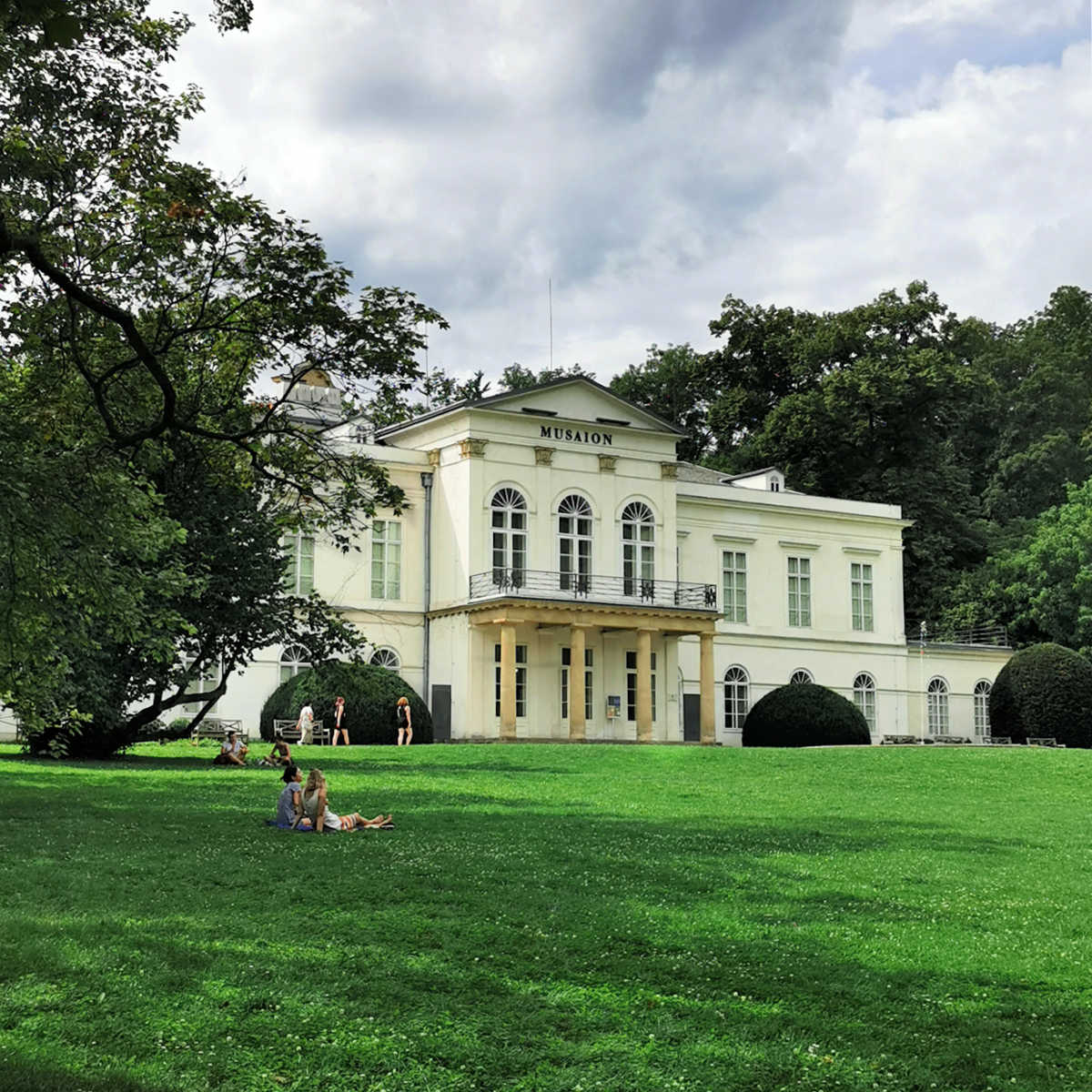
Prague 5 – includes Smichov, Motol, Kosire, Radlice, Jinonice, Hlubocepy, Mala Chuchle, Zlicin, Zbraslav, Radotin, Stodulky
Smichov is only a short ride to the centre of Prague by tram number 9, 10, 15, 16 or 20, which makes it an affordable place to stay or eat and explore Prague from. It’s quite a busy town area with shops, restaurants and independent cafes.
From the main shopping centre at Andel you can easily walk to beautiful Kinsky Garden and then follow the Hunger wall to Petrin Hill (with a great views of Prague), climb the steps to the Petrin Lookout Tower and walk all the way to Prague Castle (part of Petrin is technically in Prague 2). This is one of my favourite walks and I often walk it early in the morning to catch the sunrise at Strahov Monastery.
You can also explore the beer brewing history at the Staropramen Brewery or try a local microbrewery and pups along the Lidicka Street.
Whilst Prague 5 is perhaps known for areas with a lot of high rise flats it also has some amazing nature parks, lakes and old villages, which makes you think like you are miles away from the busy Prague centre.
My favourite hidden gems: Mala Chuchle is easily reachable by train or a bus from Prague – Smichovske Nadrazi – one of the main train stations in Prague) and it great start for a local woodland walks or you can also visit the horse racing grounds, which run events through the main season from spring to late autumn.
I also love walking in Prokop Valley which is a large nature reserve with limestone cliffs and a hidden lake. Other gems include the MeetFactory art centre and the Musoleum by David Cerny gallery or the Sacré Coeur Park, which has super cool views of Prague away from the tourists.
Prague 6 – includes Dejvice, Stresovice, Brevnov, Ruzyne, Veleslavin, Repy, Suchdol
Dejvice has some amazing villas from the end of the 19th century, which are now mainly government buildings or embassies for other countries.
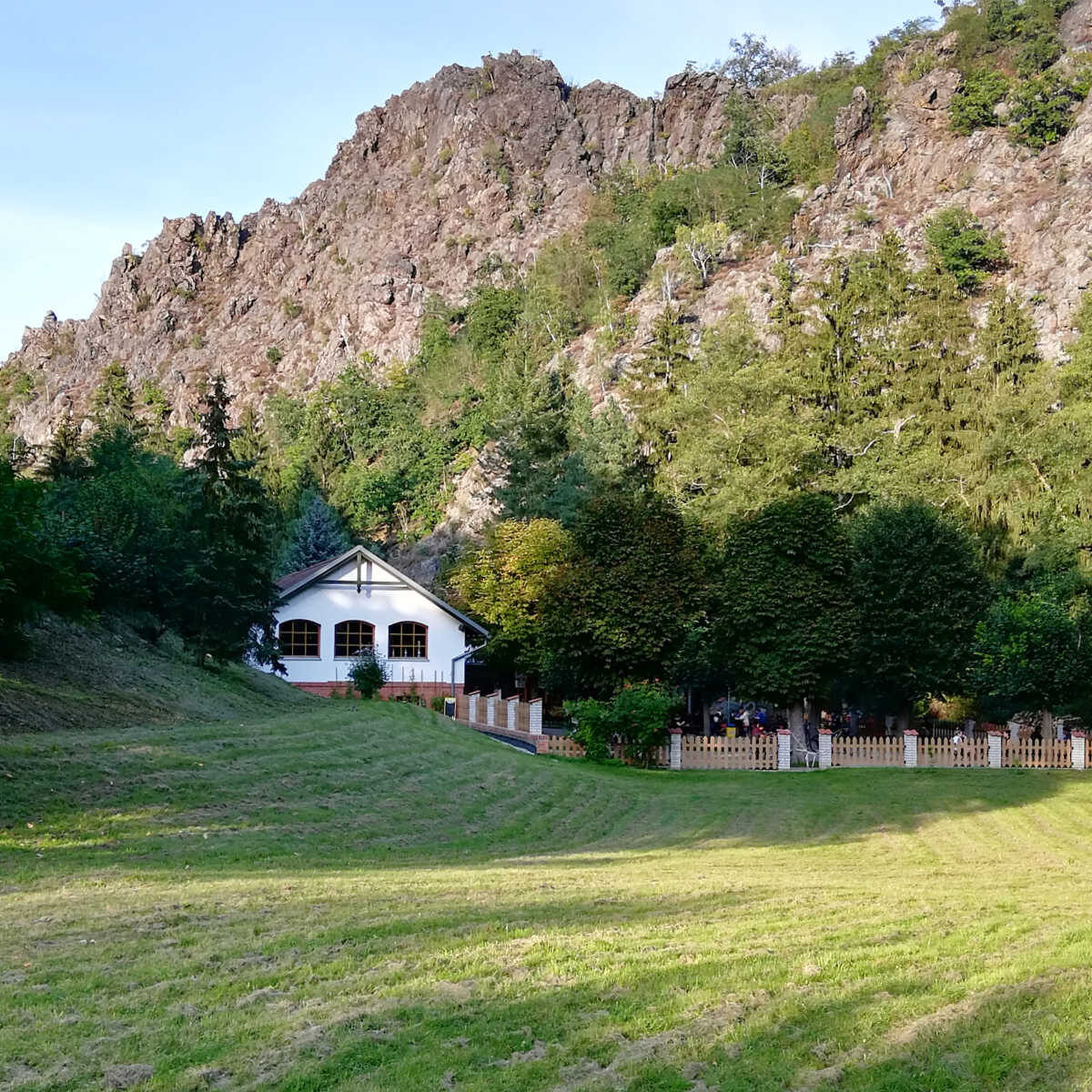
Prague 6 also includes the green Sarka Valley (one of the many beautiful green spaces in Prague), which stretches nearly to the Prague Vaclav Havel airport. It’s great nature park perfect for level walking and suitable for everyone.
My favourite hidden gems: You’ll find the oldest Benedictine brewery in the country at Břevnov Monastery, and the Baroque buildings there are just stunning. Architecture fans should definitely seek out Villa Müller by Adolf Loos, who designed this villa in a very modern, but practical way. There is also a large park called the Star Encosure (Obora Hvezda) with star-shaped Renaissance palace.
Prague 7 – includes Holesovice, Troja, Bubenec,
Whilst Holesovice is industrial like the formal electrical buildings and full of buzzing nightclubs, restaurants and trendy cafe places, Troja (on the other side of the Vltava river) is built into the hill and it feels like a world apart. This is where you can find the Prague Zoo, Botanical Garden and Troja Chateau.
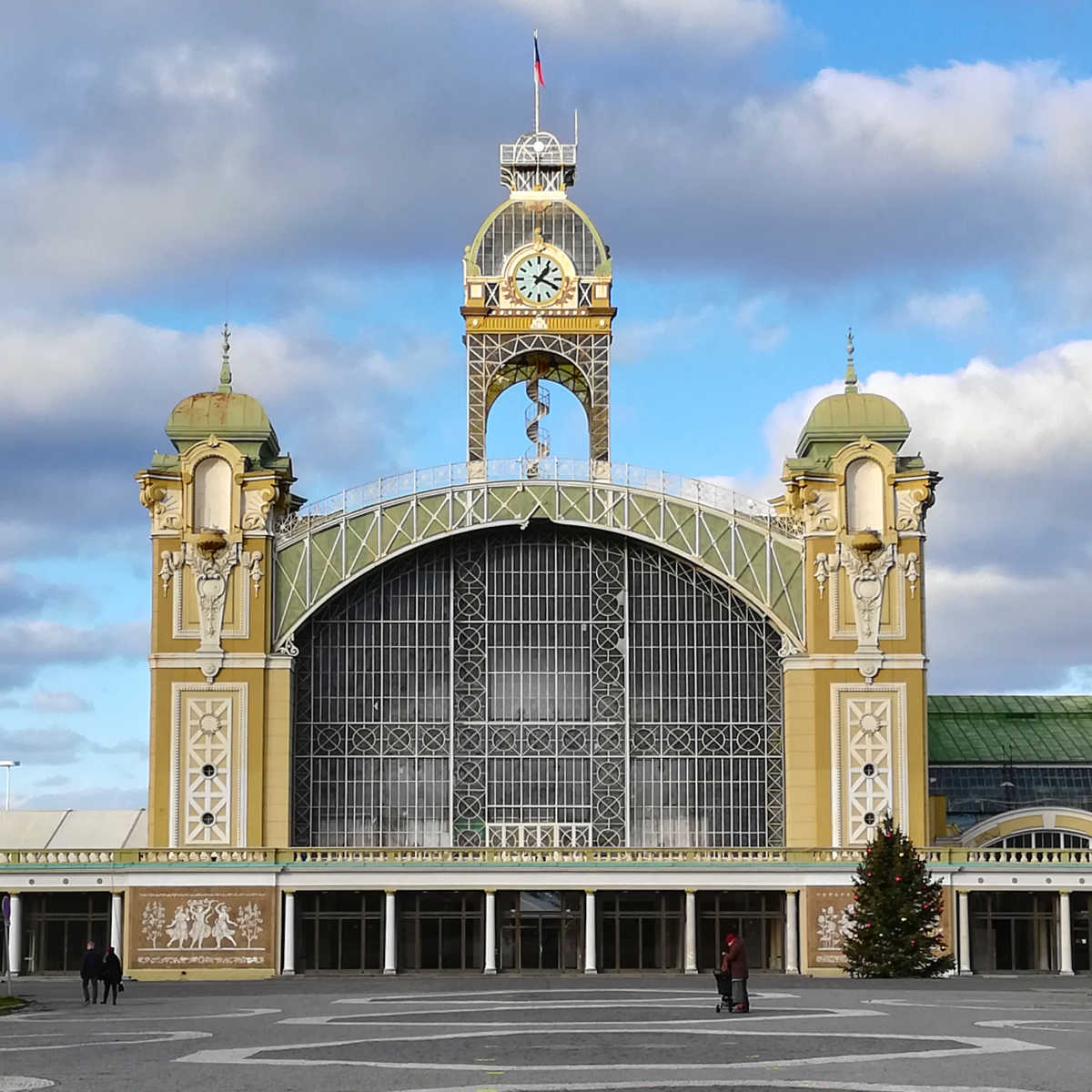
A great little walk includes walking there from the Stromovka Park on the Holesovice side which is close to the Prague Exhibition Area (Vystaviste).
If you want to stay on the top of the hill, follow the walk from Letna Park to Prague Castle and beyond to Petrin Hill and you will have a great views of the central Prague and can take some amazing photos of Charles Bridge and the Prague Castle.
My favourite hidden gems: The “Gulliver” wooden airship sitting on the roof of the DOX Centre for Contemporary Art is super cool and the exhibitions are always interesting to see.
Prague 8 – including Kobylisy, Liben, Karlin, Dablice, Bohnice, Cimice, Kobylisy
This area is mainly residential with a few historic places, but the ends of tram lines make a good starting point for a walks in the outer Prague.
Karlin had mainly an industrial and working-class feel, but then it was badly affected by the floods of 2002 and the whole area started to get re-generated.
You can now find modern buildings and flats close to the river and older buildings closer to the centre and towards the Zizkov Hill.
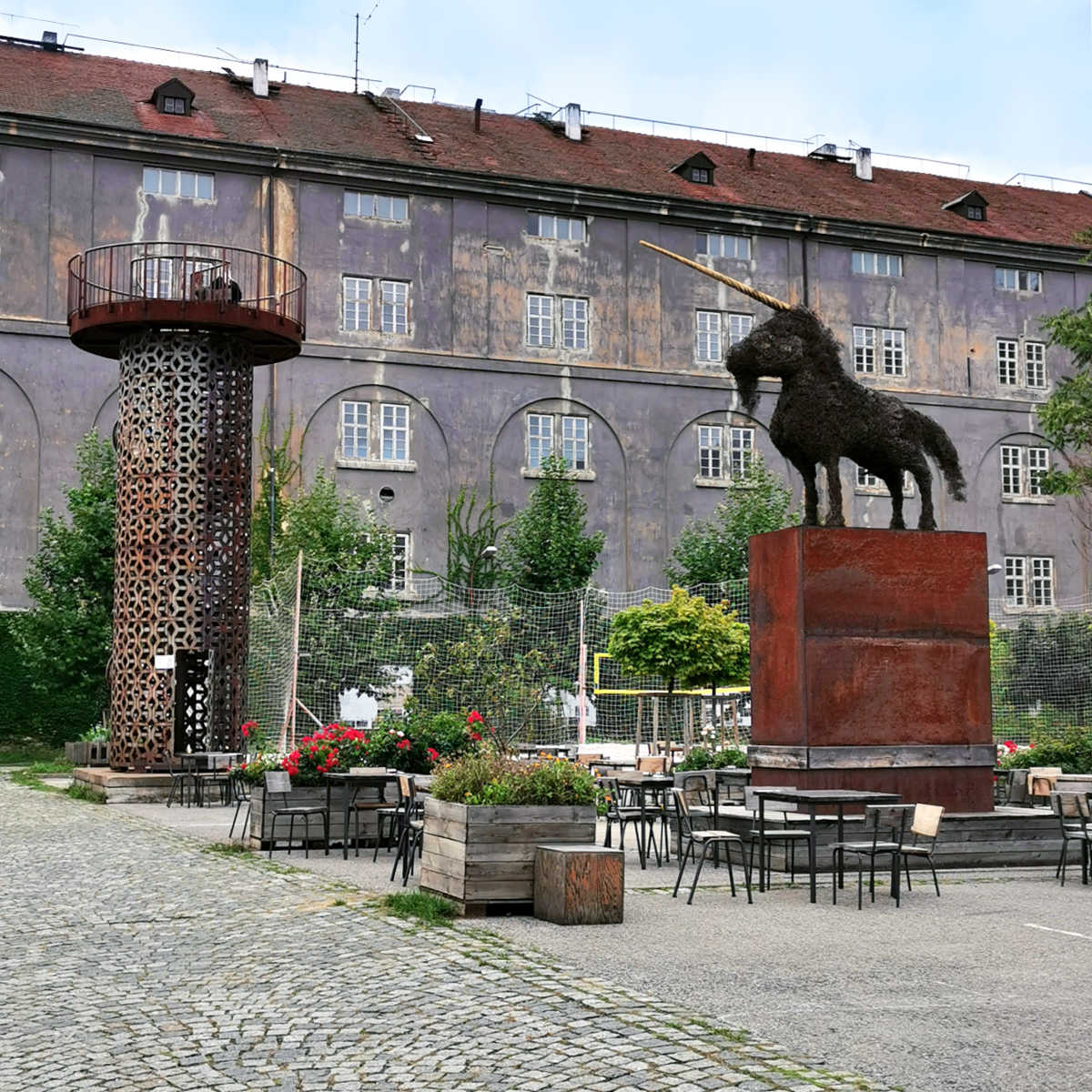
The army barracks at Karlin (Kasarna Karlin) are now turned into an alternative art space with outdoor cinema, cafe places, galleries, bars and various events.
My favourite place is the old army swimming pool turned into into cafe. Cultural events take place inside the pool and you can sit around to listen and watch. You can still see the outlines of old shower areas with the original tiles.
If that’s not enough reason to come and visit, then the cafe serves great coffe, homemade soups, cakes and sandwiches.
My favourite hidden gems: Dablice and Cimice are mainly residential area with high raised flats, but it also has a large natural park reserve, which is great for walks. You can also find unexpected gems here, like a local cemetery (Dablice Cemetery), that’s a great example of cubist architecture in Prague and the only one in the whole world!
Prague 9 – including Vysocany, Prosek, Ladvi, Letnany, Hrdlorezy, Cakovice, Kyje, Klanovice, Pocernice, Ujezd nad Lesy
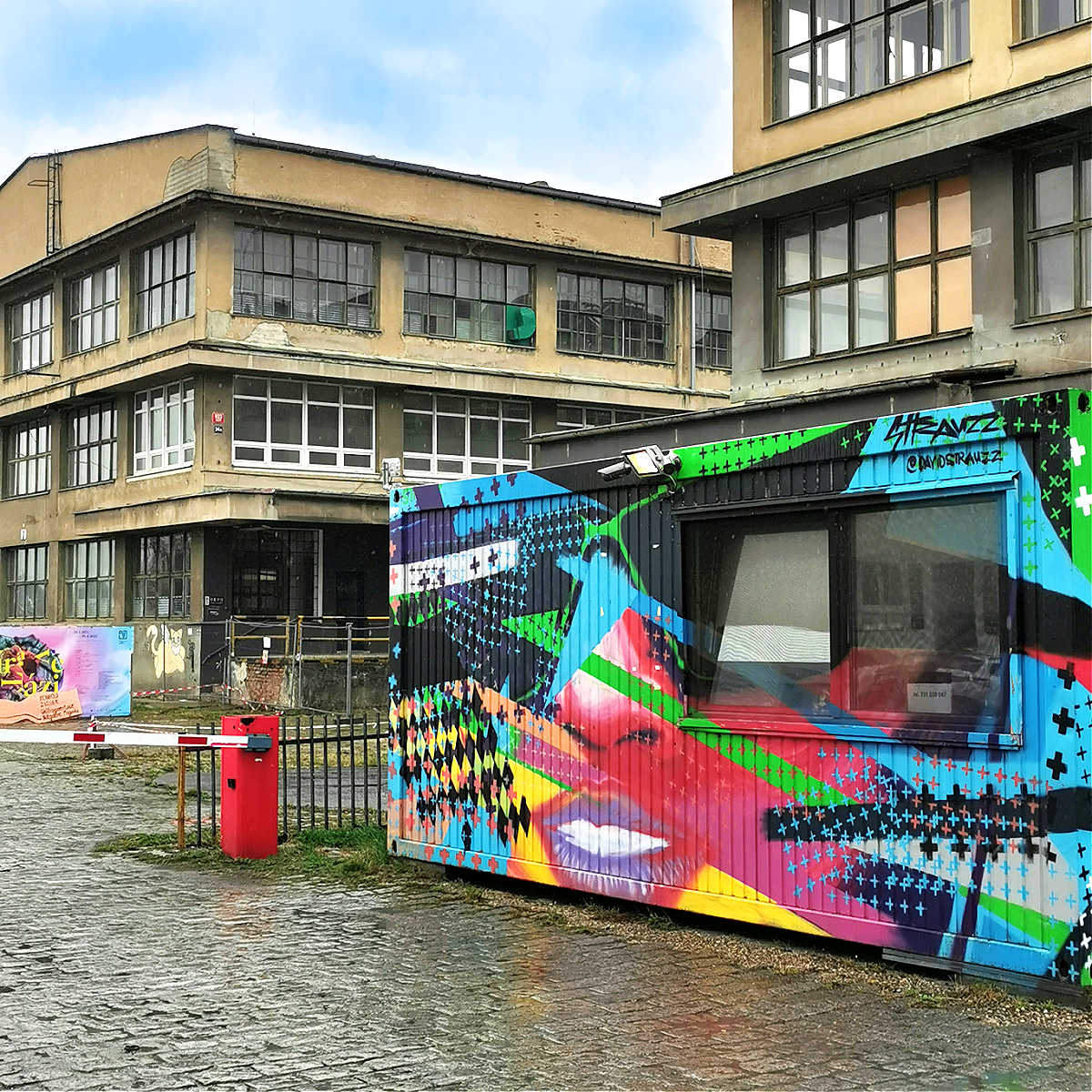
Vysocany is an old industrial area, where you can still find the remains of factories (some still working) with some cool art places like Pragovka (art gallery, exhibitions, cafe place, club and summer concerts).
Klanovice and Pocernice are pretty suburbs set in the quiet woodland areas with natural parks, walks and lakes. Klanovice were actually built purposefully as an upmarket suburb in late 19 century with detached houses built into existing forest for extra privacy and to get closer to the nature.
My favourite hidden gems: If you like industrial heritage and planes, you can explore the historic airport at Kbely and Letnany with historic planes, helicopters and anything else to do with Czech aviation. The Praha – Kbely museum is open during the summer season only and it’s one of the few Prague museums that are free to enter.
Prague 10 – including Strasnice, Vrsovice, Malesice, Zabehlice, Kolovraty
There are some lovely villas from the end of the 19th century in Strasnice and Vrsovice , especially where Vrsovice borders Vinohrady.
The heart of the local culture here is around Krymská Street, which has few independent cinemas, tiny bars and cafes.
You’ll also find the Trmalova Villa, a beautiful example of folk-inspired architecture
The old Malesice has a historic centre (it’s a small village) with a botanical garden, greenhouse and a park all looked after by a local gardening college. There are some nice walks around Malesice park and Hostivar nature reserve with large lakes and streams. You can get to Hostivar Park by the tram no. 22 – it’s one of the last stops.
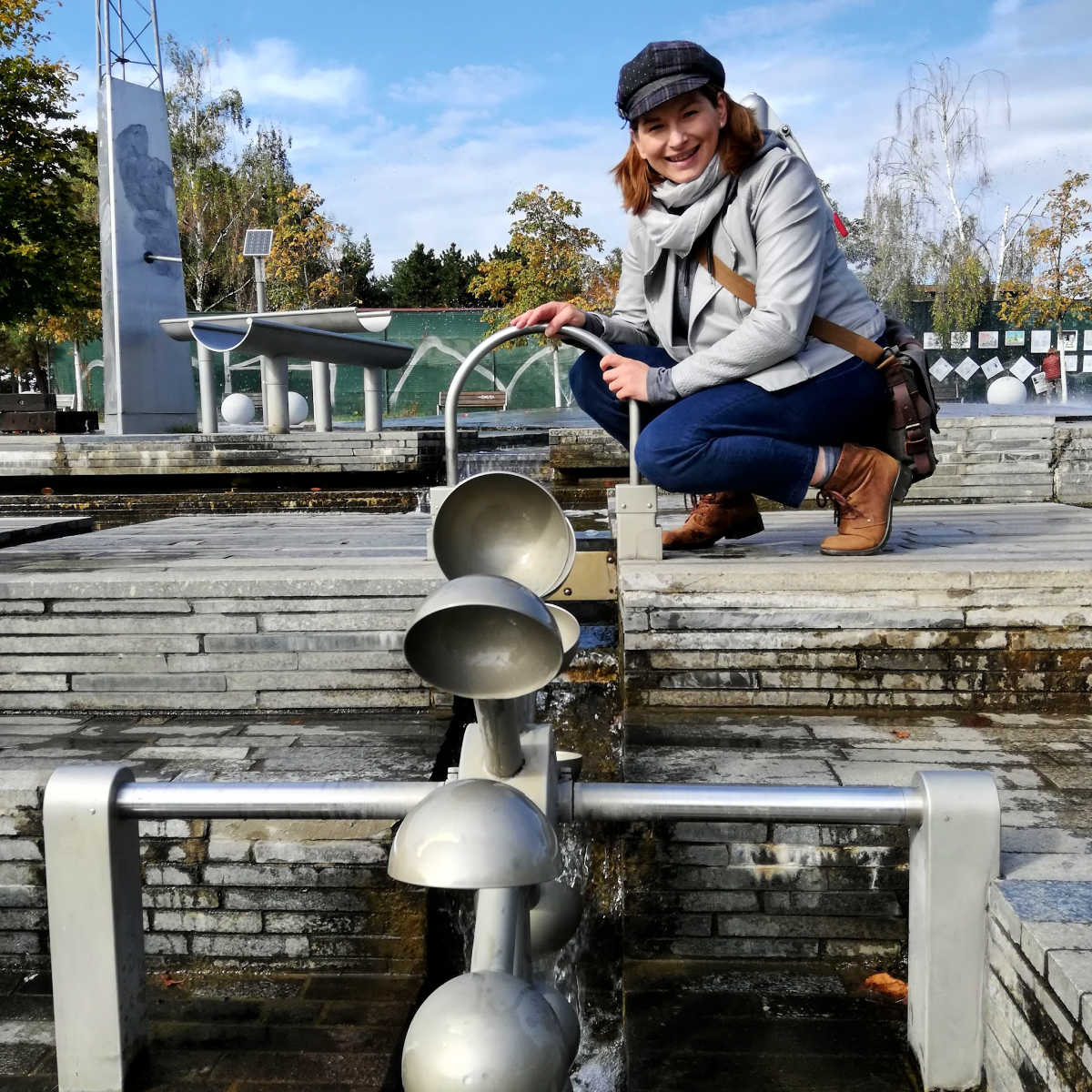
My favourite hidden gems: The modern Malešice Park which has some really fun interactive water installations, which, trust me, are great fun for all ages!
This blog post was originally written on 25 April 2022 and last updated on 3 April 2026


