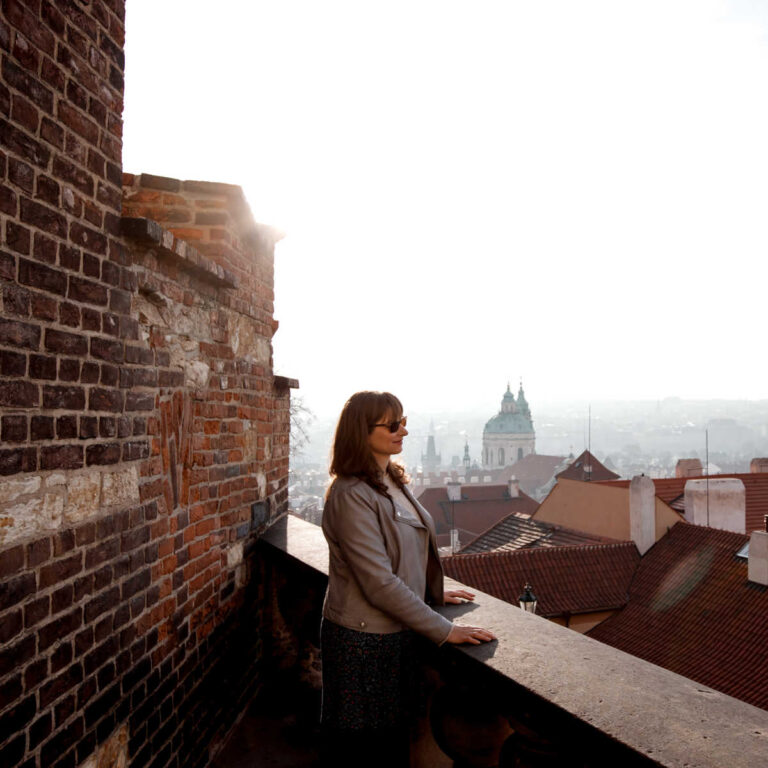
7 days Prague itinerary Prague by a local – ultimate guide with top attractions & hidden gems
The good thing is that if you have seven days in Prague, you can see the top Prague attractions and also some of the lesser visited parts of the town (which is a great way to avoid crowds in Prague, by the way), such as Karlin, Zizkov, Holesovice or Vysehrad.
There is a lot you can see in seven days in Prague, but make sure that you allow enough time for breaks and have plenty of rest as you will be doing quite a lot of walking each day. I think, having a whole week in one town is great, because you can take things a little slower and don’t have to rush from place to place.
But, even when you have 7 days in Prague, I would still suggest choosing which attraction you want to visit inside. This is because somewhere like Prague Castle can easily take a whole day if you want to visit everywhere. You might like to walk around instead and save your time (and money) to visit somewhere else instead.
Some of the main attractions in Prague also have fairly moderate to high entry fee, which is why I think, it’s worth looking into Prague Visitor Pass. The pass is a great value if you are thinking of visiting many attractions indoors and also includes public transport.
But, don’t worry if you are on a budget, as I’ve also included attractions that are accessible free of charge. I’ve also included my favourite places, attractions and cafes I like to visit in Prague.
Since I live in Prague, I’ve also added places I personally like as I wanted to show you a Prague that’s a little less touristy.
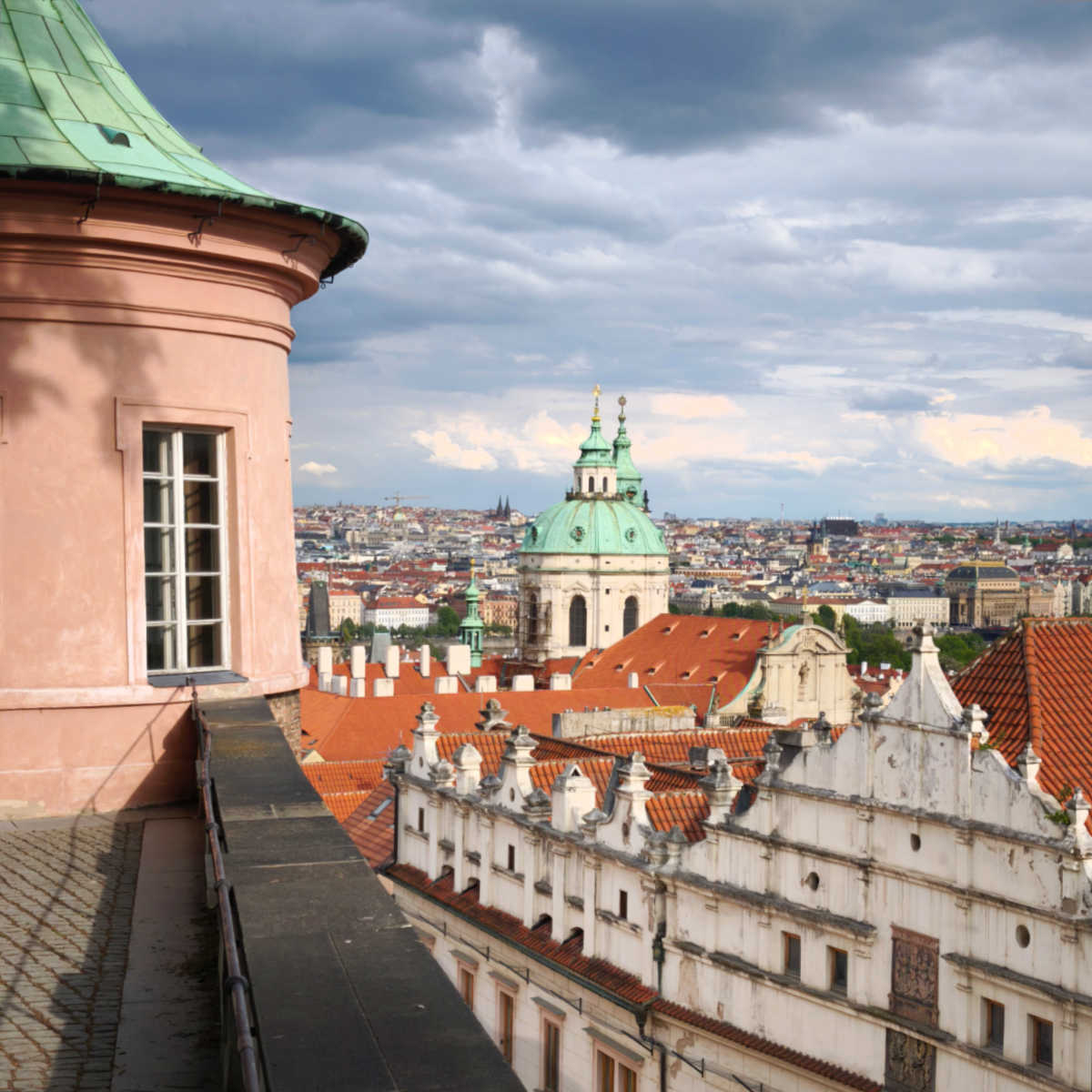
How to use my 7 days itinerary guide to Prague
I’ve probably included more attractions than you can see during one day to give you options to see what you like. I’ve kept my suggestions close together so that you can skip and move to the next attraction as you wish.
There is only so much I can add to each day and about each attraction, but I’ve written more detailed guides to most attractions, I’ve mentioned. If you see a link (underlined text) just click to find out more.
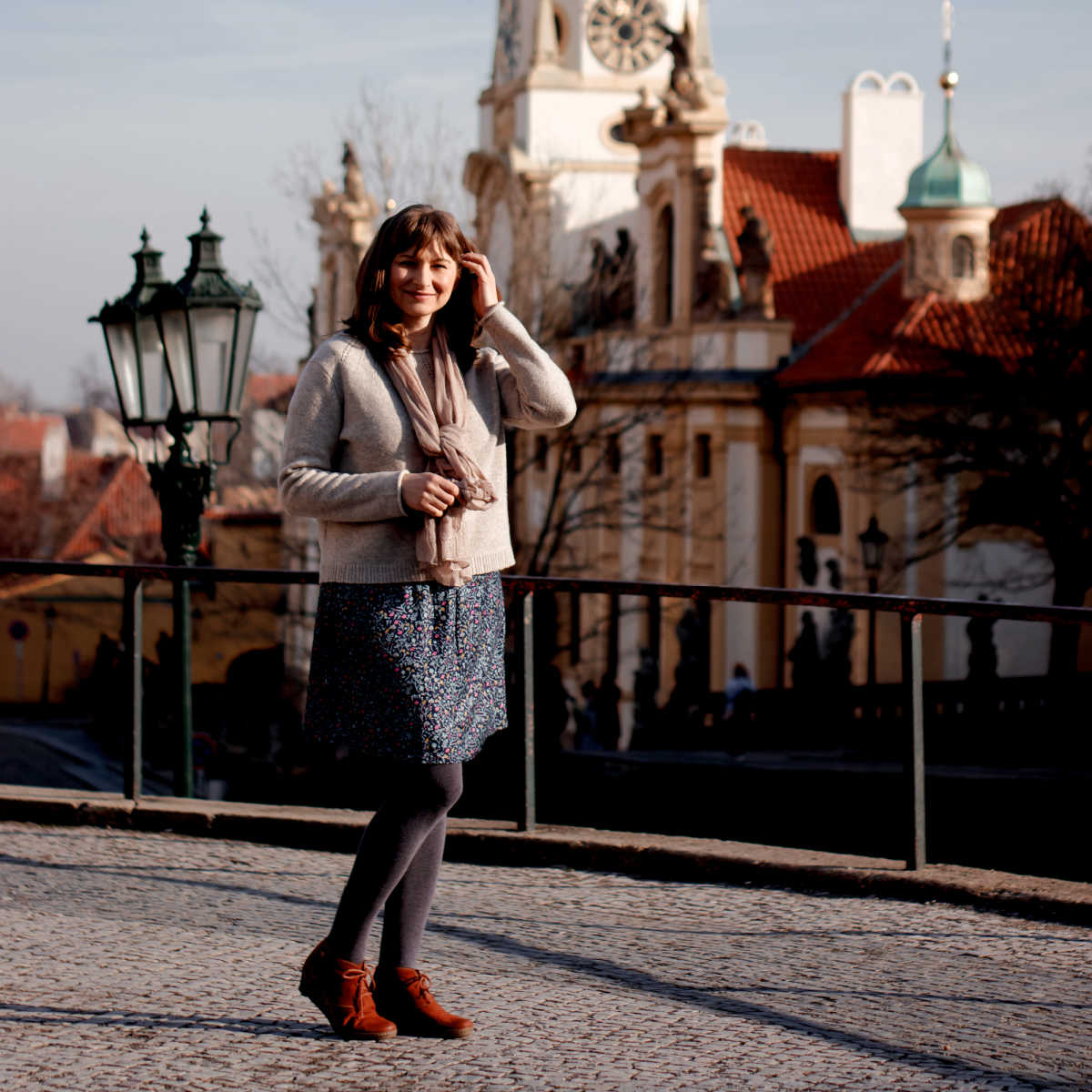
7 days Prague Itinerary (Summary)
Day 1 – The Old Town Square & Charles Bridge
Main Stops: Old Town Square – Ungelt Square – Klementinum – Charles Bridge – Vojanov Gardens – Waldstein Garden, Furstenberg Garden or Gardens’ Under the Prague Castle
Day 2 – Prague Castle & Lesser Town
Main Stops: New World Area – Hradcany – Prague Castle – Golden Lane – Nerudova Street – Lesser Town – St.Nicholas Church – Kampa Island – John Lennon Wall
Day 3 – Jewish Quarter & Wenceslas Square Area
Main Stops: Jewish Quarter – Paris Street – Convent of St. Agnes – Powder Tower – The Municipal House – Na Prikope Street Shopping Galleries – Wenceslas Square – National Museum – Lucerna Passage – Franciscan Garden
Day 4: Vysehrad & Smichovska Naplavka
Main Stops: Vysehrad Castle Grounds – Naplavka – Emauzy Monastery – Botanical Garden at Karlov – Charles Square, Operation Anthropoid Museum – Ginger & Rogers Dancing House – Slavic Island – Shooters Island – National Theatre – Cafe Slavia
Day 5: Petrin Hill & Strahov Monastery
Main Stops: Kinsky Garden – Hunger Wall – Petrin Hill Park – Lookout Tower – Strahov Monastery
Day 6: Zizkov & Karlin
Main Stops: Jiriho z Podebrad Square – Zizkov TV tower – Army Museum – Vitkov National Monument – Karlin Army Barracks
Day 7: Letna & Stromovka
Main Stops: Letna Park – Technical Museum or Farming Museum – Hanau Pavilion -Stromovka Park & Exhibition area – Holesovice Market – Holesovice Marina
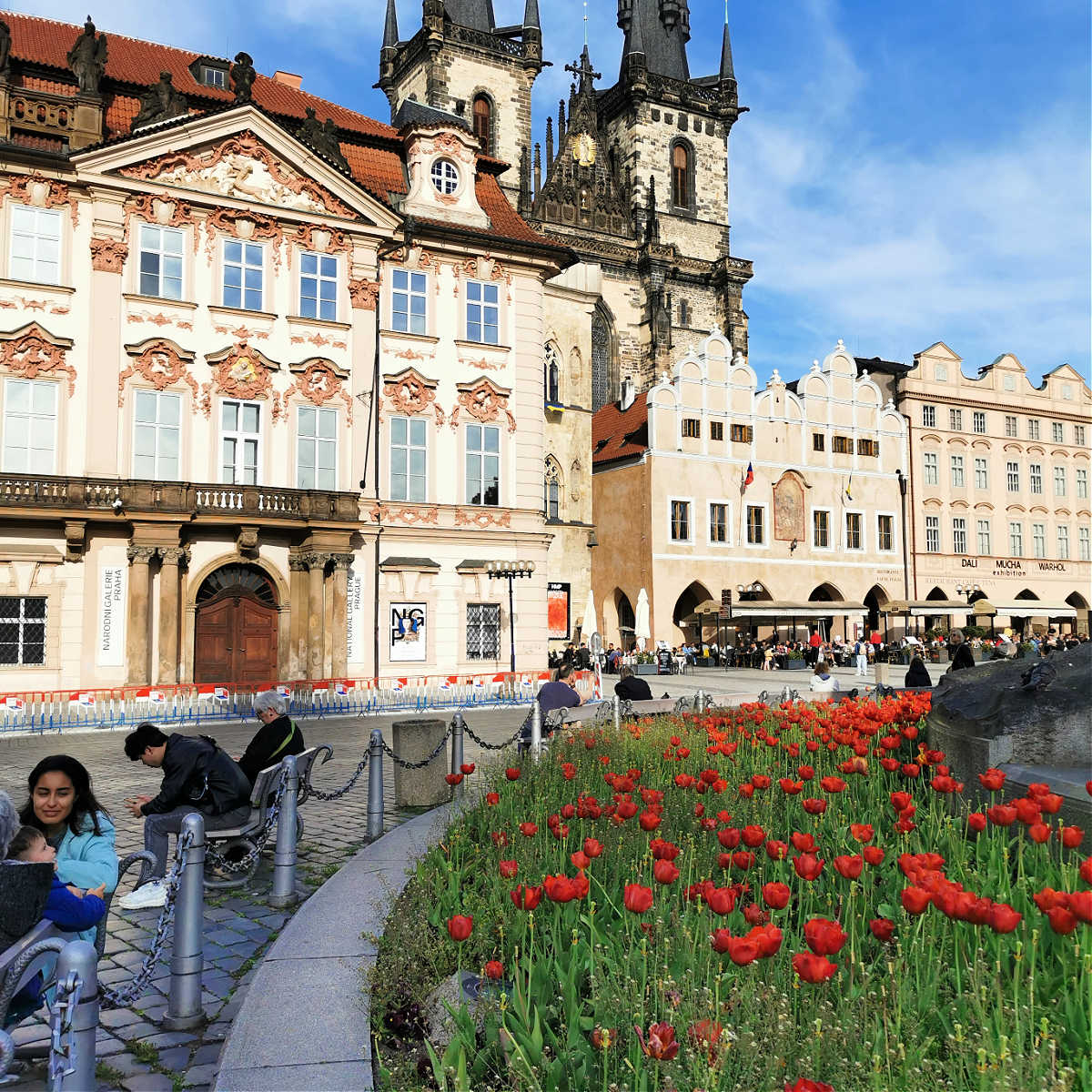
Day 1 – The Old Town Square & Charles Bridge
Main Stops: Old Town Square – Ungelt Square – Klementinum – Charles Bridge – Vojanov Gardens – Waldstein Garden, Furstenberg Garden or Gardens’ Under the Prague Castle
Optional Attractions: Golden Ring House Museum, Maddame Tusseau, Chocolate Museum, Charles Bridge Museum, Slivovice Museum
Starting Point: Staromestska Underground Stop or Tram Stop (17, 18, 2, 3) and then 5 minutes walk to Old Town Square
Optional – evening walk around the Charles Bridge to take great photos of the famous bridge.

Day 1 – Morning
We will start our first day in the heart of Prague at Old Town Square, where you can admire the beautiful Gothic, Baroque and Romanesque houses around the square. The Astronomical Clock on the Old Town Hall is what everyone comes to see and if you arrive just before the whole hour you will be able to see the clock’s figures moving as they come out from little doors and turn around.
There is also a pretty amazing view from the top of the Town Hall and if you decide to visit, you can also learn more about the Astronomical Clock mechanism and it’s history. The tickets costs 350 CZK (concessions available) and you will need about 90 minutes to comfortably see the whole attraction.
For a morning coffee, the best place I can recommend right on the square is the cafe at the Scout Institute, which is right next to the house ‘U Minuty’ with the beautiful black and white figures decorations. The house ‘U Minuty’ was also previously a house, where Franz Kafka, famous Czech writer lived and you can follow his life in my guide to Kafka’s life in Prague and visit other houses and places where he lived, worked and visited.
Next, we will head across the square to the Tyn Church, whose Gothic spires dominate the Old Town Square. The Tyn Church is open during the day and entry is free like in many other beautiful churches in Prague. I always find this church quite dark inside and not as nicely decorated as some of the others, but that’s just because I really like the churches built by the Czech architect Santini, which are full of light and are elegantly decorated inside.
Behind the church, you’ll find Ungelt Square, a historic marketplace with charming medieval architecture that is a complete contrast to the busy main square. I usually stop here for another coffee at the cute retro car serving coffees to go.
This square has also one of my favourite shops to get souvenirs from Prague – the Botanicus. They sell the most amazing soaps, shower gels and other cosmetics all made locally in Czech Republic from natural ingredients, flowers and herbs.

The cobbled streets around the Ungelt square are pretty special, so take your time to explore them and then head towards the Celetna Street to see the House of the Black Madona. This building is an excellent example of Cubist architecture and inside you will find the Czech Museum of Cubism and also a stylish cafe with the most amazing looking cakes (try the Czech traditional sweet pastry ‘Vetrnik’ made in a ‘cubist’ style as a square instead of round circle, it’s delicious!)
Next, we will retrace our steps towards the Karlova Street and walk through the Klementinum Area, a historic complex that includes a stunning Baroque Library. You can join a guided tour to explore this beautiful site and climb the tower. The tickets are 300 CZK (concessions are available) and the tour lasts about 60 minutes. I often find, that the tickets are sold out during busy times, so it’s worth booking ahead.
Day 1 – Afternoon
From the Klementinum, follow the original King’s Coronation Route, a historic route that takes you through some of Prague’s most picturesque streets, traditionally used by Bohemian kings on their way to their coronation at Prague Castle.
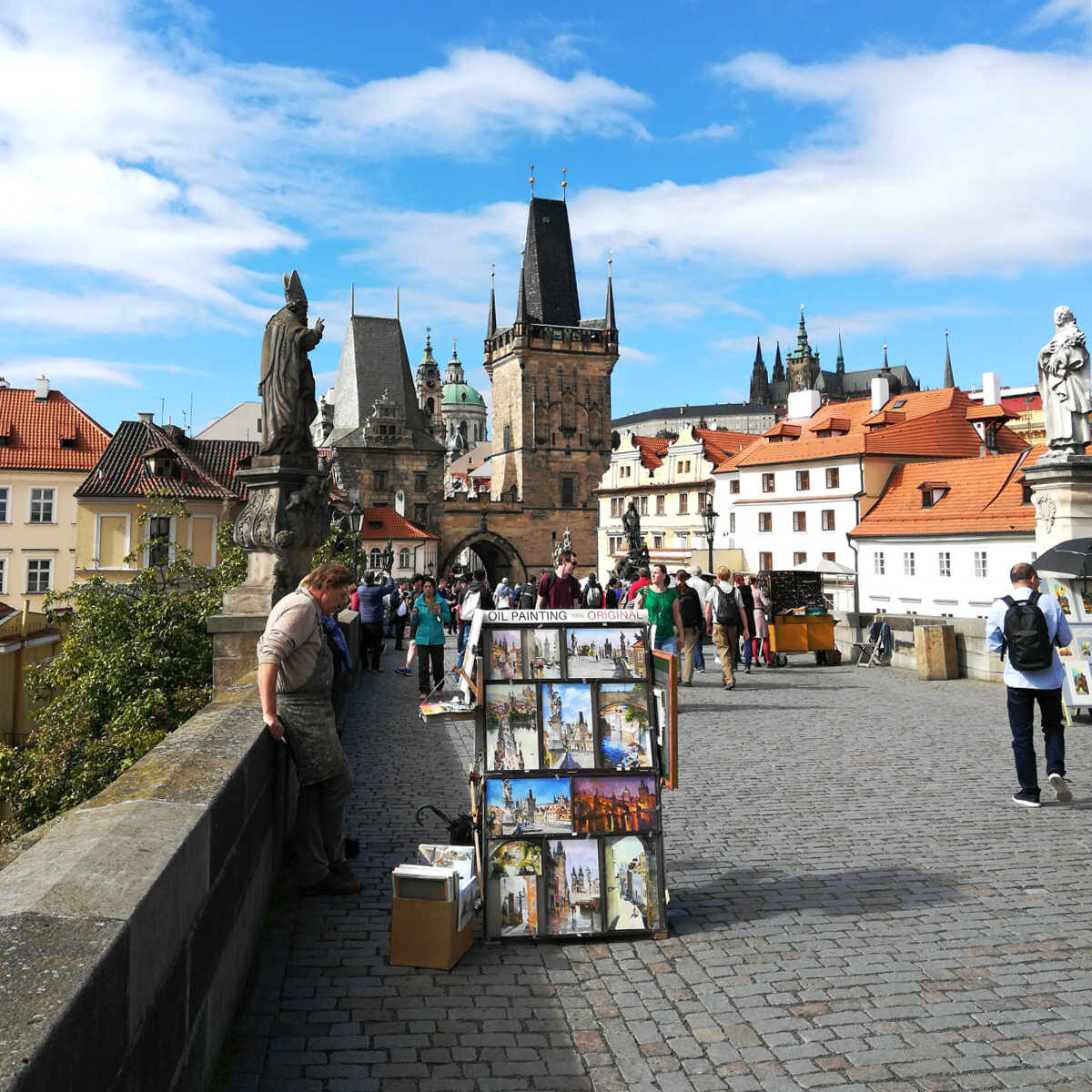
Next, you will cross the iconic Charles Bridge, decorated with statues and with a great views of the Vltava River and the Prague Castle.

If you have the time, you can also climb the Old Town Bridge Tower or the Lesser Town Bridge Tower to see the Lesser Town and the Castle close up and of course with a great view of the Charles Bridge too. Both towers are open daily and if you arrive within 1 hr of opening time (before 10 am) you get 50% of your ticket!
Once you are across the bridge, turn right through the little side streets and take a relaxing stroll in the serene Vojanov Gardens, one of the oldest gardens in Prague, where you can see colourful peacocks and have a picnic on the grass. There is also a little cafe and more importantly public toilets!

There are also several restaurants and cafes in the area (mostly quite pricey), but I’ve really liked the traditional food (and the atmosphere) in the Seminar Cafe (U Luzickeho Seminare 15) and of course my favourite cafe with boho decor called Cocovanka ( U Luzickeho Seminare 107/34). Cocovanka is quite small, but I usually find a space inside and they have the most amazing homemade sandwiches and cakes, together with a great coffee!
After your garden visit, walk slightly back to Cihelna Street to visit a very special Gingerbread House Shop to indulge in some delicious and intricately decorated gingerbreads (the sweet honey smell in the shop is amazing!)
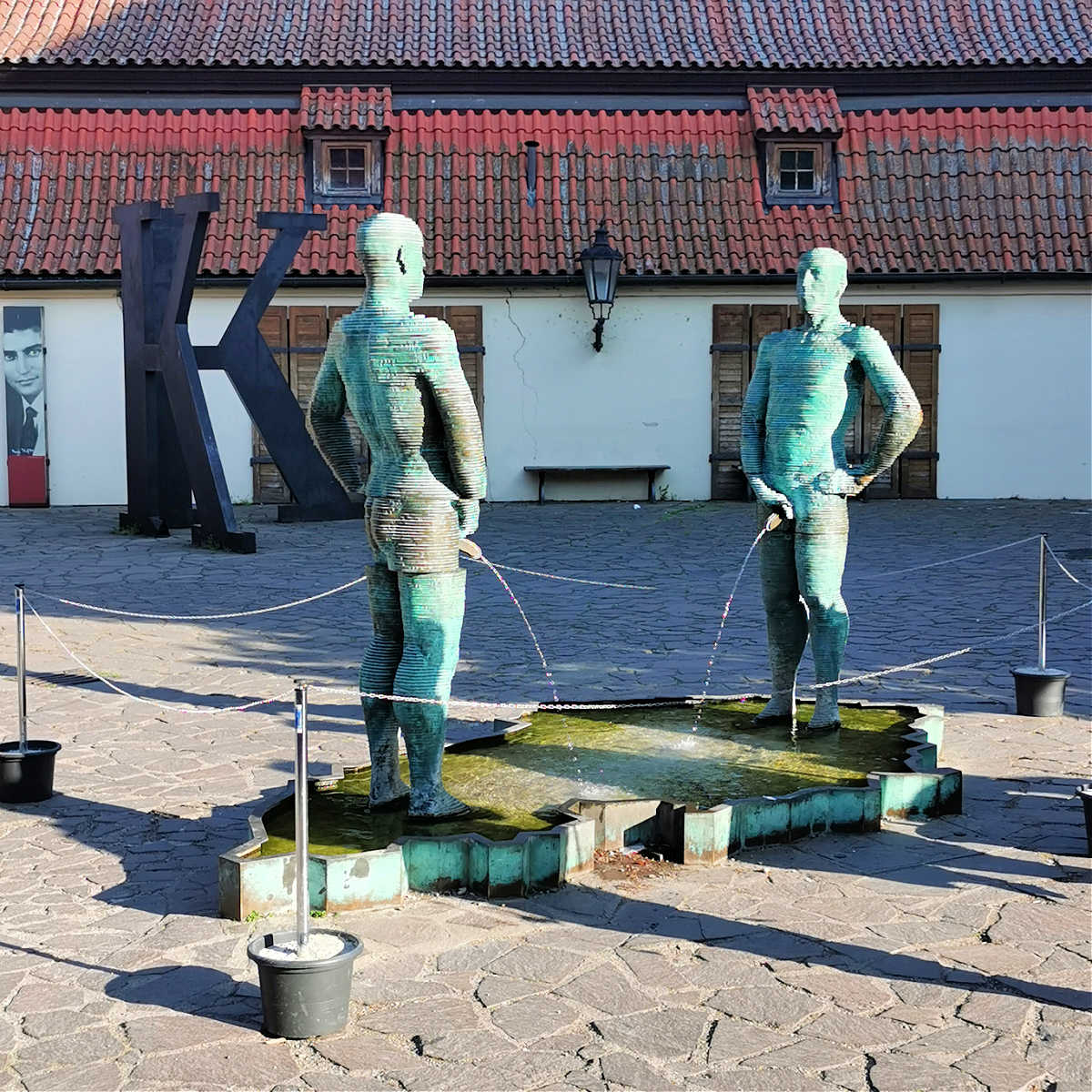
If you are a literary fan, you can pop in to the Kafka’s Museum opposite which has exhibits on the famous writer’s life and work. In front of the museum is one of the modern art sculptures by artist David Cerny which shows two naked men urinating into the pool which is in the shape of Czech Republic.

Don’t miss a visit to The Narrowest Street in Prague (entrance is from the same square – U Luzickeho Seminare 24), which leads you to the Vinarna Certovka, which is so narrow it has a traffic light for pedestrians. One of my favourite fun facts about Prague is that it was never meant as a street, but it’s purely a gap between the houses to prevent the spread of fire in medieval times.
Carry on walking towards Malostranska Underground and Tram station via U Luzickeho Seminare. If you fancy a different kind of stop, I recommend a drink in Slivovice Museum. I like the courtyard restaurant, which is free to access without a museum ticket and you can buy taster samples of all the different Slivovice drink or taste a really good traditional pub food. I also had the plum lemonade, which was refreshing and tasted great!

We will stay in the gardens for a little longer, because just round the corner there is the Wallenstein Garden, which is a beautiful Baroque garden with sculptures, fountains, and more peacocks. If you are lucky, Wallenstein Garden often put on free concerts in the summer and it’s the perfect way to finish your first day in Prague. Access is now directly next to Malostranska Underground Station entrance or from Letenska Street

If time allows, you can also explore the Furstenberg Garden or the Gardens Under the Prague Castle, which have lovely views of Petrin Hill and the historic central Prague. I almost prefer Furstenberg Garden because it’s a lot less busy, the entrance is only 50 CZK and you can also walk up to the Old Castle Stairs through it. Both gardens are open during main tourist season (Spring – Autumn) and the entrances are from Valdstejnska Street behind the Malostranska Underground Station.
Day 2 – Prague Castle & Lesser Town
Main Stops: New World Area – Loreta Church & Monastery – Hradcany – Prague Castle – Golden Lane – Nerudova Street – Lesser Town – St.Nicholas Church – Kampa Island – John Lennon Wall
Optional Attractions: Toys Museum, Lobkowicz Palace Art Museum, Vrtba Garden, Music Museum, St. Nicholas Bell Tower, Kampa Art Gallery Museum, Werich Museum & Cafe
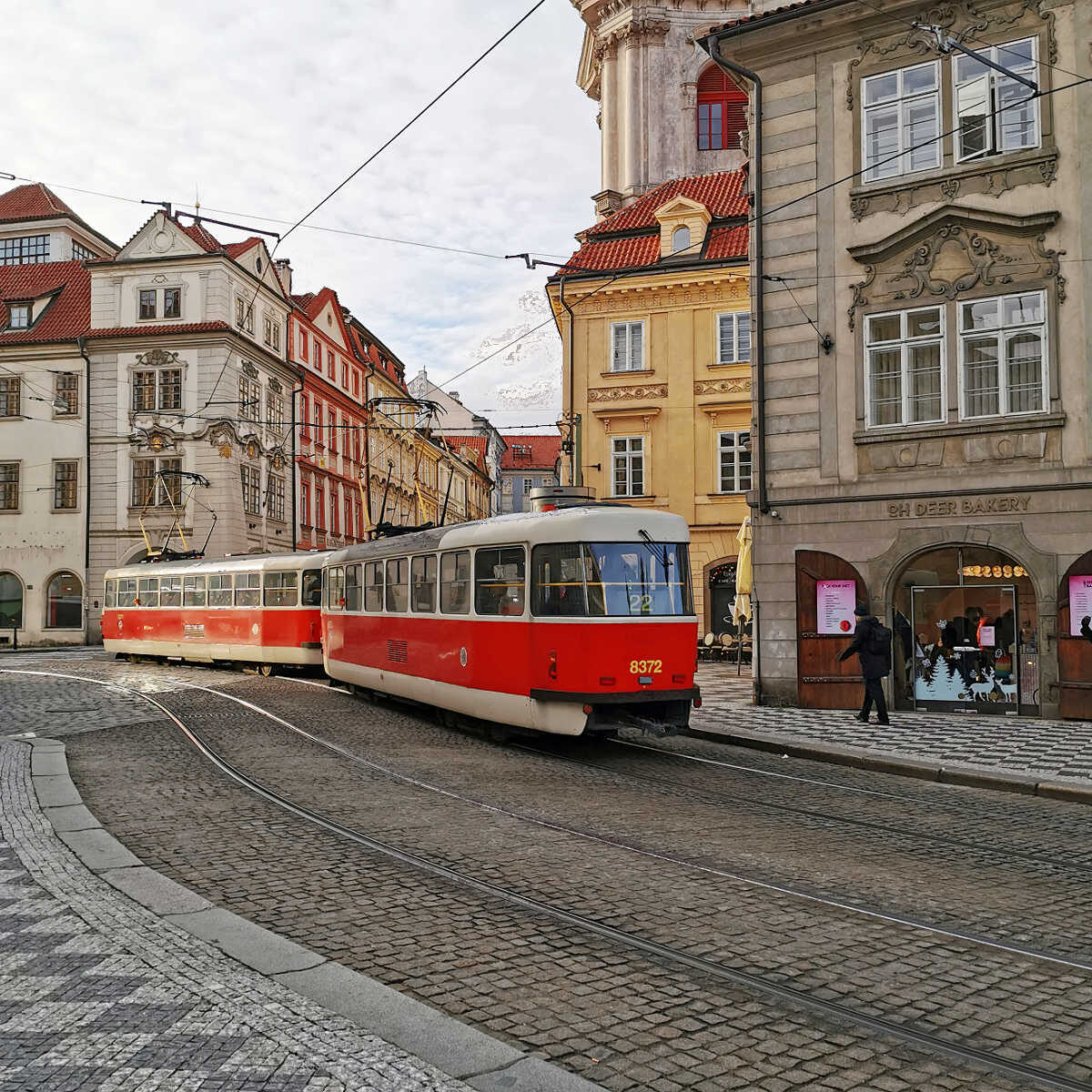
Starting Point: Pohorelec Tram Stop: Take the tram number 22 from the centre of Prague or Malostranska Underground Station
Day 2 – Morning
Today we start at Pohorelec tram stop and my favourite starting point for exploring the Hradcany area and see more than most people who get off at the Prague Castle tram stop.
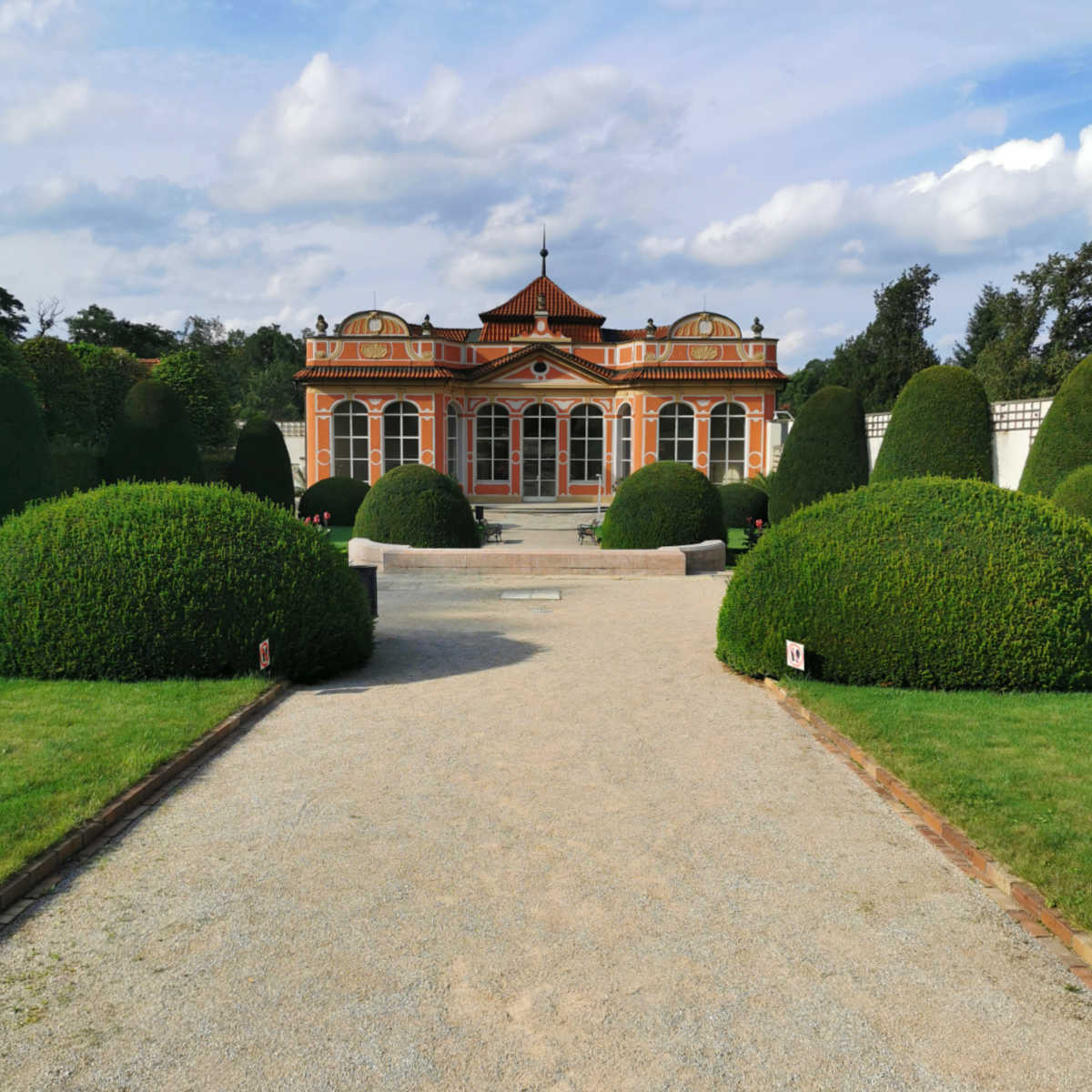
First we will stop at the pretty Czernin Palace Garden, which is a serene and not that well known garden right next to the longest palace in the whole Czech Republic – The Czernin Palace. The garden is open only at the weekends during the main tourist season and it’s completely free to enter.
The palace is now a government building and closed to public, but opposite you can find the beautiful Loreta Church & Monastery. It’s worth timing your visit around the whole hour, because the clock chimes a lovely little tune played by lots of little bells.
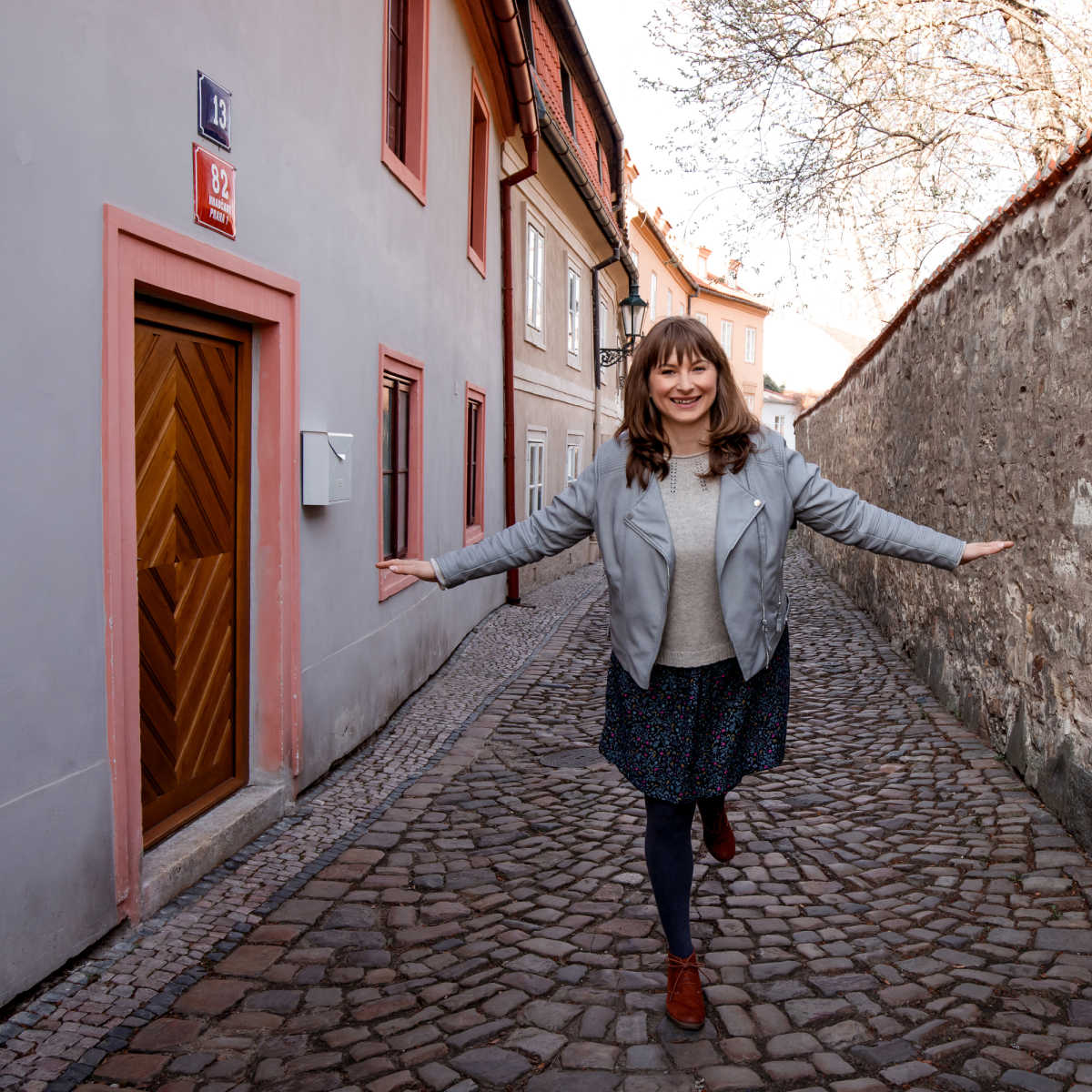
As you turn into the little streets next to Lorreta Square, you are now in the New World Area (Nový Svět), a quaint and less-touristy part of Prague with narrow cobblestone streets and charming houses. It’s a delightful area for a leisurely stroll and some great photo opportunities. There are a couple of places to have a coffee, so if you’ve missed your morning fix, Kavarna Novy Svet is a perfect place to stop.
From there, head to the Hradcany Square, where you’ll finally see the Prague Castle. As the largest castle in the world (confirmed by the Guinness World of Record Book, thank you!), Prague Castle is a must-see.
But, I have to say, that as much as I love walking in the grounds of Prague Castle, I’ve only visited the castle interiors once and they were a little underwhelming. There is no furniture or rooms set out to give you an idea how people used to live there, it’s mainly decorated walls, lots of empty space and tons of information about the history.
Unless you are super interested in the castle and the history, you might like to save yourself 500 CZK and about 3 hrs of your time and just walk around the castle grounds for free by yourself.
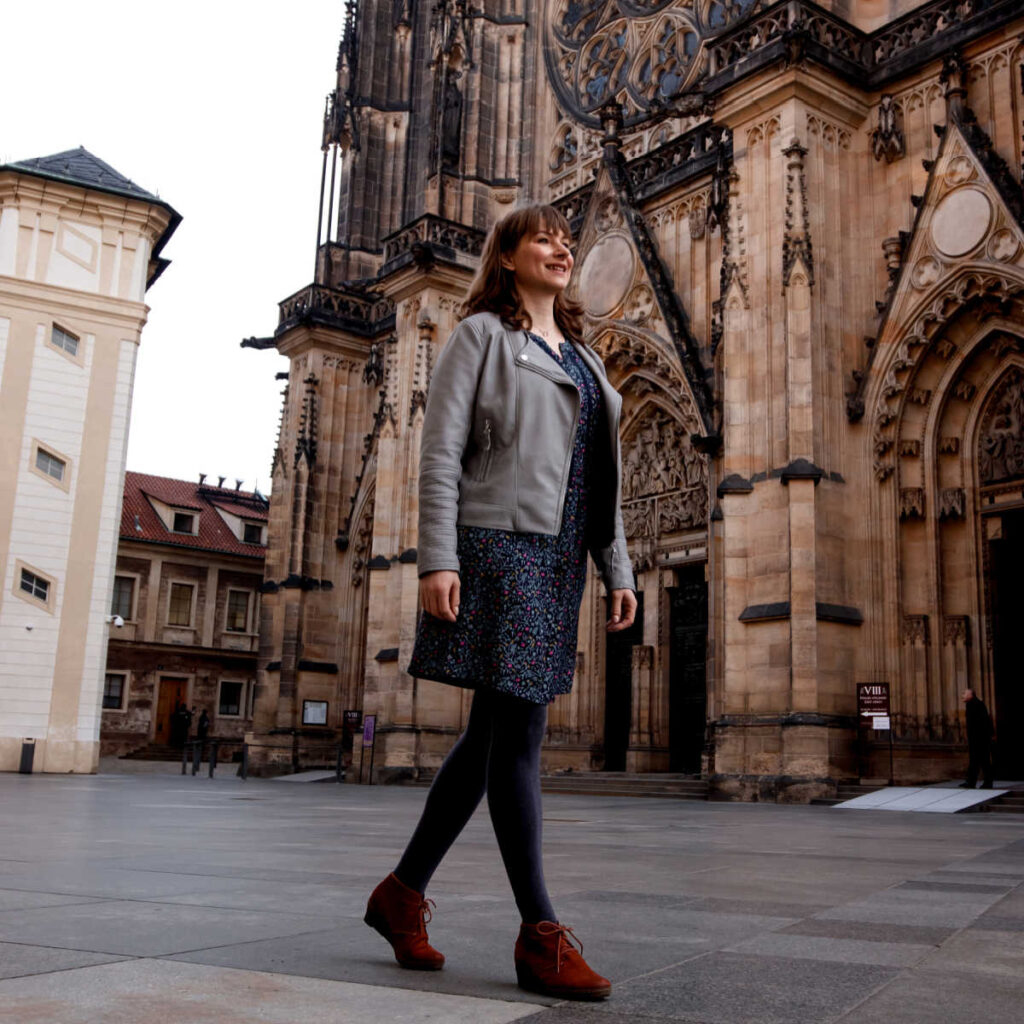
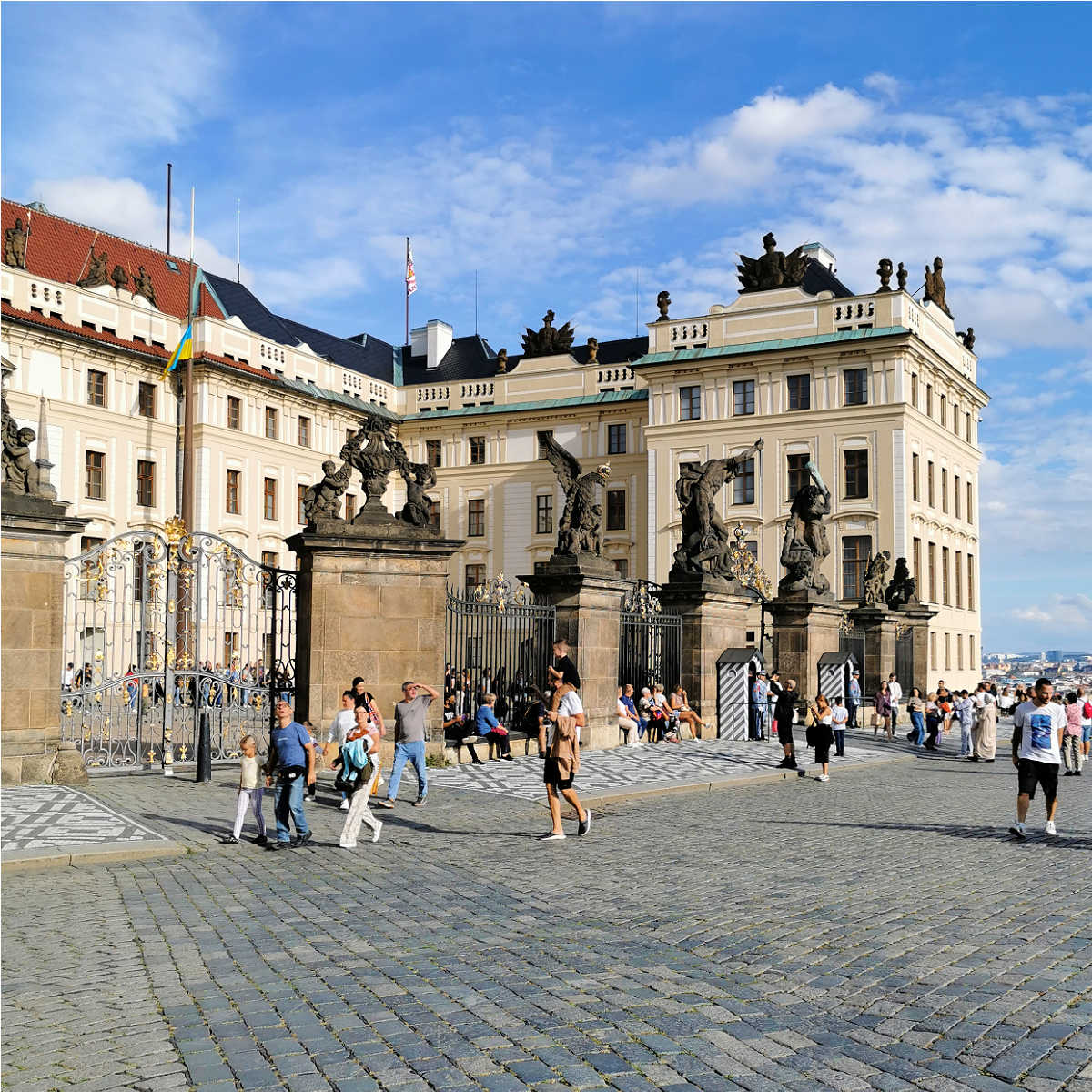
You can easily spend a couple of hours exploring the castle large grounds, including the stunning St. Vitus Cathedral, the Old Royal Palace and the picturesque Golden Lane.
This charming street is lined with colourful houses and back in medieval times, these were used by the castle’s guards and goldsmiths. The entry to Golden Lane is included in the castle ticket or you can come back after 5 pm to see the street for free.
If you fancy an unusual view of Prague Castle, you can climb the St.Vitus Cathedral tower, which is the only ticket that can be purchased separately from the main ticket (200 CZK adult ticket with concessions available).
There are more attractions at the Prague castle to temp you, including the only private palace – the Lobkowicz Palace Art Gallery, Restaurant & Cafe. The cafe has the most amazing view of Prague and if you get the chance to sit at the terrace, it’s definitely worth stopping here for coffee or a light lunch.
If I want to have a lunch at the castle I usually go to Café Šternberk – Mezi řádky, which is hidden in the Sternberk Palace (also a Prague National Art Gallery). It’s not all touristy and the cafe helps people with disabilities, so your money will also go to a good cause.

Day 2 – Afternoon
After stopping for a while to admire the views from the top of the New Castle Stairs, make your way down Nerudova Street, a historic street that leads from the castle to the Lesser Town.
This street is one of the best one see the houses signs, which are painted above the entry doors. You will also find lots of souvenir shops and cafes here. My favourite ones include the ‘Kafe & Hrnky‘ where you can have your coffee, sandwiches or homemade cakes in a small courtyard.

You might have already heard that you should try trdelnik in Prague and if you can move away from the fact that trdelnik is not a traditional Czech pastry and never really was, you can try one of the best trdelniks in the Cafe U Kajetana.
I’ve had one with the plum jam (povidla) and it was pretty good as a sweet bread dough pastry with a cinnamon sugar on the top goes.
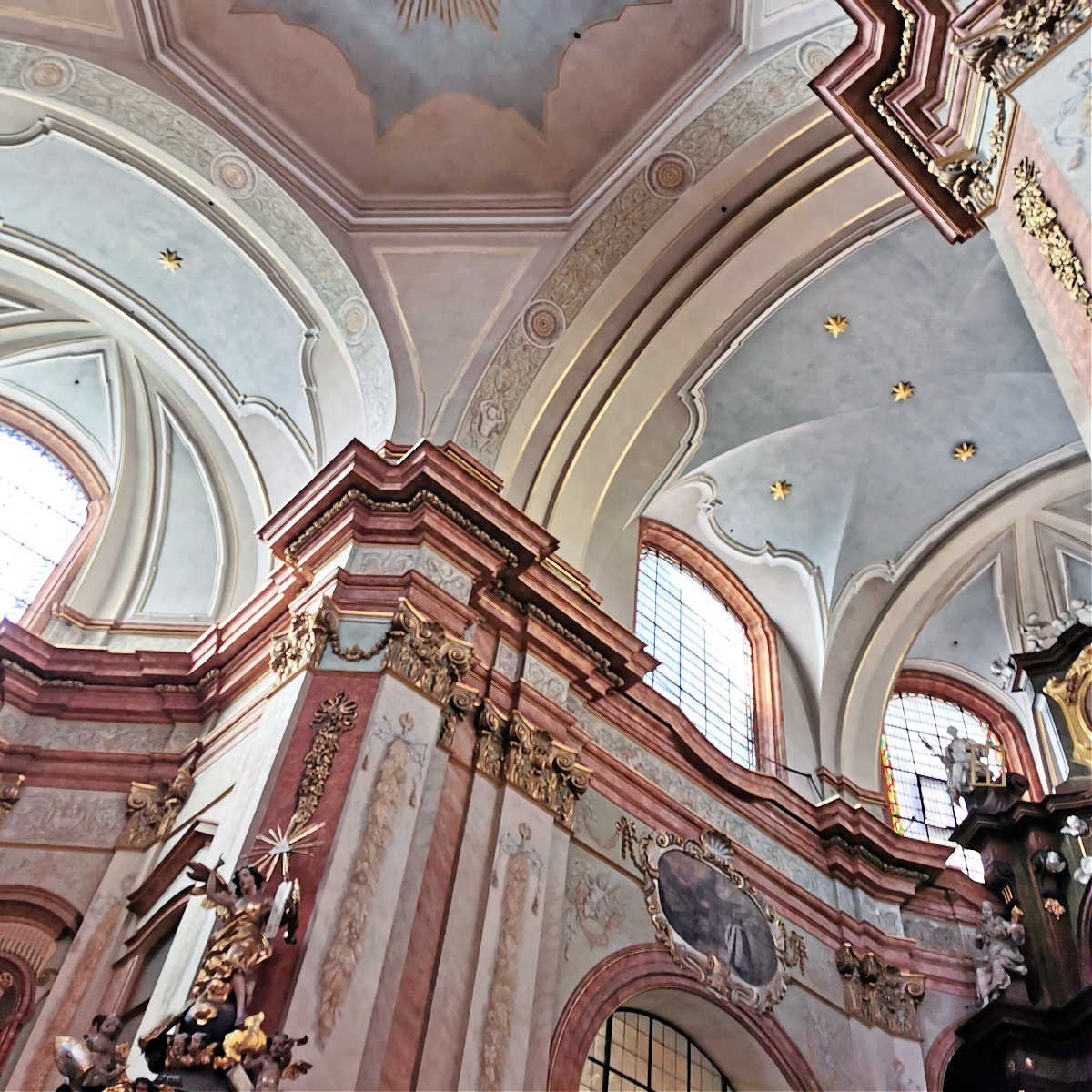
Right opposite, you will find one of the early examples of buildings designed by architect Jan Blazej Santini, the Church of the Virgin Mary – At the Theatines. The architect also designed two palaces on Nerudova Street (Thun Palace) and also lived on the same street. He was buried in a church that doesn’t exist anymore, but you can see a commemorative plague on the wall just below the stairs to Jansky Vrsek.
There are more quirky streets as you walk down towards the Lesser Town Square, filled with picturesque houses and more shops. If you are interested in baroque architecture, then I’d suggest that you visit the St.Nicholas Church, which is the most beautiful of baroque churches in the whole Czech Republic.
Right next door to the church, you can climb the St.Nicholas Bell Tower which has a hidden spy room on the top with fabulous views of red roofs of Lesser Town houses below.
If you have the time, I recommend that you walk through the Snemovni Street until you find quiet square with a tree and local’s wine bar (Zasivarna u Fify, Valdstejnske Namesti 163/2). I always love how peaceful this little square feels, probably because the street doesn’t lead anywhere. In the past, this was one of roads leading to the castle, but later the gardens under the castle were built and the road was blocked with a house.
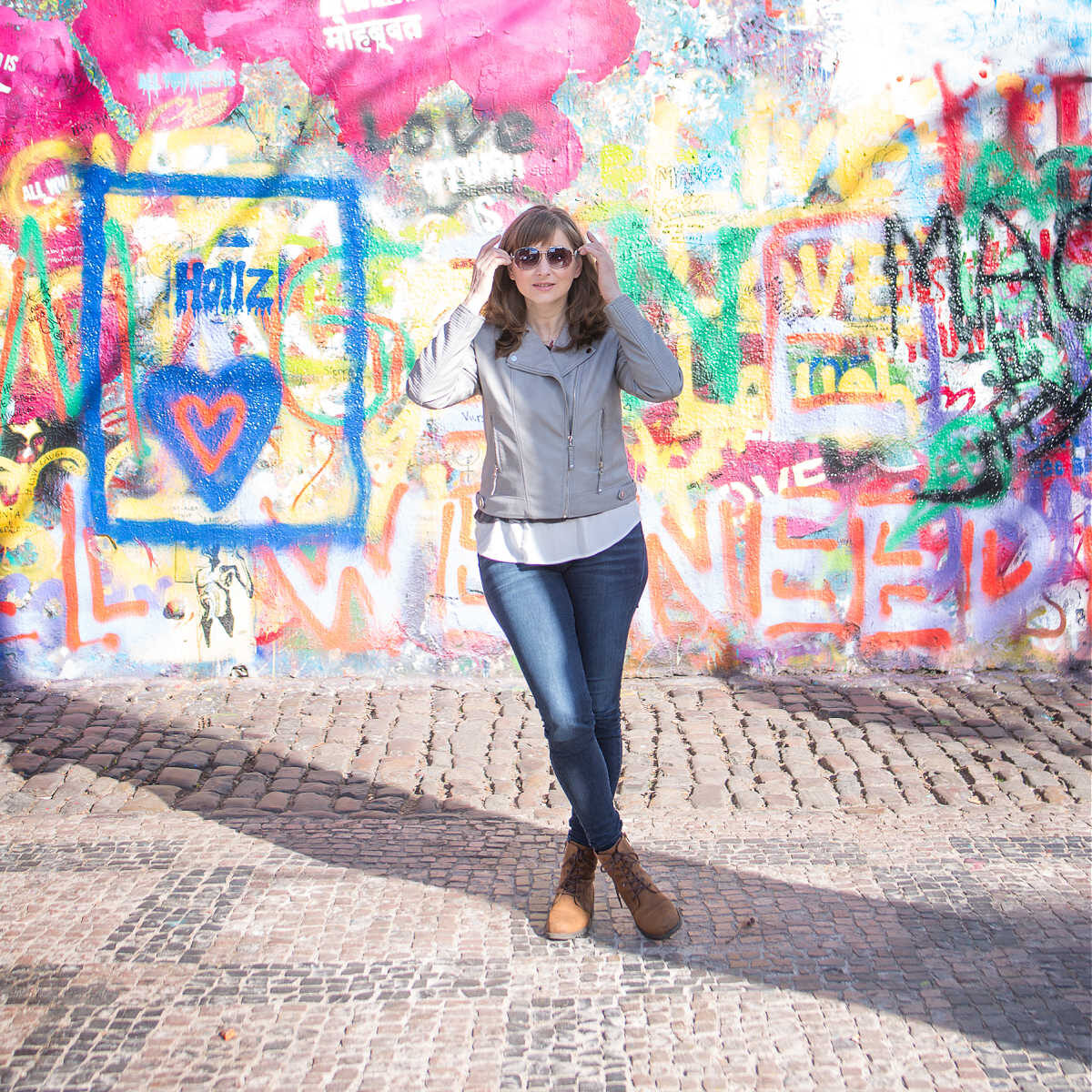
We will finish today with a visit to nearby Kampa Island, which is another peaceful oasis in the heart of the city. You can stroll along the riverside and enjoy the views of the Charles Bridge and the Vltava River.
I like to stop at Rybarna Cafe, which is also run by the Scout’s Institute or if you fancy something a little more upmarket the cafe at the Werich Museum has the most amazing pastry cakes and a good coffee.
Whilst you are there make sure that you also visit the John Lennon Wall, which is a tribute to the famous musician and a symbol of peace and freedom. The wall is constantly changing as the artwork develops, so it might look slightly different from the picture in your guide book.
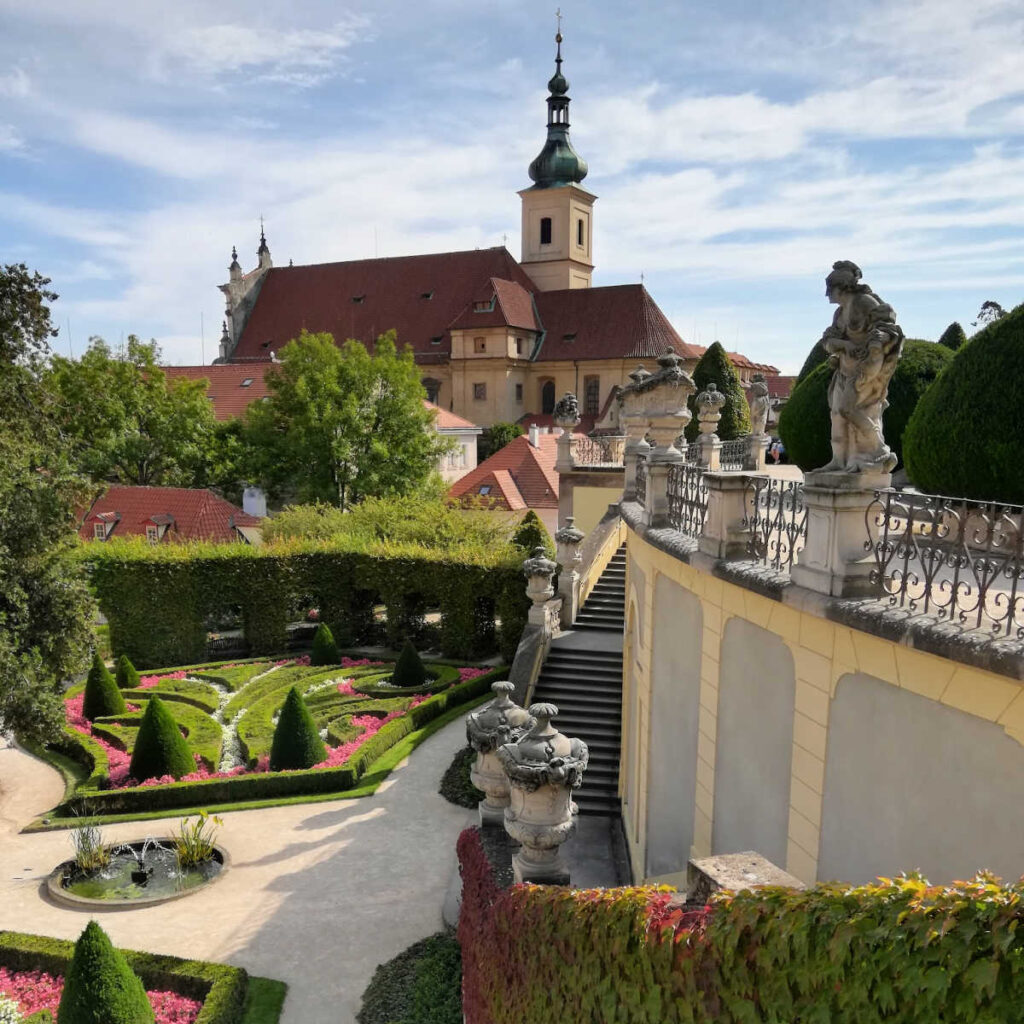
If the time permits, I’d also recommend to visit one of my favourite gardens – the Vrtba Garden (Karmelitská 25). It’s easily one of Prague’s most beautiful Baroque gardens, It’s hidden behind houses and has several terraced gardens, sculptures, and stunning views of the city. There is moderate ticket entry and the garden is often open until 7 or 8 pm in the summer, so it’s the perfect place to finish your day.
Day 3 – Jewish Quarter & Wenceslas Square Area
Main Stops: Jewish Quarter – Paris Street – Convent of St. Agnes – Powder Tower – The Municipal House – Na Prikope Street Shopping Galleries – Wenceslas Square – Franciscan Garden
Optional attractions: National Museum, Museum of Communism, Palladium Shopping Centre
Optional areas to explore: Riegrovy Sady in the evening for a beautiful sun set, concerts & beer garden
Starting Point: Staromestska Underground Station or tram stop (17, 18, 2, 3)
Day 3 – Morning
Today we start our day in Prague’s historic Jewish Quarter – Josefov district. You have a couple of options here, well three really…
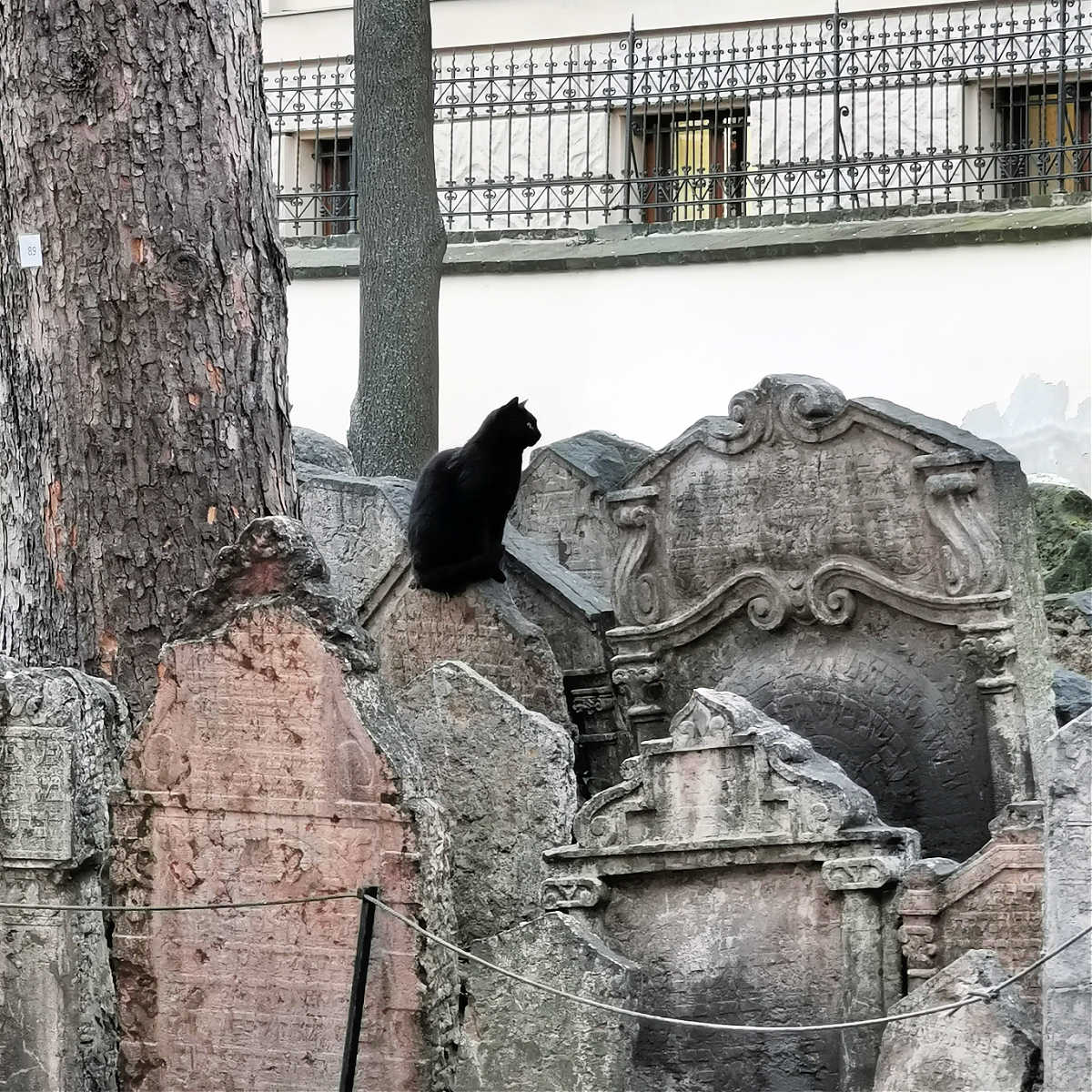
If you want to have a look inside the synagogues, museum and the old cemetary, there is only one ticket combining all the attractions and costs around 600 CZK adult (concessions available). In my experience, the visits can take easily 2-3 hrs or more as there is so much to see and you will definitely get a good understanding of the history of Jewish community in the Czech Republic and Prague.
The second option is to walk around the historic Jewish Quarter, to see all the synagogues from the outside, look through the gates to the old Jewish Cemetery and read a guide book (or my blog!) to learn more about the Jewish community in Prague.

On top of that (as a third option), I’d recommend visiting the Jerusalem Synagogue (Jindriska Street), which is the only one where you can buy individual ticket for. There are other Jewish cemeteries in Prague, that you can visit for free. These are outside the centre of Prague, for example one is next to the Zizkov Tower in Prague 3 and the other one is at Olsany (Zelivskeho Underground Station) Prague 10.
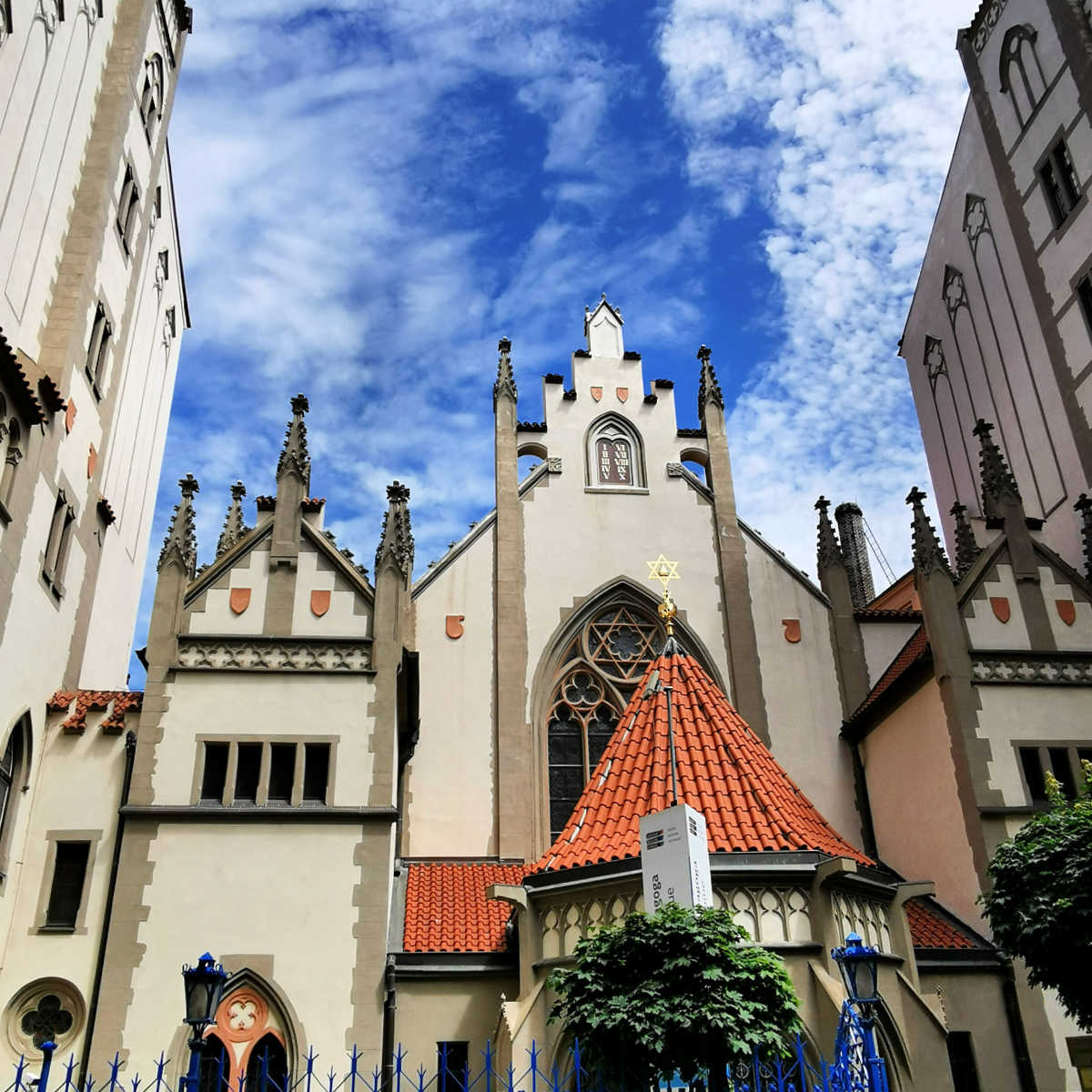
The Josefov district is the smallest official area of Prague. The original Jewish Ghetto was condemned to “sanitation” as a poor district at the end of the 19th century. Only a few buildings remain from the ghetto, including the Jewish Town Hall, the Old Jewish Cemetery and six synagogues: Klaus, Maisel, Pinkas, Staronova, Spanish and High Synagogue.
The Old-New Synagogue is closely linked to the famous story about Golem, who’s creator is buried at the Old Jewish Cemetery.
If you are interested to learn more about the Jewish history, you can also visit more Jewish sites outside Prague, such as the Jewish Quarter in Kolin or synagogues in Plzen.
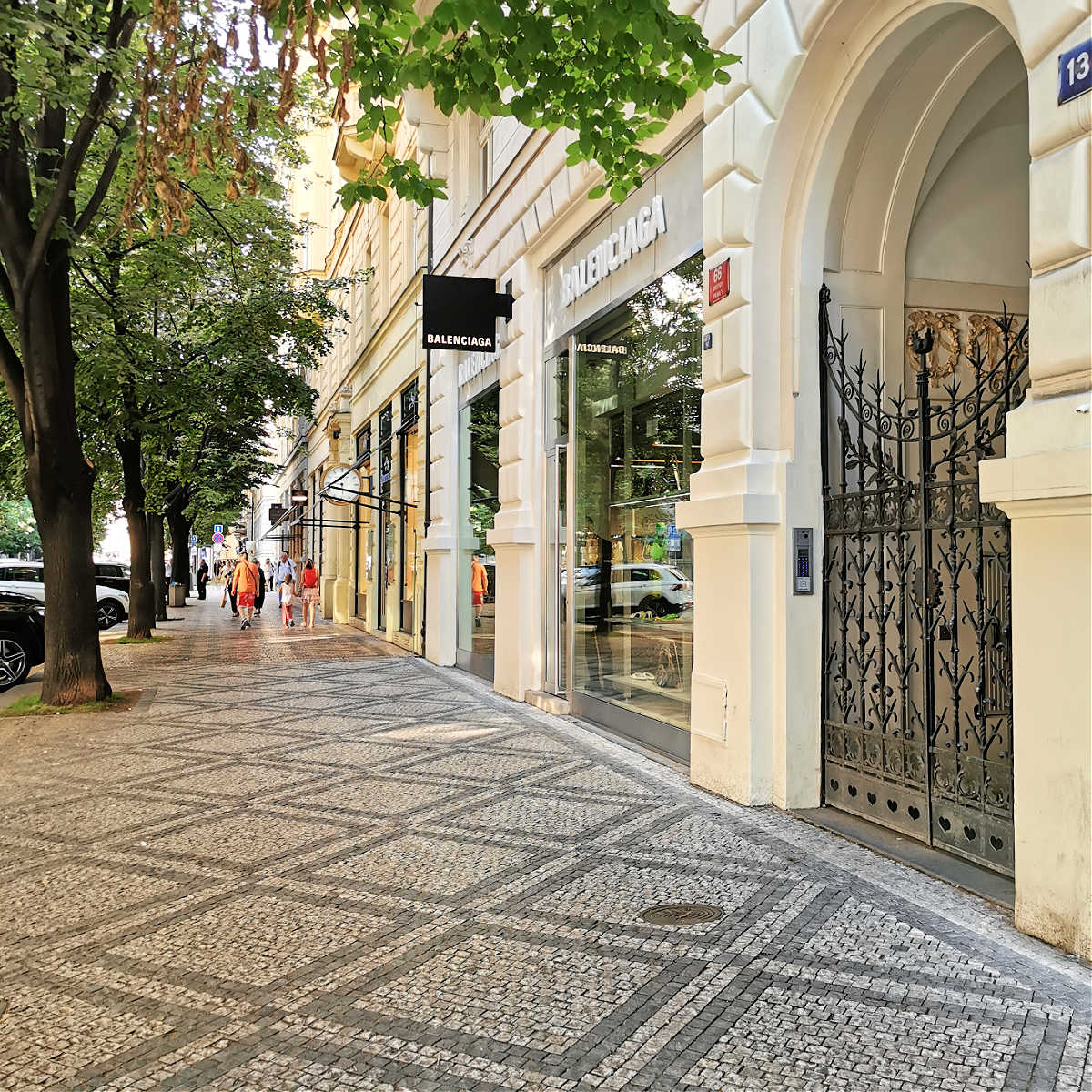
One street you can’t miss is the Paris Street (Pařížská Ulice), which is one of Prague’s most luxurious shopping streets, lined with high-end boutiques, cafes and elegant buildings.
This street leads you back towards the Old Town Square, but today we will walk through the back streets, which have more local cafes, independent shops and local restaurants.
Keep to Siroka Street, where you can see the Spanish Synagogue and then walk through either ‘V Kolkovne’ or ‘Vezenska’ to get to a small little square. Explore the streets around nad continue through U Obecniho Dvora (or Hastalska and then Anezska) until you get to one of the best art galleries in Prague – Convent of St. Agnes.
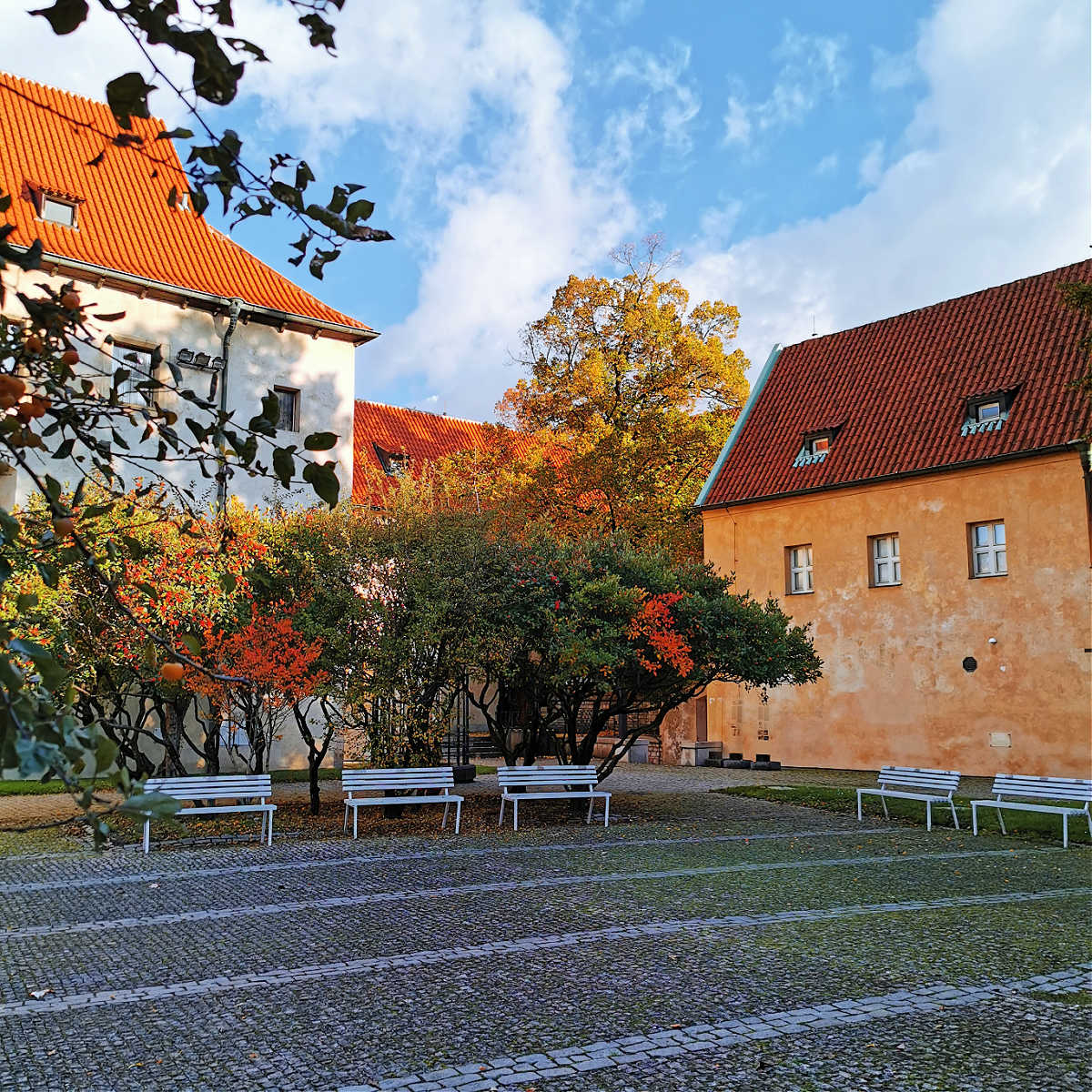
If you are interested in medieval paintings and statues, then this is the best art gallery to visit, but I would like to suggest that you continue to Kozi Street and then to Na Frantisku to get to the back of the Convent of St. Agnes. There is a cloister garden, church of st Salvator and more buildings excavated from where this part of the Prague was a convent with bustling streets behind.
I absolutely love this corner of Prague, it’s so peaceful there and the best thing is it’s all free to access. As you walk around you can get right to the back of the museum and sit in the garden which is part of the museum cafe – Anezka Cafe. Last time I visited it was a warm autumn day and I sat there with a hot cup of coffee reading a book, which was a complete bliss!

After that I usually walk through the garden to Rasnovka and then through Hastalska and Rybna back to the Old Town Square or through Benediktska Ulice to the back of Kotva Department Store and then to Namesti Republiky and the Municipal House.
As you walk through the streets, you will find more local shops, cozy cafes and restaurants like the famous ‘Nase Maso‘ where you can choose your meat first before they cook it for you.
If you are ready for lunch, my favourite cafes near by include Cafe Soukenda (Soukenicka) or Cafe at Kampus Hybernska. Both are very laid back, mainly visited by students and not at all touristy.
Day 3 – Afternoon
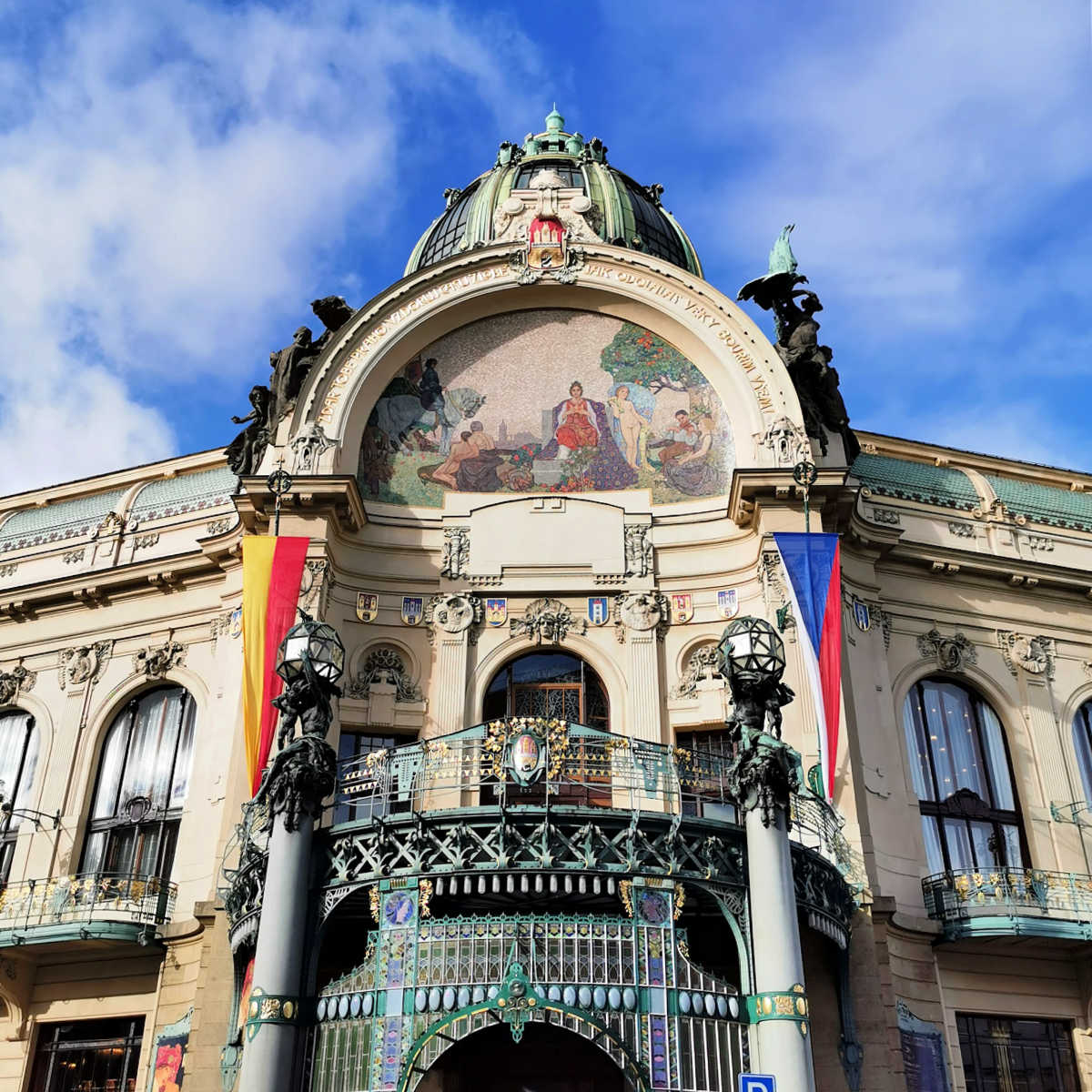
The next stop on our self-guided tour is the nearby Municipal House, which is an Art Nouveau masterpiece with a beautiful concert hall. You can also have a lunch here (very pricey in the restaurant on a ground level, but super affordable at the traditional Czech pub downstairs).
You can visit Municipal House and just have a look around in the public areas yourself or you can also take a paid guided tour of the building, that takes you to the large concert hall and other rooms beautifully decorated and painted by the famous Czech painter A. Mucha (that you can’t normally see).
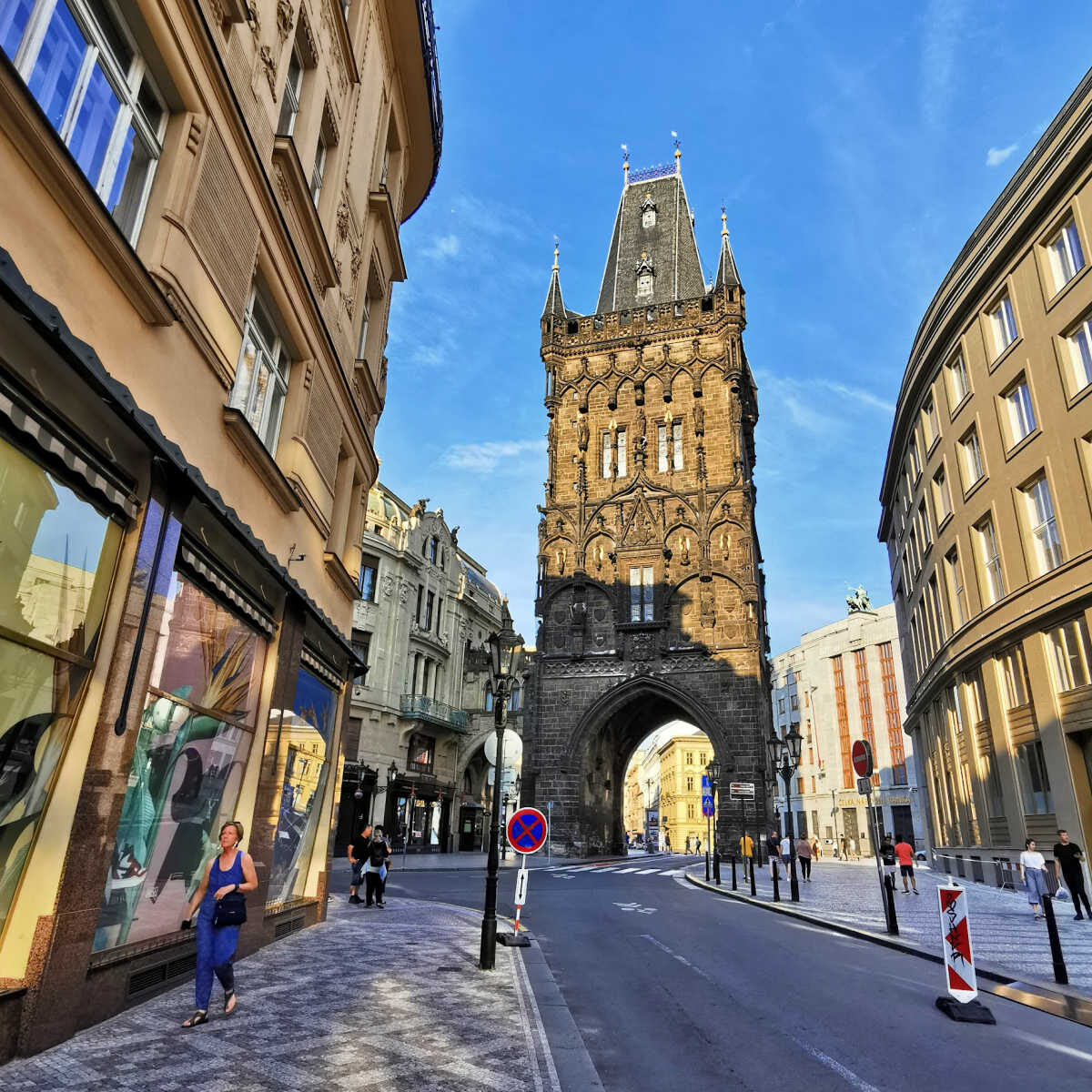
Next to the Municipal House is the Powder Tower, a Gothic tower that once formed part of the city’s fortifications. You can climb to the top for panoramic views of Prague and the Prague Castle in the distance.
Continue your journey along Na Příkopě Street, a busy shopping avenue that connects the Old Town with Wenceslas Square. Here, you’ll find a mix of international brands and local shops, perfect for some retail therapy. I particularly like the historic shopping arcades, which are great for walking through if it’s raining.

If you are planning to see the Jerusalem Synagogue, you can use the Passage of Czech design as a short cut, which takes you directly to Senovazne Namesti and once you cross the street, you will see the synagogue at Jeruzalemska Street.
You can also check out the Galerie Teleport, the Myslbek Gallery (one of the more modern shopping centres in Prague) or the Slovansky Dum Gallery which hides a lovely courtyard with trees and green plants.
You will eventually arrive at the bottom part of Wenceslas Square, a lively boulevard that is both a commercial centre and a historical site. There are large shops and department stores here, restaurants and fast food chains.
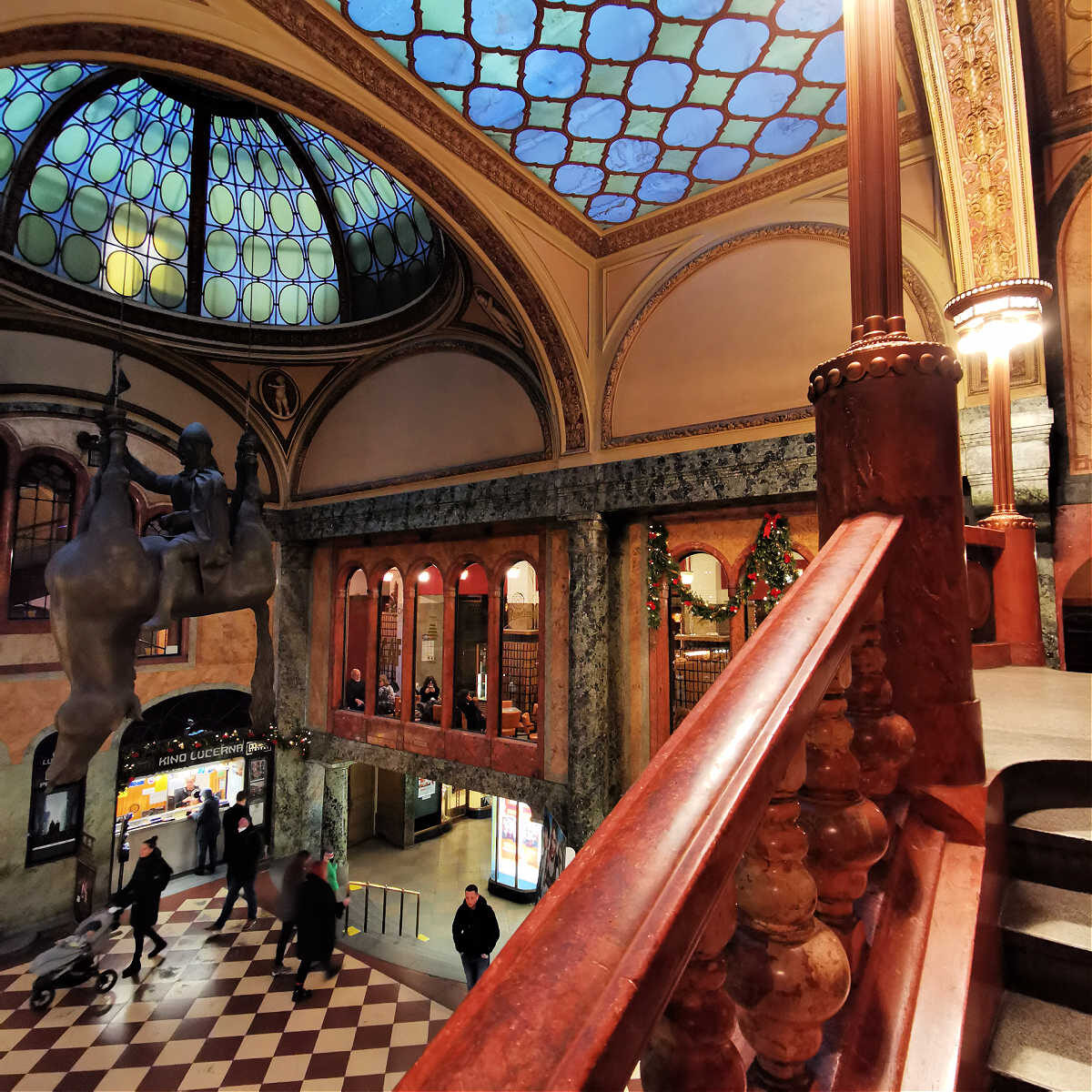
But instead of the modern shops, I normally head for the traditional shopping arcades like Svetozor, Lucerna or Palac Fenix, where you can find local cafes, shops, old cinemas and theatres.
In my humble opinion, one of the best fruit sorbets and ice-creams in Prague are in Svetozor passage. I used to come here as a teenager and it’s still one of my favourite places. I always take my ice cream to the nearby Franciscan Garden, which is a little hidden park and flower garden with plenty of benches to sit on.
Afterwards you can continue to walk up pass the statue of Saint Wenceslas and the National Museum at the top of the square.
Optional: From the Wenceslas Square, make your way to the Jerusalem Synagogue, a beautiful example of Art Nouveau architecture and easily the most colourful building in Prague.

Optional: Before concluding your day, make sure to see the only Cubism Lamp in the whole world, which is near Jungmanovo Namesti.
You can also see the Adria Palace on the corner of the Jungmanovo Square and then continue to Narodni to see the new Spitfire Butterfly Statues on the newly re-opened Maj Department Store. If you walk through the shopping centre next to Maj, you can also see the Franz Kafka Rotating Head Statue nearby.
Optional: Roof restaurant at Maj with a beautiful roof top views of surrounding houses and Prague. Saying that I always feel a little out of place there, so I usually end up few floors bellow in the only self-service eatery with fast food chains and about sixty huge chandeliers! I like to think, that this is the Prague version of luxury eating on budget!

Day 4 – Vysehrad & Smichovska Naplavka
Main Stops: Vysehrad Castle Grounds – Naplavka – Emauzy Monastery – Botanical Garden at Karlov – Operation Anthropoid Museum & Church – Ginger & Rogers Dancing House – Slavic Island – Shooters Island
Optional Attractions : Vyton Museum of Vltava & river trade at Podskali,
Starting Point: Vysehrad Underground Station (line C)

Day 4 – Morning
This morning we will start at Vysehrad Underground station on line C, which is about 15 minutes from the centre of Prague. From there we will follow the ‘Na Bucance’ and ‘V Pevnosti’ street which will takes us first to the Taborska Brana and through Leopoldova Brana to the Vysehrad Fortress Area.
There is quite a lot to explore here, including the Rotunda of St.Martin, the Old Castle Casemates, St Peter & Pavel Basilic and the Vysehrad cemetery with all the well known Czech people.
There is also a great view from the little vineyard, several cafes, children playground and walks around the fort walls. The best thing is that the general entry is free and you just pay to see whatever attraction you want.

There is not much left from the original castle or the fort, so I always think the best way to explore Vysehrad is just to walk around. One place that’s very different is the St.Peter & Paul Basilic as it’s beautifully decorated inside.
Once you’ve done exploring the Vysehrad grounds, walk down through the last Cihelna Brana gate and follow the Vratislavova Street down the hill.

This street has some lovely independent cafes, wine bars and restaurants. My favourite cafe is Kavarna Cekarna (Cafe Waiting Room at Vratislavova 30) that has amazing little courtyard between the houses. They have great coffee, homemade cakes and you can even get toasted sandwiches.
Also right next door at number 31 Vratislavova you can pop in for a lunch at school for people with learning disabilities. It’s one of my favourite self-service restaurants in Prague, but it’s only open Monday – Friday until about 2 pm during the school term because it’s run by young adults who are training to work in restaurants and catering services.
Before you head for the Smichovska Naplavka, you can also walk slightly back following the Vltava River to have a look at some of the most amazing houses in Prague built in cubism style. The most prominent is the Kovarovicova Vila, which stands on the corner of Rasinovo Nabrezi.
Day 4 – Afternoon
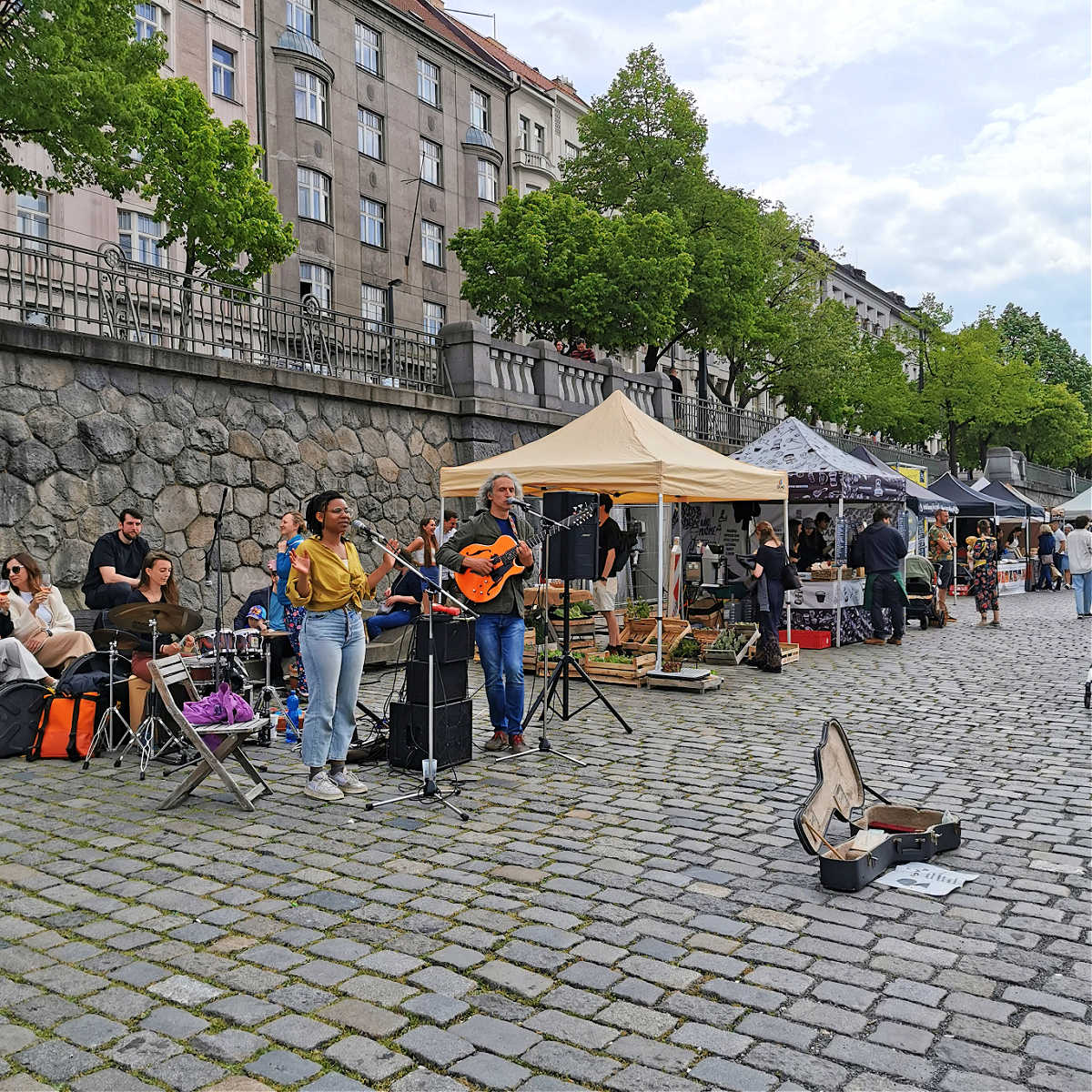
Next I always walk down the steps to stroll on the Smichovska Naplavka, which is a river bank next to the Vltava River. If you time your visit to Saturday morning you can catch here one of the best farmer’s markets in Prague.
The rest of the week, you can see here restaurants and bars on the boats and cafes in old tunnels under the river banks. It’s a great place to walk with a view of Petrin Hill and Prague Castle in the distance. In the summer there are little boats crossing the river and you can explore the other side of Naplavka too.

Before the Naplavka meets the Palackeho Most (Bridge) we will walk up to the top street and take the Trojicka Street to take us to the most amazing hidden botanical garden in Prague. It’s the oldest botanical garden with a couple of greenhouses with rare plants and birds. There is a small entrance fee to the greenhouses, but the outside garden, which is quite large, is completely free to enter.

Next we will walk up to Emauzy Monastery following the Vysehradska Street and then Na Slovanech. There is really great view from the little square in front of the main monastery church and you can also find a little cafe here (open during summer time).
If you have the time to visit the monastery inside, I thoroughly recommend it. It’s very peaceful there and the buildings are well preserved despite the bumpy history. I’m looking forward to see the gardens on the hilly slope next to the monastery being restored and finally opened to public.
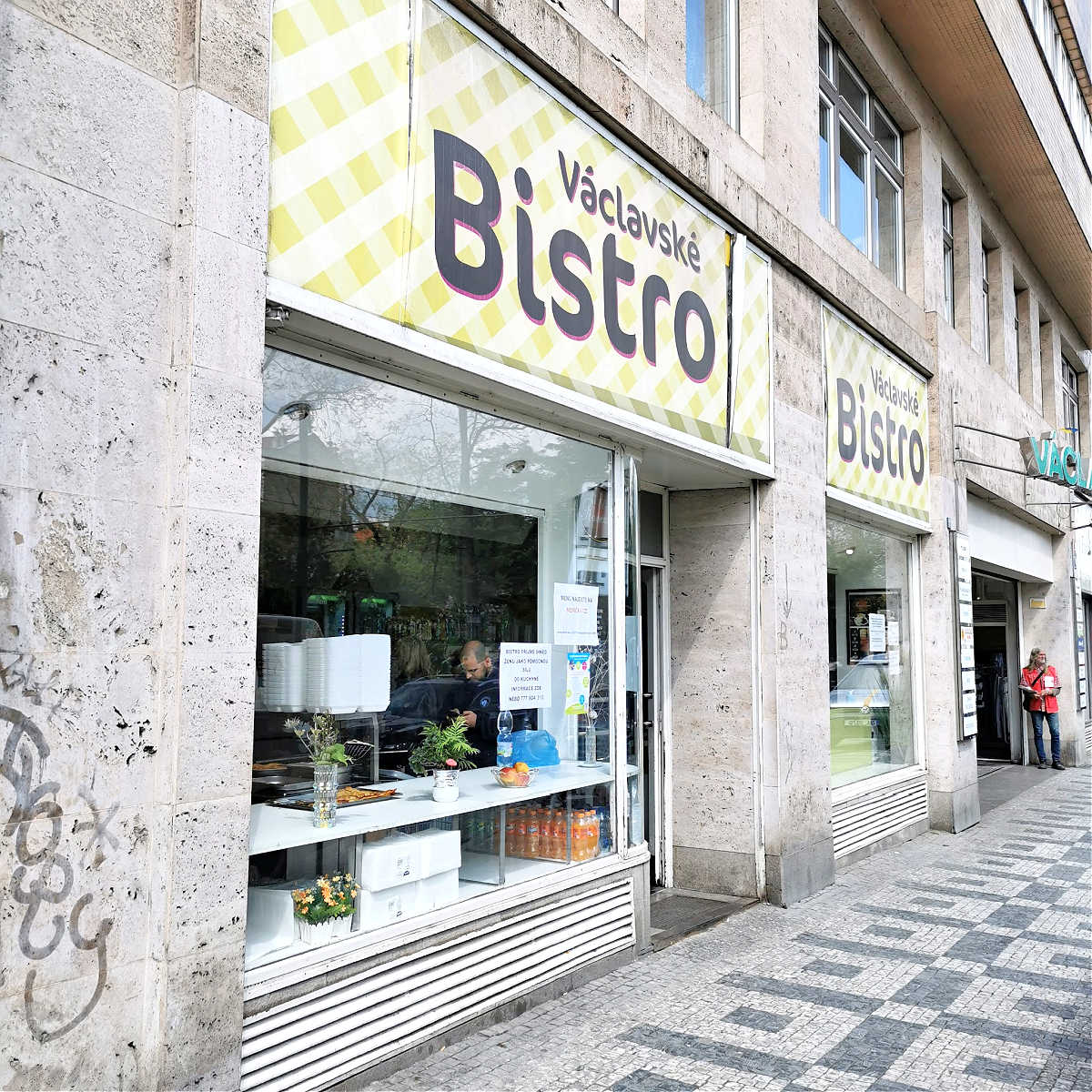
If at this point you need to stop (and I don’t blame you…) there is a lovely cafe at the CAMP (building next to Emauzy), where they have a fabulous homemade soups, light snacks and fab coffee. Another coffee option is ‘I Need Coffee! (Na Morani 1958) or if you need a fast food, try the traditional Czech food at Vaclavske Bistro (Vaclavska Pasaz, Karlovo Namesti) which is open every day until late.
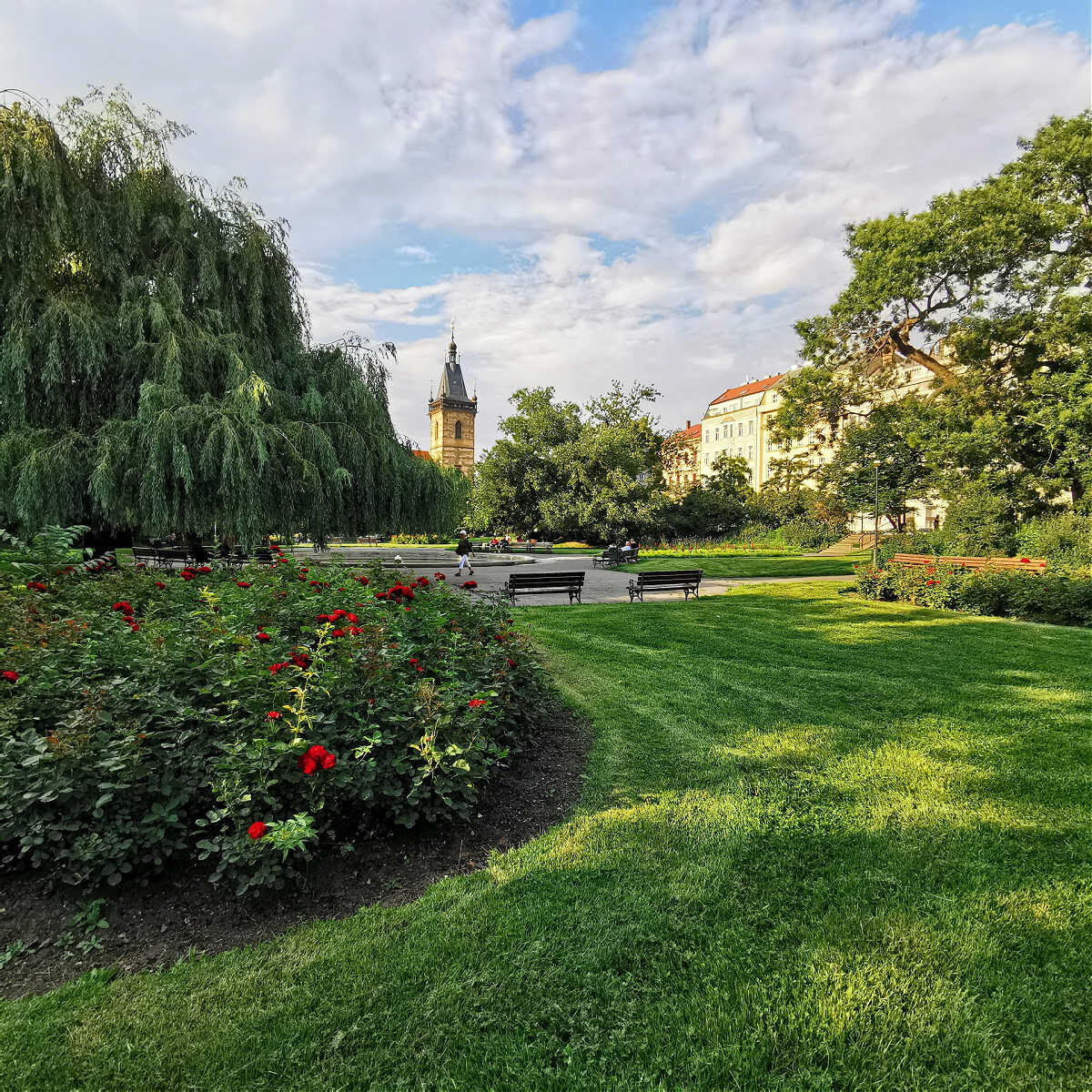
Walk through Karlovo Namesti, which is one of the most historic squares in Prague (and the biggest one in the whole Czech Republic) and then take the Resslova Street on the left down to the Vltava River.

This street will take you to the Ss. Cyril and Methodius Cathedral, which was a crucial place in the Czech resistance during the 2nd World War. There is also a free museum in the church crypt called The National Memorial to Heroes of Heydrich Terror. This is where the soldiers were hiding and you can find out more about the operation Anthropoid, including visiting the actual crypt (entrance is completely free and the museum is open daily).
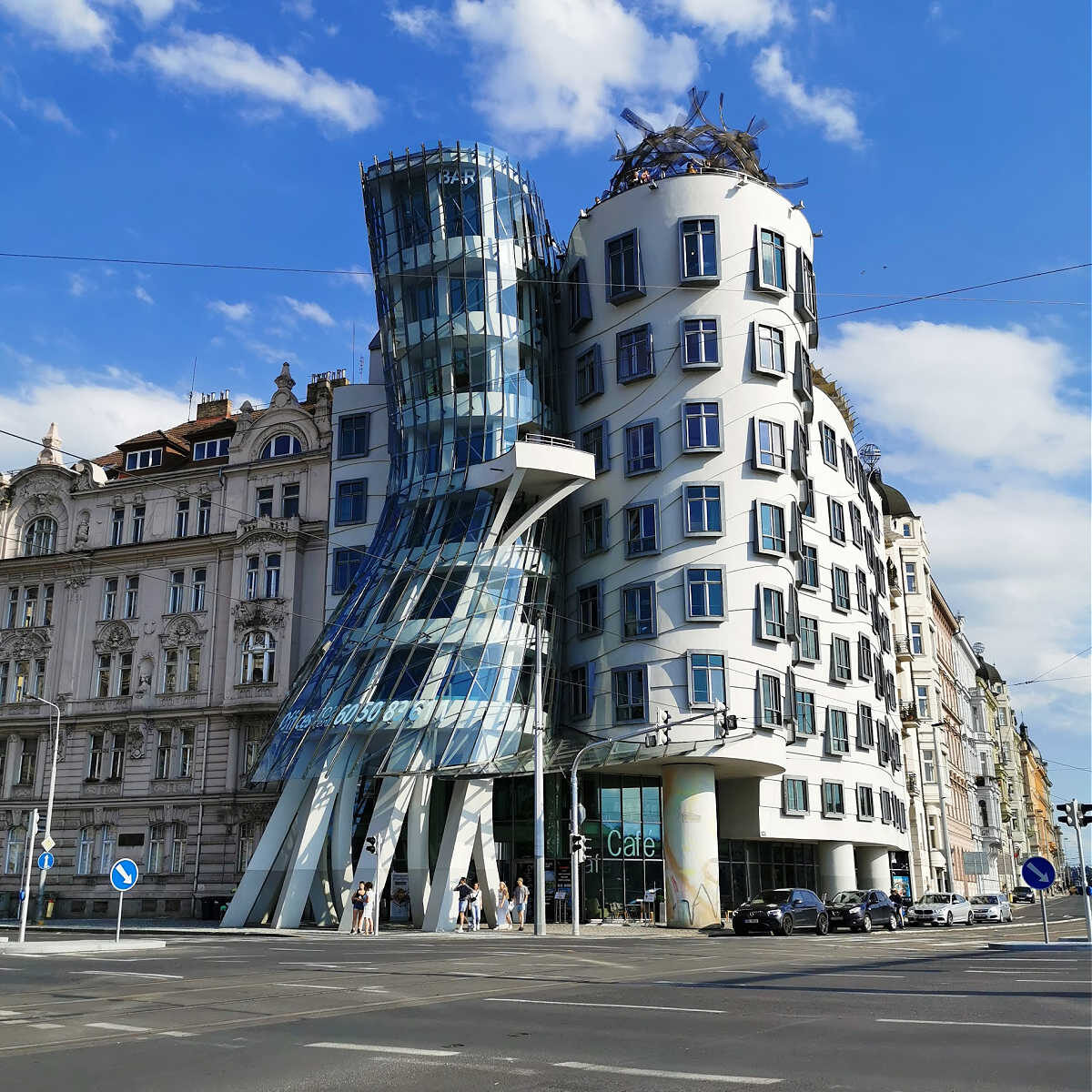
Resslova Street will take you directly to the famous Dancing House with a roof top bar and an art gallery at the ground floor. It’s a great place to pop in for a drink at the roof viewing gallery with a fab views of Petrin Hill and Prague Castle in the distance.
If you fancy a little break and the weather is nice, you can rent a little paddle boat from the Slavic Island or listen to a open air concert at the Shooter’s Island (access from the Legion Bridge).
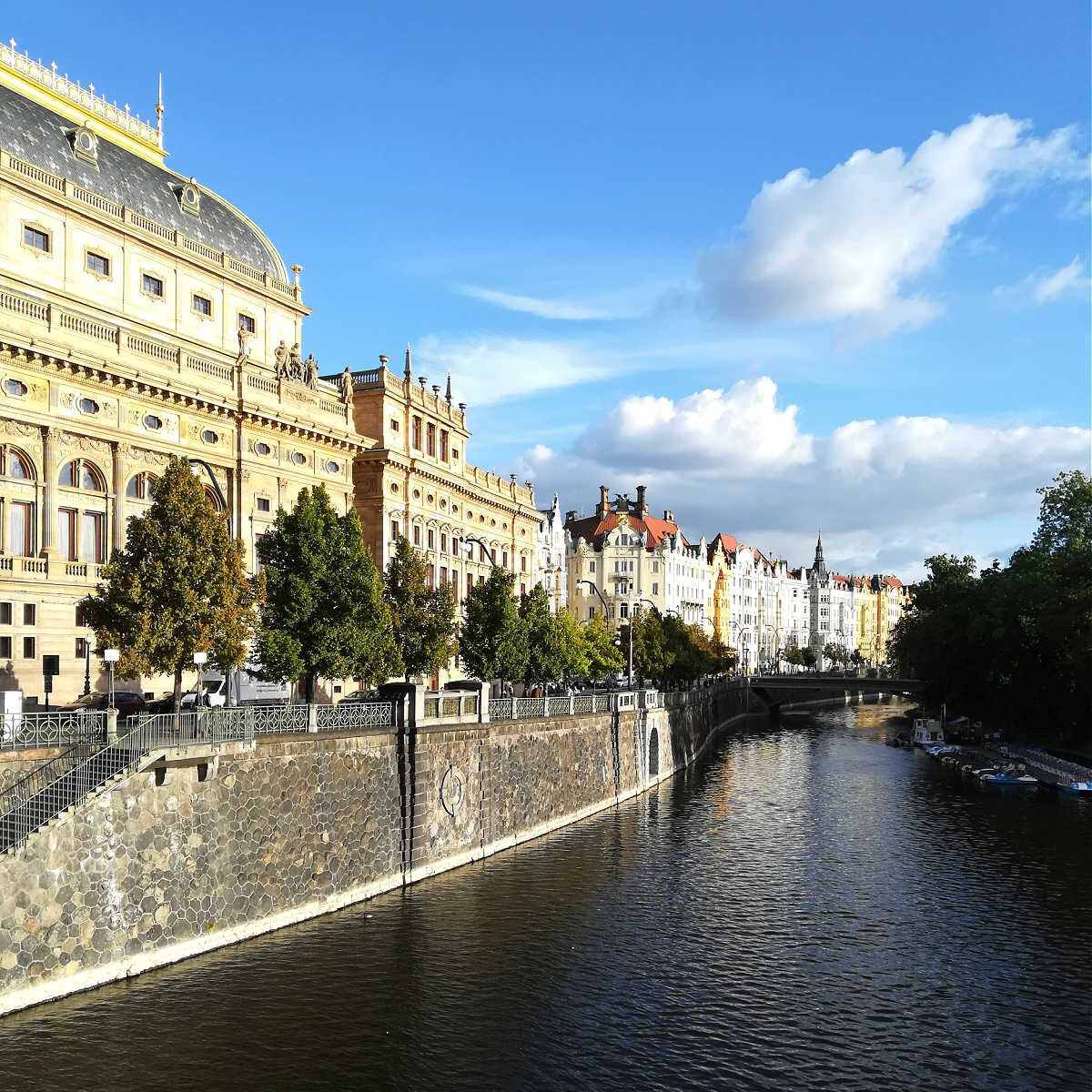
I also often pop in to the National Theatre which is just at the end of the bridge. This theatre is one of my favourite theatres in Prague and most performances now have also English subtitles. The theatre puts on the best operas, ballets and traditional plays including Mozart, Shakespeare, Smetana or Janacek.
The historic cafe Slavia, which is opposite the theatre is open every day until 10 pm (and has an evening dinner menu), so it’s the perfect way to finish your fourth day in Prague there with the views of Prague Castle and Charles Bridge.

Day 5: Petrin Hill & Strahov Monastery
Main Stops: Kinsky Garden – Hunger Wall – Petrin Hill Park – Lookout Tower – Strahov Monastery & Baroque Library – Vlasska Street – Jansky Vrsek
Optional Attractions: Folk Museum, Mirror Maze Muzeum, Museum of Miniatures, The Stefanik Observatory, Museum of Alchemists and Magicians of Old Prague, Museum Montanelli
Starting Point: Svandovo Divadlo tram stop on the 9, 15, 12, 20 tram line

5 Day – Morning
Today we will start our walk from Kinsky Square. If you fancy a super posh breakfast, then I’d recommend the nearby Cafe Savoy (Vitezna 124), but book in advance as this place get’s full really quickly, especially for breakfast.
If you don’t want to re-mortgage your house (yes, the Cafe Savoy is a little on the pricey side!), then I can recommend the ‘Spot’ Cafe at Kinsky Square, which is equally lovely. I also often visit the ‘Mezi Radky’ cafe (Stefanikova 278) because it has good coffee, excellent breakfast and they employ people with mild mental health issues helping them to get back to work and to gain more social confidence. I like that by eating my breakfast there I’m helping others!
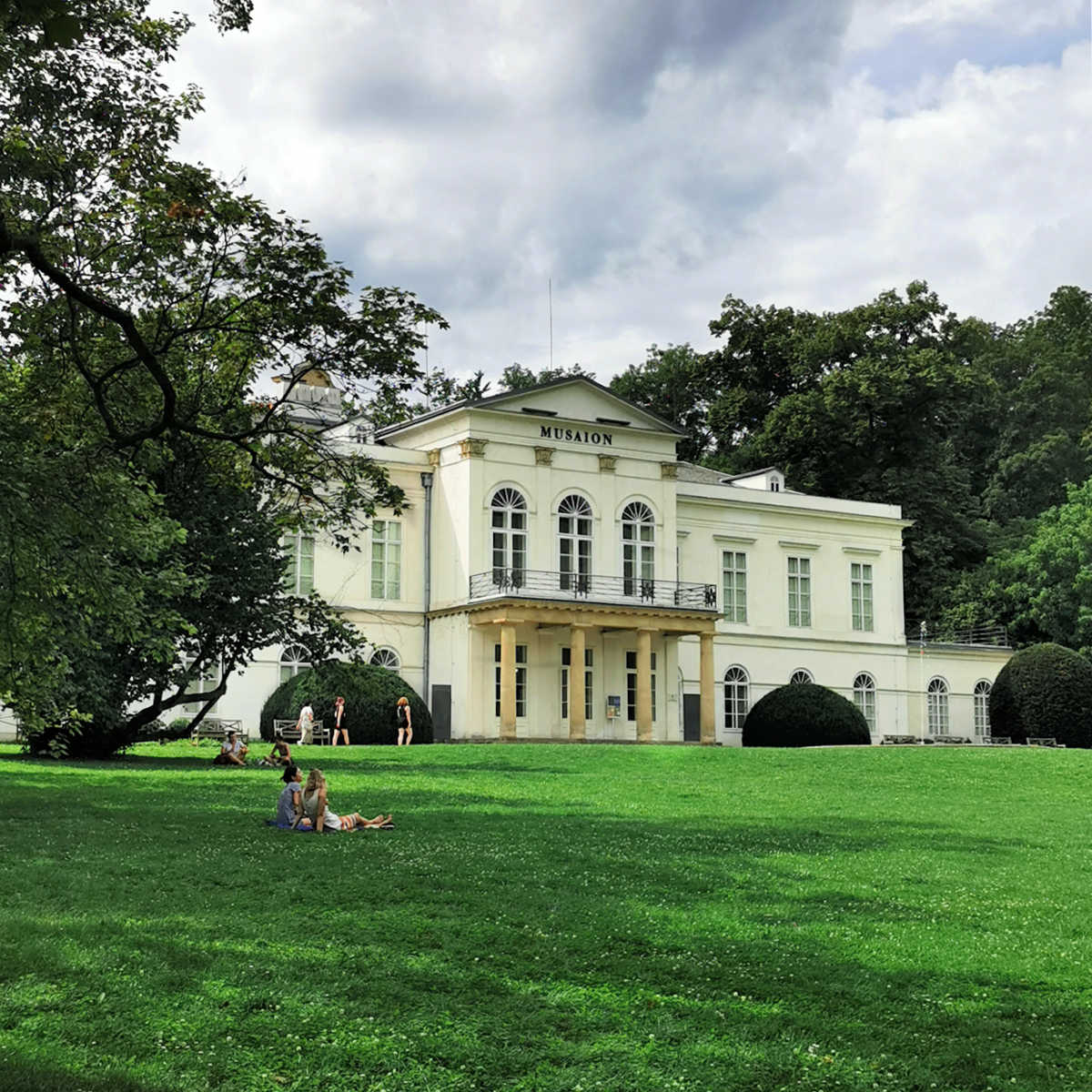
After our breakfast, we will first walk towards the Kinsky Chateau set in a beautiful Kinsky Park, which is now a museum. It gives you an idea how this part of Prague was once removed and felt like you are in the countryside. If you fancy learning more about old Czech customs and folk traditions, you can also visit the Ethnographic Museum inside. It’s a lovely building, the exhibitions are always very well done, have English descriptions and the entrance fee is fairly inexpensive.

From the museum we will continue up the hill through the winding paths until we reach a little water pond. From there you can walk directly up to get to the Petrin Rose Garden and the rather pretty sunken Flower Garden next to it.
If you are interested in the stars I recommend you visit the Stefanik Observatory ( you can leave your visit until evening, when you can actually take part in guided stargazing through the two main telescopes.
Or you can carry on walking on a level paths around the Petrin Hill to get the most amazing views of Prague Castle Hill. At some point you will walk through a high wall, which is called the Hunger Wall and was built originally to give poor people something to do during Charles IV reign (don’t worry, they did get paid!)

The Petrin Lookout Tower is my favourite building on the top of the Petrin Hill. It’s a miniature copy of Paris Eiffel Tower and you can get a really good view of Prague from there. If it’s windy the tower sways a little, when you are on the top, but only ever so slightly. Last time I visited, I managed O.K, but it was definitely an interesting experience!
5 day – Afternoon
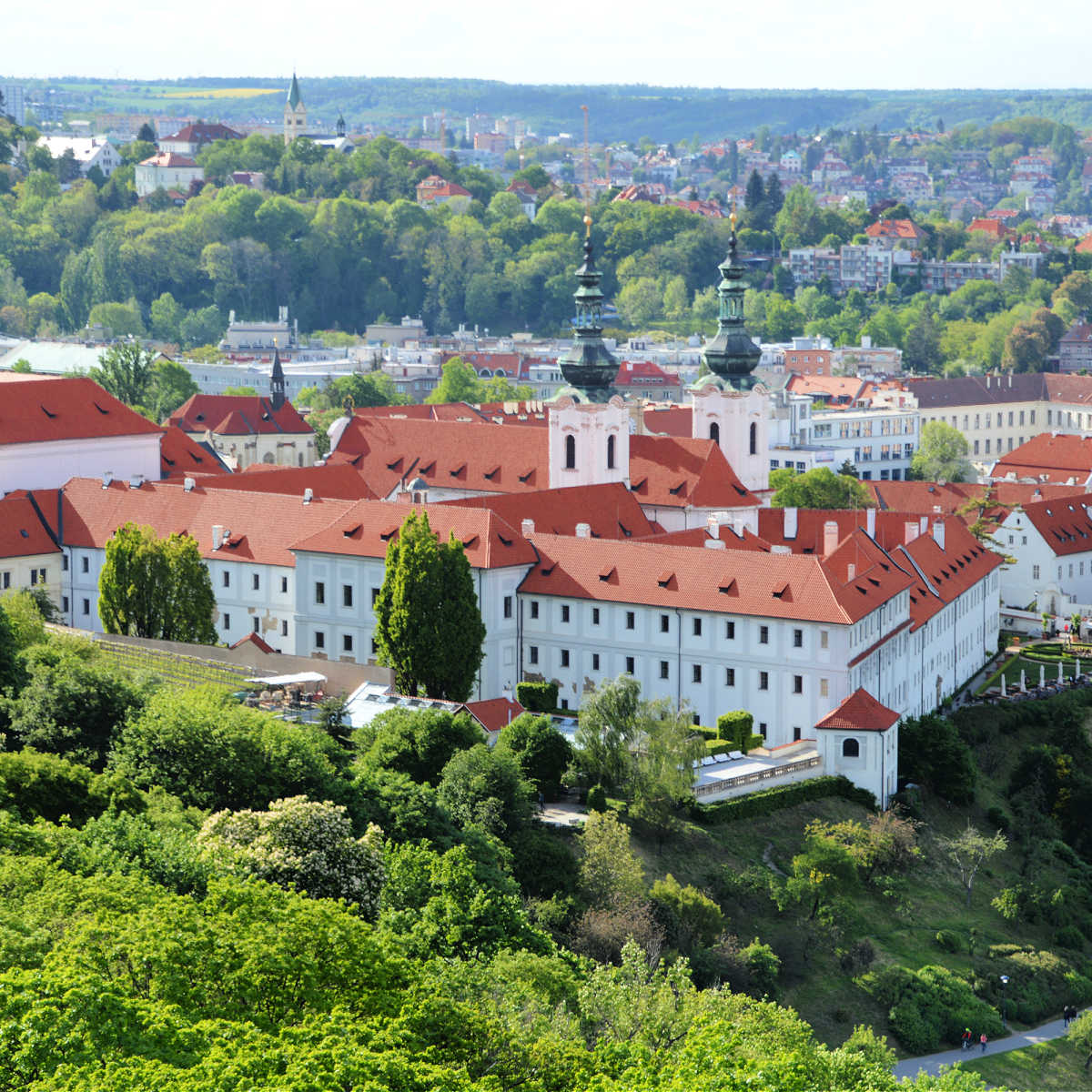
Continue walking along the Hunger Wall until you reach the Strahov Monastery with it’s beautiful Baroque Library. Here you have an option to visit the church, the library or take the whole tour of the monastery. There is also a great brewery called The Strahov Monastery Brewery or St.Norbert and you can sample any of their 25 different types of beers in their restaurant and a beer garden.

To finish your day, you walk just slightly outside the Strahov Monastery to Our Lady of Exile to get the most amazing views of Prague.
To get back to the centre of Prague, walk through any of the little streets taking you down the hill or through the Strahov Gardens to Vlasska Street, which is full of wonderful houses, quirky cafes and old palaces.
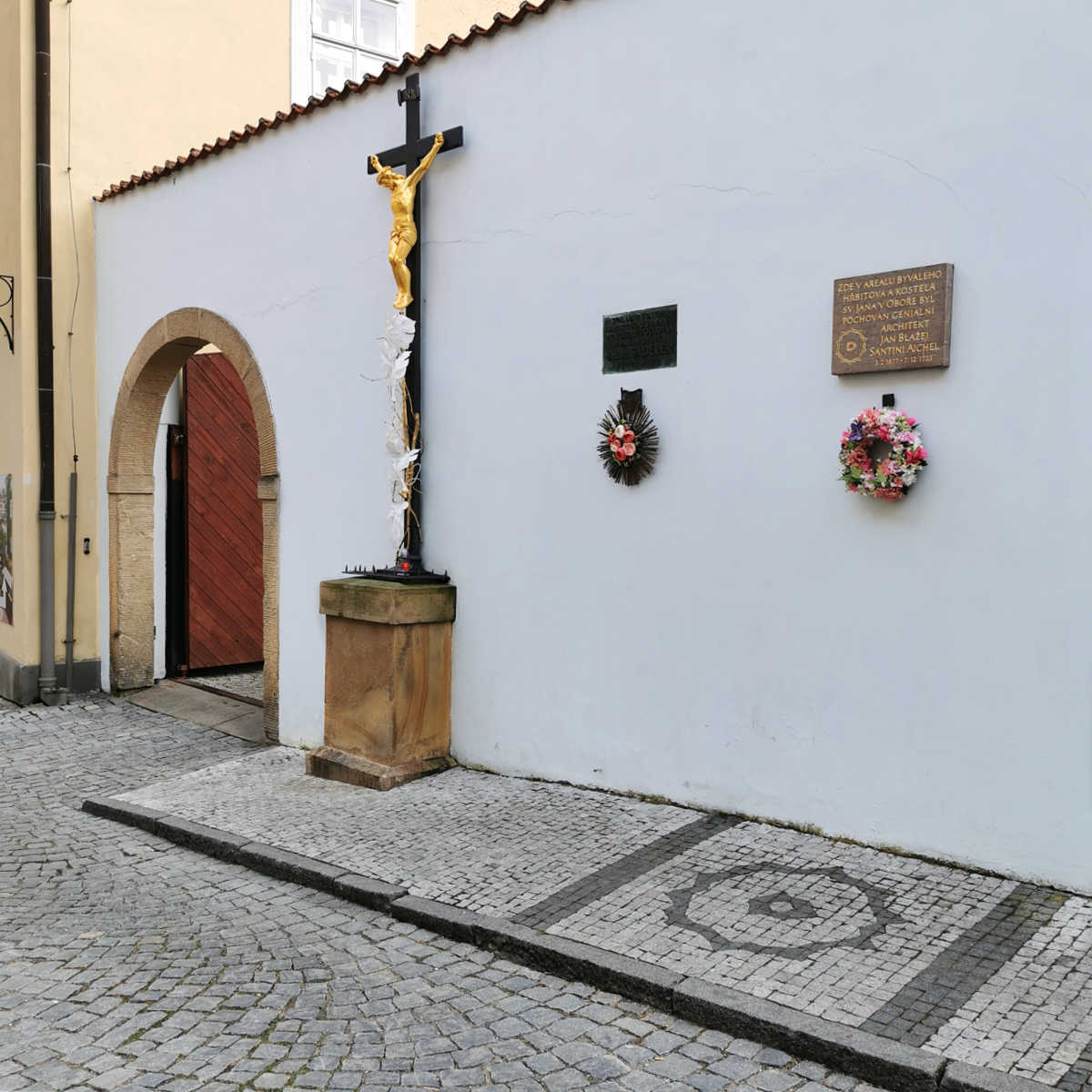
This is a very lovely part of Prague that not a lot of people come to, which makes it even prettier. My favourite little place here is the Jansky Vrsek and Janska Street, which finish with steep steps up to Nerudova Street. Another lovely street is the Trziste, which ends up as a house passage, which takes you to Museum Montanelli (art gallery) and again to Nerudova Street.
You’ll eventually come down to the Lesser Town Square and can carry on exploring places you might have missed before, or just sit down and enjoy a cup of coffee at the Malostranska Beseda (which is a traditional restaurant with separate cafe and it’s also one of the best jazz venues in Prague) or I also often get a coffee at the coffee cart in front of the Lesser Town Church of Our Lady Victorious, where you can learn about the Infant Jesus of Prague.

Day 6 – Zizkov & Karlin
Main Stops: Main Train Station – Army Museum – Vitkov National Monument – Zizkov Television Tower – Farmer’s Market at ‘Jirak’ – Karlin Army Baracks – Karlin
Optional Attractions: Riegrovy Sady
Starting Point: Hlavni Nadrazi – Main Train Station
Morning
Start your day at Prague’s Main Train Station — Hlavní nádraží, but before you head out, make time for the extraordinary Fanta Café inside the old station building. Most people rush straight through without looking up, which is a real shame. The train station is a lovely example of art nouveau architecture, designed by Josef Fanta and completed in 1909. There is also a new cafe bar in what used to be the 2nd class ticket waiting room. The older cafe is quite small, but the new cafe bar is spacious and airy and never have a problem finding a seat there.
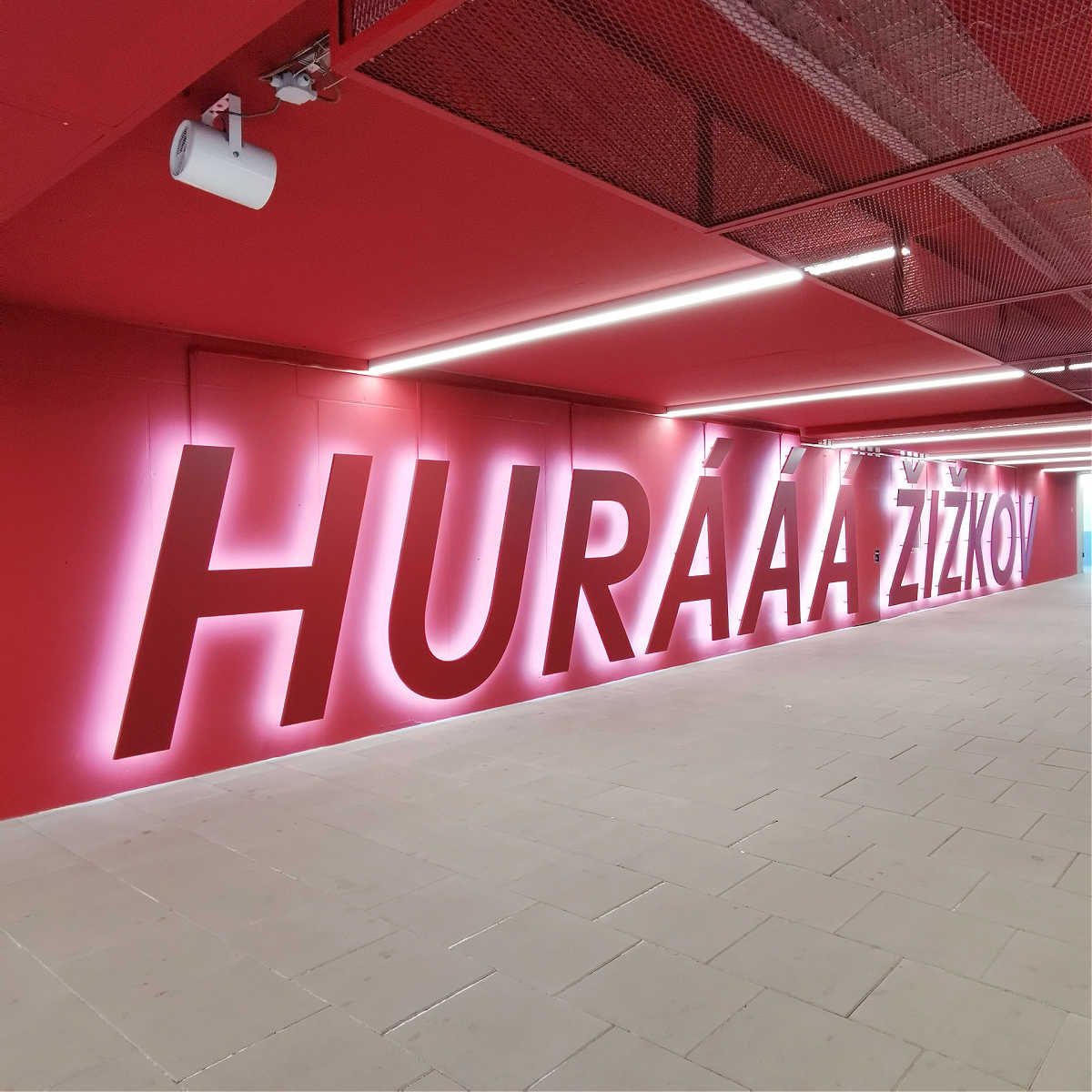
From the station, we will make our way to Žižkov district, through a new (ish) underpass connection from the last platform and then following the old railway track (now a walking and cycling path).
Zizkov is one of Prague’s most characterful and independent neighbourhoods with brilliantly eclectic mix of architecture. Žižkov has more pubs per capita than almost anywhere else in Europe, which tells you quite a lot about the local personality!

Your first stop is the Army Museum at the base of Vítkov Hill, which covers Czech and Czechoslovak military history from the First World War through to the Cold War. It’s been recently re-opened and the exhibitions are really well-presented and the best thing is the entry is free! If history is not your cup of tea, I’d still recommend you visit the first floor cafe, that has a lovely terrace with a great views. I like to watch the trains arriving and leaving the Main Train Station from there!
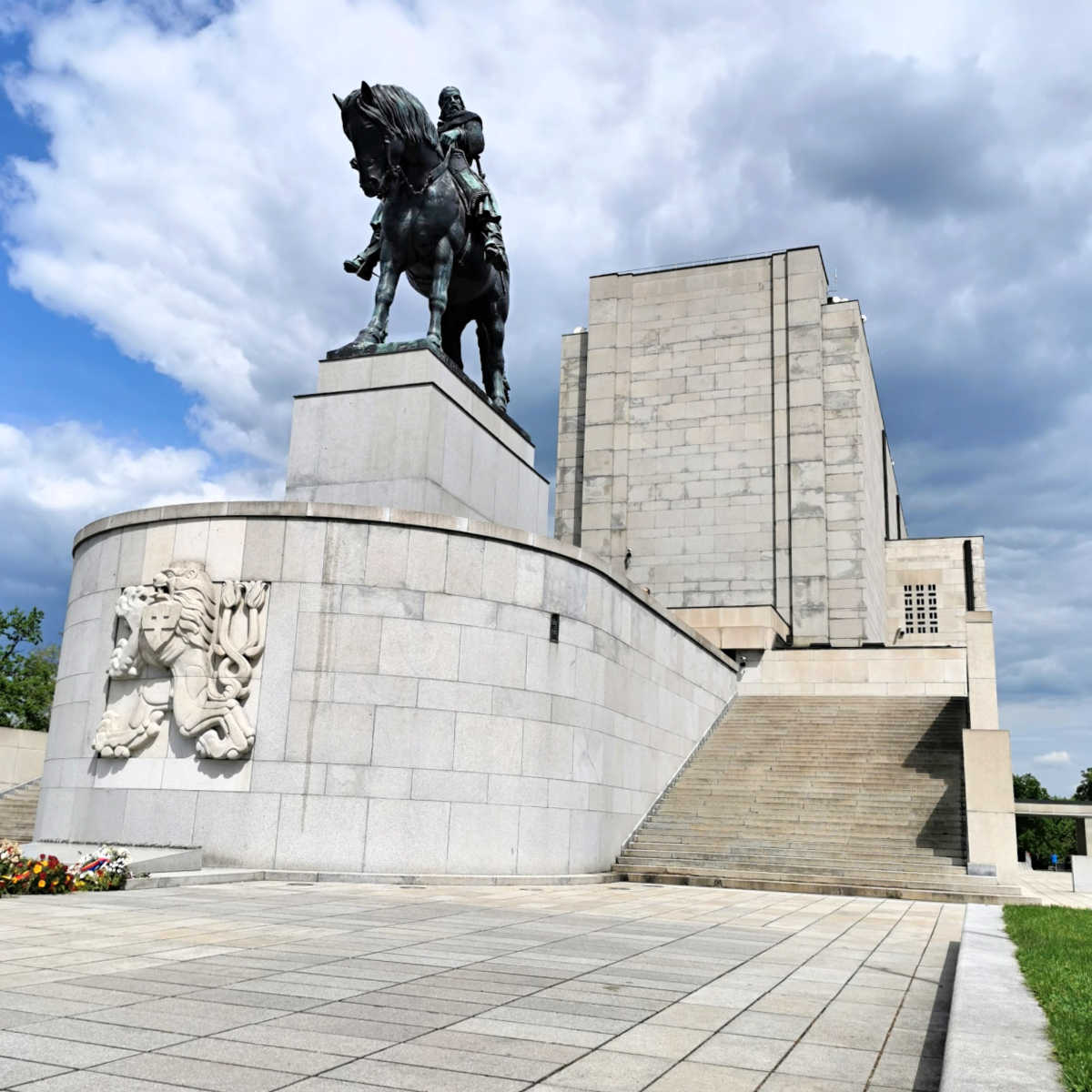
Alternatively, head straight up to the Vítkov National Monument on top of the hill. I think, this is one of those places that genuinely surprises people. The building itself is a huge functionalist structure built in the 1930s as a memorial to the Czechoslovak Legions and inside you’ll find an extraordinary interior with marble halls, important historical exhibitions and the mausoleum of Klement Gottwald, who was Czechoslovakia’s first communist president.
Outside you can’t miss the enormous equestrian statue of Jan Žižka, who was Hussite military commander after whom the district is named. The statue is one of the largest bronze equestrian statues in the world and the views from up here over the city are wonderful too.
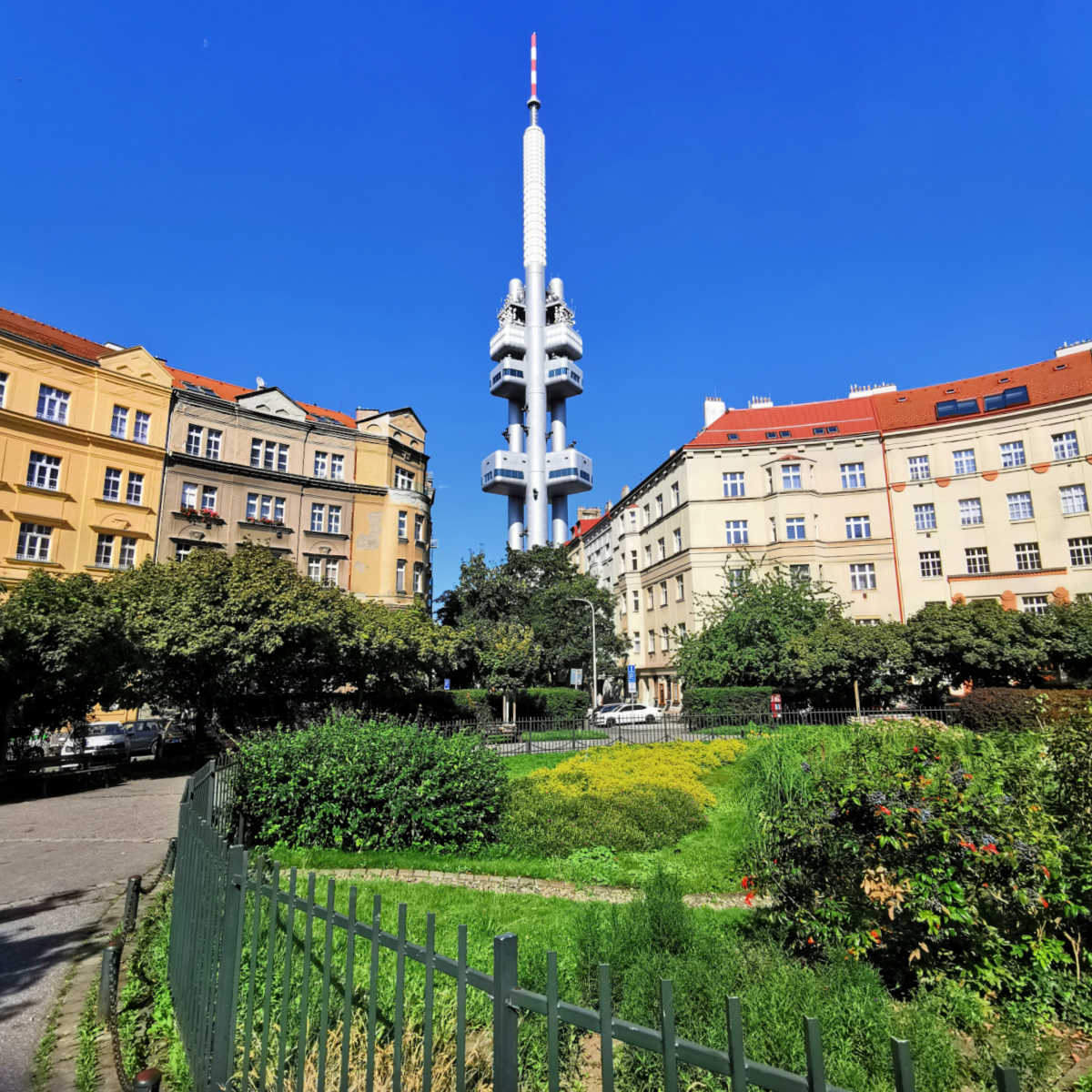
From Vítkov, make your way to the Žižkov Television Tower by walking down the hill first and then taking any street up the hill opposite. The tower was built between 1985 and 1992 and the 216-metre tower dominates the Žižkov skyline. It is either loved or hated depending on who you ask.
What everyone agrees on is that the observation deck has a breathtaking 360-degree view over the whole city. You can also find the famous ten crawling baby sculptures by artist David Černý clinging to the tower, which are as unsettling up close as they look in photographs. There’s also a restaurant and bar inside if you want to stop for a coffee with a view.

Next, head to Náměstí Jiřího z Poděbrad, one of Prague’s most beautiful squares, dominated by the striking Church of the Most Sacred Heart of Our Lord, a remarkable art deco church designed by Slovenian architect Jože Plečnik and completed in 1932. It looks unlike any other church in Prague and is well worth going inside.
The square also has popular Farmers’ Market (Wednesdays, Fridays, Saturdays), where you’ll find fresh local produce, artisan bread, cheese, pastries, and street food. A great place for a late morning snack.

Afternoon
This afternoon we will explore Karlin area and my favourite way to get there is to walk under the Vitkov Hill through a tunnel! From Jirak it’s all the way down the hill through Chlumova Street, that will take you directly to the entrance to the tunnel.
Straight after you walk out of the tunnel you can top up your caffeine at my favourite Kafe Garaz, which is literary a cafe in an old car garage! I always love to pop in to a coffee here, there is just enough space for a few tables inside, where the decor and music is slightly retro and totally cool.
Karlín was almost entirely destroyed by catastrophic flooding in 2002, but the area was transformed into one of the most architecturally creative areas of Prague.

The streets around Křižíkova and Husitská are full of excellent independent cafés, restaurants, design studios and boutique shops.
For lunch or coffee, Můj šálek kávy on Křižíkova is one of the best specialty coffee shops in Prague with genuinely excellent coffee in a warm, relaxed space that’s very popular with locals.
Also worth knowing is Eska, a brilliant bakery and restaurant in a beautifully converted factory space, which serves creative Czech food with a modern twist.
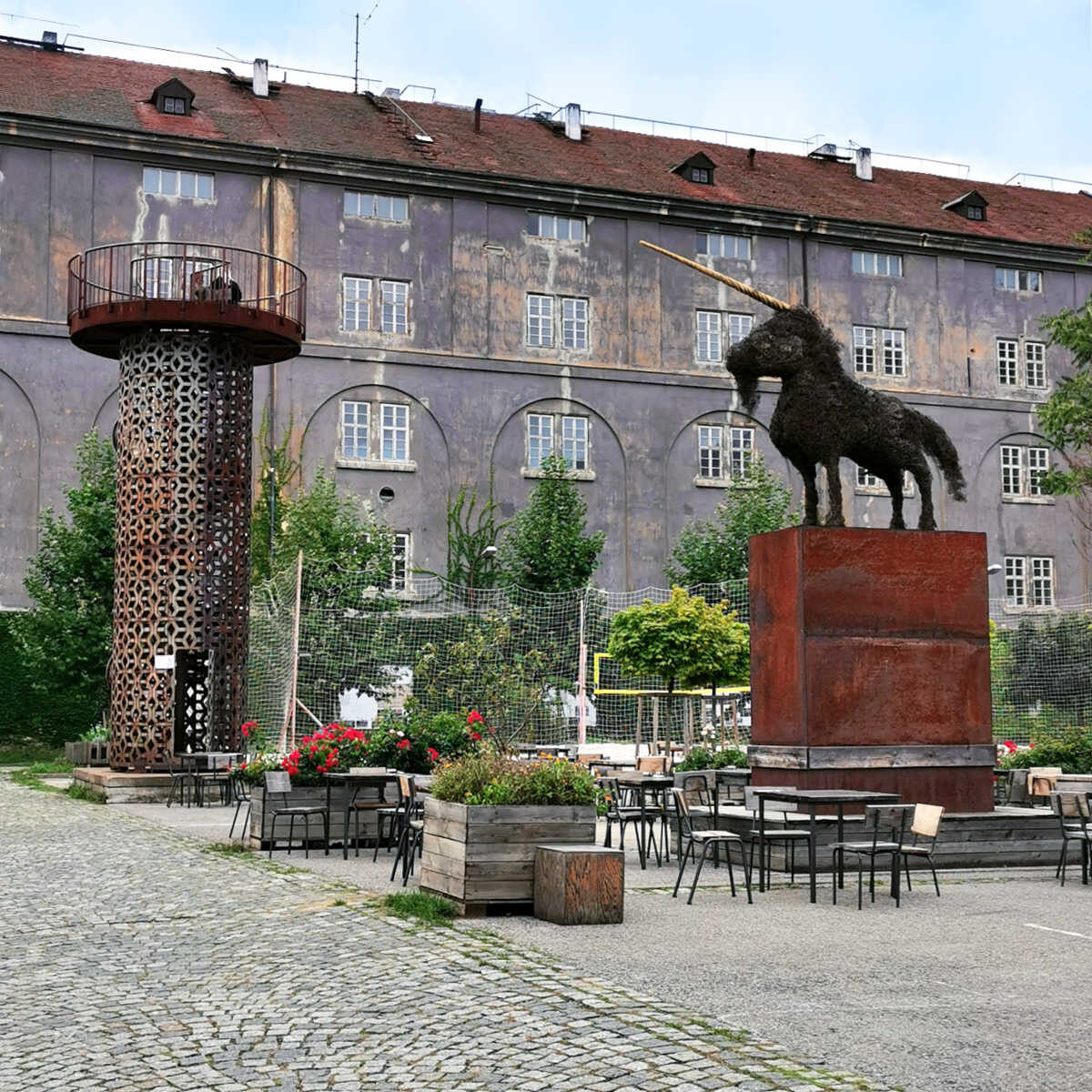
I think, the best way to finish the day is stop at former Karlin Army Barracks. It’s now an alternative art venue with outdoor bar, which often puts on films, concerts and exhibitions.
It’s a really large space, so no matter how many people are there (and it can get quite busy!) you can always find a corner with empty bench and chill out for a bit.

Day 7 – Letna Park, Stromovka & Holesovice
Main Stops: Letna Park – National Technical Museum – Farming Museum – Hanau Pavilion – Vilas of Bubenec – Stromovka Park & Exhibition area – Holesovice Market – DOX Gallery – Boat Harbour – Holesovice
Optional Attractions: Prague Zoo or Botanical Garden in Troja, Troja Chateau (Art Gallery) and walk to Stromovka & Exhibition Area, Trade Fair Palace (Art Gallery & Museum)
Starting Point: Letenske Namesti tram stop on 12 tram line.
Morning
We will start today at Letna Park, which is on the hill above the Vltava River on the same side as Prague Castle and Petrin Hill. From there you get the most amazing views across the Old Town rooftops, the castle and all the bridges. In the mornings it’s mostly locals: dog walkers, runners, people on their way to work. The tourist crowds haven’t made it up the hill yet, which is exactly why it’s such a great place to start your day.
While you’re here, look out for the famous Letná Beer Garden, one of the best outdoor places in the city, with a long terrace and views that are pretty hard to beat.
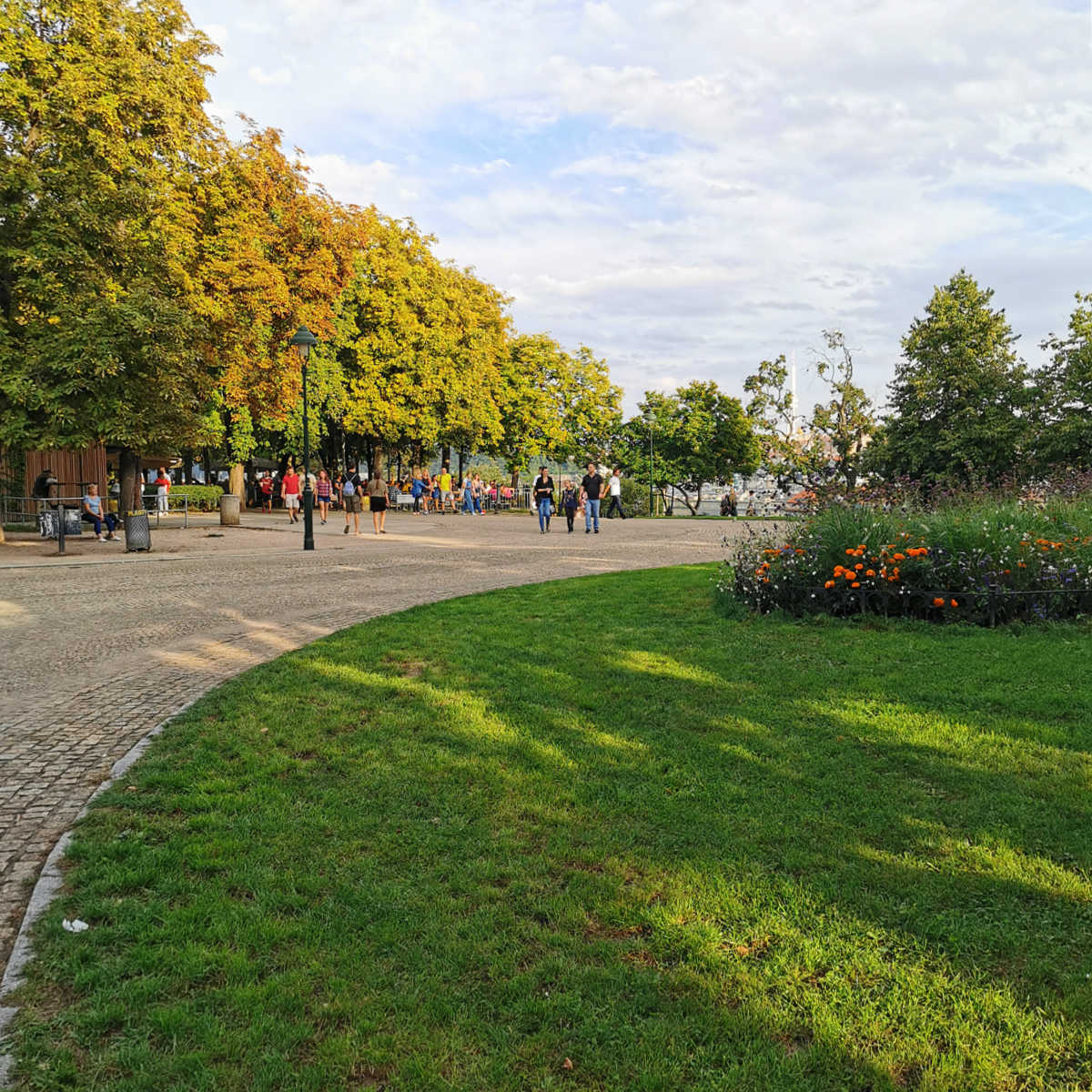
This is also where one of the largest Stalin monuments in the world once stood. It was a gigantic 14,000-tonne granite statue, unveiled in 1955 and demolished just seven years later. The giant metronome that ticks slowly above the city stands in its place today.
If you walk a bit further into the park (towards Prague Castle) you will find the Hanau Pavilion , which is a beautiful neo-renaissance cast-iron structure originally built for the 1891 Prague Jubilee Exhibition. It is right at the edge of the plateau with views down over the river and it’s open as a cafe. Even if you don’t stop to eat, it’s a lovely spot for photos.

Just below the park on Kostelní street, you will find two great museums almost next to each other. The National Technical Museum has an enormous hall filled with historic cars, motorcycles, aeroplanes and locomotives, plus exhibitions on astronomy, Czech architecture and photography.
Right next door, the National Museum of Agriculture covers Czech farming history, forestry and rural life, including a beautiful historic library. Because most tourists walk straight past it, you’ll often have it almost to yourself. Both are open Tuesday to Sunday, all year round.
Before you cross the road to walk down to Bubenec, I recommend you stop in one of the independent artisan cafes in Letna. My favourite is Café Letka with cosy atmosphere and excellent coffee, but there are so many other lovely places in this area, you almost can’t go wrong!
If you fancy a quick, but traditional Czech hearty meal, pause at my favourite self-service canteens (Jidelna Letna) on Milada Horakova Street on the corner of Ovenecka as you are returning from the Technical Museum. Afterwards pop in to Merhautovo Pekarstvi (Bakery) for the best poppy seeds cakes this side of Letna!

From Letná, head north-west into the area with Vilas of Bubeneč. This is one of my favourite walks in Prague that almost nobody talks about. Wide, tree-lined streets are filled with extraordinary early 20th century villas: art nouveau buildings next to functionalist houses next to grand neo-baroque mansions, many are now being used as embassy buildings.
Although the villas are mainly private, there are a couple of them that you can see the gardens and interiors, because they are being used as a museum and an art gallery. The first one is Villa Pelle (Pelléova 91/10) with art gallery, lovely cafe and modern art sculptures in the garden.
The second one was originally built in 1929-30 by the prominent banking and industrial family Petschek and is now a literary museum (Pelléova 44/22). You can visit both gardens and cafes for free, but there is a moderate entry fee to see the exhibitions.
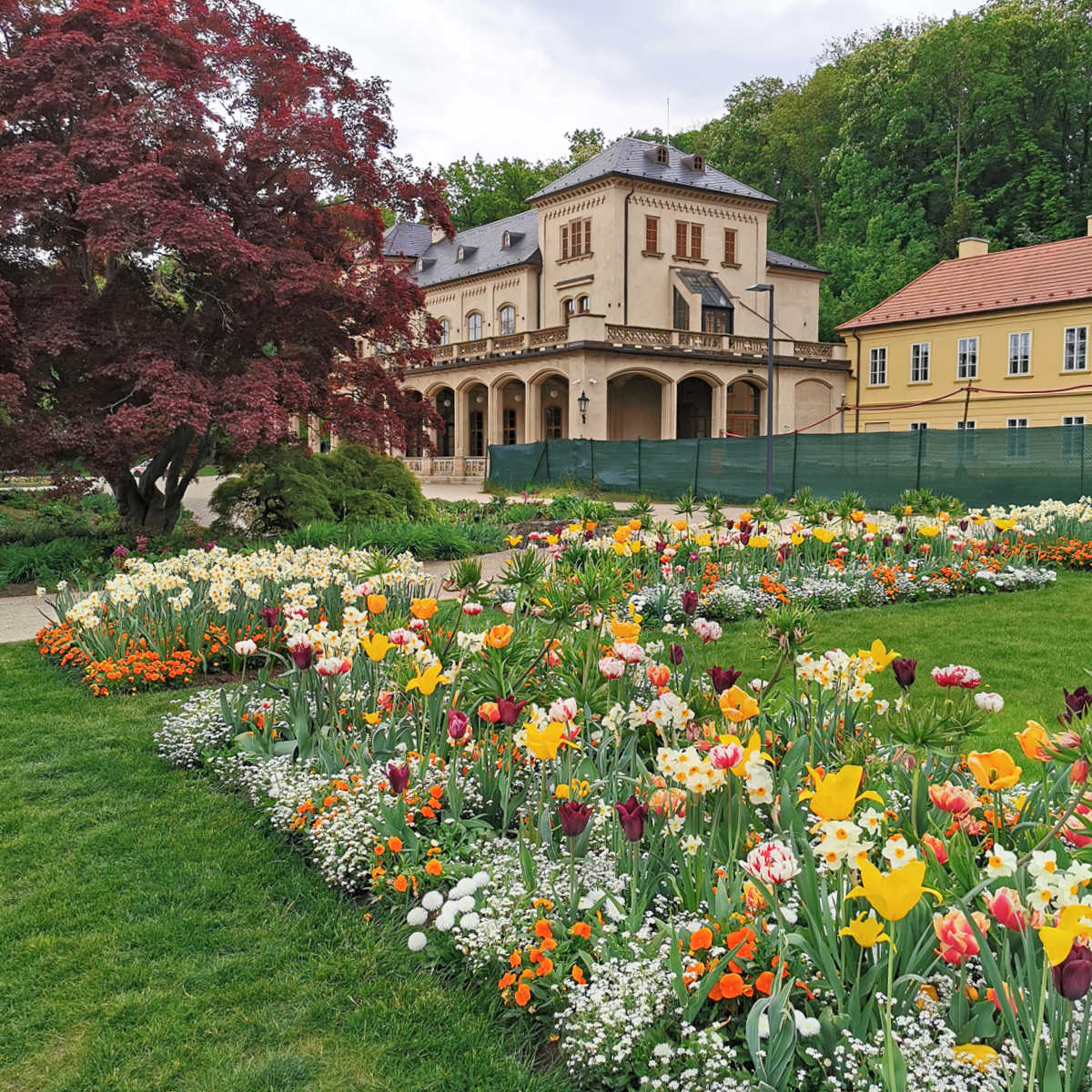
Continue walking to Stromovka Park, which is one of Prague’s oldest parks going back to the 13th century when King Přemysl Otakar II established it as a royal deer park.
Today there are long tree-lined avenues, ornamental ponds, open meadows, historic dance hall with restaurant and a small Gothic hunting lodge sitting above the park.
Right next to Stromovka you’ll find Výstaviště Praha, the Prague Exhibition Grounds which was built for the 1891 Jubilee Exhibition. The main Industrial Palace is an extraordinary piece of 19 the century iron-and-glass architecture and there are regular craft and art markets, concerts and other events throughout the year. The famous Křižík Fountain here also puts on spectacular light and water shows on summer evenings.

If you fancy an alternative afternoon, you can head north to Troja, which is quiet, leafy area on Vltava river. The best way is to take the 112 or 234 bus from Holesovice Underground & Tram Station. It takes about 20 minutes and the bus takes you directly to the entrance to the ZOO.
The Prague Zoo is genuinely one of the best in Europe with over 5,000 animals and voted the fifth best zoo in the world.
Right next door, the Prague Botanical Garden has beautiful themed gardens, a large tropical greenhouse and lovely views over the Vltava valley.
Also in Troja, the Troja Chateau is a spectacular late 17th century baroque summer palace with an extraordinary grand staircase and formal gardens and 19th century Czech painting exhibitions inside.
There’s a lovely riverside walk from Troja back towards Stromovka. I always walk it this way back to Holesovice as I prefer it to a crowded bus! To treat myself I usually pick up an iced coffee from an outdoor bar (TrojBistro) just before I cross the Vltava river. Bistro Karel at the end of Troja Chateau gardens is really good too, if you want to sit down and have a proper lunch.

Just one stop by a tram, you can make a slight detour to the Trade Fair Palace, which is the National Gallery collection of modern and contemporary art. The building is one of the largest functionalist buildings in Europe and a genuinely extraordinary building well worth a visit. Café Kolektor inside is also a beautiful, calm space for lunch or coffee.

Afternoon
In the afternoon, we will continue to Holešovice and the Pražská tržnice (Prague Market). To get there it’s best to take a short ride on a tram, as it’s quite a long walk. From the ‘Vystaviste’ tram stop take any tram to ‘Prazska Trznice’.
This enormous complex of beautiful late 19th century brick market halls is now a brilliant mix of food stalls, independent shops, vintage clothing, street food, small galleries and creative businesses. There are regular weekend markets and food festivals throughout the year.

Nearby, DOX Centre for Contemporary Art is one of the best contemporary art galleries in central Europe in a spectacular converted factory space. I absolutely love the enormous wooden airship (the Gulliver Zeppelin) suspended in the upper gallery, which you can actually go inside.
DOX has regular international exhibitions alongside Czech contemporary art and there’s a great bookshop and café inside too.
For lunch or a coffee break, Vnitroblock is one of my favourite spots in Holešovice, a café, boutique, and gallery space inside a house courtyard, with a wonderfully relaxed creative atmosphere.
End your afternoon at the Holešovice Boat Harbour on the riverbank, which is a peaceful place to sit, watch the boats or get a drink from the many cafes and bars. During summer you can hire rowing boats and kayaks here. The riverside path connects back towards Stromovka too so if you want to you can have an evening walk along the river.

Day Trips from Prague
In case you see everything on my 7 day Prague itinerary in less than a week, or you want to skip some of the attractions (don’t worry I don’t mind!), I also wanted to include some optional days out from Prague for you.
If you have only 1/2 day available and you want to venture out of Prague, this is enough time to for example to get to Kutna Hora and see the famous Bone Church and the beautiful historic town.
Or if you prefer to visit a large gothic castle close to the Berounka River, it’s very easy to get to Karlstejn castle by public transport. Whilst Karlstejn castle is open all year round, not all castles are, so if you are visiting Prague during winter, you might like to check out my guide to castles near Prague open in winter.
If you prefer to learn more about recent history, you might like take the bus to visit Terezin, the Second World War Jewish & prisoners camp.

If you have a whole day spare, my favourite days out from Prague include Plzen (beer history & great town), Karlovy Vary (spa town & woodland walks), Brno (coffee capital of Czech Republic), Liberec (historic town & hikes to Jested viewing tower), Olomouc (beautiful historic town) or Tabor (quirky streets & walks by the river).
You can also visit the beautiful Cesky Krumlov, although I have to warn you it’s a long day out. It’s fairly easy to get to Cesky Krumlov from Prague by public transport but the journey can take up to 6 hrs from your day.
This summer, I also spent a fabulous day in historic Trebon town and saw the beautiful chateau, Renesaince towns and walked around the famous carp ponds.
If you like to learn more about the history of beer, the best place to visit is Zatec, where they grow hops and of course make they own beer too.
Czech gingerbread is also super popular and you can visit Pardubice, where the tradition started, within one our train ride from Prague.
This blog post was originally written on 21 July 2026 and last updated on 21 July 2026