
My Guide to Prague Botanical Garden in Troja: Vineyard, Japanese Garden & Tropical Jungle (2026)
I have a fond memories of Troja botanical garden. The first time I visited it was just before the garden officially opened in 1992. I remember I was just a teenager and went along with my mum for a fabulous day workshop about making handmade paper with dried flowers.
Next time I visited it was nearly 30 years later on a very hot summer’s day and everything looked very different – the garden was considerably bigger, the greenhouse was built and I was pleasantly surprised at the different areas of the garden with explanation panels and plenty of space to walk around.
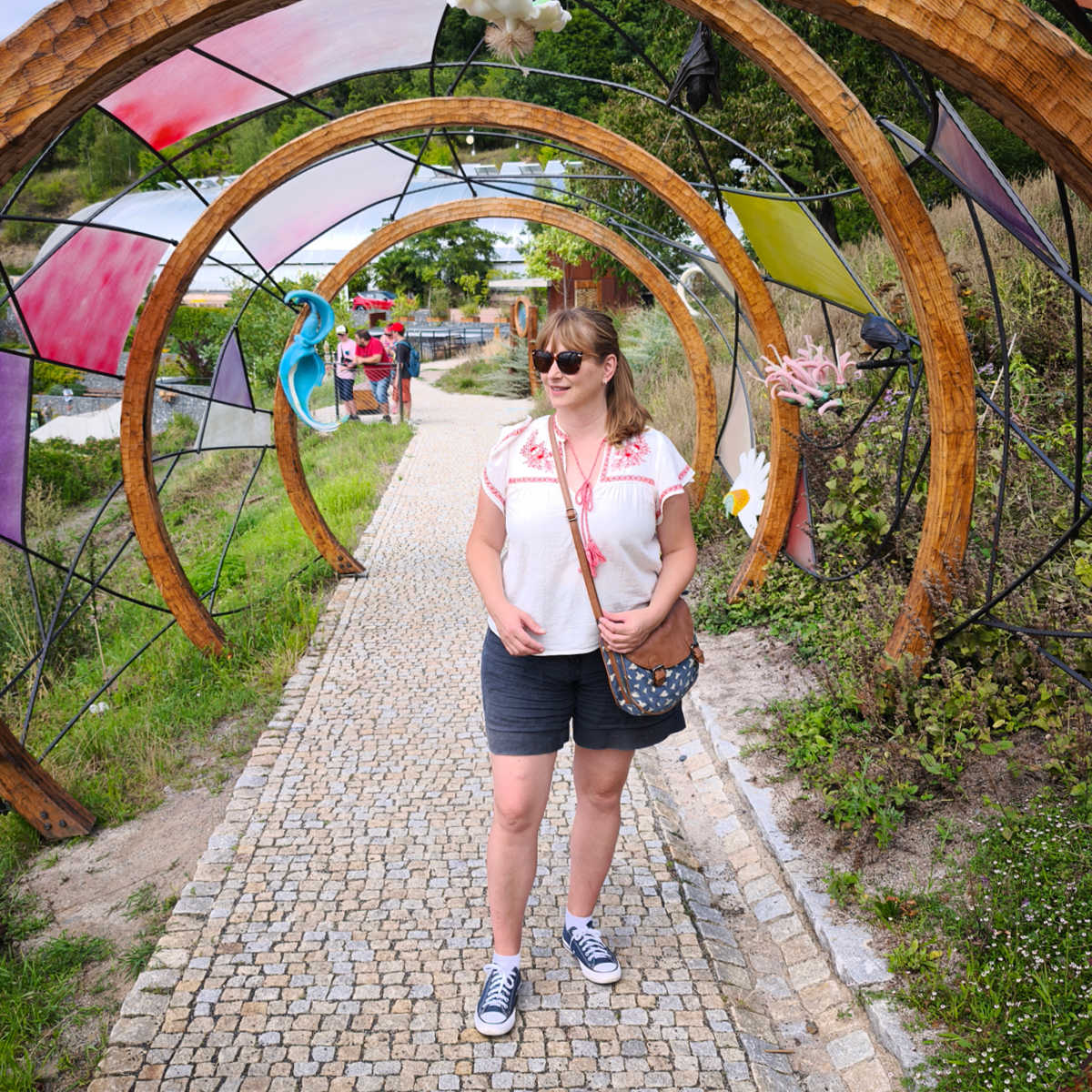
There are modern sculptures, a bee keeping corner, native America plants with a large teepee tent and large rope hammocks to rest in.
One thing you need to be prepared for, is that this botanical garden is very hilly and it’s not great for walks with pushchairs, baby prams or anyone with mobility issues.

What’s new in the Botanical Garden for 2026
Plant Odyssey as overall theme for 2026
If you’re planning a visit in 2026, there are some fantastic new things to see that make this year a bit different from my previous trips. The Troja Botanical Garden has launched a theme for the whole year called “Plant Odyssey” (Rostlinná odysea), where they want to show how plants evolved from the very first life forms on Earth to the incredible diversity we see today.
Archa Bohemica – New permanent exhibition
I really like the new exhibition called Archa Bohemica, which focuses specifically on endangered Czech plants how the botanical garden is helping to save them.
Fata Morgana Greenhouse – Night guided tours
If you’re visiting in the colder months (typically January through March and then in the winter), you can book a guided night time tour of the Fata Morgana greenhouse. I’ve done this, and there is a completely different atmosphere from the daytime. Many tropical plants only open their flowers or release their strongest perfumes after dark to attract nocturnal pollinators.

Crystal Garden – Illuminated Glass Exhibition
Running through the winter season (into early 2026 and hoping we get the same for 2027), there’s a stunning exhibition of glass sculptures by Jiří Pačinek scattered among the plants. At night, these are all illuminated and there is also different music which makes the whole garden into a glass symphony of light and music. I had the chance to visit this year and it was definitely the highlight of my Christmas.
St. Claire’s Vineyard – Sunday Cellar Tours
On Sundays throughout 2026, you can join a Sunday Cellar tour. It takes you into the historic 200 m² wine cellar where you can see the modern stainless steel equipment and the fermentation process. The best part is the tasting at the end, where you get to sample wines that are produced entirely on-site. You can only buy these specific bottles at the vineyard’s own wine shop.
Butterfly Display – The Art of Survival Skills
If you are visiting between April 2nd and May 17th, 2026, the annual butterfly exhibition has a specific theme this year: “The Art of Survival.” They bring in over 5,500 chrysalises, and if you time it right, you can actually watch an adult butterfly emerge and dry its wings.
There’s an accompanying interactive exhibit in the Ornamental Garden where you can see through a butterfly’s eyes and learn about their anatomy using microscopic displays.

The Botanical Garden in Troja History
Whilst this botanical garden is probably the best known one from all the Prague botanical gardens it is the youngest one – officially founded in 1969.
During the next 20 years the garden was slowly developed and planted with various trees, plants and rare flowers, but sadly stayed closed to the general public for most of that time.
Apart from a few open days, the garden was never properly opened. The garden was finally opened to the public in 1992 although the area initially opened wasn’t that big. Over the next few years, more areas become opened to the public such as the Japanese Garden, the plants of Turkey and Mediterian areas and a large collection of flowering irises.
The Fata Morgana greenhouse is a relatively new addition, which opened in 2004. This large greenhouse covers an area of about 1,750 square metres and is about 130‑metre‑long .
The vineyard of St. Clara was included into the garden in 1995 and over the years more exhibitions about wine growing were added. You can now taste the local wine in a small wine bar next to the vineyard, where you can see all the different types of grapes.
Exploring the Different Areas of Troja Garden
The Troja Botanical Garden is really large, and I always tell people that you can’t just pop in, you really need a few hours to explore the different areas properly. I like how the landscape changes from one corner to the next as you walk through. Here is a breakdown of what you’ll find in each part of the outdoor garden.
The North Section: Mediterranean and Turkey
If you start in the North Section, you’ll find yourself in the Mediterranean and Turkey area. This part is higher up on the hill, which means the views over the Troja valley are brilliant. It’s full of drought-resistant plants and aromatic herbs like rosemary, sage, and lavender, alongside silver-leaved olive trees that honestly make you forget you’re in Central Europe.
Right next to it is the Turkish Steppe, which replicates the rocky, dry landscapes of Asia Minor with various hardy perennials and bulbous plants like wild tulips and crocuses that thrive in the poor, stony soil.
The Central Section: The Japanese Garden and Irises
Moving into the Central Section, you’ll discover the Japanese Garden, which for me is the most peaceful part of the entire estate. It’s incredibly well-designed with water features and perfectly placed stones. In the autumn, the Japanese maples turn these deep, fiery reds that are just stunning, while the spring brings a massive wall of colour from the azaleas and rhododendrons.
Just nearby is the Iris Collection, which is one of the largest in Europe. If you visit in May or June, you’ll see thousands of bearded irises in every shade of purple, yellow, and blue imaginable.
The Peony Meadow & Ornamental Wetlands
One of my favourite spots that many people miss is the Peony Meadow. It’s a bit of a trek further north, but in the late spring when the tree peonies and herbaceous peonies are all in bloom, it’s easily the best place for photos.
Close to this, you’ll find the ornamental wetlands and lakes. I love sitting by the water here to look at the water lilies and the various marsh plants like irises and marsh-marigolds that line the banks. It feels very hidden and quiet compared to the main paths.
The North-West: North American Prairie and Forest
If you keep walking toward the far edge, you’ll hit the North American section. It feels completely different here, almost like a wilder park. You’ll see massive Giant Sequoias and Douglas Firs towering over the paths.
In the summer, the prairie section comes alive with tall grasses and North American wildflowers like Echinacea (coneflowers) and Rudbeckia, which are always buzzing with bees. It’s a great spot if you want to see some serious scale in the tree collection.

Fata Morgana Greenhouse
If you want to experience a proper tropical forest right in the middle of Prague, you really have to visit the Fata Morgana Greenhouse.
You will need about 60 – 90 minutes to visit the greenhouse which is organised in three different sections and it feels like a proper journey across the world’s tropical regions.
The Dry Section: This is the first bit you enter. It’s full of succulents and plants from dry tropical and subtropical areas like Madagascar or Mexico.
The Lowland Rainforest: This is the biggest part of the greenhouse. It’s humid, lush, and full of massive ferns and palms. There’s also a huge pond here where you can see tropical fish swimming around.
The High Mountain Section: This is the final part, which mimics the cooler, misty forests of the Andes or the Himalayas. It’s a bit fresher in here, which is usually quite a relief after the humidity of the rainforest section!
My local tip: Because it’s a greenhouse, it’s obviously very warm inside. I always tell people to use the cloakroom near the entrance. Even in winter, you’ll want to take your heavy coat off immediately or you’ll be melting by the time you reach the fish pond!
St. Claire’s Vineyard
In the lower part of the Botanical Garden, you can now visit the St. Claire’s Vineyard. Prague is one of the few botanical gardens in the world that has such an extensive vineyard which is still being fully used and produces wine for sale.
It is not known exactly when the vineyard was founded, but it is certain that the warm southern slope was used by Charles IV when he ordered to have it planted with vines in 1358. At the time this was one of the Prague many vineyards that were started at the same time and some still exists to this day.
This vineyard is also a great place to learn more about winemaking. You can see all the different types of grape varieties that are currently grown in the Czech Republic.
White Wine Varieties: You’ll see plenty of Riesling (Ryzlink rýnský), Müller-Thurgau, and Pinot Blanc (Rulandské bílé). They also grow Sauvignon Blanc and Traminer (Tramín červený), which produce beautifully aromatic wines.
Red Wine Varieties: For the reds, the vineyard focuses on Pinot Noir (Rulandské modré) and Blauer Portugieser (Modrý Portugal). These grapes love the rocky soil here and produce some really elegant, light-bodied red wines.
Local Wine Varieties: They also have smaller plots of Moravian Muscat and Neronet, which is a locally bred variety that gives the wine a deep, intense colour.
If you do the Sunday Cellar guided tour, you will also learn about pests, disease protection, and grape processing. The vineyard also has historical winemaking tools, such as old presses, vats, and barrels, which you can see as you explore the area.
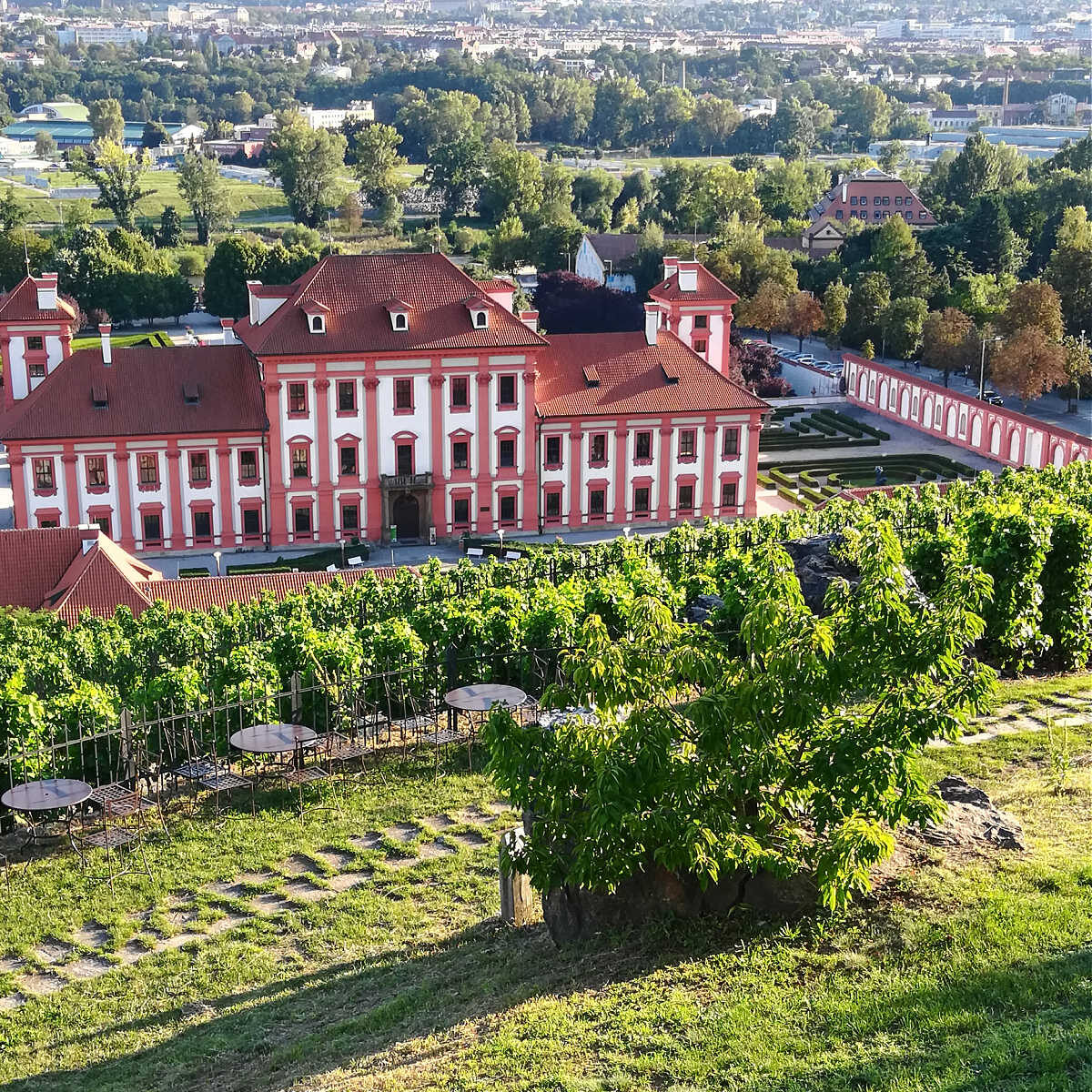
The views from the vineyard are beautiful and you can see the Troja Chateau and Stromovka park in the near distance.
The wine, which is delicious by the way, costs about 100 CZK per 100 ml and you can also buy whole bottles from 500-1000 CZK. The vineyard shop and bar is open during the regular botanical garden opening hours and sadly, you can’t just visit to buy the wine (you have to have a ticket for the whole botanical garden – I asked!).
The St. Clare’s Chapel
The St. Clare’s Chapel is that charming little white building you see perched right at the top of the vineyard in the Troja Botanical Garden. There is a great view over the whole valley and you can then walk down to the vineyard.
The chapel was built between 1691 and 1695 by Count Václav Vojtěch of Sternberg. He actually named it after his wife, Clara Bernardina of Maltzan, and it served as a private place of worship for the family while they were staying at the nearby Troja Chateau. The count built it as a way of saying thanks for the successful wine harvests and the prosperity of the estate.
Despite the many changes to the vineyard over the centuries, the chapel has remained remarkably intact. After a major restoration in the 1970s, it was eventually handed over to the Botanical Garden.
Practical info for visiting the botanical garden
Address: Trojská 800/196, Prague 7 – Troja
Opening Times
Gardens: April – September: 9:00 AM – 7:00 PM, October – March: 9:00 AM – 5:00 PM
Fata Morgana Greenhouse: Tuesday – Sunday: 9:00 AM – 6:00 PM (April – September), Tuesday – Sunday: 9:00 AM – 5:00 PM (October – March)
Ticket Prices
- Adults: 180 CZK
- Seniors (60+): 95 CZK
- Students: 95 CZK
- Children (3–15 years): 60 CZK
- Family Ticket (2 adults + up to 3 children): 450 CZK
- Children under 3 years: Free
My local tip: Buy your tickets online to get 10% discount (even if you are just standing at the entrance gates).
Facilities
There are several cafes within the grounds of the botanical garden and the prices are very reasonable. Recently the garden also upgraded the main walks with drinking water fountains and I have to say, they are a brilliant addition (the whole garden is on the hill and walking around is certainly a thirsty job!).

How to get to the botanical garden from the centre of Prague (to the main entrance)
To reach the main entrance of the Prague Botanical Garden at the Fata Morgana greenhouse from the city centre (Old Town Square), start by taking the metro from Staroměstská Station on Line A (green) in the direction of Depo Hostivař. At Muzeum Station, transfer to Line C (red) heading toward Letňany, and get off at Nádraží Holešovice.
Once you leave the metro, take Bus 112 in the direction of Zoo Praha – Botanická zahrada Troja. The bus ride takes about 10 minutes. Get off at the stop “Zoo Praha – Botanická zahrada”, which is the same stop used for the Prague Zoo.
From there, follow the signs uphill to the Fata Morgana greenhouse entrance—it’s about a 5–7 minute walk through a pleasant area surrounded by greenery. The entire journey from Old Town Square to the main entrance of the Botanical Garden takes approximately 35–45 minutes, depending on connections.

How to get to the top entrance (in Bohnice)
If you want to enter the Prague Botanical Garden from the upper Bohnice entrance (the top of the garden, near the outdoor expositions and the Fata Morgana greenhouse), the easiest way from Old Town Square is to take the metro and a bus. From Old Town Square, walk to Staroměstská Metro Station and take Line A (green) toward Depo Hostivař.
At Muzeum Station, transfer to Line C (red) in the direction of Letňany and get off at Nádraží Holešovice. Outside the metro, take Bus no. 144 or no. 102 in the direction of Bohnice and get off at the stop “Sídliště Bohnice.”
From there, it’s about a 5–10 minute walk to the Bohnice entrance of the botanical garden, located at the top of the hill near Trojská 800/196.
The path is well signposted, leading you to the main gate by the Fata Morgana greenhouse, which is ideal if you want to explore the garden downhill through its outdoor expositions. The entire journey from Old Town Square takes roughly 40–50 minutes.
What to see nearby
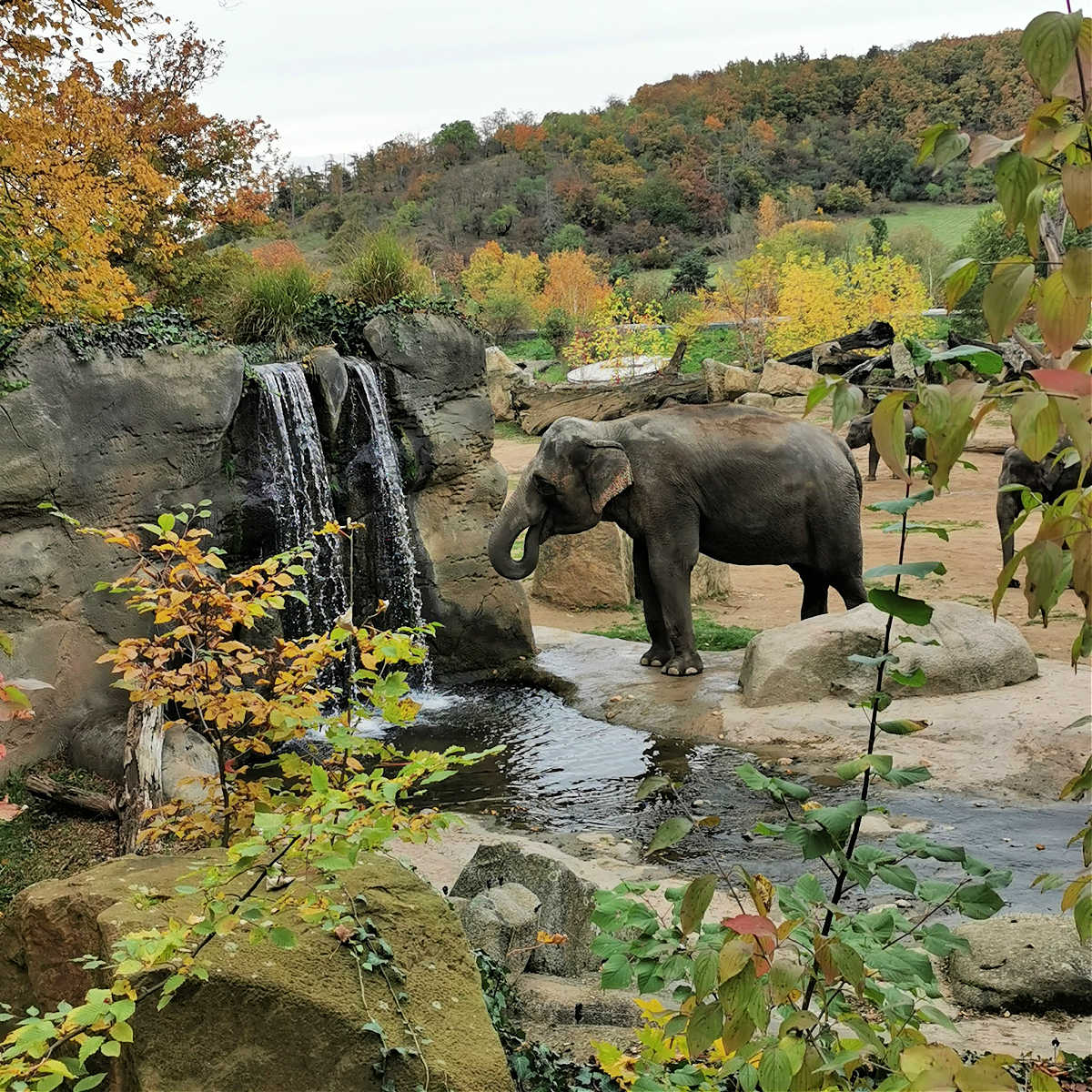
If you’re making the trip out to Troja, it’s worth knowing that the Botanical Garden is part of a much bigger, beautiful area of Prague. Just a few minutes’ walk downhill from the garden’s main entrance, you’ll find the Prague Zoo. It’s honestly one of the best in Europe—I’ve been countless times and the way they’ve landscaped the habitats into the hillside is just brilliant.
Right next door is the Troja Chateau (Trojský zámek), which is this magnificent 17th-century Baroque palace with beautiful gardens. If you have time, do go inside. The frescoes and stucco work are incredible, and the Prague City Gallery usually has some great art exhibitions on display there.
From the chateau, you can keep walking down to the Vltava River and cross the modern pedestrian bridge. This leads you straight into Stromovka Park, which is one of my favourite places for a long, peaceful stroll among the ponds and huge old trees.
This blog post was originally written on 26 March 2026 and last updated on 26 March 2026


