
Lucerna Shopping Passage: Prague’s Art Nouveau Arcade with an Upside-Down Horse
Lucerna is one of Prague’s most iconic buildings or rather it’s a sprawling Art Nouveau palace with a labyrinth of shopping passages, a legendary cinema, a grand ballroom, cafés, a famous music club, and one of Prague’s most talked-about pieces of public art.
I always walk through Lucerna to go to cinema or cafe and just love hiding here when it’s raining. It also perfectly connects with Svetozor passage and my favourite ice-cream place.
Built between 1907 and 1921, Lucerna was actually designed and developed by Václav Havel (grandfather of the writer and future president Václav Havel), who wanted to create a modern multiplex entertainment and shopping centre right in the heart of Wenceslas Square.
The name “Lucerna” means “lantern” in Czech, and it comes from the building’s most distinctive feature—a massive glass-roofed atrium that floods the interior with natural light.
When Lucerna opened, this was absolutely revolutionary. The whole concept of covered shopping passages with shops, entertainment venues, and cafés all under one roof was incredibly modern and cosmopolitan, inspired by similar developments in Paris and Vienna.
The Lucerna Shopping Passages
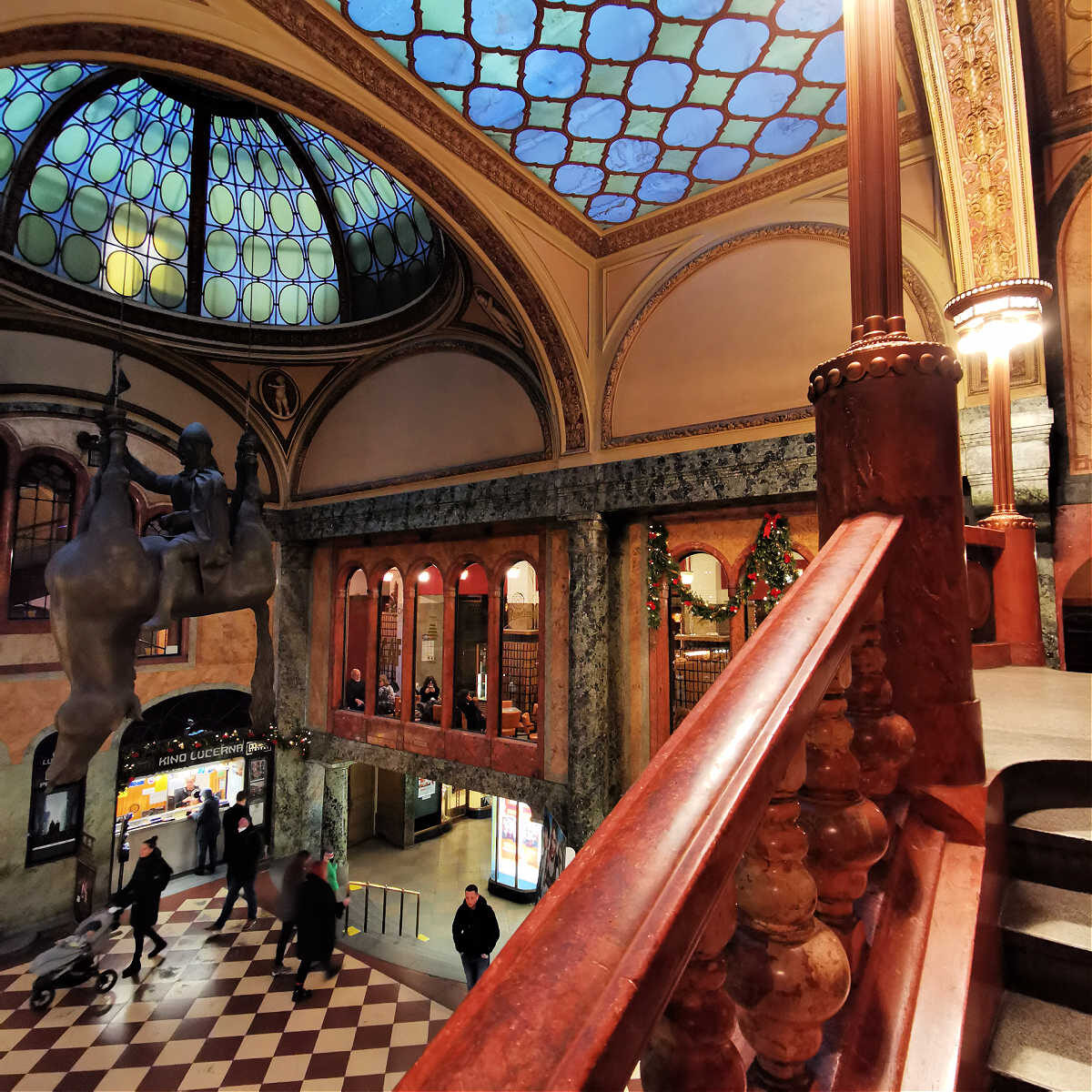
The shopping arcade is a genuine maze of corridors on the ground floor, lined with trendy shops, fashion boutiques, restaurants, cafés, and small businesses. Unlike modern shopping centres with their identical chain stores, Lucerna’s passages feel genuinely individual—quirky independent shops, vintage stores, jewellers, and places that have been there for decades.
The passages connect Štěpánská Street with Vodičkova Street, so you can walk right through from one side to the other, which is super useful, when it’s raining!
The architectural details are beautiful, I really like the original Art Nouveau tilework, wrought iron railings, decorative elements, and that wonderful sense of early 20th-century optimism about modernity. The round marble hall in front of the cinema is the centre of the arcade, and this is where you’ll find the most famous modern feature of Lucerna.
David Černý’s Upside-Down Horse
Hanging from the ceiling of the main hall is David Černy sculpture called”Kůň” (Horse), an upside-down horse with Saint Wenceslas sitting on its belly. It’s a cheeky, irreverent take on the famous equestrian statue of St. Wenceslas that stands at the top of Wenceslas Square.
Černý installed it in 1999, and it caused quite a controversy at first. Some people found it disrespectful to the national patron saint, while others loved the humour.
I have to say, I quite like it. The sculpture perfectly captures that Czech sense of humour, slightly absurdist, gently mocking authority and pomposity, but done with enough skill and wit that it becomes genuinely iconic.
Lucerna Cinema
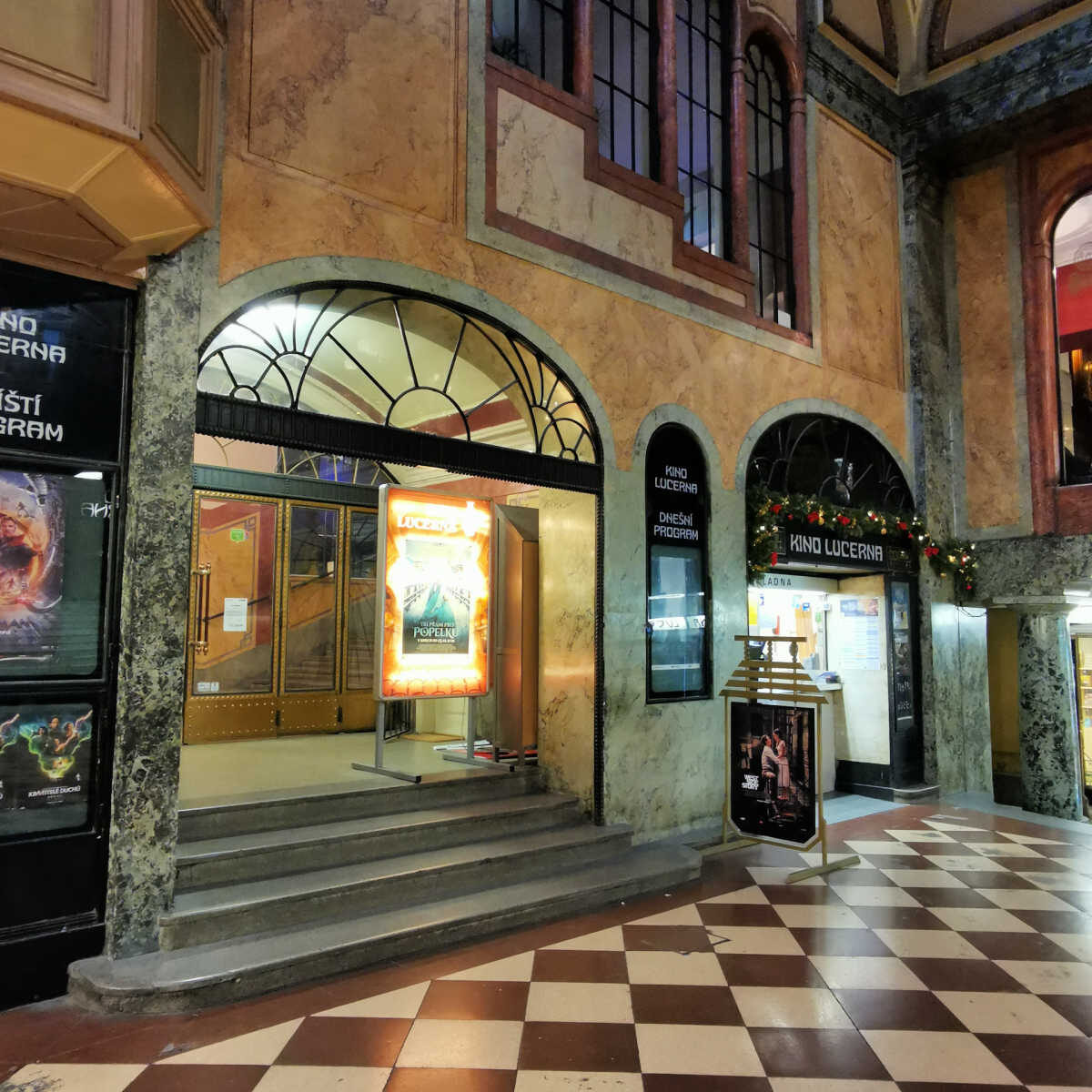
I think that Lucerna has the most beautiful art cinema in Prague. It was founded in 1909 as one of the first few cinemas in the town. The grand cinema hall on the first floor is absolutely spectacular – it’s an Art Nouveau masterpiece with ornate decorations, a beautiful ceiling, comfortable seating, and that sense of cinema as a special occasion rather than just day to day entertainment.
The cinema is still operating and shows a mix of mainstream films, art-house cinema, and special screenings. I always think that watching a film here feels properly special, you’re sitting in the same hall where people have been watching movies for over a century.
There is also a smaller cinema room, which has only a handful of seats. This was the private cinema of Havel’s family, which was also used for first screenings and special occasions. Whilst the main hall was always open to the public, the smaller one was only open to public after the Velvet Revolution in 1989.
Lucerna Music Bar
In the basement is the legendary Lucerna Music Bar (often just called Lucerna Club), which has been an important part of Prague’s music scene for decades. It’s a proper old-school rock venue with a big dancefloor, a stage that’s hosted countless Czech and international bands, and regular club nights that are hugely popular with locals.
The club is particularly famous for its “80s and 90s Video Party” nights, which happen regularly and pack the place with people dancing to classic music videos projected on big screens. It sounds cheesy, but it’s genuinely fun and very Czech—people of all ages dancing enthusiastically to hits from their youth. The club also hosts live concerts, DJ nights, and themed parties throughout the week.
The Great Hall
On the lower floors, Lucerna has a magnificent Great Hall, which is a beautiful ballroom with a stunning ceiling, chandeliers, and Art Nouveau and early Art Deco decoration.
I used to come here for my ball room dancing lessons and also folk concerts. It’s nice to see that the hall is still being used for end of school balls, concerts and other events. The acoustics are wonderful and retro concerts here are particularly special.
Rooftop
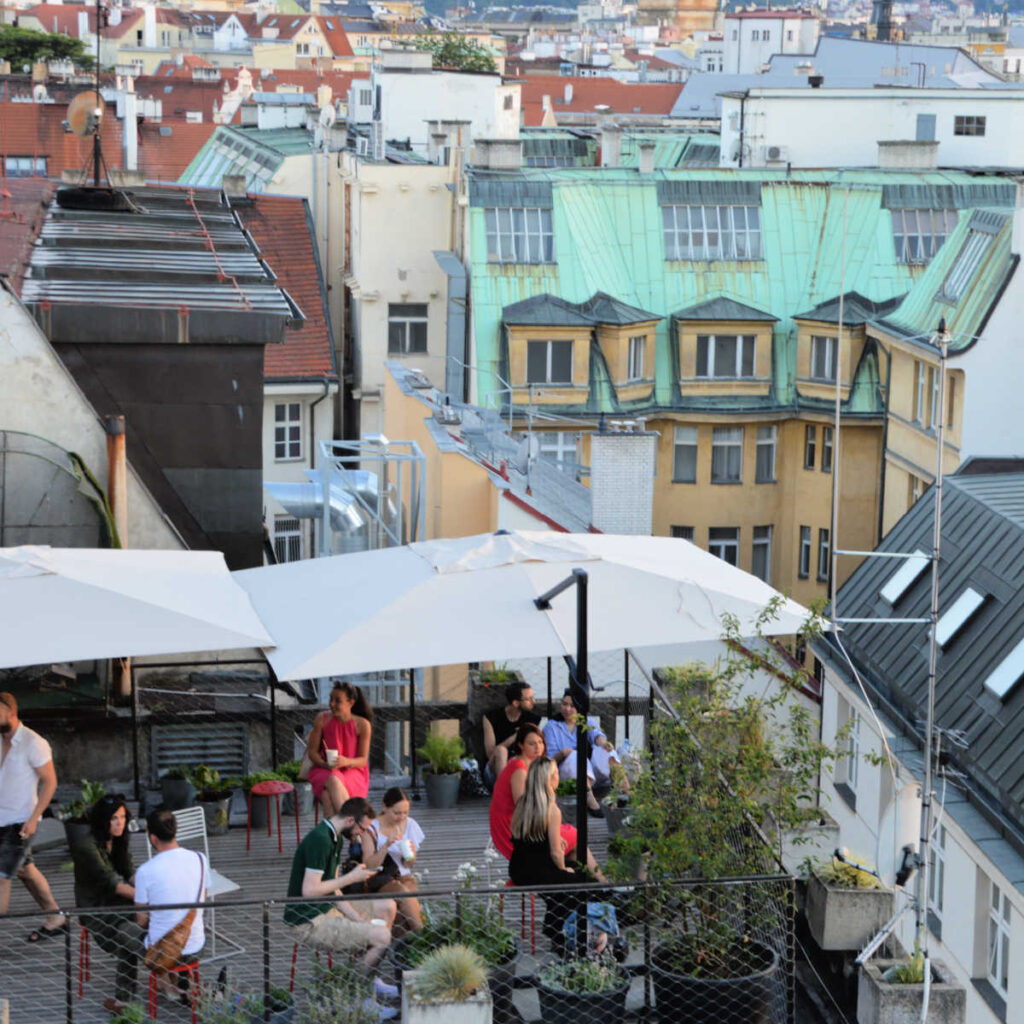
There’s also access to rooftop areas and terraces, though these aren’t always open to the public. I was lucky enough to visit, during open days before the roof tops were closed again for renovations.
There are fantastic views across the city centre and Wenceslas Square from there. I really like that the rooftop was part of the original design, which was because Václav Havel senior wanted to include every modern amenity, including outdoor spaces.
When the rooftops re-open again, you can also look forward to trying out the paternoster elevator, which is only one of few still in use in Prague. Until then, you can try the paternoster at New Town Hall in Marianske Square, but you need to take a guided tour to see it.
Kavárna Lucerna
If you want to experience what the 1930s Prague cafe would have felt like, you should definitely visit Lucerna Café. This is not a posh place with high prices, just regular historic cafe, which is largely undiscovered by tourists. It doesn’t try to pretend to be something else, because it’s perfect as it is!
You walk through a double door with a thick curtain to prevent any draft coming in, you need to order and pay for your drink at the bar and you can sit, read paper or book or talk to your friends. There could be students discussing politics, their studies and literature on one table and older ladies sipping coffee with eggnog on the other and everyone is happy. You don’t need to worry about feeling under dressed like in Savoy and just enjoy being here without feeling too self-conscious.
There is a large piano, that’s sometimes used and if you sit here for long enough you will start noticing waves of people coming in and then suddenly leaving. That’s because the cafe is part of the Lucerna cinema and people stop for a drink before they go to watch the latest film.
The Havel Connection
The fact that Lucerna was built by Václav Havel’s grandfather makes it even more special. The Havel family were progressive, cultured, and ambitious, exactly the kind of people who drove Czech cultural and commercial life during the First Republic.
When Václav Havel (the future president) was growing up, his family still owned Lucerna, and he spent time here as a child. After 1948, the communists confiscated the building, but after 1989, it was returned to the Havel family through restitution.
Practical Information for visiting
Location: Štěpánská 61 (entrances also from Vodičkova and Wenceslas Square), Prague 1
Opening times: Passages generally Monday–Saturday 09:00–20:00, Sunday 10:00–19:00 (individual shops vary); Cinema and Music Bar have separate schedules
Tickets: Free to walk through passages; cinema tickets around 150–200 CZK; club entry varies by event
This blog post was originally written on 28 March 2026 and last updated on 28 March 2026


