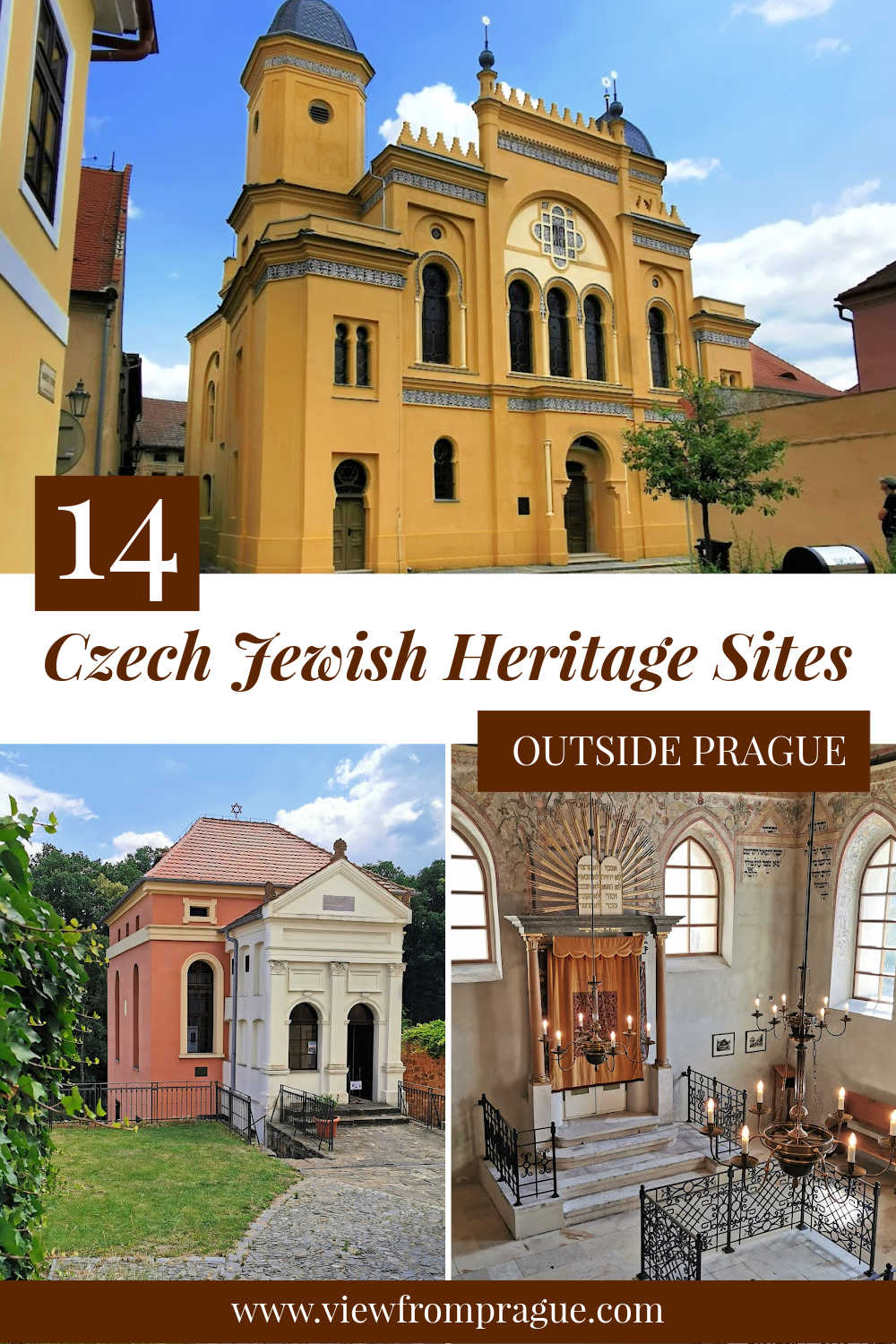
Visiting Guide to 14 Czech Jewish Heritage Sites outside Prague
Over the last few years, I’ve started to pay more attention to the history of Jewish communities in each town I visit and learn more about the culture and traditions.
In this practical guide, I wanted to share with you my favourite 14 Jewish heritage sites outside Prague, which are easily reachable by public transport. I’ve listed them in order of how close they are to Prague and how much you can see when you get there. I’ve also included synagogues that are privately owned and not open to the public, but you can usually see them from the street or walk around.
I should also mention, that this is not an exhaustive list, there are so many more towns with remains of Jewish cemeteries and synagogues, that are mainly used for different uses.
I’ve also visited other Jewish heritage sites, but I thought I’d mention here the sites you can visit as a day trip from Prague. The towns themselves make a great day out too, as they are historic towns with preserved inner town areas, castles, churches, museums and lots more to see.
If you are short of time and you’ve already seen the Jewish Ghetto and Synagogues in Prague, then I’d suggest a visit to Kolin to see how the Jewish quarter looked like in the 19th century. If you are up to it, then visit to Terezin will help you to fully understand the sad chapter in Jewish community history in the Czech Republic during the second world war.
MORE DAY TRIPS FROM PRAGUE
- The complete visitor’s guide to historic Slavonice Town >>
- Castles near Prague you can visit during winter >>
- Visiting Santini Architecture in Prague & beyond >>

Kolin – Jewish Quarter, Synagogue, Old & new Cemetery
If you want to see the best-preserved Jewish Quarter closest to Prague, then a trip to Kolin is a must! It’s only 40 minutes on a direct train from Prague and you can find here several preserved streets, original shop entrances, a synagogue and a museum. I thought it was a complete hidden gem, since it’s so close to Prague!
The Jewish community has settled in Kolin at the end of 14 century and for a long time it was one of the biggest (second biggest after Prague) and the most important Jewish communities in the Czech lands.
In 1402 the first wooden synagogue was built on the site, where you can find the current synagogue. The synagogue is a bit obscured by another large house, which used to be the Jewish school. Unlike other synagogues, this one was still being used after the 2WW until 1955 as some of the Jewish community has returned back to Kolin.
The new Jewish cemetery used to have a small prayer & funeral building with a flat for the cemetery staff, but it was torn down before 1989. I found out that the ‘aron ha-kodes’ which is a decorated box for the Tora ended up in a synagogue in Northwood in London (UK).
Visiting: Synagogue is open to public and includes museum, Jewish Quarter streets accesible any time, cemetery is open sometimes, but you can see most of it from the iron gates.
MORE DAY TRIPS FROM PRAGUE

Terezin
And of course, the most poignant visit was my trip to Terezin, which I’ve visited many times before, but only recently could bring myself to visit the Small Terezin Fortress and the exhibitions in the Terezin Jewish Ghetto School.
During World War II, Terezin was used by the Nazis as a concentration camp and ghetto, mainly for Czech Jews, but also Jewish people from occupied lands and Germany. It was used as a transit camp and from there people were sent to concentration camps, and forced labour camps in German-occupied Poland and elsewhere.
The Nazis used Terezín as part of a deceptive ploy. They presented Terezin to the outside world as a “model Jewish settlement,” but in reality, it was a concentration camp. There are even photos of Red Cross visiting the town, with children in clean clothes playing in front of a school, but it was all for show for one day only.
There were also wealthy older German Jews sent here under the false pretence of ‘retirement facilities’. Their properties back in Germany, all their money and jewellery were taken from them in the same way as with all the Czech Jewish communities.
During its existence, more than 140,000 Jews passed through Terezín. About 33,000 died there from malnutrition, disease, and overwork.
Visiting: Open to public, free to walk around the Terezin Jewish Ghetto in the large fortress, but you need to buy tickets for museum buildings & small Terezin fortress.
MORE DAY TRIPS FROM PRAGUE
Ustek
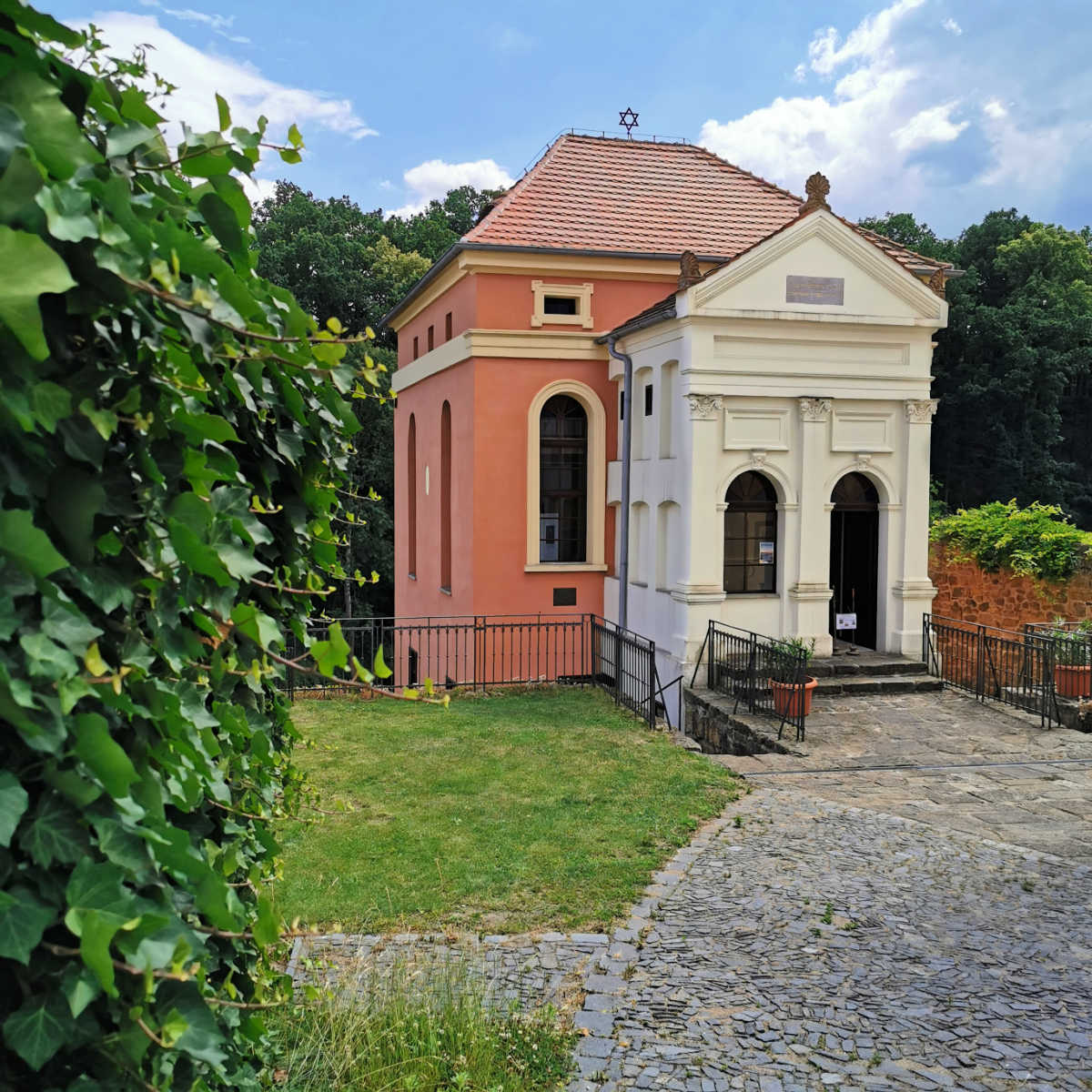
I also visited one of the few remaining Jewish schools in Ustek (about 2 hrs train journey from Prague), which is now beautifully preserved together with the synagogue and rabi’s house and opened as a museum.
The synagogue was built in 1791 – 1794 in classical style and was replacing a wooden synagogue which burned down twenty years before. The synagogue was used until the 2WW, but then the surrounding houses were taken down and the building started to get dilapidated.
During the 1970s, the decision was made to demolish the building, but after 1989, the Federation of Jewish Communities in the Czech Republic started to restore the synagogue. It’s good to see that, the synagogue is now open to the public and also used for Jewish ceremonies – the first Jewish wedding since before the 2 WW took place here in 2018.
The cemetery with around 221 remaining grave stones is just outside the town and you can follow the local educational trail to take you there. As you walk you can learn more about the local Jewish history from the display boards along the way. The cemetery is up a steep hill, but it’s definitelly worth walking up there as it gives you the full picture of the life in a small town.
Only a few families came back after the 2WW and by the 1950s they all emigrated to Israel or the USA.
Visiting: 1. Maje Street, no 96. Synagogue & school is a museum and is open to public (affordable tickets). Cemetery is also open (free).
MORE DAY TRIPS FROM PRAGUE
Breznice – Jewish Quarter, Synagogue & Cemetery
There was a Jewish community in Breznice since 16th century, because that’s when the Breznice Jewish Cemetery started to be used.
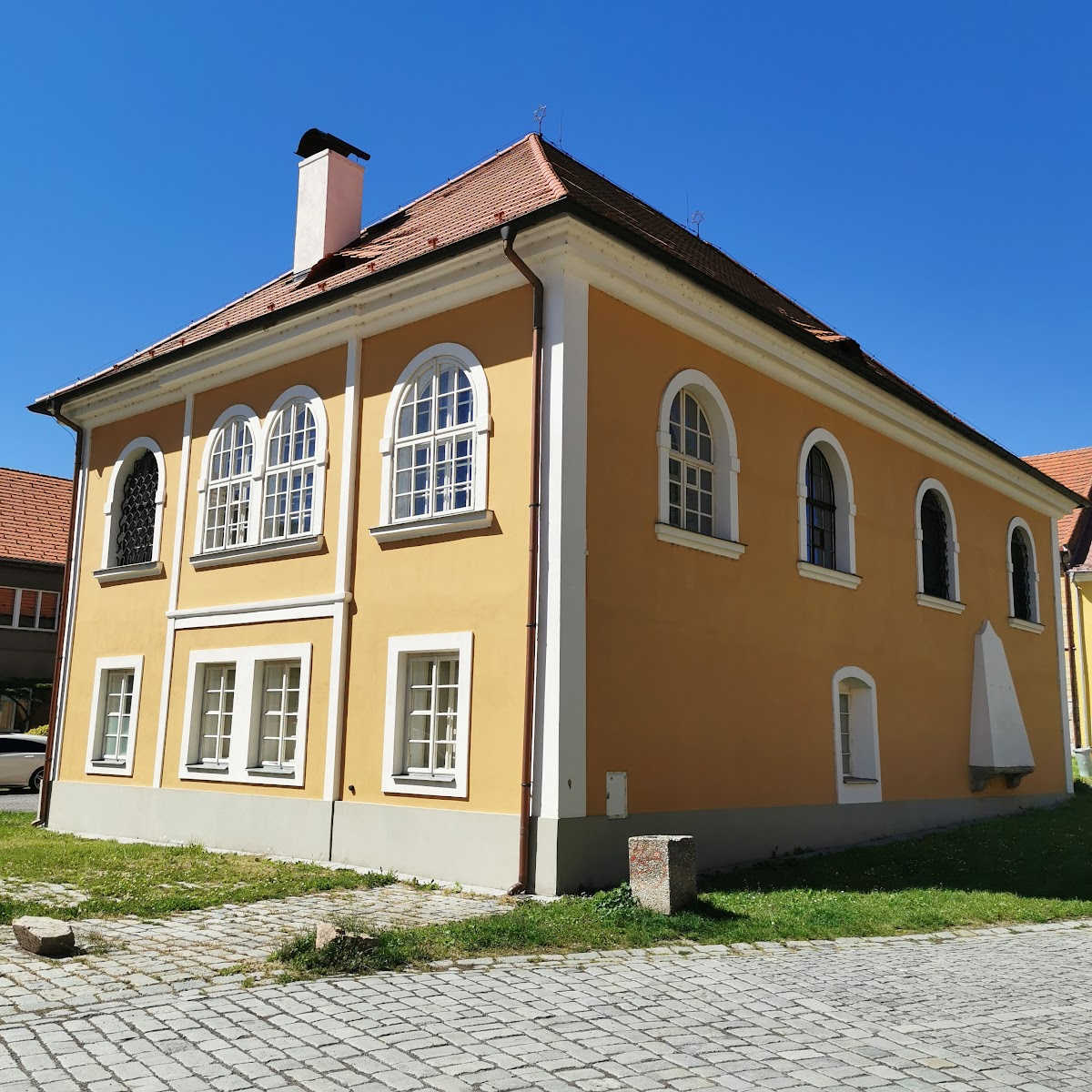
The Breznice Jewish Quarter is very unique, because unlike in other towns, where the Jewish community was given a part of town to live in, in Breznice, they were given an empty building plot. This ment, that the Breznice Jewish Quarter, also known as ‘Loksany’ was designed as a square with synagogue in the middle and houses around. Unlike other Jewish Ghetto’s, the houses here seem spacious and not too crammed together.
The Synagogue was originally built in 1725-1726 in the late Baroque style and re-built after a major fire in 1821 in an Empire style. After the 2WW was used, like many other synagogues as a storage and only returned back to the Jewish Community in Prague in 1995. The Synagogue was eventually completely renovated and after 60 years it was open to the public again in 2014.
Visiting: Synagogue is open to public & there is a small admission cost, the houses within the Jewish quarter are privately owned, but you can walk around.
Zatec
I also found a newly restored synagogue, when I visited Zatec town because of their hop growing and beer making.
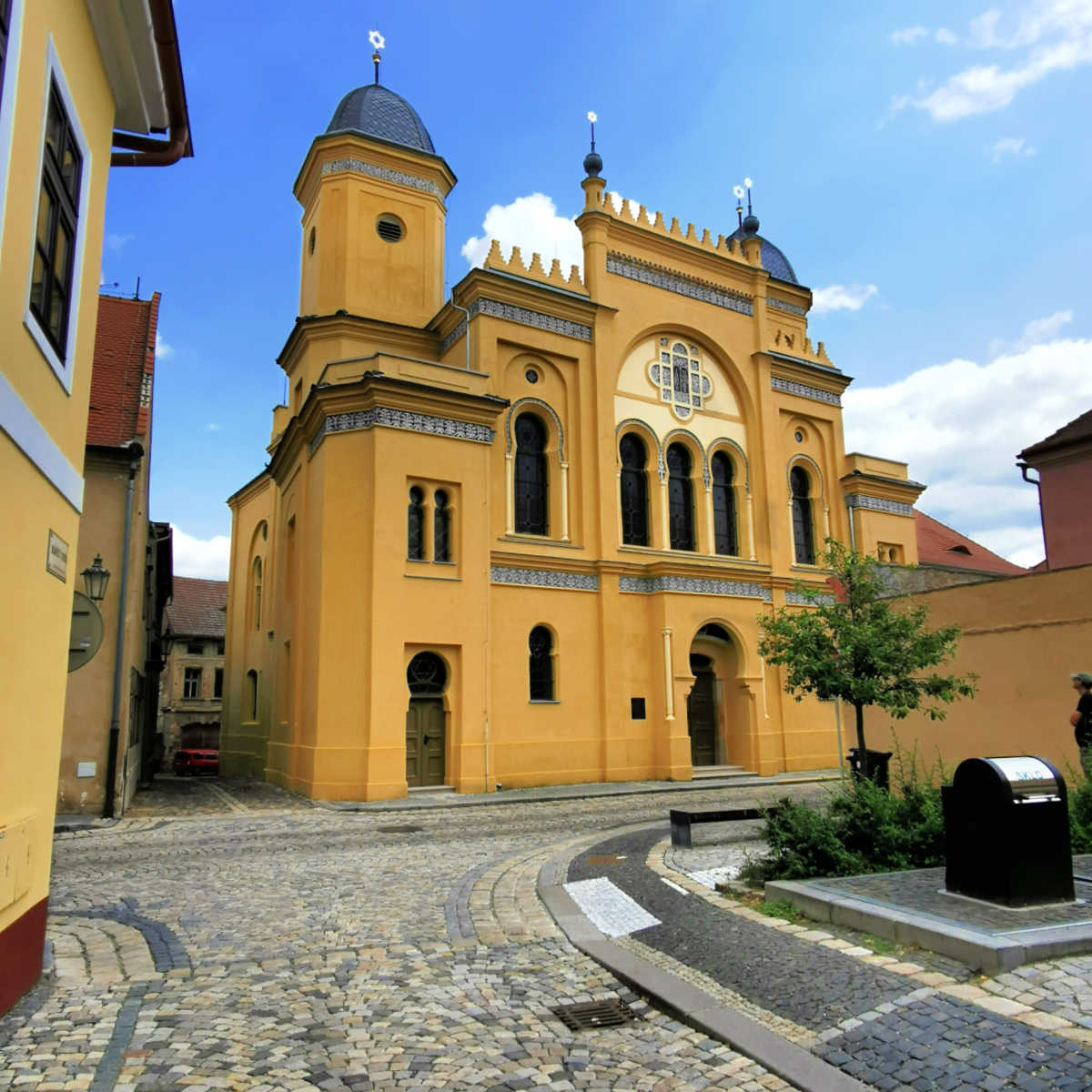
The newly reconstructed Jewish synagogue is the second largest synagogue in the Czech Republic and will be soon opening to the public as a modern gallery and cultural centre.
The synagogue was built between 1871-1872 in the Moorish style based on the plans of architect Johann Staňek. The fact that it is the second-largest synagogue in the Czech Republic, illustrates how much the hop trade was successful at the time (and the local Jewish community was of course significantly involved in the hop trade).
After the tragic events in 1938, the synagogue ceased to serve its original purpose and decayed for decades. This changed when it was purchased by Ing. Daniel Černý in 2013. He decided to restore the synagogue and neighbouring rabbi’s house and create a cultural centre commemorating the history of the Jewish community in Žatec.
The Zatec cemetery was founded in 1869 and it’s over 3000 m2 large. Astonishigly, the cemetery was used during 2WW as a storage of army equipment and sadly only 4 grave stones survived. The cemetery is now a commemorative garden.
Visiting: You can see the synagogue as you leave the main square towards the railway station. Synagogue is planned to be open for cultural events, but it’s fully visible from the street. The cemetery is on Prazska Ulice and you need to phone up to make an appointment to see it inside. You can, however see quite a lot of the space from the gate.
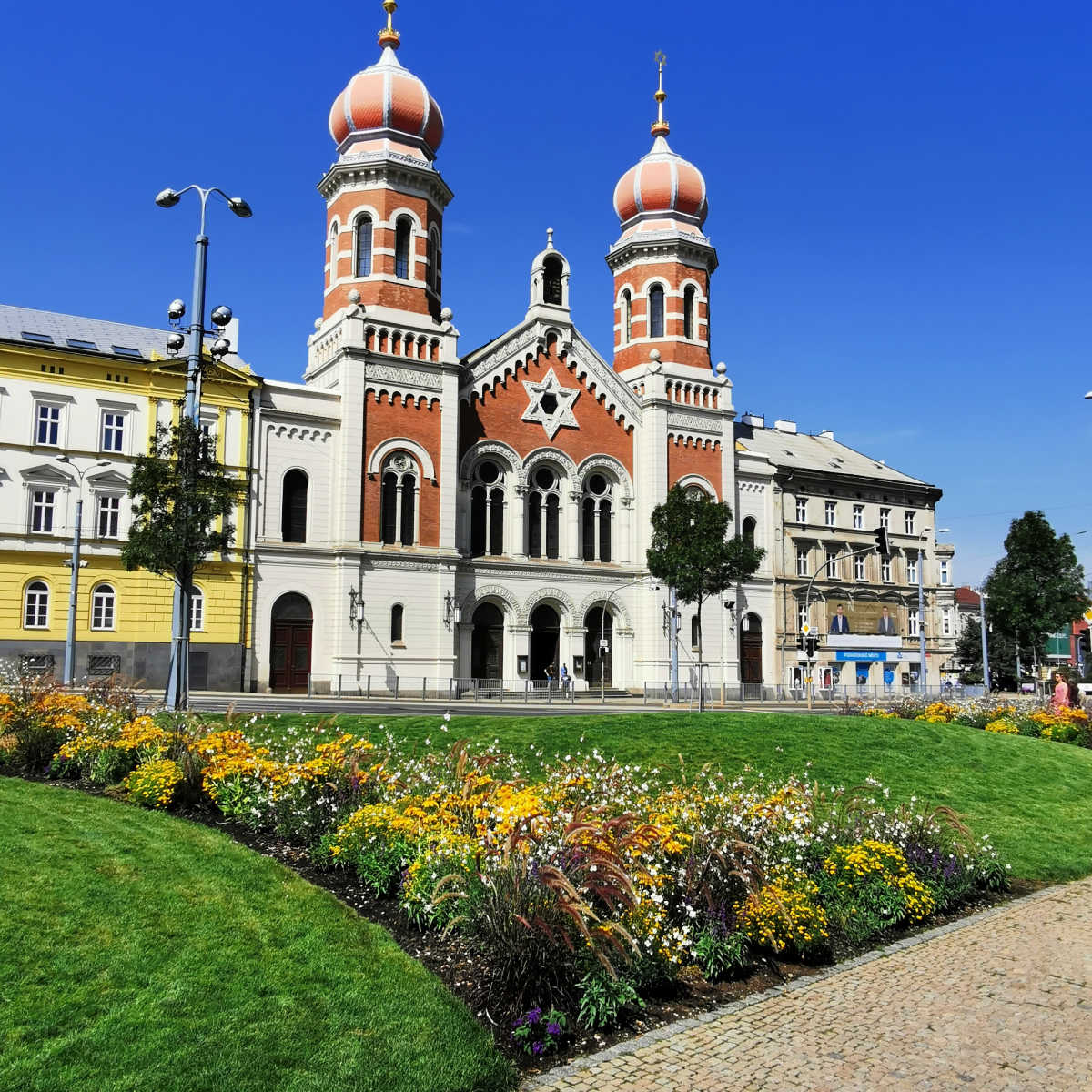
Plzen
Old Synagogue, Large Synagogue, Supplementary Synagogue, Old & New Cemetery,
The Large Synagogue in Plzen is the biggest synagogue in the Czech Republic and it’s also the second biggest one in the Europe and the 5th one in the whole world!
It was built between 1888 – 1892 and was designed by Max Fleischer and Emanuel Klotze. The building has three large areas and the two towers are 45 metres high each. Inside the synagogue is beautifully decorated with flower and leaves design.
The courtyard of the synagogue also has a house of the rabi. During the 2ww the synagogue was used as a storage and afterwards, it was used for services until 1973. Afterwards, the building was abandoned until 1989, when slow refurbishment started, initially funded by the Czech Ministry of Culture.
You can also find the Old Synagogue in Plzen (inside the courtyard of house no. 80/5 Smetanovy Sady), which was built in 1857 – 1859.
The Jewish community in Plzen was already established in the town before the 16th century, but in 1504 all Jews were told to leave Plzen. Rules have changed in 1848 and Jewish families started to come back to Plzen. At that time, there were 41 families, which was enough to get permission to build a synagogue. By 1875 the first synagogue wasn’t large enough, so another synagogue was built next door and connected with a wooden walkway.
Within the next decade, the Jewish community in Plzen grew so much that the Large synagogue had to be built. The Old Synagogue has been restored and it’s now being used for services, art exhibitions, concerts and there is also a permanent exhibition about the Jewish traditions and history of the Jewish community in Plzen.
Visiting: The Large and the Old synagogues are still used as active places of worship, the the otherJewish sites can be visited from the outside, cemetery is open to the public during the day time.
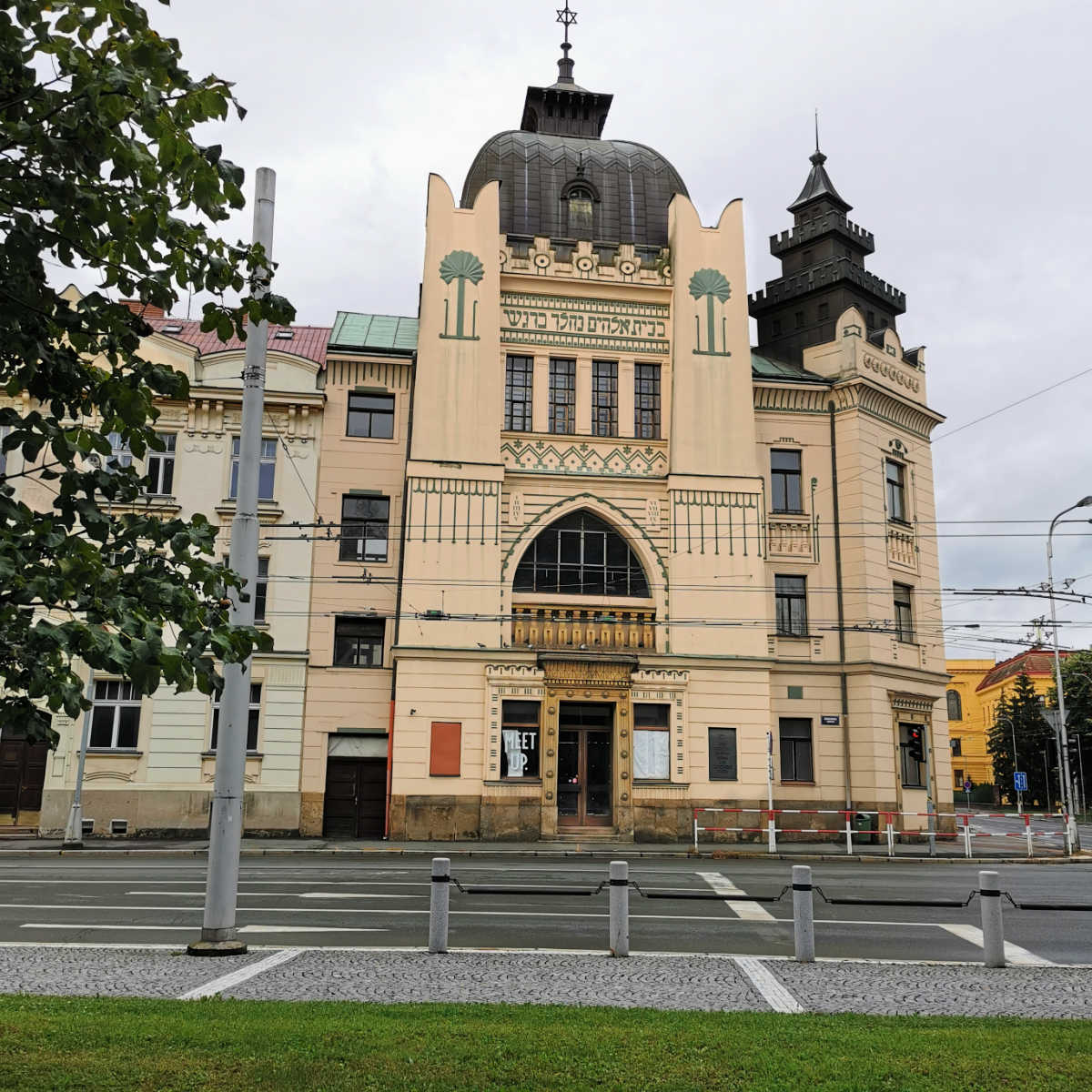
Hradec Kralove – Synagogue
The Hradec Kralove Synagogue is a large corner building, which was built in 1904-1905. After the war, the local Jewish community was re-started again, but as people started to leave, the synagogue become neglected. In 1960 the synagogue was bought by a Science Library. The building has returned back to the Jewish Community in Prague in 2007.
Visiting: Pospisilova Trida, Visible from the street, is owned by the Jewish Community in Prague, but it’s closed to the public unless there is an art event or exhibition

Kutna Hora – Synagogue
Kutna Hora might be already on your list of places to visit after Prague, so let me add another heritage site you can look at when you visit. The new synagogue in Kutna Hora is from 1902 built in Art Noveau style.
If the building is open, it’s worth looking around as there is a permanent exhibition about the Jewish community in Kutna Hora. The exhibition is open from May to October on Wednesday, Friday and Saturday from 10 am – 4 pm.
The Jewish community in Kutna Hora originally lived in the upper part of the town but had to move out to closer where the current synagogue stands.
It’s very easy to travel to Kutna Hora from Prague by train and the journey takes only about 40 minutes.
Visiting: Smiskova Street no. 619. Visible from the street, private building used by Husita’s Church.
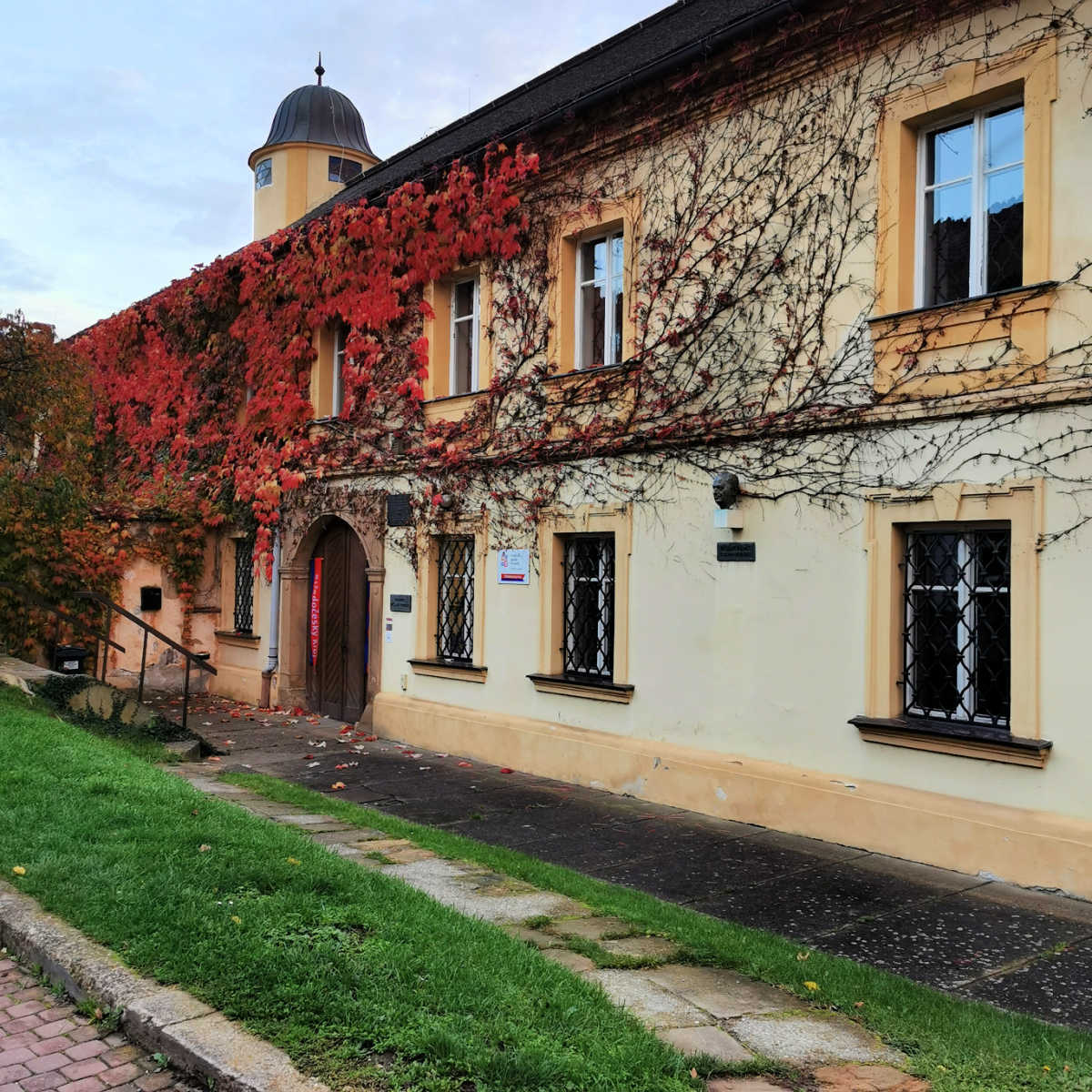
Rakovnik – Synagogue & Cemetery
The Jewish community in Rakovnik was fairly small. Records go back to 1441, but for the next two centuries there were only few families living in the town. The official Jewish community was founded in 1796 and the population grew to about 30 families.
The synagogue was originally adapted in 1763 from a normal town house and extended many times over. After the 2WW the synagogue wasn’t used anymore and the tora was taken to New York and gifted to the Jewish community there. The building was used for a while by a husitas church, but later left empty.
Visiting: Vysoka Street, no 232. Synagogue is open to public on special occasions and the space is used by an art gallery, which is open during normal working hours. You can also see the building from the street any time.
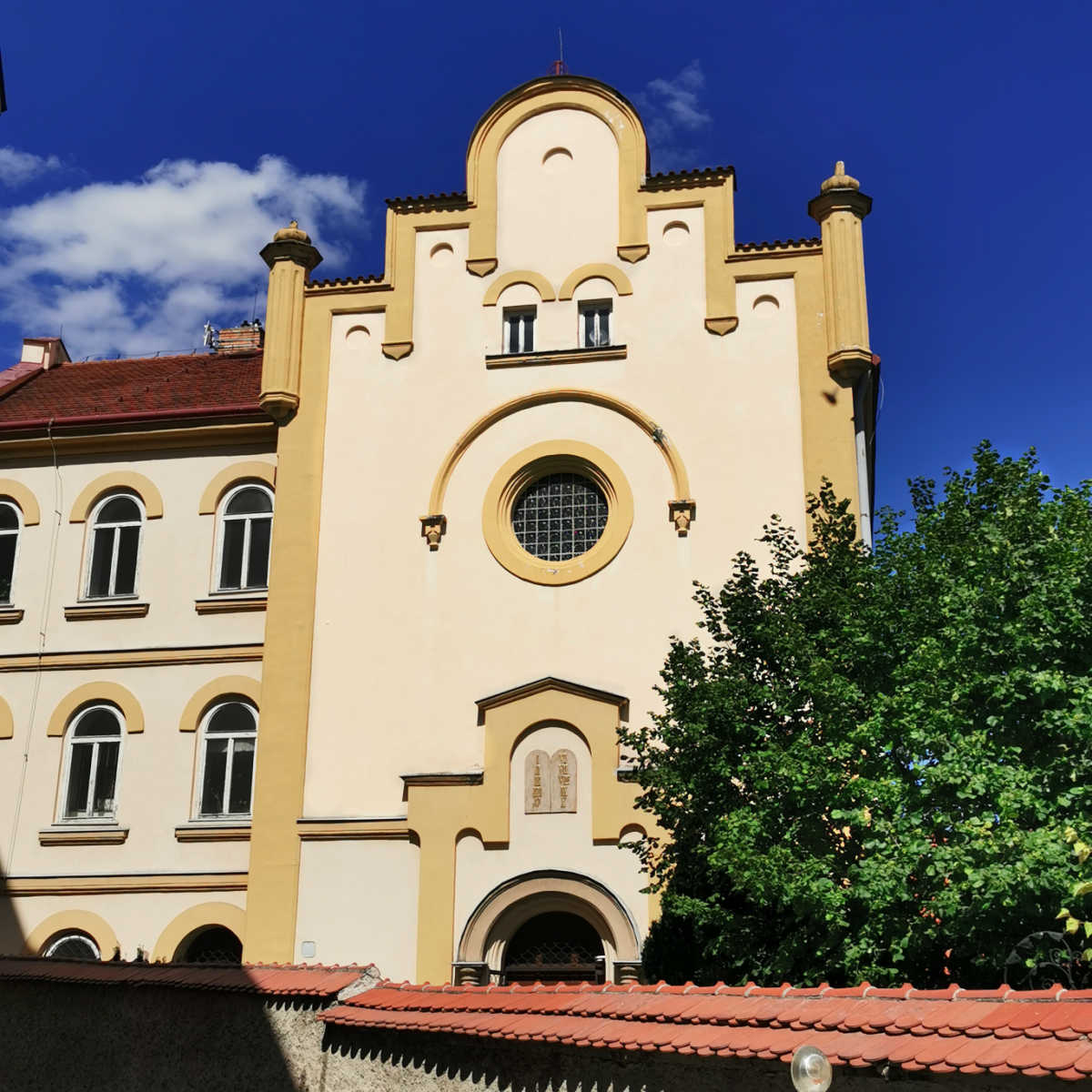
Slany – Synagogue & Cemetery
The Slany Jewish community was fairly new, as families were only allowed to settle in the town from 1848.
The synagogue was built in 1865 in Maurish style after the Slany Jewish community’s previous prayer room – a room in a local pub – wasn’t sufficient anymore. In the late 19th the rabi Filip Bondy was the first person who started to use Czech language during the Jewish services.
At the beginning of 1942, 1632 Jewish people were taken, initially to Terezin and then to other concentration camps. Only 11 people have returned.
After the 2WW the synagogue was used as a storage space, archive of a local law court and also as an accommodation. There is nothing left from the original wall decorations and most of the valuable items have also been lost and what’s been saved, has been moved to the Jewish museum in Prague.
After the 2WW the Czech government sold several toras from the Slany Synagogue to a private collector in USA, despite the protest of the official Jewish community in Prague. The toras are used in Jewish communities in Savannah, New Jersey or Prescott and to this day, the now non-existent Jewish community in Slany is being commemorated during special anniversaries.
The cemetery has a modern prayer and funeral building built in 1931 in functionalist style. This is quite unusual, as there are only a few other Jewish buildings in this style (for example the Smichov Synagogue in Prague 5)
Visiting: Fricova Street, The synagogue is not open to the general public – since 2013 the building is used as a local police office. You can, however, see it from the street. The cemetery is open to the public or you can see part of the cemetery from the street
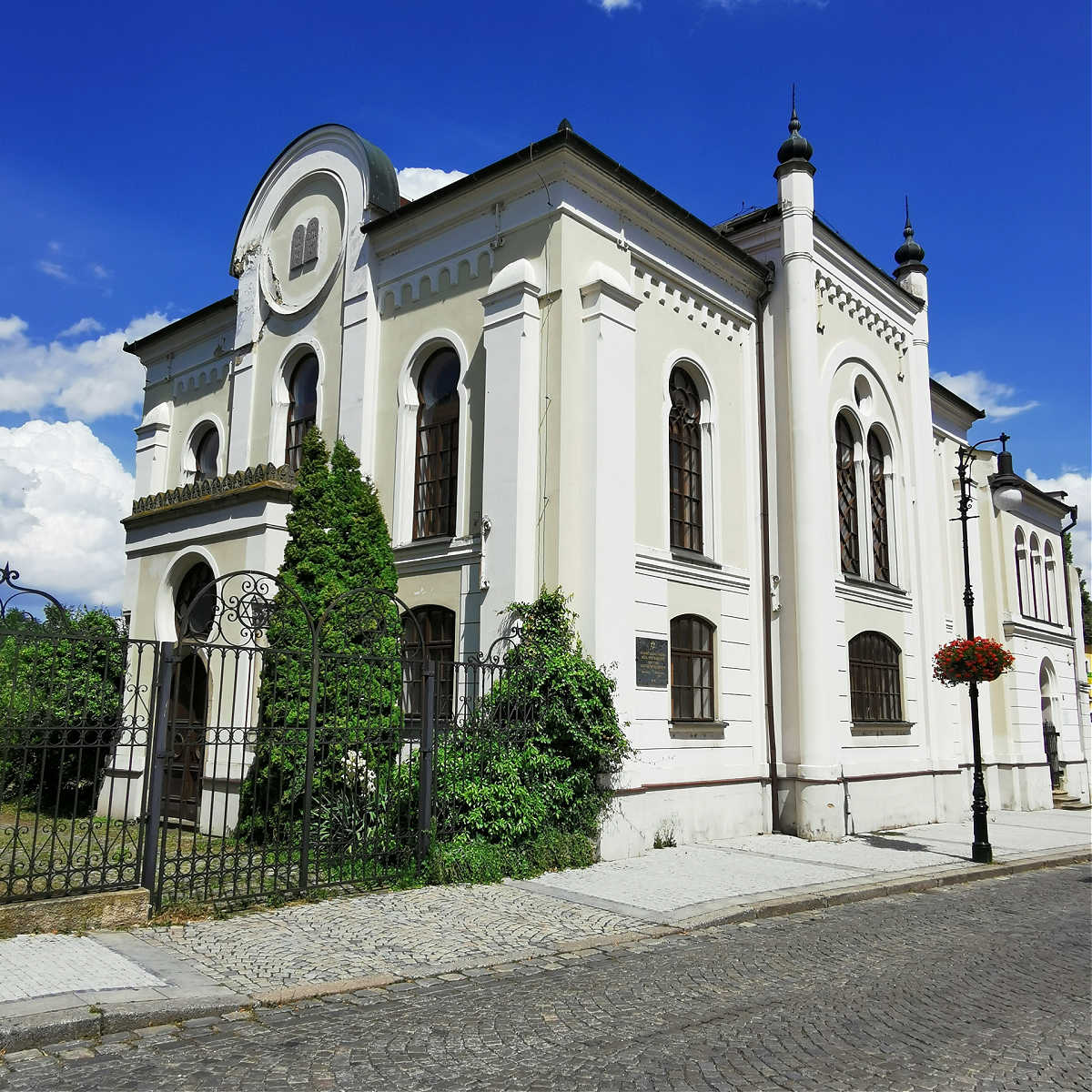
Louny Synagogue & Cemetery
The Louny synagogue was built in 1871 in neoromantic style and Maurish decorative elements and it replaced old synagogue in a nearby Ceska street. The new synagogue was slightly away from the main Jewish quarter, which was in Ceska Street. This was because this building plot become available after a local pub and a post office burned down. The synagogue was designed by Johann Stanek – the same architect that designed synagogue in nearby Zatec.
During the 2WW the town bought the synagogue and used it as a museum and later as a storage for a local law court. Unfortunatelly nothing from the inside decorations have survived.
There used to be three different cemeteries in Louny and only the third one has survived and it’s still being used to this date.
Visiting: Hilbertova Street, Synagogue is not open to public, but you can see it from the street, cemetery is open to public during regular opening hours or you can look through a gate.
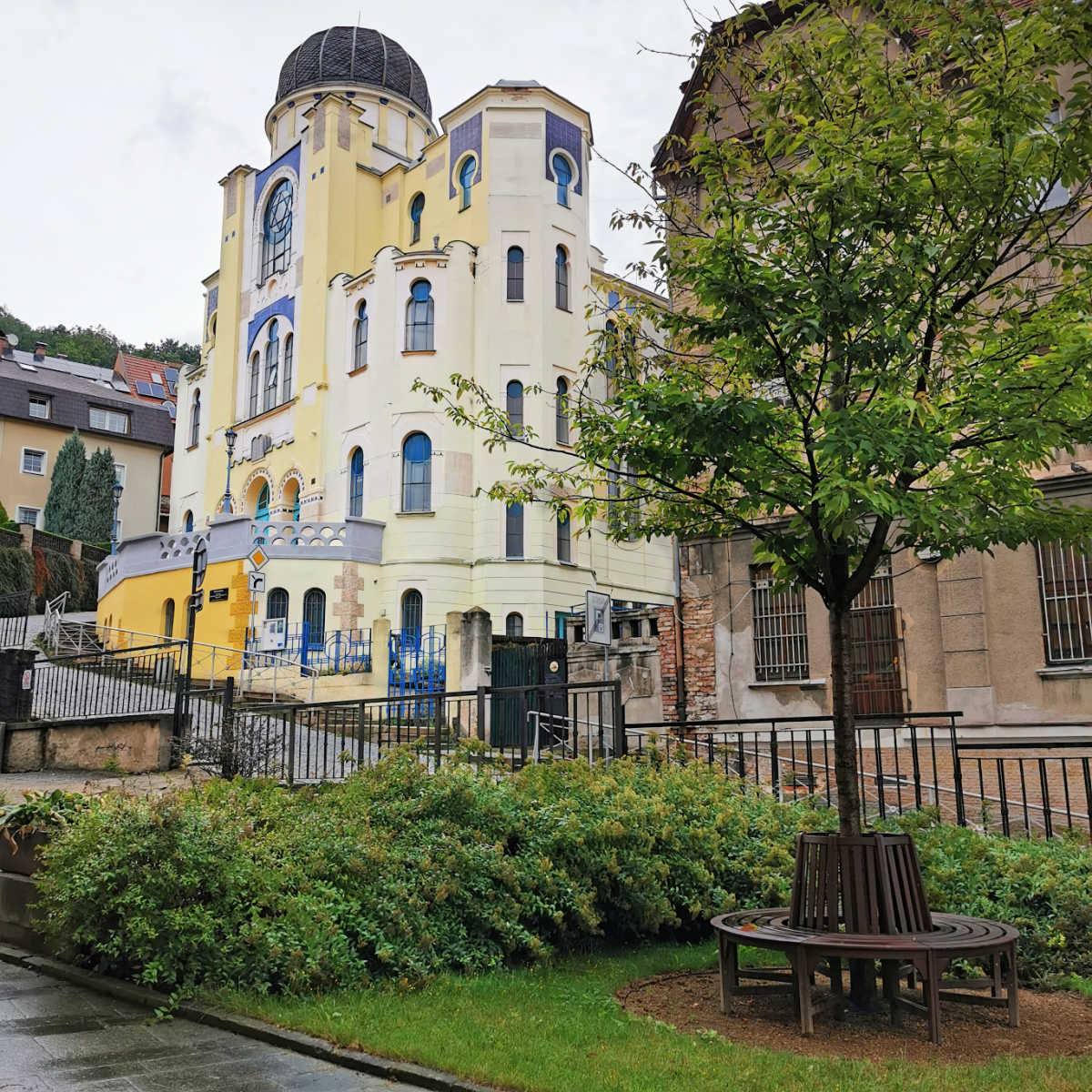
Decin Synagogue, Old & New Cemetery (completely lost)
I thought I’d also mention Decin because the synagogue here is the only synagogue still remaining in North Bohemia after 1938.
This beautifull synagogue was built in 1907 in oriental Art-Noveau style. The synagogue was taken over by Naci Officers during the 2WW and afterwards the building was sporadically used – either as an archive or it was left empty.
The border regions of Czechoslovakia (including Decin), also known as Sudetenland during the 2WW, have been annexed by Nazi Germany in 1938 and added to Germany. During the night from 9 to 10 November 1938, the Nazis organised attact on many Jewish communities and burned down over 35 synagogues. This horrible night is also called the ‘Kristallnacht’ or the Crystal Glass Night.
During the “Kristallnacht,” the then-mayor of Decin – Podmokly, JUDr. Anton Kreissl, allegedly personally intervened for the synagogue’s preservation, arguing that setting it on fire could also damage the surrounding houses.
His successor, Mayor Julius Stumpf (1939 – 1942), was also constantly pressured to have the building destroyed, but somehow he managed to save the building too. He apparently claimed he didn’t have enough labourers to knock down the building and another time his excuse was that the building was still used for storage.
The Jewish Community in Decin was renewed after 1993 and the synagogue restaured, so it can be now used again as synagogue, meeting place, art space, concert hall and exhibition area.
Visiting: Podmokly Decin Area, Zizkova Street – Open during exhibitions, concerts or phone in advance to arrange viewing. The Jewish cemeteries in Decin are long gone and there are no remains.

Trebic
Another well preserved Jewish Quarter is in Trebic although it’s a bit of a journey from Prague (2-3 hrs one way trip on a train) I think it’s worth it. Trebic Jewish Quarter is even listed in the Czech UNESCO list and it’s nicely preserved, with original streets, synagogue, museum of a typical Jewish house and a nearby cemetery. The Jewish quarter takes up around 4,3 acres and there are around 124 houses. It’s separated from the main Trebic town by the river Jihlava.
Narrow streets, stone staircases, sleeping squares, and mysterious corners make Třebíč a city cut out of medieval times. The Jewish quarter survived and has its own town hall, school, poorhouse, and two synagogues, which is what makes it so unique. I’ve been amazed at how authentic this part of the town felt, it was like stepping back in time.
I walked by the Jihlava River all the way to the former Leather Factory, which was owned by one of the Jewish business familly and then back to the main part of the ghetto. This gave me a really good idea of how the whole town was set up. There is also a great view of Trebic from the top of the hill as you walk to the cemetery.
Close by you can also find the original Jewish cemetery from 1631 with an old ceremonial hall. Trebic Jewish Quarter is the only Jewish site on the UNESCO list outside of Israel, which is why it’s so special to visit.
The Jewish community started to settle here in 1238, but the first written document about a formally established Jewish quarter wasn’t until 1410 (when it was unfortunately burned down). By the end of 16 th century there were around 6 families living here, but by the beginning of 18 th century this number have increased to around 1000 people. By the end of the 18 th century this was around 1770 people.
The live in the ghetto was never easy, including locking the gates at night or having to lower a synagogue because the light from the window was too upsetting for the lord’s wife. At the beginning of 18th century the owner of the town and lord Jan Josef from Valdstejn agreed to a new rule, where Jewish people who owned houses anywhere else in the town had to swap houses with non-jewish people living in the Jewish Ghetto.
Before the war there were around 300 people living there, but after the 2ww only 10 people have returned and the whole Jewish Quater become neglected. The local goverment rented the small houses here to families on low income and there was never any attempt to restaure or repair the main Jewish sites in the town.
During the 1970s there were even plans for the complete removal of all houses, but fortunately that never happened. The Jewish quarter was saved because it wasn’t big enough to accommodate the sheer number of high rise panel houses that the town wanted to built. The whole area is also set up on slope of a steep hill, which was another problem for the city planners.
After the Velvet Revolution in 1989 money were finally allocated to repair the Synagogue and application was made to UNESCO to save the rest of the Jewish Quarter.
Trebic is 3 hrs away from Prague, depending on the bus or train connection and unfortunately, there are no direct connections. I’ve still done this visit as a day trip from Prague, but it was quite a long day.
Visiting: Synagogue (payable), Museum (payable) & Cemetery (free) is all open to public, streets are accessible any time. There are few hotels, restaurants, cafes and shops. There are also regular events to celebrate Jewish culture and traditions.

Boskovice
I was surprised to find that the Boskovice Jewish Quarter (about 2,5 hrs on a direct train from Prague) was as good as Trebic and I found it even more preserved and educational – there is a great Jewish museum, synagogue museum and you can also step into the mikvah room under one house.
The Jewish quarter itself feels quite big (it’s over 5 acres) with a lots of different streets to wonder around. There used to be around 100 houses all together and some were split into flats. There is even the old square with a water well and traditional meat market shops.
You can also see one of the few remaining gates to the Jewish Quarter, that always had to be locked at night.
The Jewish community in Boskovice goes possibly back to 14 th century, but written documents are from 16th century. By the end of 17 th century Boskovice was the largest Jewish town in Moravia. So much so, that a law act was passed to allow only 326 Jewish families to live in the town.
During the mid 19th century things changed again and Jewish families (about 2000 people) formed about 1/3 of all Boskovice population.
With rules changing again and Jewish people being allowed to move freely, many affluent Jewish families left for Brno. Boskovice than became the ‘poor’ Jewish town with only 400 people. After the 2 WW only 20 people returned but none stayed permanently.
The Boskovice Synagogue was built in 1639 and extended several times. During the 2WW the building was used as storage for the Jewish property confiscated by Nazis.
The Jewish cemetery is short walk outside the town and it’s one of the larger ones in the Czech Republic after the Jewish cemeteries in Prague. The cemetery was founded in the 16th century and there are over 2500 grave stones in about 14500 m2. The cemetery is set in a very steep hill, so it’s perhaps not unusual that it has two gates. The lower one is for general public and the top one was for the funeral carts.
Visiting: Synagogue, mikvah, Jewish museum is open to the public (tickets are very affordable). There are display boards about the Boskovice Jewish town as you walk around the streets.
This blog post was originally written on 17 October 2024 and last updated on 17 October 2024
PIN TO KEEP FOR LATER