
9 Hidden Secrets of Prague Main Train Station: History & What Not to Miss
I use Praha Hlavní Nádraží every time when I’m catching a train for a day trip from Prague. But for me, it has never been just a place to wait for a train departure. I love industrial history, so I often arrive early to have the time to explore another part of the train station.
I often think it’s a shame that so many travellers only see the modern, noisy shopping levels. If you know where to look, this building is full of royal secrets, heroic stories, and even some quirky modern art.
In this guide, I wanted to show you my favourite places at the station—the spots that make me stop and smile every time I travel. From the glamour of the Art Nouveau era to the hidden bunkers of the Cold War, here is the history of “Hlavák” and the hidden gems you won’t want to miss while you wait for your platform.

The Main Train Station History
The Praha Hlavni Nadrazi – The Prague Main Station was open in 1871 and was originally called the Franz Josef Station (since the Franz Joseph 1 was then the king of Austrian-Hungarian Kingdom which included Bohemia and Moravia at the time).
The original train building (designed by A. V. Barvitius and V.I. Ullmann) unfortunately hasn’t survived. It was 150 metres long, had two large towers and more than 22 doors that opened to the train platforms. It was so beautiful, that it was nicknamed the ‘ Chateau Train Station’.
At the beginning of the 20 century the existing train building wasn’t sufficient anymore and the railway company wanted to build a new departure and arrival building.
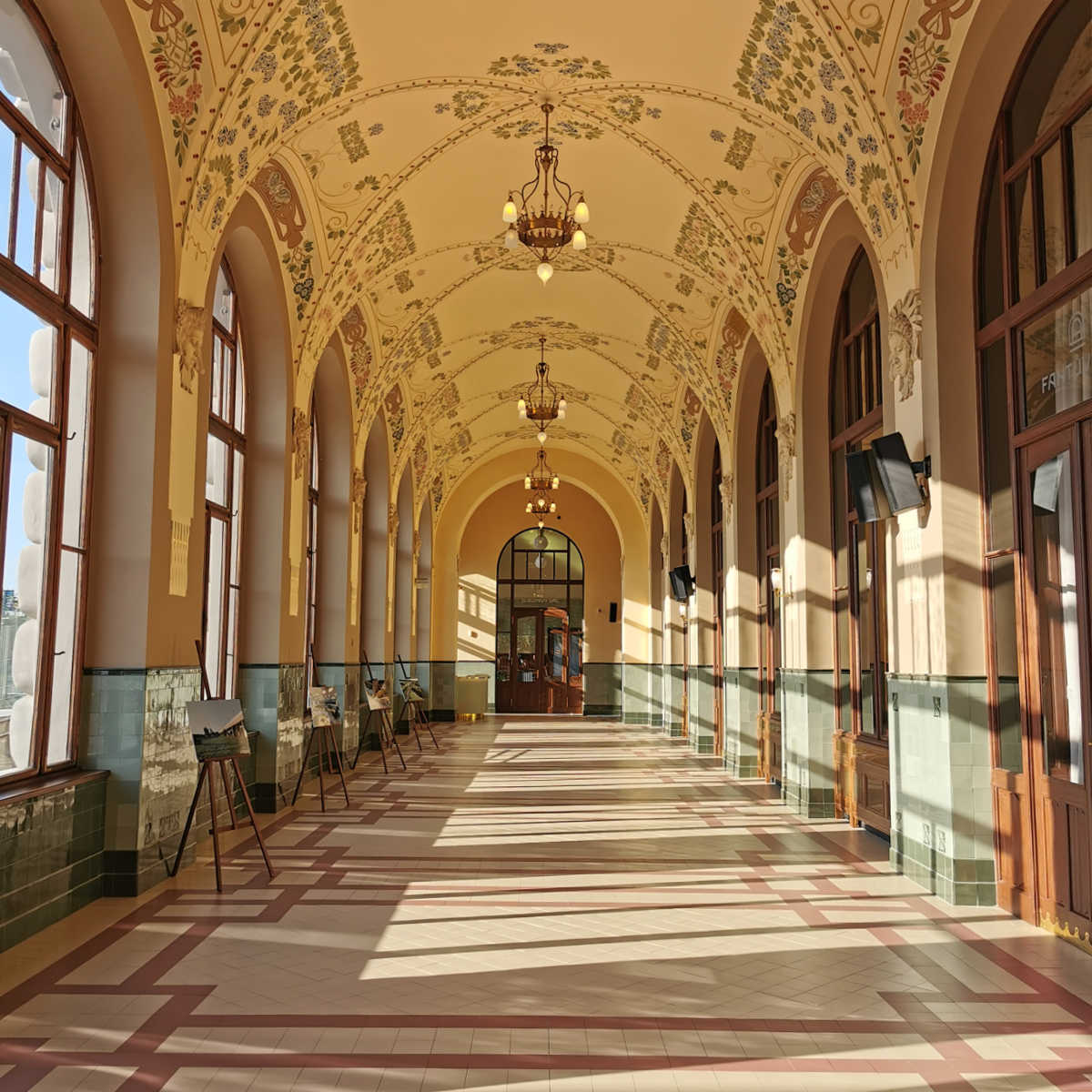
The current art nouveau style station building was finished in 1909 following a design of a talented architect Josef Fanta. The main entry building with ticket offices (now cafe place) was beautifully decorated with paintings of different towns within Bohemia, that you could reach by the train.
There were also restaurants and waiting rooms for public and private waiting rooms, which were used by important guests, such as Tomas Garrigue Masaryk (the Czech president), Thomas Edison, Le Corbusier or Charlie Chaplin. These private waiting rooms were beautifully decorated and are still sometimes opened to public during a special open days.
At the beginning of the 20 century the two wing canopy was also build to cover the platforms (at the time there were only four platforms).
During first 10 years of 20th century the railways company started to experiment with electric locomotives and by 1928 the main train station was fully upgraded to electric rails.
The new extension to the building under the main road bypass was build in the late 70s and at the same time the underground station was opened.
Further upgrades to the interior of the main station were done in the 2011 and made the building (inside) a little brighter and nicer place to wait for your train.
The train station name changes over the years
It’s now called the Hlavni Nadrazi – Main Station, but it was also very briefly (1945-48) called the Wilson’s Station – Wilsonovo Nadrazi (after then President of USA Woodrow Wilson). We always used to call it Wilsonovo Nadrazi as do many people, especially tramps and people you’ll see heading into the countryside camping on Friday afternoon.
As you walk through the park in front of the train station, you can see President Wilson statue. After WWII, the Communists tore down the original statue of President Wilson because they didn’t want a monument to an American and to promote a ‘western’ way of living. A new one was only put back in the park in 2011.
Another nickname is ‘Hlavak’, which is used by most people when they talk, although you probably won’t find it written anywhere.

1. Fanta’s Cafe & Bar
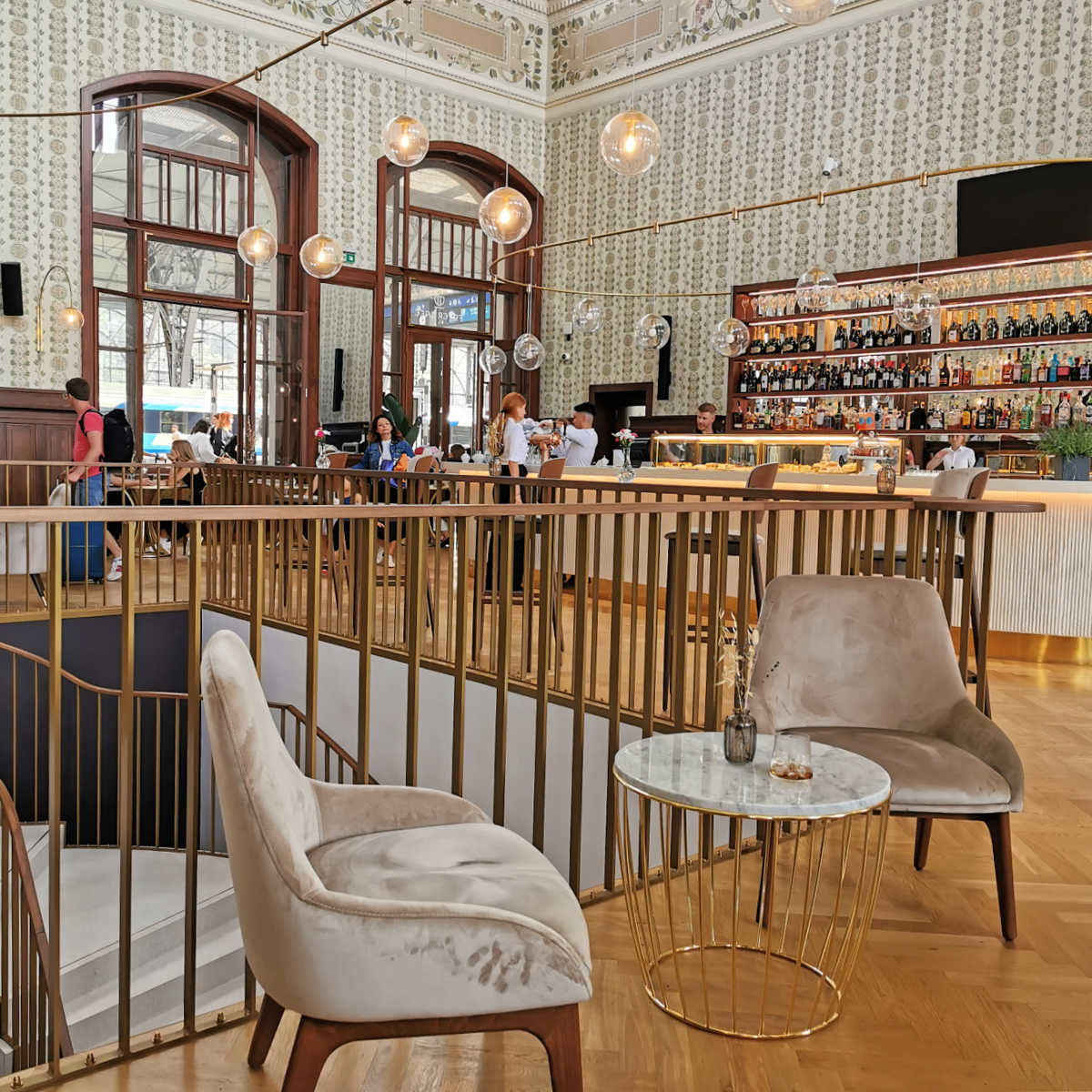
I absolutely love walking up to the Fantova Kavárna area, which I think it’s the most beautiful part of the entire station.
To find it, you have to leave the modern, noisy shopping area behind and head up the escalators to the very top floor of the old building.
I think that the moment you walk in, you feel like you’ve stepped back a hundred years! This stunning space used to be the main entrance hall with ticket offices and waiting rooms.
I love how they’ve kept all the incredible Art Nouveau details. If you look up, you’ll see a massive, soaring dome decorated with beautiful statues and paintings of various Czech cities.
I really like how they’ve used the old wooden ticket booths—you can still see the little windows where people would have queued up to buy their travel passes decades ago! Inside the Fanta’s cafe, which would have been the ticket offices, you can still see the original train master safe for daily takings.
It’s so much more glamorous than your average station coffee shop!
The best thing about it lately is that they’ve opened a really stylish new bar area in what used to be the original second class waiting rooms.
I often think that sitting there with a coffee is the perfect way to spend a spare thirty minutes, instead of sitting on a plastic chair downstairs, you get to soak up the atmosphere of a “railway palace.” Honestly, I think it’s one of the most beautiful interiors in all of Prague, and it’s a shame that so many travellers miss it just because they don’t think to look upstairs!
2. Nicholas Winton Statue
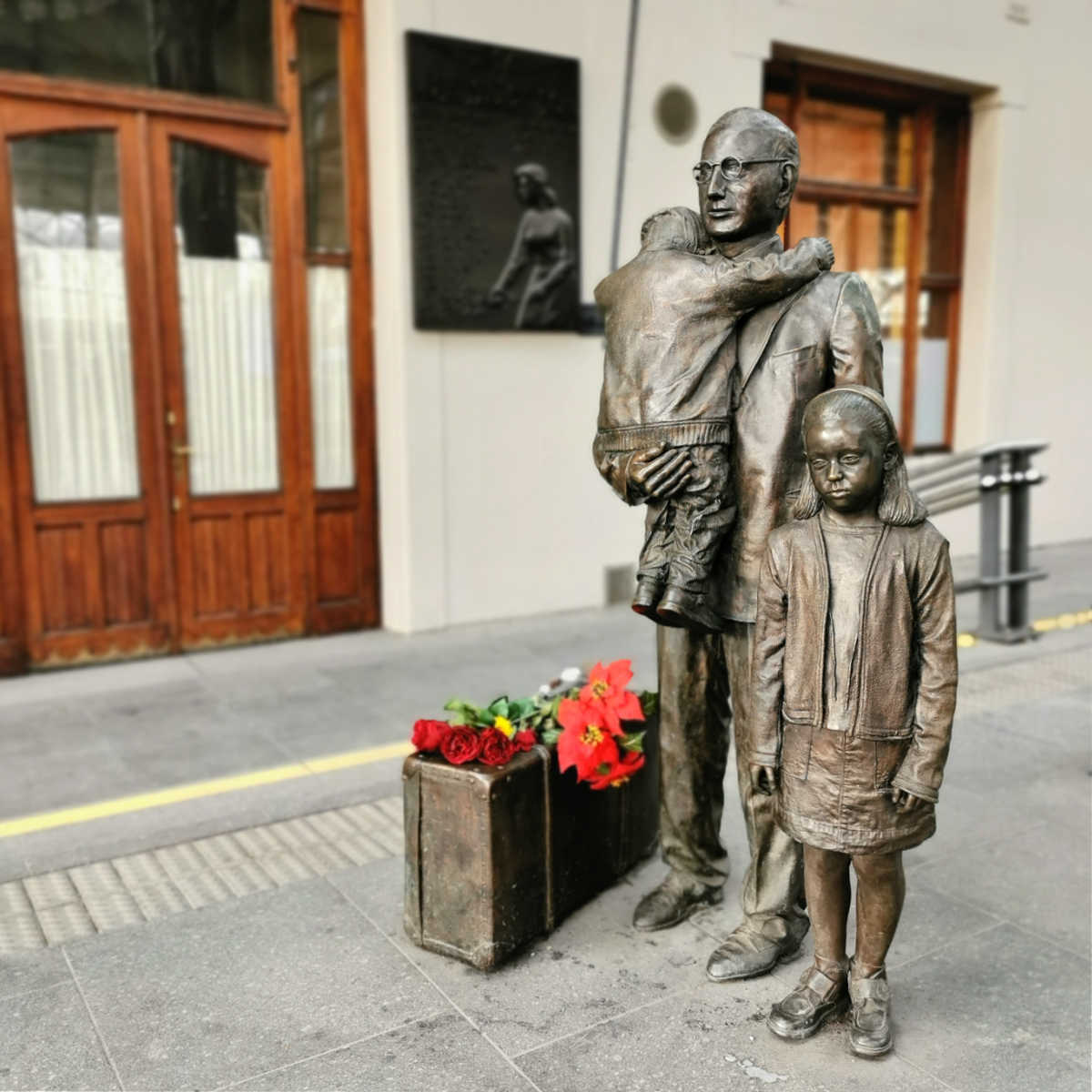
If you go to platform 1 you’ll be able to see a statue of children with suitcases, which commemorates the children transportation to England organised by Nicholas Winton to help them to escape the horrors of second world war and to keep them safe.
I love how this memorial isn’t tucked away in a museum; it’s right there on the platform where the actual history happened. Back in 1939, just before World War II started, a young British man named Nicholas Winton realised that Jewish children in Prague were in terrible danger. He organised eight special trains—the “Kindertransport”—to carry 669 children away to safety in Great Britain.
The statue itself is so touching; it shows Sir Nicholas standing with two children and a battered old suitcase. I think that when you see it, you can’t help but imagine the bittersweet scenes that took place right where you’re standing—parents saying their very last goodbyes to their little ones, hoping they’d find safety in the new country.
3. The Zizkov Walk Underpass & the Variace Art Instalation
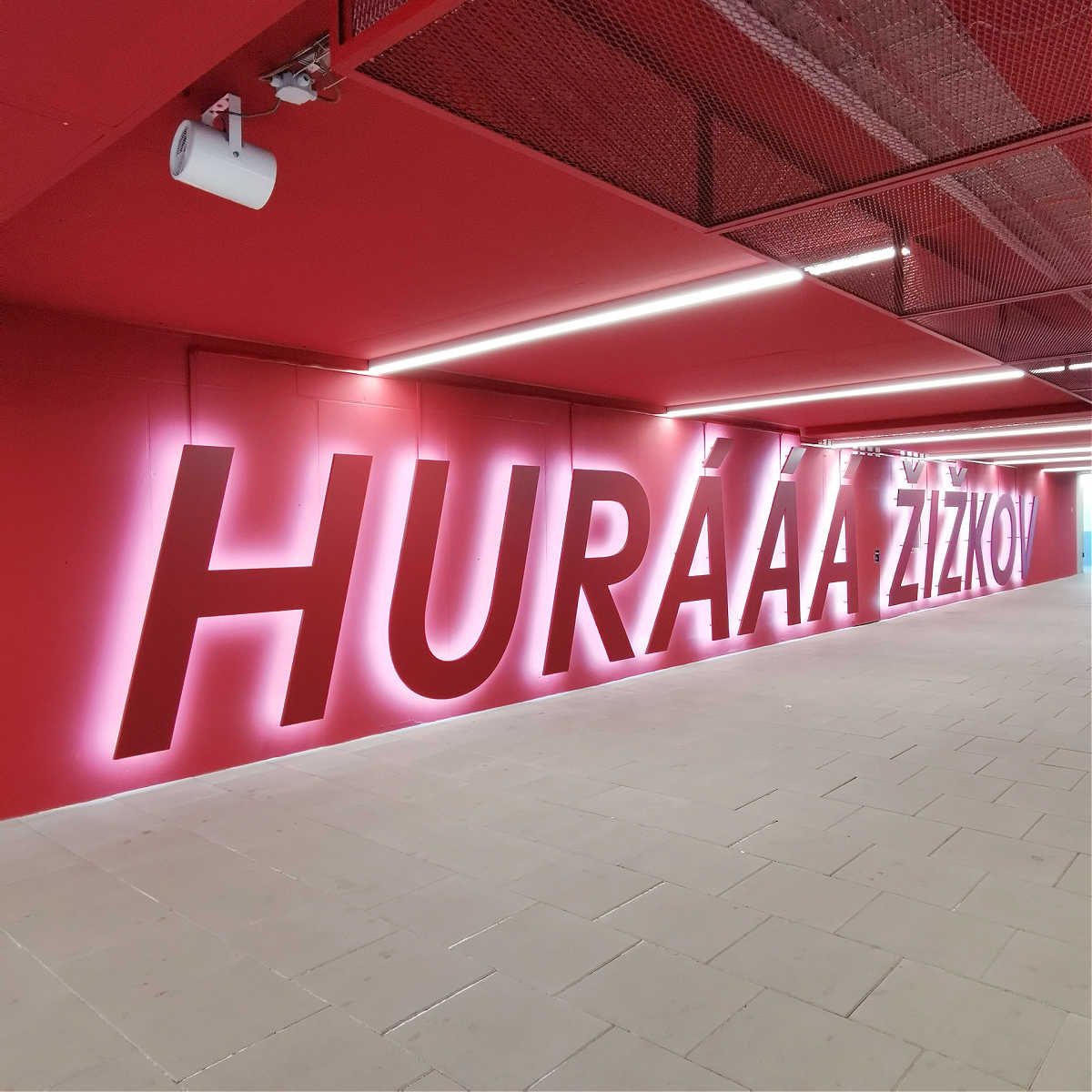
A new underpass was opened at the end of the 7th platforms which leads you to Zizkov. This is quite a good shortcut if you live or stay in that part of the town.
I honestly think that the new underpass to Žižkov is one of the best things to happen to the station in years! For decades, the station felt like a bit of a fortress—if you wanted to get to the trendy Žižkov district (Prague 3), you had to walk all the way around the tracks or walk all the way around the train station.
But in 2021, they finally opened this brilliant shortcut that connects the platforms directly to the other side of the tracks. It’s a very modern, clean tunnel that takes you right near the University of Economics and the Seifertova street area.
There is another reason to walk all the way to the end of the underpass. As you walk out you’ll find what I think is the most clever piece of art in the whole station.
It’s called Variace, and it uses those iconic old Pragotron departure boards—you know, the ones with the black mechanical flaps that make that lovely click-clack sound. But instead of showing train times, this board is “alive” with Artificial Intelligence! The AI writes little poems, random thoughts, and tiny stories about life at the station that flicker across the board for a few seconds before disappearing.
It’s a brilliant way to save a piece of railway history and give it a modern, techy twist. And the best thing is that you never know what it’s going to say next.
4. Emperor’s Waiting Room
The Císařská čekárna, or the Emperor’s Waiting Room is tucked away behind a plain-looking door towards the end of the Platform 1. It was built specifically for Emperor Franz Joseph I (who ruled the Austro-Hungarian Empire back then) so he wouldn’t have to rub shoulders with the “common” public when he arrived in Prague.
It was finished around 1905, and even though the rest of the station has been modernised, this room still looks exactly like a royal palace inside.
The waiting room is lavishly decorated including silk wallpaper, massive crystal chandeliers, and a fireplace that probably cost more than a small house! The Emperor only used it a handful of times before the Empire collapsed in 1918.
After that, it wasn’t just for royals; the first Czech President, Tomáš Garrigue Masaryk, used it as his private lounge too.
The waiting rooms are not open to the public and only open up for special events like “Open House Prague” in May or on European Heritage Days in September.

5. The new bypass road & the modern entrance hall
The new entrance hall was originally built in the 1970s and is a classic example of Brutalism architecture, which has a very cool, retro-future vibe that you won’t find anywhere else in the city.
Between 1972 and 1977, a team of brilliant architects, including Jan Bočan and Alena Šrámková, built this huge underground terminal to handle the millions of people using the new Metro system.
I love how “high-tech” it was for the time—it’s full of bold red ceilings, exposed pipes, and floor tiles with wavy patterns that Alena Šrámková designed specifically to help guide people towards the platforms.

The bypass road was also build at the time, which meant that you couldn’t enter the main train building from the park or the previous road anymore. Most people would agree that it wasn’t the most elegant solution to the station upgrade. Before that road existed, you could walk straight from the park into the historic ticket hall!
Saying that, there are big plans to change this and remodel the entrance and the front of the station. The new project called “Nový Hlavák” will involve building a giant wooden canopy over the entrance and turning that concrete area back into a leafy park.
The tram lines that originally run in front of the station are also being put back and the tram stop will be again where it was before. The current ‘Hlavni Nadrazi’ tram stop is about 5 minutes fast walk through the Vrchlicky Park, which is super inconvenient if you are running late for your train.

6. The Hlavni Nadrazi underground station
Hlavni Nadrazi underground station is the oldest one on the Prague Metro Underground and it’s on the C line (red colour). The work on this station started in 1967 and fully opened in 1974.
When you visit today, you’ll notice that there are platforms on both sides of the tunnel and the underground (and not in the middle like at most Prague underground stations).
This is because originally the plan was to build an underground tramway system, that would use the existing trams, which had doors on just one side. By the time the government agreed the plans, it was thought that a separate underground system, which would use low level access trains with doors on both sides would be better.
The metro station under the Main Train Station was already built, so the new underground used that. There is only one other underground station that has platforms on both sides – Vysehrad – and that’s because the train is running through the Nuselsky Bridge and it was easier to design the station that way.
7. The Nuclear Shelter Vents
This is a bit of a “spooky” one! Because the new part of the station was built during the Cold War, the whole thing was designed to double as a nuclear fallout shelter. There were other cold war shelters, such as Folimanka or Jalta strategically spaced out through the whole Prague.
If you walk around the park, which is nicknamed Sherwood or near the car park on the roof, you’ll see these strange, large concrete “mushrooms” or metal vents sticking out of the ground. I always think it’s a bit chilling to realise those are actually the air intake pipes for the bunkers hidden deep beneath your feet!

8. the Old Tracks & walk to Zizkov on the dismantled Railway Tracks
If you walk to the very end of Platform 1 and look toward the Vitkov Hill with National Memorial, you can see the remains of the old railway tunnels. It’s a great spot for a photo because it feels so quiet compared to the rest of the station.
You can also walk or cycle on the old Prague – Turnov train track, which was closed in 2008 (and re-routed via the newly opened tunnel in the Vitkov Hill), where you can see more of the old track and old railway buildings.
You can still find old outer train buildings (going towards the Zizkov hill) like Krenovka (on Husitska Street) that were part of the railways. Krenovka is a large building that was used for keeping locomotives overnight to charge them up, when the railway went electric in early 20th century.
To start the walk, just walk through the new Zizkov Underpass and then follow the main train tracks on a walkway over the old railway bridge, through the old railway tunnel to the Krejcarek Park.
The Prague branch of the Turnov-Kralupy-Prague railway, called the old Vítkovská Railway was built in 1872 and has been used until 2008 when part of the railway was relocated to the northern side of the hill (you can see the new tunnels as you walk through the old railway tunnel on the path).
I’ve walked this route many times and I can completely understand that people living in Zizkov district had a bit of a love-and-hate relationship with the railway.
The track ran so close to the houses, that people were reminiscing how all the crockery was chiming in the cupboards when the train went past. Considering that the steam trains were still running on the train tracks until the 1980’s, it must have been pretty dirty as well as noisy living right next to the tracks.
As you walk on the path you can stop for refreshments at many places that are accessible directly from the path (don’t miss the famous bar ‘U Vystrelenyho Oka’), there is also a children’s playground set out as a railway station and super cool ground trampolines for everyone, which I can never resist when I walk by.

9. Historic Semmering Train to Prokop Valley
If you fancy a bit of an adventure, I think you should definitely hop on the Prague Semmering train! It’s a stunning railway line that starts right at the main station and winds its way over two massive stone viaducts and through the rocky cliffs of the Prokop Valley (Prokopské údolí) in Prague 5.
I love how this train makes you feel like you’re in the middle of the mountains, even though you’re only ten minutes away from the city centre. The views from the train are amazing and it’s the most scenic train journey you can take from Prague.
The best thing about this trip is how easy and cheap it is. Since it’s a local train (look for line S65 or trains heading toward Hostivice/Rudná u Prahy), it’s part of the regular Prague public transport system.
That means if you have a 24-hour pass or a “Lítačka” card, it’s basically free! If not, a simple 30-minute ticket for 39 CZK is all you need. The trains usually run every hour and during weekend you even get to ride on the historic red train carriages. I’ve done this journey many times and think it’s such a lovely way to escape the crowds for a few hours.
The historic train goes all the way to Praha – Zlicin and you can get connections all the way to Rudna u Prahy. If you jump off at the Praha-Hlubočepy or Praha-Holyně stops and you’re right in the middle of a beautiful nature reserve for a hike!
This blog post was originally written on 19 January 2026 and last updated on 19 January 2026


