
Visiting the beautiful Czernin Palace Garden – Prague’s hidden gem
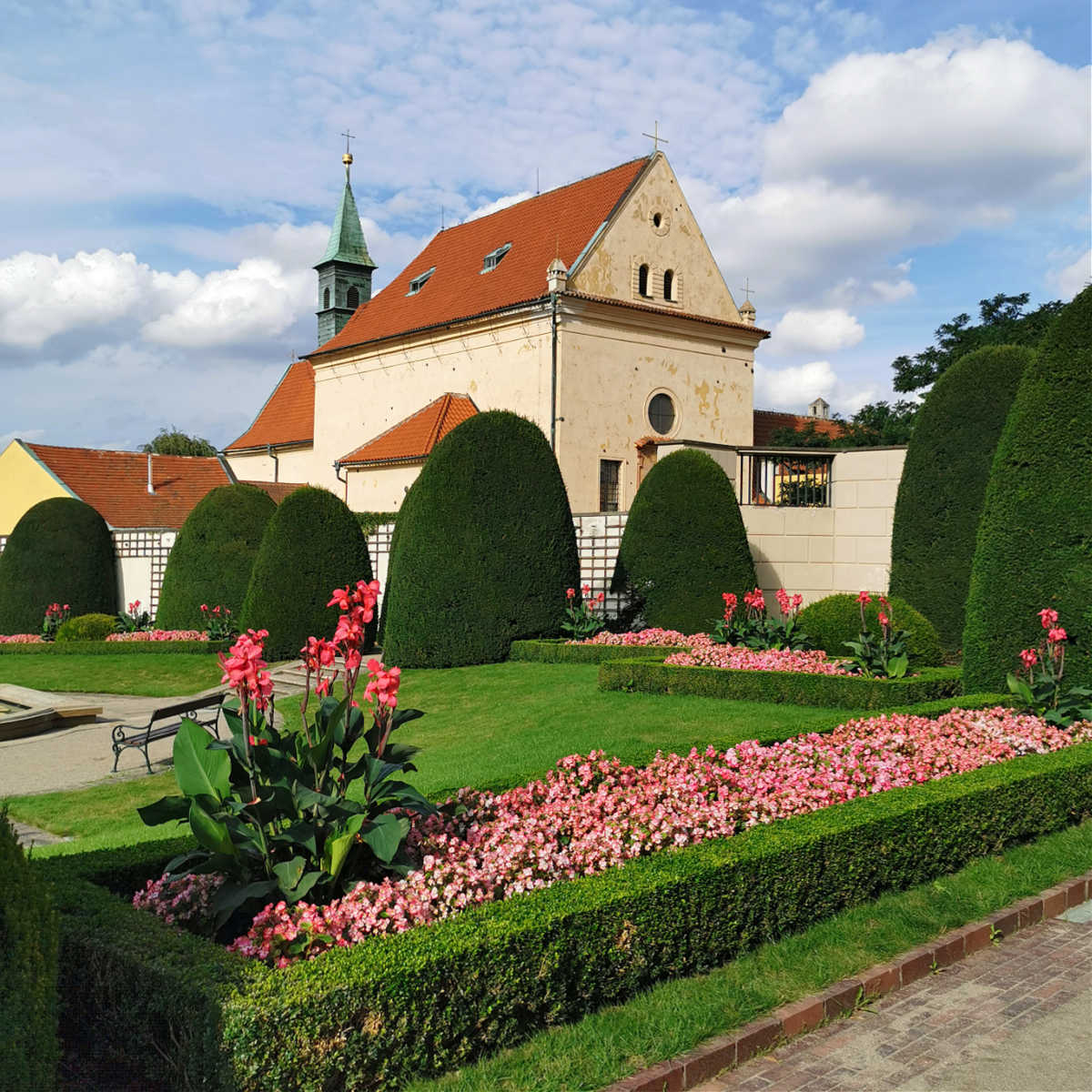
Czernin Palace Garden (Černínská zahrada) is one of the most beautiful gardens open free to the public in Prague. I think it’s still a complete hidden gem as it’s slightly tucked away from the rest of the must-see attractions in Prague. I always find the garden peaceful and never too busy.
The Černín or Czernin Palace Garden belongs to the Ministry of Foreign Affairs and is open to the public during the main tourist season during weekends. For the 2026 season, the garden officially opens on 30 May 2026 and runs until 30 September 2026.
PIN TO KEEP FOR LATER
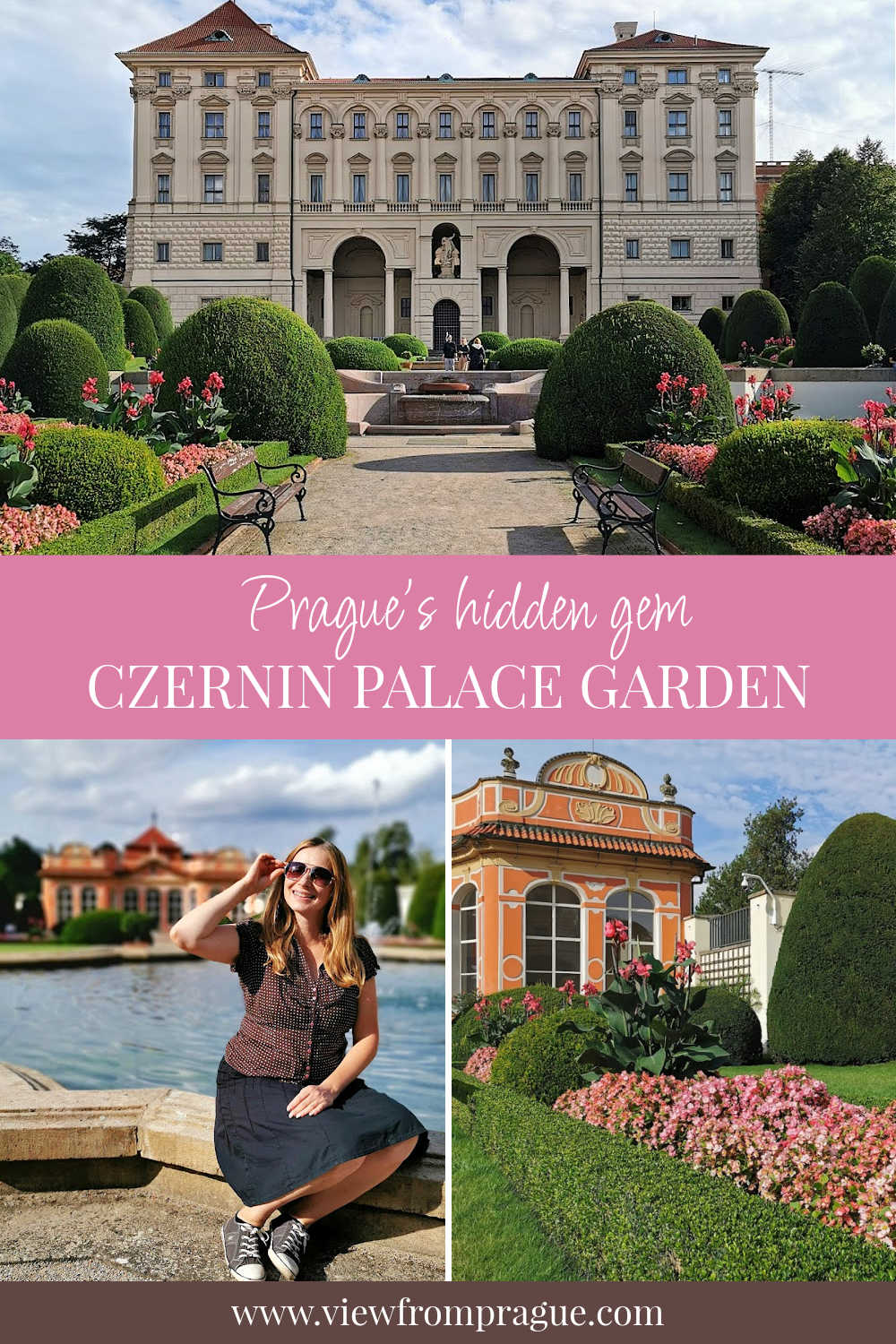
The Czernin Palace Gardens History
The original Baroque garden was created at the end of the 17th century and in the 19th century, the garden was transformed into an English park.
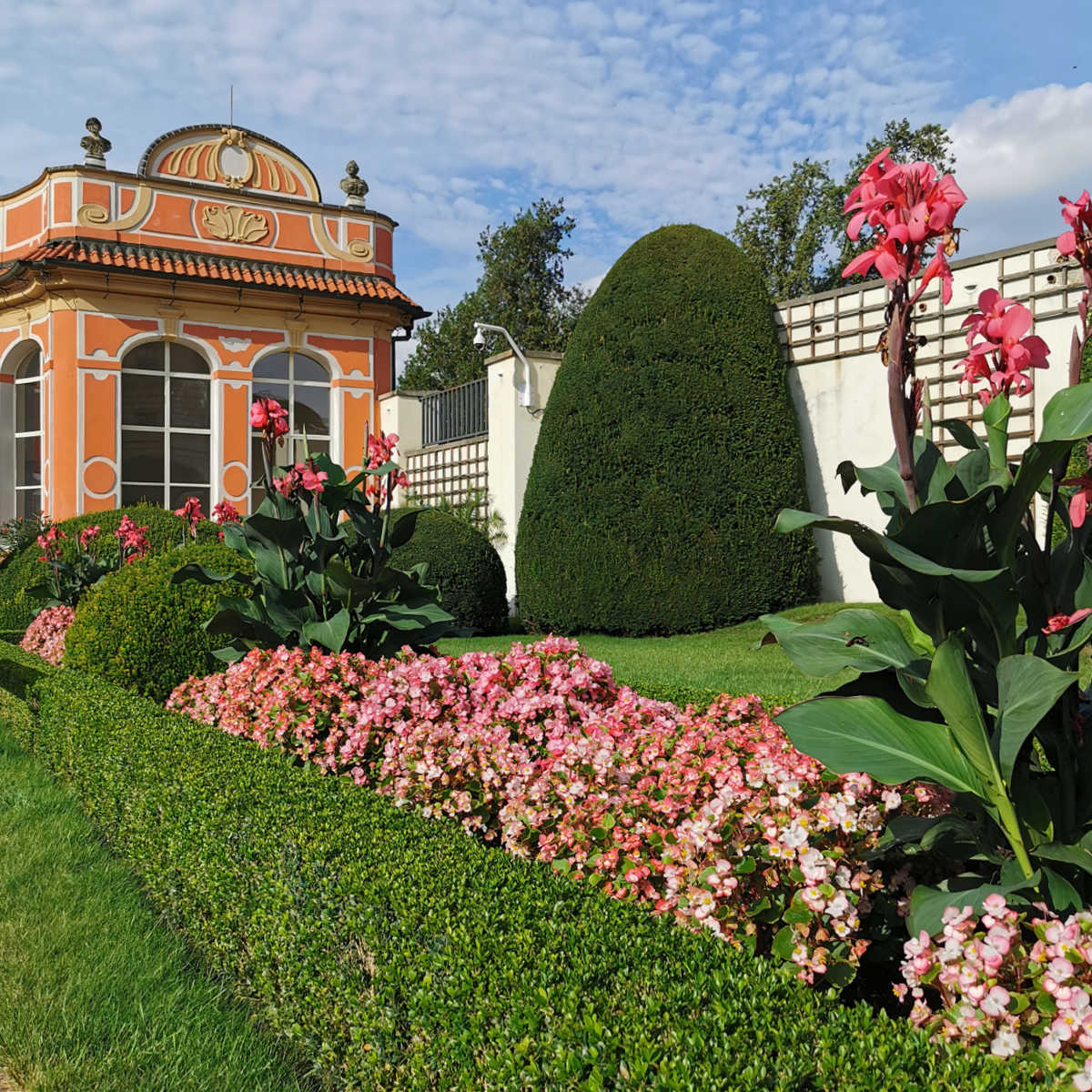
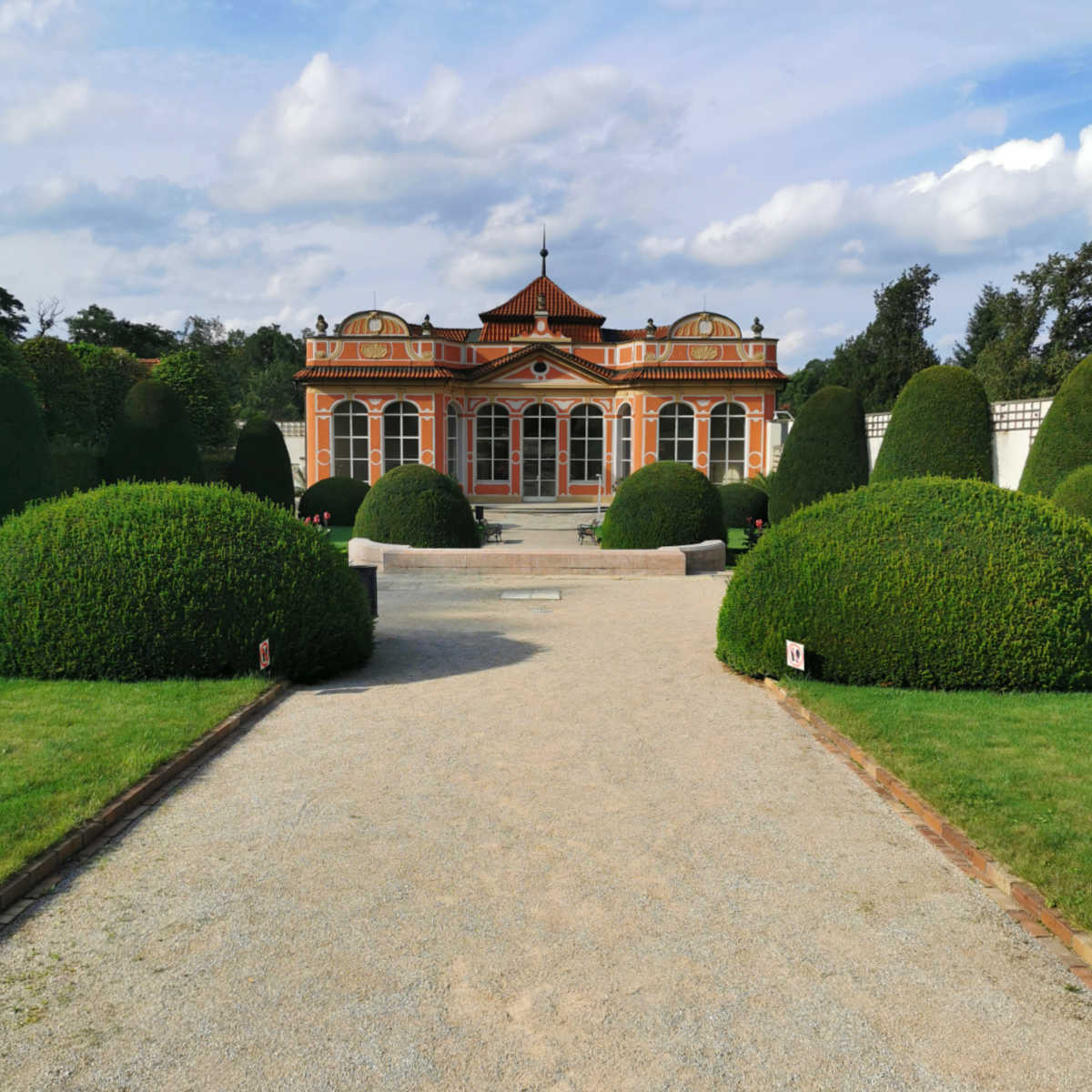
Several prominent architects worked on the garden’s design, such as Francesco Caratti, Domenico Rossi, and František Maxmilián Kaňka, who designed the summerhouse at the end of the garden.
I also found that the main fountain pool was designed by Jan Blažej Santini and when you look at the shape you can clearly see his star design. He was one of the many people working on the palace gardens, so quite often it’s not even listed as his work.
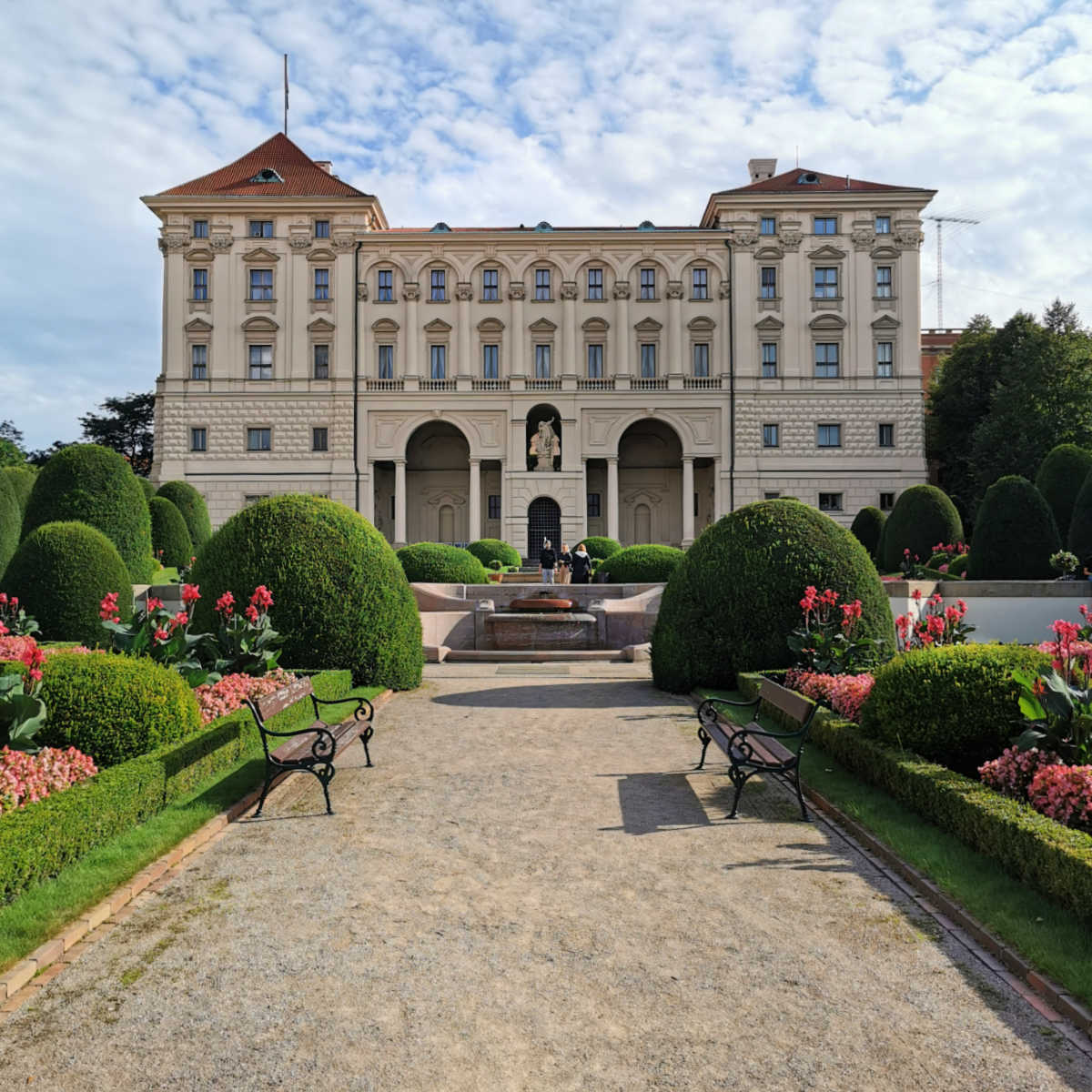
The garden is quite large (about 1. 7 acres) and interestingly enough is not in front or the back of the large palace, but rather next to it from one side! The palace facade has a statue of Hercules wrestling with the Hydra by Czech sculptor Ignác František Platzer, who made the sculpture in 1746.
MORE GARDENS TO VISIT
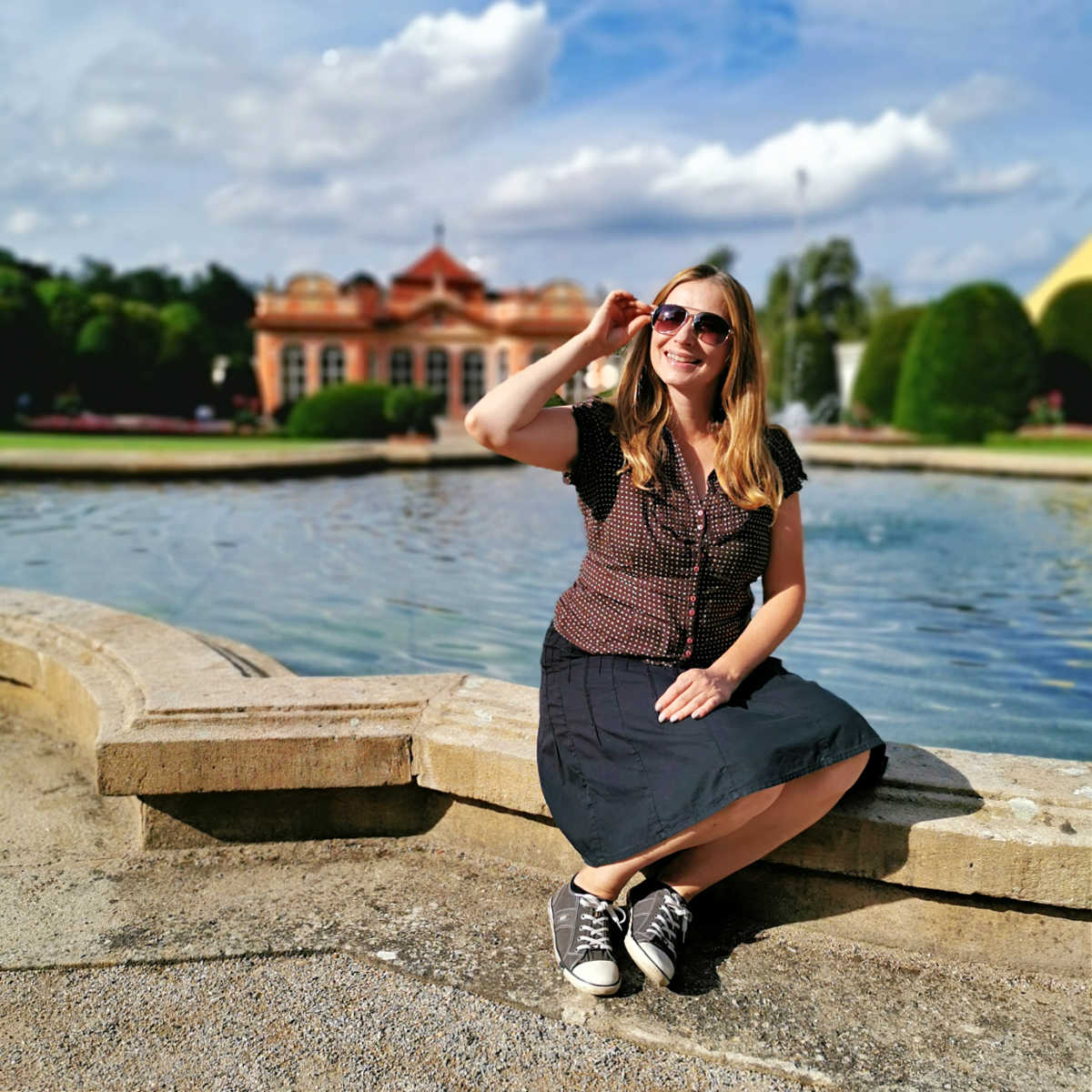
After the mid-19th century, the Czernin Palace was converted into barracks and unfortunately, the garden was destroyed. The land was used as a farmyard and new horse stables, sheds, and a blacksmith’s workshop for repairing horse harnesses and horseshoes were added.
The garden was reconstructed back into its current, but much simplified form during the next stage of remodelling of the Czernin Palace, between 1929 and 1934 under the direction of architect Pavel Janák.
MORE GARDENS TO VISIT
Czernin Palace History
The garden belongs to the Černín or Czernin Palace, which is the longest Baroque building in the Czech Republic (in my photos you can see the side of the building facing the garden, not the front, which is 250 metres long!).
It was built for the Cernin family, who were a prominent aristocratic family and wanted to show off their wealth and status to compete with the Habsburgs.
The building plot, which Černín purchased in 1666, had several disadvantages. For example, architects found the work challenging due to its irregular shape of 60 x 250 meters and a decline of 8.5 meters.
Under the palace terrace, there are also remnants of a Christian cemetery from the 10th to 12th centuries, foundations of houses from the 16th century, and the foundations of the circular chapel of St. Matthew, built-in 1727–32 by F. M. Kaňka and demolished in 1791.
MORE GARDENS TO VISIT
The construction of the palace began in 1669 by F. Caratti and later it was contributed to by G. B. Alliprandi, F. M. Kaňka, A. M. Lurago, G. B. Maderna, and others.
By the 1720s, the stucco work inside the palace rooms was completed, and statues of Mercury, Andronicus, and Cupid by Matyáš Braun were installed in the grand hall, while Václav Vavřinec Reiner decorated the staterooms and finished painting colourful frescoes.
The Černín Palace was also decorated with expensive paintings and tapestries from French and Belgian workshops, Count František Josef Černín enjoyed showing off his wealth to all his visitors.
Unfortunately, the high financial costs of building and maintaining the palace were also the start of the Cernin’s family financial downfall. They had to sell the palace to the state and the king in 1851, and for a short time, it was used as army barracks.
After the founding of the Czechoslovak Republic in 1918, the palace was restored again and the offices of the Ministry of Foreign Affairs moved in and continue to use the palace to this day.
It was here, in the Czernin Palace, where on March 10, 1948, Foreign Minister Jan Masaryk fell from a window of his apartment in the rear wing of the palace. The circumstances of his death are still a mystery and nobody really knows whether it was an accident or not.
MORE GARDENS TO VISIT
Planning your visit: Practical Information
- Address Location: Loretanske Namesti 5, Prague 1 (The garden can only be entered through an entrance opposite the Loreta Church on the side of the Czernin Palace)
- How to get there: No 22, 23 trams or the number 42 historic tram from the centre of Prague (or Malostranska) to Pohorelec tram stop and then 5 minutes walk
- Opening Times: Saturday & Sunday 10 am – 5 pm from 30 May – 30 October 2026 (occasionally also opened during special public holidays)
- Entrance Fee: Free
- How much time to allow for your visit: 30 – 45 minutes
- Facilities: None (but there are cafes and restaurants on the streets as you walk from the tram stop)
How to Actually Find the Hidden garden Entrance
The reality is that Czernin Palace is a massive, imposing chunk of Baroque architecture and because it functions as the Czech Ministry of Foreign Affairs, it doesn’t exactly scream “tourists welcome.” If you just put the location into a google maps, you’ll end up staring at a heavily guarded entrance with absolutely no sign of a garden.
But, don’t panic, here is exactly how to find the garden entrance. When you hop off the tram at Pohořelec walk down the main street until you get to Loretánské Náměstí and see the Loreta Church. Walk down to the front of the church and then turn your back directly to the Loreta Church. Directly across the cobblestones, you’ll see the stone wall running alongside the right-hand side of the main Czernin Palace.
Look for a single, quite modest gate, right opposite the Loreta with a garden sign and opening times. This is the only entrance to the garden, so make sure you find your way back there.
What else you can see near Czernin Palace Garden
Before you head down to see the garden, you can first visit the Strahov Monastery to see the church, the monastic brewery and the incredible Baroque library. There are also amazing views of Prague from outside the monastery.
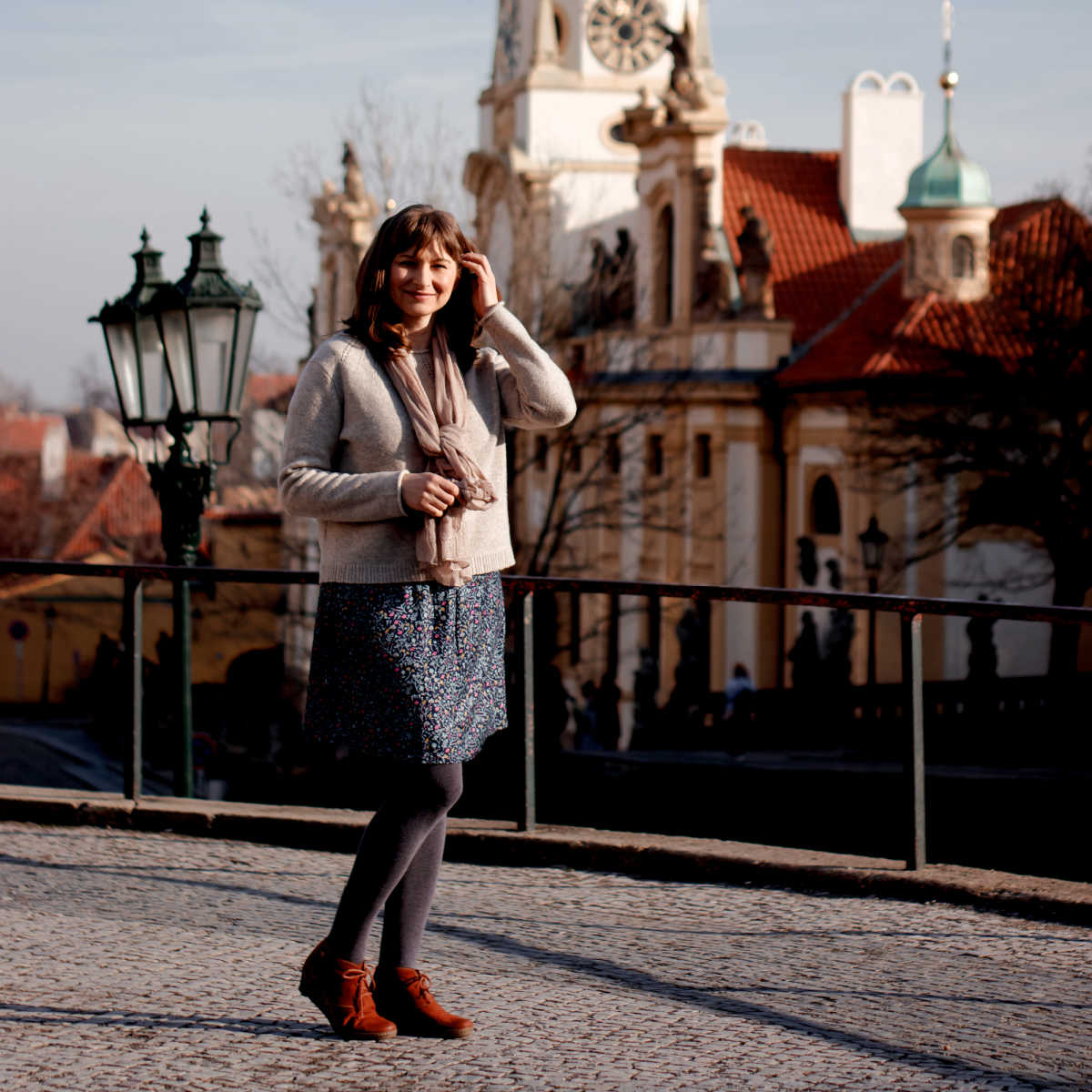
Right opposite the Czernin Palace Garden is the Loreta Church and Monastery, a beautiful Baroque complex with a famous carillon bells, which you can hear playing every hour.
From there, you can head down into the New World Quarter (Nový Svět). It’s a remarkably quiet area full of quaint little streets, narrow cobbled paths and small houses that feel completely separate from the busier parts of Hradčany.
It’s well worth stopping at Kavárna Nový Svět and have a coffee and a slice of homemade cake. The cafe is in one of the smaller houses with a lovely balcony and garden. Whenever I stop for coffee there I hardly believe I’m in Prague!
Finally, you can use the new ‘U Brusnice’ entrance close by to go straight down into the Stag Moat for a peaceful walk. You can walk up to Prague Castle or the Royal Garden or continue all the way to down to Malostranska tram or underground stop.
This blog post was originally written on 8 April 2024 and last updated on 20 May 2026


