
New Town Prague: My favourite 14 hidden gems & things to do
Ask most people what’s in the New Town and they’ll say Wenceslas Square, maybe a shopping centre, and leave it at that. Which means they’re missing a lot. Charles IV founded this district in 1348 and nearly 700 years on, it’s full of quiet corners, small churches and old streets that usually don’t make it into tourist book guides. But I think, that this just makes them that much special!
I live in Prague and I love walking around the New Town, because it’s a lot less touristy than the centre. Some of my favourite places here are a two-minute walk from the main tram lines, but they might as well be in a different city for how few people find them.
The Church of St Peter na Poříčí has been standing since the 12th century and barely gets a mention in most guidebooks. The Franciscan Garden sits right behind Wenceslas Square and is one of the calmest spots in the centre. Petrská čtvrť, the small neighbourhood behind the Bílá labuť department store, has some of the best independent wine bars and cafés in the city.
In this guide, I’m sharing my favourite 14 hidden gems in Prague’s New Town that I think are worth seeing if you are after something a bit different than just the main Prague attractions.

1. Emmaus Monastery (Klášter na Slovanech – Emauzy)
The unmistakeable modern white towers with gilded spires mark the Emmaus Monastery from quite far away.
Those striking concrete towers were designed in the 1960s by architect František Černý after the original Gothic steeples were destroyed during an American bombing raid on 14th February 1945, the pilots thought they were bombing Dresden but accidentally hit Prague instead!
The monastery itself was founded by Charles IV in 1347 as a Benedictine monastery for Slavic monks, which was quite unusual in medieval Prague. Charles IV wanted to strengthen ties with other Slavic nations and Emmaus became a centre of learning, art and Slavic literature.
The Church of the Virgin Mary and the Slavic Patrons was consecrated on Easter Monday in 1372, and the Gospel reading that day was about Christ’s appearance to disciples on the road to Emmaus, this is where the name comes from.
Inside, make sure you don’t miss the Gothic wall paintings in the cloisters. These date from the 1360s and are incredibly rare examples of Gothic art that survived. The paintings show scenes from the Old and New Testaments in beautiful, faded colours and whilst many are damaged or fragmentary, what remains is absolutely beautiful.
The church interior is quite plain and modern now after the war damage and subsequent reconstruction, but the cloisters are magical. I enjoyed walking through the quiet arcaded walkways, looking at the medieval paintings and visiting the herb garden in the enclosed courtyard.
What is also amazing about this place, is that the monastery is still active. The Benedictine monks returned in 1990 after the Velvet Revolution and carry on working and living here.
Location: Vyšehradská 49, Prague 2
Opening times: Monday–Saturday 11:00–17:00 during summer, Monday – Friday (11:00–16:00 ) during winter
Tickets: 90 CZK (concessions & family tickets available)
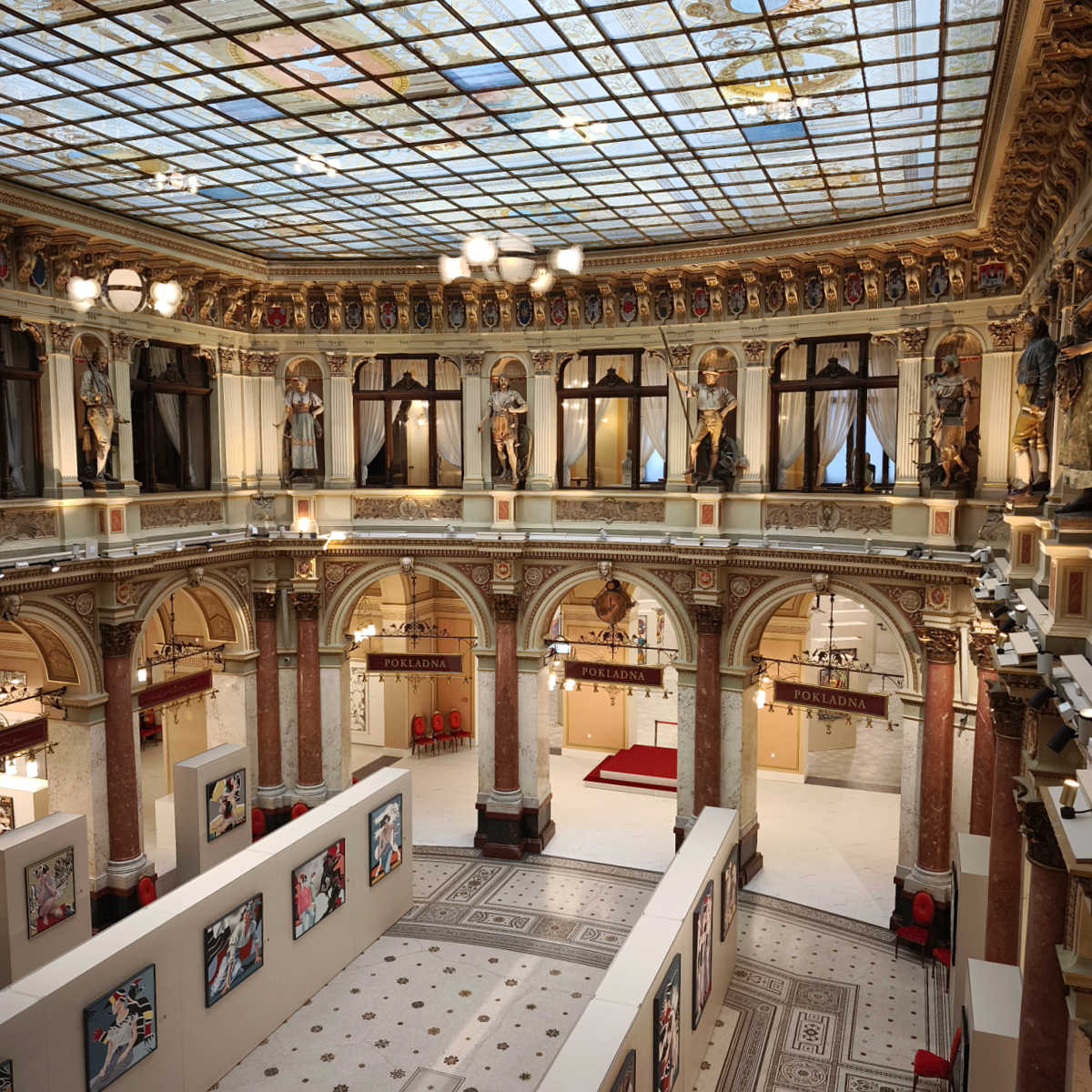
2. Art Palace Prague (former Živnostenská banka building)
This stunning neo-Renaissance building near Republic Square has just opened as Art Palace Prague, but its history is absolutely fascinating. The building was constructed in the late 19th century as the headquarters of Živnostenská banka (the Trade Bank), one of the most important financial institutions in the Czech lands during the Austro-Hungarian Empire and the First Czechoslovak Republic.
Živnostenská banka was founded in 1868 and quickly became one of the pillars of Czech economic life, financing major industrial projects, supporting Czech businesses and playing a crucial role in the national revival. The bank needed an impressive headquarters that would reflect its importance, so they commissioned this magnificent neo-Renaissance palace with elaborate facades, sculptural decorations and interiors that would impress clients and competitors alike.
During the First Republic (1918-1938), Živnostenská banka was at its peak, and this building was at the heart of Czech financial life. After 1948 and the communist takeover, the bank was nationalized and eventually absorbed into the state banking system. The building continued to be used for various purposes, but lost much of its original grandeur.
Now, after careful restoration, it’s been transformed into an art gallery. The renovation has beautifully preserved the neo-Renaissance architecture while creating modern exhibition spaces.
The art exhibitions are always open for a few months at a time and change fairly frequently. I’ve visited one to see the building and I recommend you do the same. Whilst the art wasn’t my cup of tea, I was blown away by how beautiful the building was inside, it was almost worth the entrance fee! And whilst I was standing in the middle of this amazing building I realised that the same architect built a very similar bank in Liberec, which is now – a surprise – an art gallery too!
Location: Na Příkopě area (exact address: varies by source, near náměstí Republiky), Prague 1
Opening times: Daily, when exhibition is on
Tickets: Varies by exhibition, but usually from 350 CZK (concessions available)

3. Franciscan Garden (Františkánská zahrada)
Right next to the Church of Our Lady of the Snows, this peaceful garden is a lovely oasis in the middle of the city. The Franciscan monks have maintained gardens here since the 14th century and whilst the current layout is from the 1950s, it still feels very medieval.
There are rose beds, old trees, benches everywhere and a little fountain in the centre. During spring and summer, the roses are absolutely beautiful and I usually come here to eat my lunch, have a coffee or ice-cream from nearby Svetozor passage. You can also find here quite large children’s playground, cosy cafe called Truhlarna with outdoor seating.
There are three different entrances, one from Wenceslas Square (through the arcade), one from Jungmann Square, and one from Vodičkova Street. It’s never packed, even in high season, which is quite surprising given how central it is.
Location: Jungmannovo náměstí, Prague 1
Opening times: April–September 07:00–22:00, October–March 08:00–19:00
Tickets: Free

4. Museum of Antonín Dvořák (Vila Amerika)
This is another amazing place I recommend you visit for the building itself, although the exhibition about Antonin Dvorak is interesting too (and there are English descriptions).
This beautiful Baroque summer palace is in a quiet corner of the New Town and I think, it’s one of Prague’s most charming small museums.
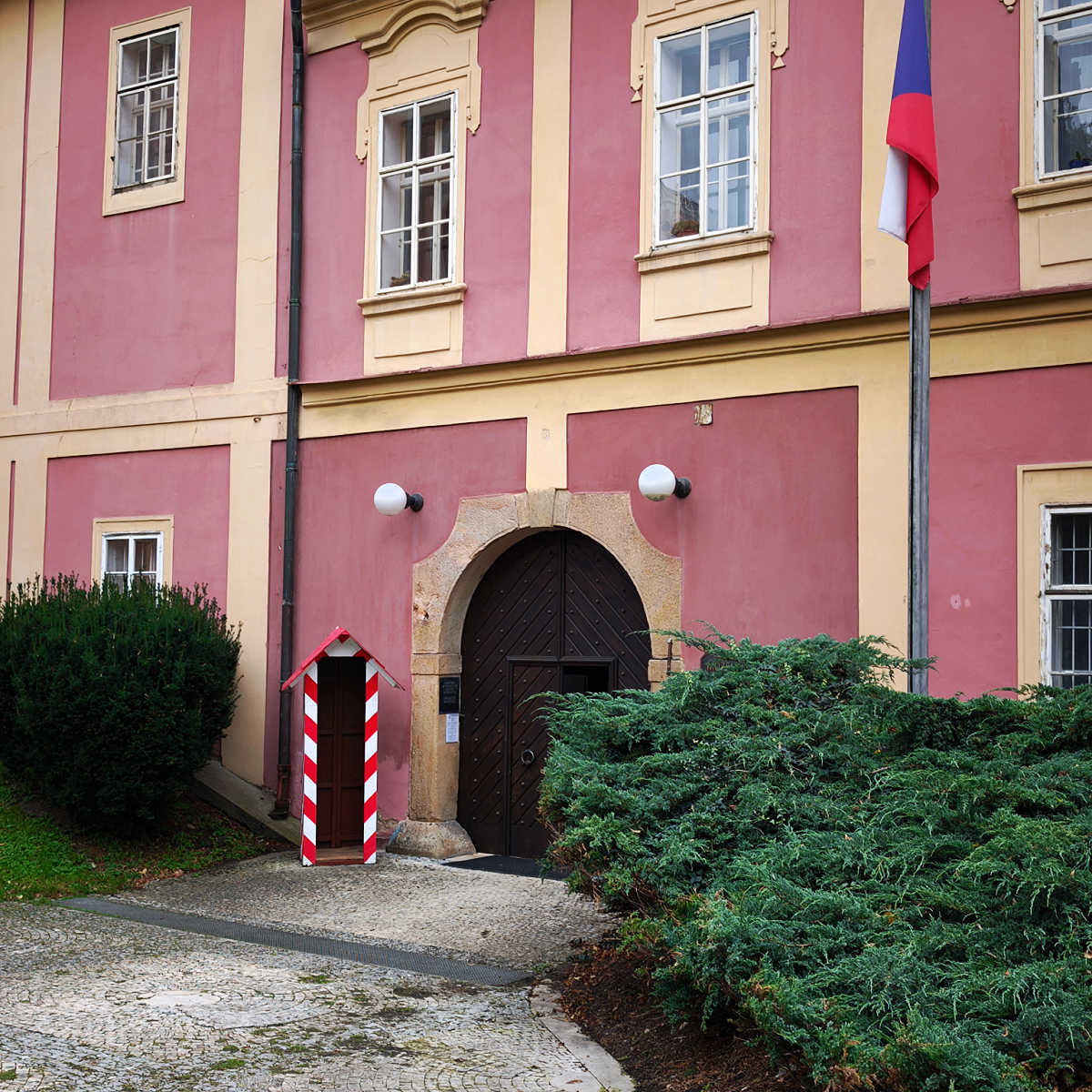
The building, called Vila Amerika, was designed by Kilian Ignaz Dientzenhofer and built in 1720 as a summer retreat for the Michna family. The villa is so pretty, painted in salmon pink with white trim, with elegant proportions and surrounded by a formal Baroque garden with statues, fountains and perfectly trimmed hedges.
Since 1932, the villa has been used as a museum dedicated to Antonín Dvořák, Bohemia’s most famous composer. The exhibition covers Dvořák’s life and work through personal belongings, manuscripts, photographs, letters and his actual writing desk. You can see the desk where he composed the “New World Symphony,” his spectacles, conducting batons and handwritten scores.
The garden is absolutely lovely, especially in spring and summer and the statues with very striking face expressions are from Matyas Braun, who was the most famous Czech Baroque sculptor.
Location: Ke Karlovu 20, Prague 2
Opening times: Tuesday–Sunday 10:00–13:30 and 14:00–17:00 (closed Mondays)
Tickets: 50 CZK adults, 30 CZK students

5. New Mill Water Tower
I’ve enjoyed visiting this tower, because it’s a bit different to the others. Whilst you can’t see the typical Prague landmarks from the top here, you get to experience the history of the tower, fire fighting and the development of Prague’s water supply and done in a very modern way, through light display, film and colourful pictures.
The New Mill Water Tower was built in 1658 on the ruins of an earlier Renaissance tower destroyed by a flood in 1655.
It might not look it, but was designed in the Baroque style and as a water tower was part of the city’s water supply system pumping water from the Vltava River and distributing it to the Lower New Town.
I found it slightly hilarious, that water towers were apparently very prone to burning down! I mean how, when they are full of water, right? This was because in the winter they had to keep a very low fire at the bottom of the tower to prevent the water pipes from freezing and to make sure that the water was warm enough to run the pipes to get to the wells in the town. And quite often the fire got out of hands (I’m guessing the tower keeper fell asleep!) and burned down the tower.
This tower was in full working order until the late 19th century when modern waterworks started to be used and the tower was no longer needed.
- Address: Nové mlýny 827/3A, 110 00 Praha 1
- Opening Times: Daily: 9:00 AM – 8:30 PM
- Tickets: Adults: CZK 190, Students and Seniors: CZK 130, Children (6-15 years): CZK 130, Children under 6: Free
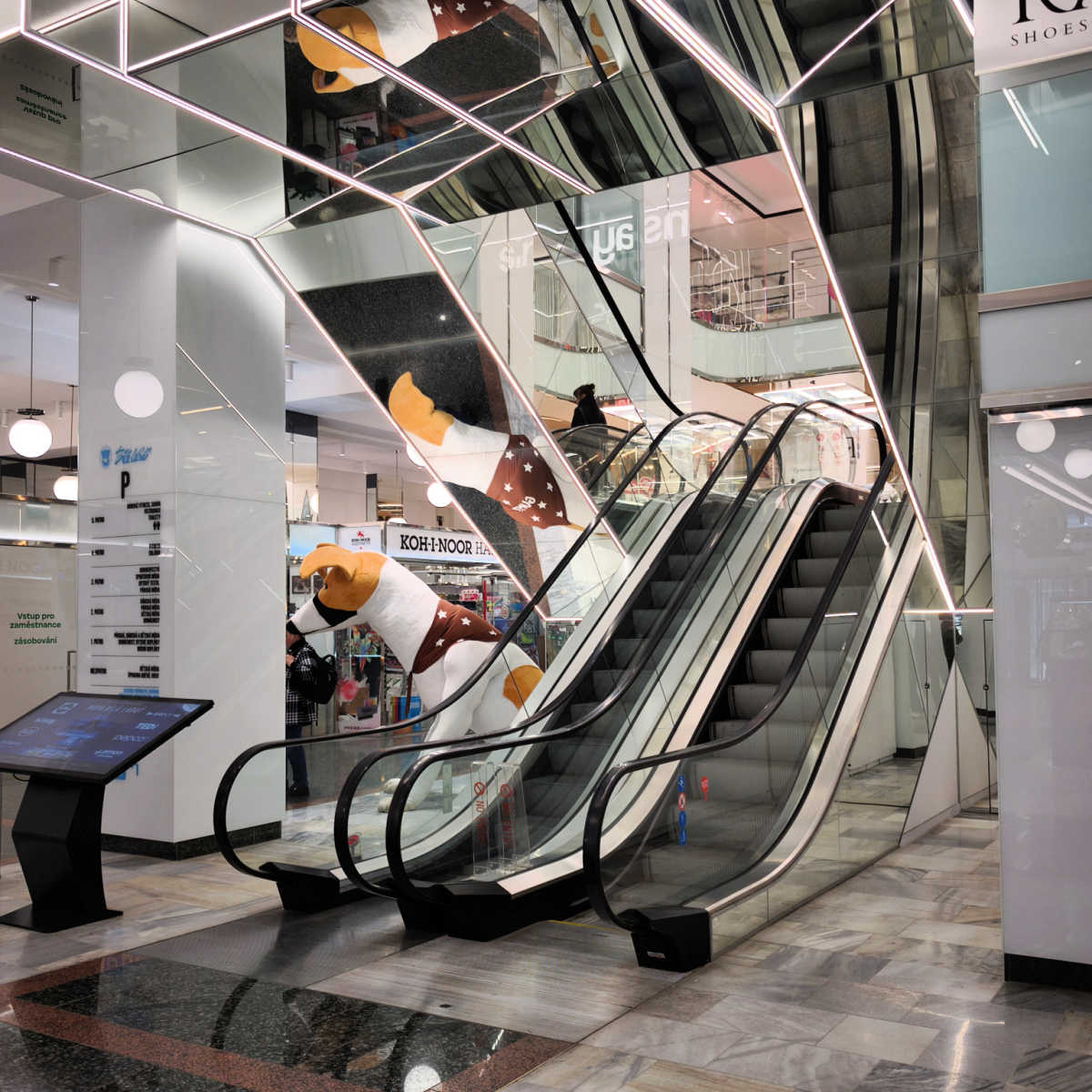
6. White Swan Department Store (Bílá labuť)
This functionalist building from 1937–1939 is an absolute architectural gem that most tourists completely miss. The White Swan was one of the first purpose-built department stores in Prague, designed by architects Josef Kittrich and Josef Hrubý in the clean, modernist style that was revolutionary for its time. The curved white facade with its horizontal bands of windows and the elegant swan logo are instantly recognisable.
During the First Republic (1918–1938), this was one of the most fashionable shopping destinations in Prague. The building was designed with all the latest innovations, escalators, central heating and a rooftop restaurant with views across the city.
Although other shopping centres in Prague have taken over Bila Labut, the building itself is still stunning. The exterior has been beautifully restored and you can still see the original functionalist architecture.
Location: Na Poříčí 23, Prague 1
Opening times: Monday–Friday 09:00–20:00, Saturday 09:00–19:00, Sunday 10:00–19:00 (shopping centre hours)
Tickets: Free to enter
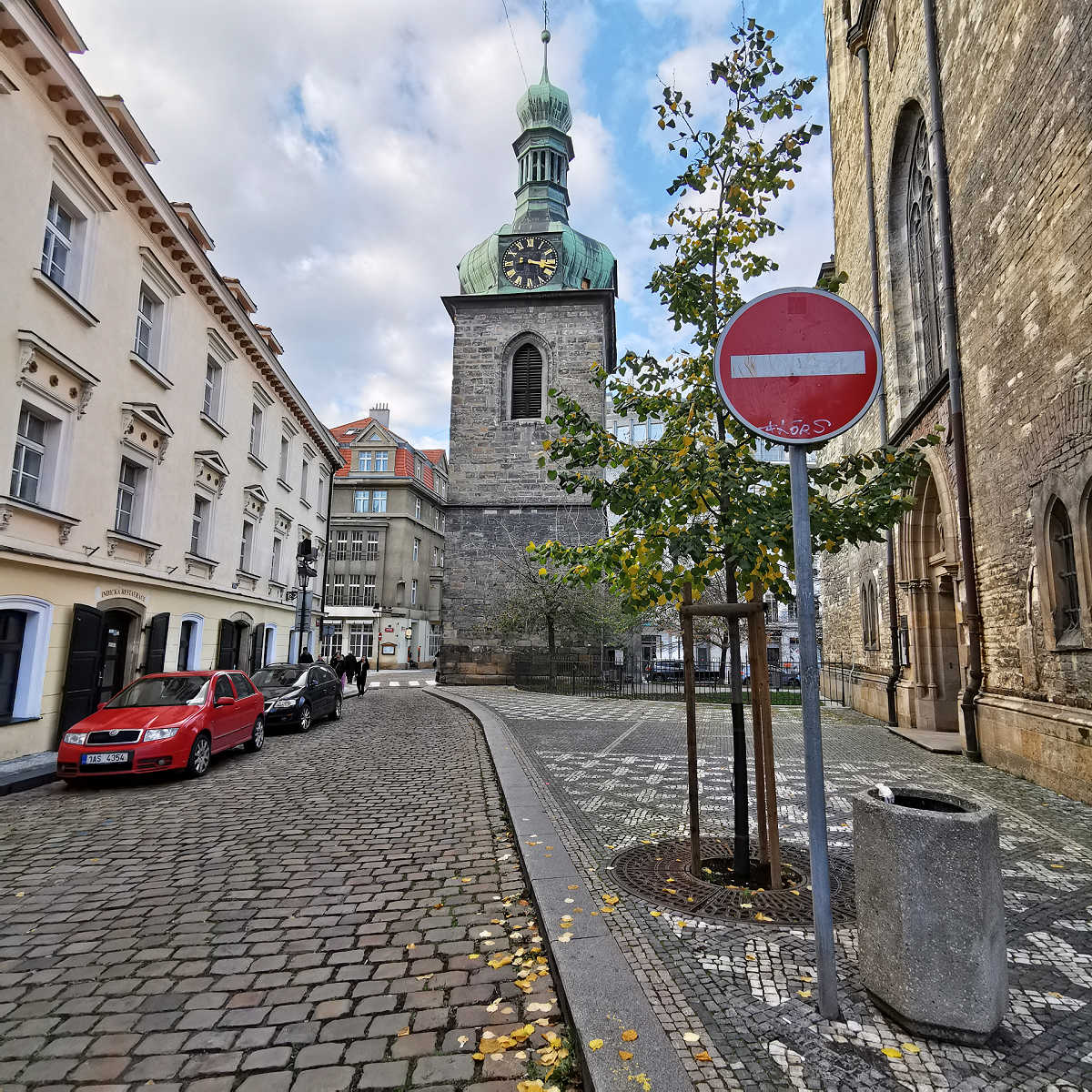
7. Petrská čtvrť (Petrská Quarter)
Whenever I walk through the Petrská čtvrť, I feel like I’m in a completely different town. I think that this is because, Petrská čtvrť existed a long time before the New Town was founded.
In the 12th century King Vladislav II invited German merchants from the Rhineland to settle here. They were given their own legal privileges and built the Church of St Peter na Poříčí around 1170, which is still standing today, though heavily rebuilt over the centuries.
The Knights Hospitaller set up a commandery nearby not long after, complete with a hospital for travellers and pilgrims, which turned the area into one of the busiest and most cosmopolitan corners of medieval Prague.
When Charles IV founded the New Town in 1348, Poříčí and the Petrska Ctvrt was included into his grand plan, but its older, winding streets never quite fit the neat grid he imposed elsewhere, which is why this part of town still feels different today.
The quarter gets its name from the Church of St. Peter (Kostel sv. Petra) on Petrské náměstí, which dates back to the 14th century, though the current building is mostly from the 18th century.
The whole area is a fascinating mix of old workers’ housing, converted industrial buildings, Art Nouveau apartment blocks and increasingly modern cafés, vintage shops and independent galleries.
Location: Petrská čtvrť, Prague 1 (area roughly bounded by Těšnov, Florenc, and náměstí Republiky)
Opening times: Open 24/7 (it’s a neighbourhood)
Tickets: Free to explore

8. Prague Botanical Garden (Botanická zahrada Praha)
Whilst the main Prague Botanical Garden is in Troja outside the centre of Prague, there’s also Charles University Botanical Garden right in the New Town that’s much easier to reach and absolutely worth visiting.
Founded in 1898, this small botanical garden covers about 3.5 hectares and includes several greenhouses with tropical and subtropical plants, several outdoor gardens showing plants from different geographical regions. It has a lovely peaceful atmosphere that feels miles away from the busy city streets.
There are benches everywhere, nice paths for walking and labels on everything if you’re interested in learning about the plants.
The garden also hosts temporary exhibitions and workshops, which are always nicely put together. I always visit the Christmas exhibition here, but there are also orchid exhibitions and organised plant swaps.
Location: Nádvorní 134, Prague 2 (Charles University Botanical Garden)
Opening times: Daily, hours vary by season (generally 09:00–19:00 summer, shorter in winter)
Tickets: 100 CZK adults for greenhouses, outdoor access is free

9. Podskalská Customs House Museum at Výtoň
You can find this little museum right on the Vltava riverbank in a 16th-century building that was originally the customs house where raftsmen had to pay duties on goods they transported down the river.
The Podskalí area was once a thriving settlement of river workers, raftsmen and their families, a proper working-class community with its own culture and traditions that’s now almost completely forgotten.
The exhibition inside the museum tells the story of the Podskalí settlement, the hard life of the Vltava raftsmen who transported timber and goods downstream.
You’ll see tools and equipment the raftsmen used, photographs and paintings showing what the area looked like before modern development, traditional costumes and displays about the rafting guilds and their customs. There are also sections about how the river trade worked, the dangers of navigating the Vltava before it was regulated, and the festivals and traditions the Podskalí people celebrated.
I find this museum quite moving because it preserves the memory of ordinary working people whose way of life has completely disappeared. The Podskalí quarter was demolished in the early 20th century to make way for modern embankments and buildings and barely anything physical remains. This customs house and its exhibition are basically all that’s left of a community that existed for centuries.
- Location: Rašínovo nábřeží (at Výtoň), Prague 2
- Opening times: Saturday–Sunday 10:00–18:00
- Tickets: 80 CZK adults, concessions available
10. Police Museum (Muzeum Policie ČR)
This is quite unusual museum in a very unusual building! You can find the Police Museum in a former Augustinian monastery, right next to a large baroque church. The monastery building itself dates back to 1350 when it was founded by Charles IV and whilst much of the original Gothic structure was rebuilt in Baroque style, you can still see beautiful vaulted ceilings and cloisters.
The Police Museum moved here in the 1990s and it’s quite fascinating if you’re interested in crime history and forensics. The exhibitions cover the history of Czech policing from medieval times through the communist secret police era to modern-day law enforcement. There are historic uniforms, weapons, police equipment and vehicles, but the most compelling sections are about famous Czech criminal cases. The museum doesn’t shy away from how the police were used as instruments of oppression during the totalitarian regime.
The Church of the Assumption of the Virgin Mary and Charlemagne is part of the complex too. It’s octagonal and was modelled on Charlemagne’s chapel in Aachen because Charles IV wanted to connect himself to the Holy Roman Empire tradition.
The monastery also has a lovely peaceful garden courtyard where you can sit after touring the rather intense crime exhibitions. I told you it’s rather strange experience!
Location: Ke Karlovu 1, Prague 2
Opening times: Tuesday–Sunday 10:00–17:00 (closed Mondays)
Tickets: 100 CZK adults, concessions available
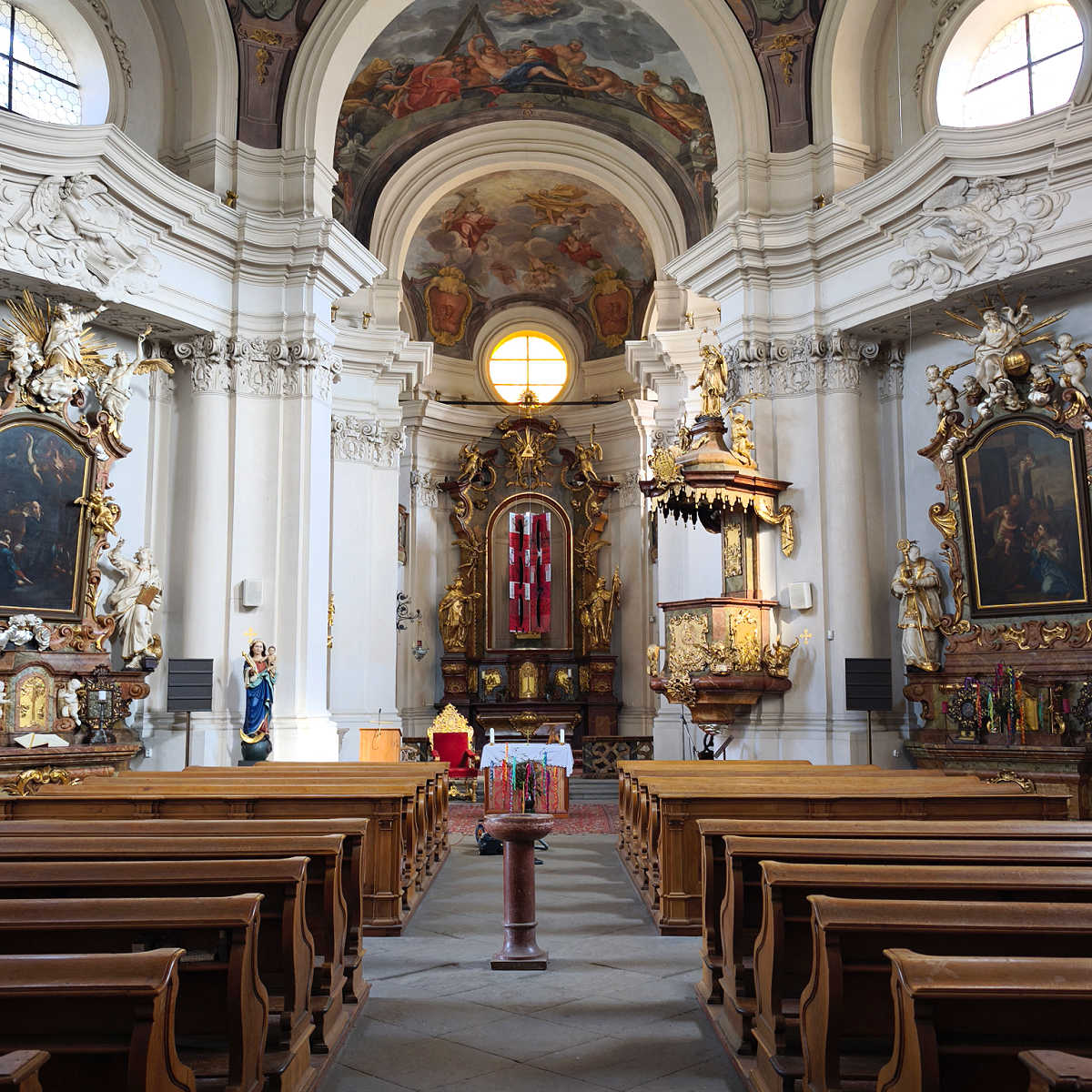
11. Church of St. John of Nepomuk on the Rock
This absolutely stunning Baroque church designed by Kilian Ignaz Dientzenhofer was build on a steep rock behind what is now a Faust house on Charles Square. Built between 1730 and 1739, it’s one of the finest examples of Prague Baroque architecture and the dramatic location and double staircase leading up to the entrance make it quite magical.
The church was built to honour St. John of Nepomuk, who was thrown from Charles Bridge into the Vltava by King Wenceslas IV in 1393 and became Bohemia’s most important saint. Dientzenhofer (who also designed the Church of St. Nicholas in Lesser Town) created a another masterpiece here.
Inside, the ceiling fresco by Karel Kovář shows the glory of St. John of Nepomuk and there’s gorgeous Baroque decoration everywhere, including gilding, sculptures and ornate altars. The church has an unusual diamond-shaped floor plan, which gives an illusion of a large space when you’re inside.
What many people don’t know is that there’s a beautiful terraced garden next to the church. The garden belongs to the Czech Society of Rock Garden Enthusiasts (Klub skalničkářů), who maintain it as a rockery with alpine plants, rare specimens and beautiful landscaping. The society has used this garden since the 1930s to grow and display alpine and rock garden plants.
I’ve visited several times and the garden is absolutely lovely. It is built on different levels following the natural rocky terrain, with winding paths, small water features and hundreds of different plant species. The garden is open the garden to the public during special open days (usually a few times a year), and they also hold exhibitions and plant sales. If you’re lucky enough to visit when it’s open, definitely go, the combination of the Baroque church and this peaceful alpine garden is quite special.
Location: Vyšehradská 49, Prague 2
Opening times: Church usually open for services; garden open during special open days
Tickets: Church free (donations welcome); garden usually free during open days
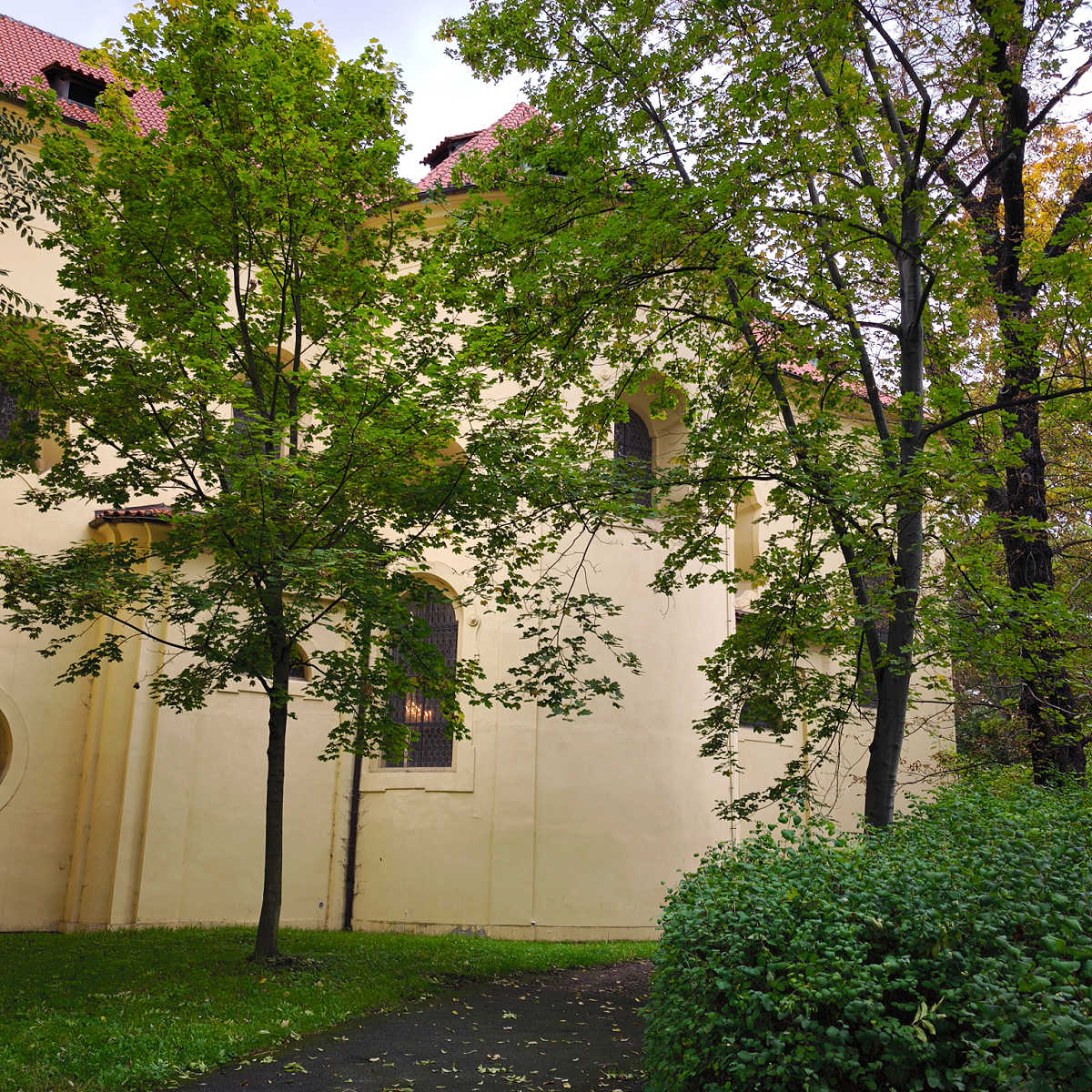
12. Psychiatric Garden & Church of St. Catherine of Alexandria
Hidden behind walls on Ke Karlovu street is one of Prague’s most secret and peaceful gardens, the Psychiatric Garden, which belongs to the former psychiatric clinic founded here in the 1790s.
The garden feels more like a park, because it has mature trees, winding paths, flower beds, benches, and a wonderfully tranquil atmosphere.
The psychiatric clinic here was one of the earliest in the Habsburg lands to treat mental illness humanely and to use therapeutic gardens as part of treatment. The idea that patients should have access to peaceful green spaces, meaningful work (many helped maintain the garden), and dignified care was quite revolutionary in the late 18th century.
Inside the garden, you can also see the Church of St. Catherine of Alexandria, a Gothic church originally founded in 1354 by Charles IV as part of an Augustinian monastery. The church has had a turbulent history, it was damaged during the Hussite Wars, rebuilt in Gothic and later Baroque styles, and eventually incorporated into the psychiatric hospital complex when the monastery was dissolved.
Location: Ke Karlovu, Prague 2 (entrance through the hospital complex)
Opening times: Daily (dawn to dusk)
Tickets: Free
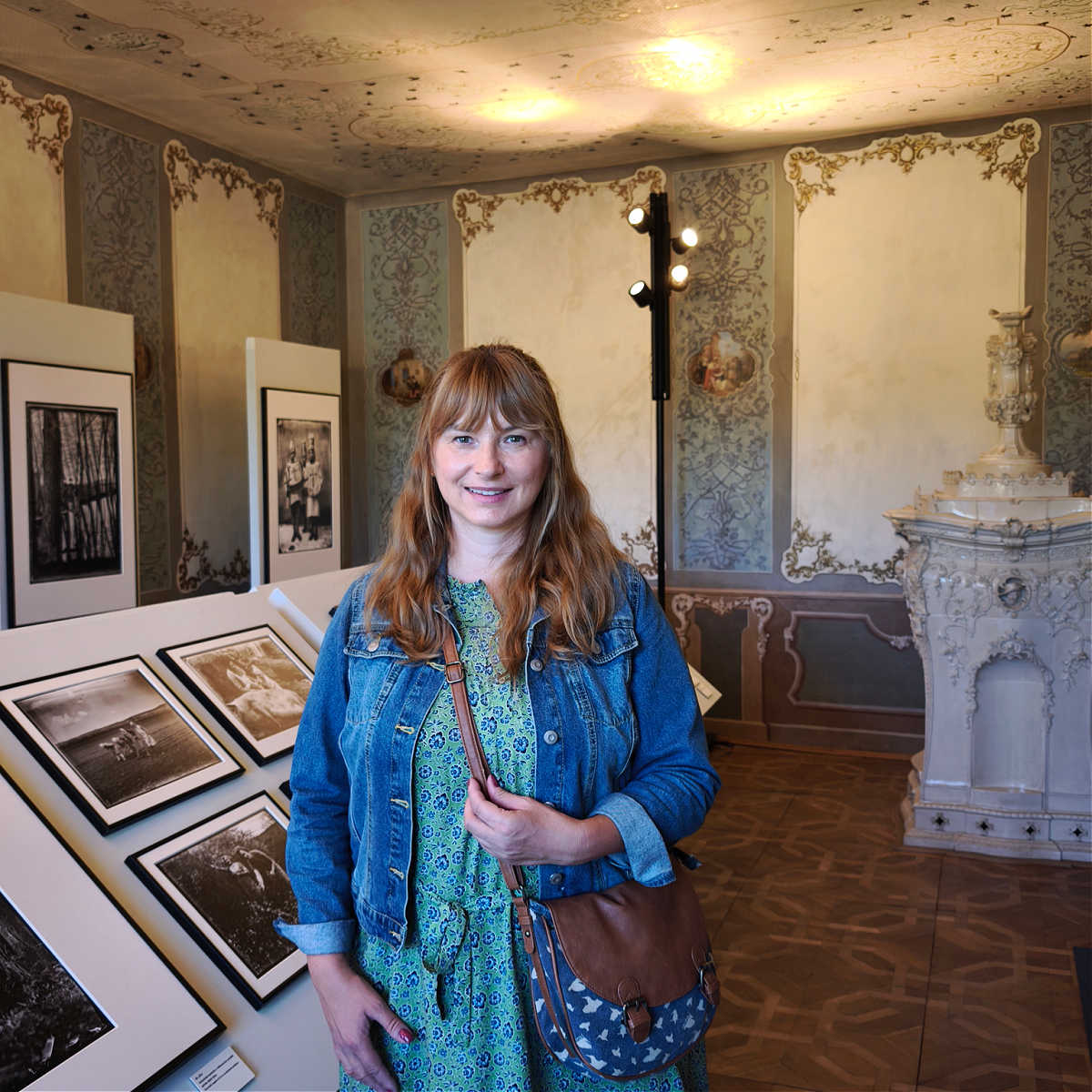
13. Postal Museum (Poštovní muzeum)
The Postal Museum is another place that I think, it’s worth visiting for the building itself, because it’s so beautiful.
The museum tells the story of postal services in the Czech lands from the 16th century to the present day. There are historic postboxes, old postal uniforms, early telephones and telegraph equipment and very comprehensive collections of stamps.
What I find most interesting are the sections about how mail was delivered through different periods of Czech history, through wars, occupations and regime changes.
The museum is small, so you won’t need hours, but it’s a lovely quirky stop if you’re interested in social history and want to see something different from the usual tourist attractions.
Location: Nové mlýny 2, Prague 1
Opening times: Tuesday–Sunday 09:00–17:00 (closed Mondays)
Tickets: 50 CZK adults, 30 CZK students/seniors
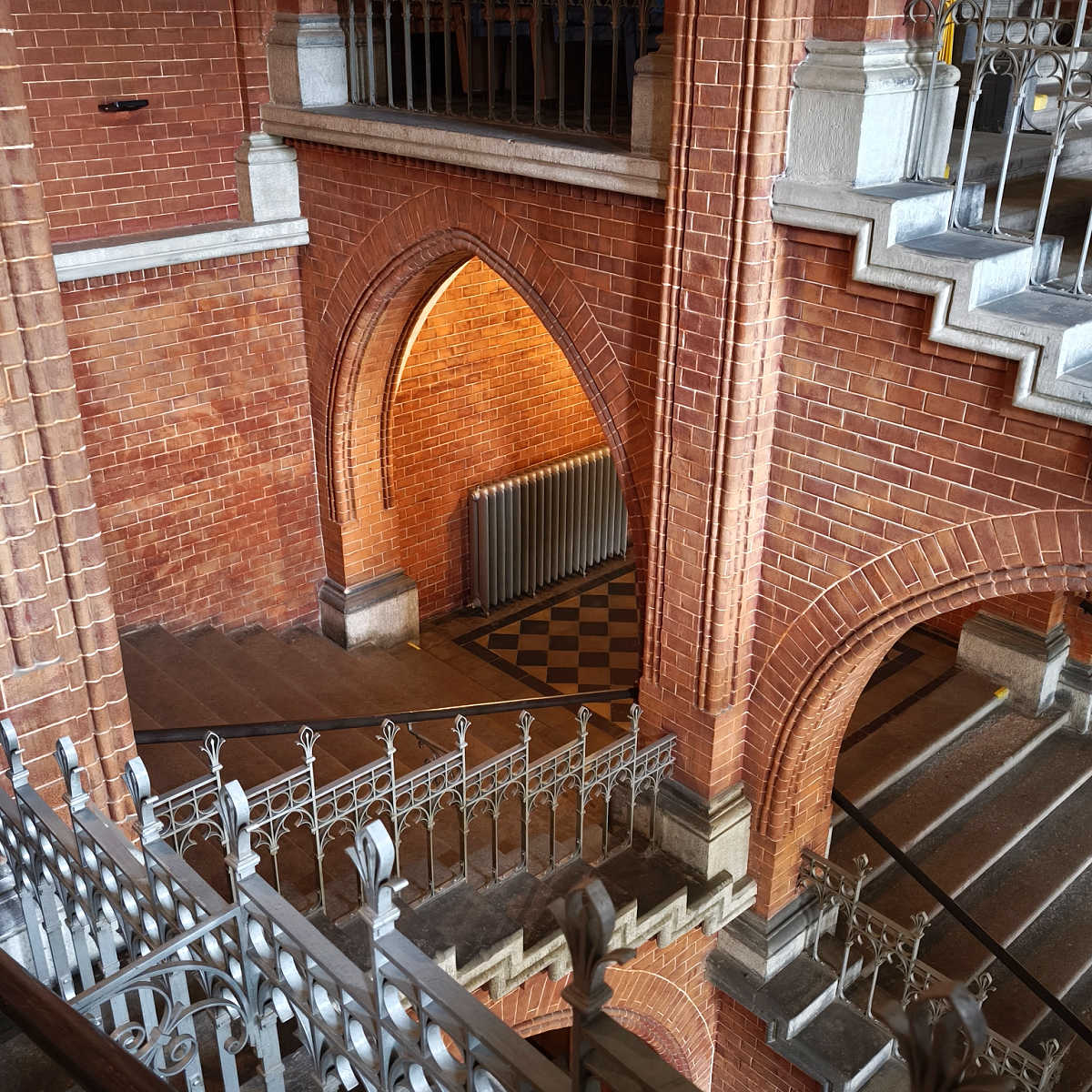
14. Apolinář Clinic (Nemocnice Na Apolináři)
Whenever I walk by the Apolinar I feel like I’m back in London. This is because this hospital building was built in the “English pavilion style” that was considered cutting-edge hospital design in the late 19th century. The clinic was founded in 1879-1884 and named after St. Apollinaris, whose church stands right next door (the neo-Gothic Church of St. Apollinaris designed by Antonín Baum).
The English pavilion system was revolutionary at the time, because instead of one massive hospital building where diseases could spread, the complex had separate pavilions for different departments, all set in landscaped grounds with plenty of fresh air and greenery. This design was based on Florence Nightingale’s principles of hospital hygiene and the idea that patients recovered better with access to light, air and nature.
The complex is still a functioning hospital, but you can visit the entrance hall and the chapel on the first floor.
You can also walk around the building, I always found this area of New Town fascinating as there are more hospital buildings, university lecture halls and old gardens.
Location: Apolinářská 18, Prague 2
Opening times: It’s a functioning hospital; church sometimes open for services
Tickets: Not a tourist attraction as such; access to chapel and viewable from outside only
This blog post was originally written on 8 July 2026 and last updated on 8 July 2026


