
More Than Stamps: Discover Prague’s Postal Museum in a Baroque House with Beautiful Wall Paintings
When I first visited the Postal Museum, I honestly didn’t expect much—I mean, how exciting could stamps and old letters really be, right? But the moment I stepped inside this unassuming Baroque house tucked away in the backstreets of Prague New Town, I realized it’s a hidden gem packed with history, quirky stories, and some surprisingly beautiful wall art.
Since then I always visit when there is a new exhibition on and also happily recommended to anyone who wants to see how a well to do mill owner’s once used to live like in Prague.
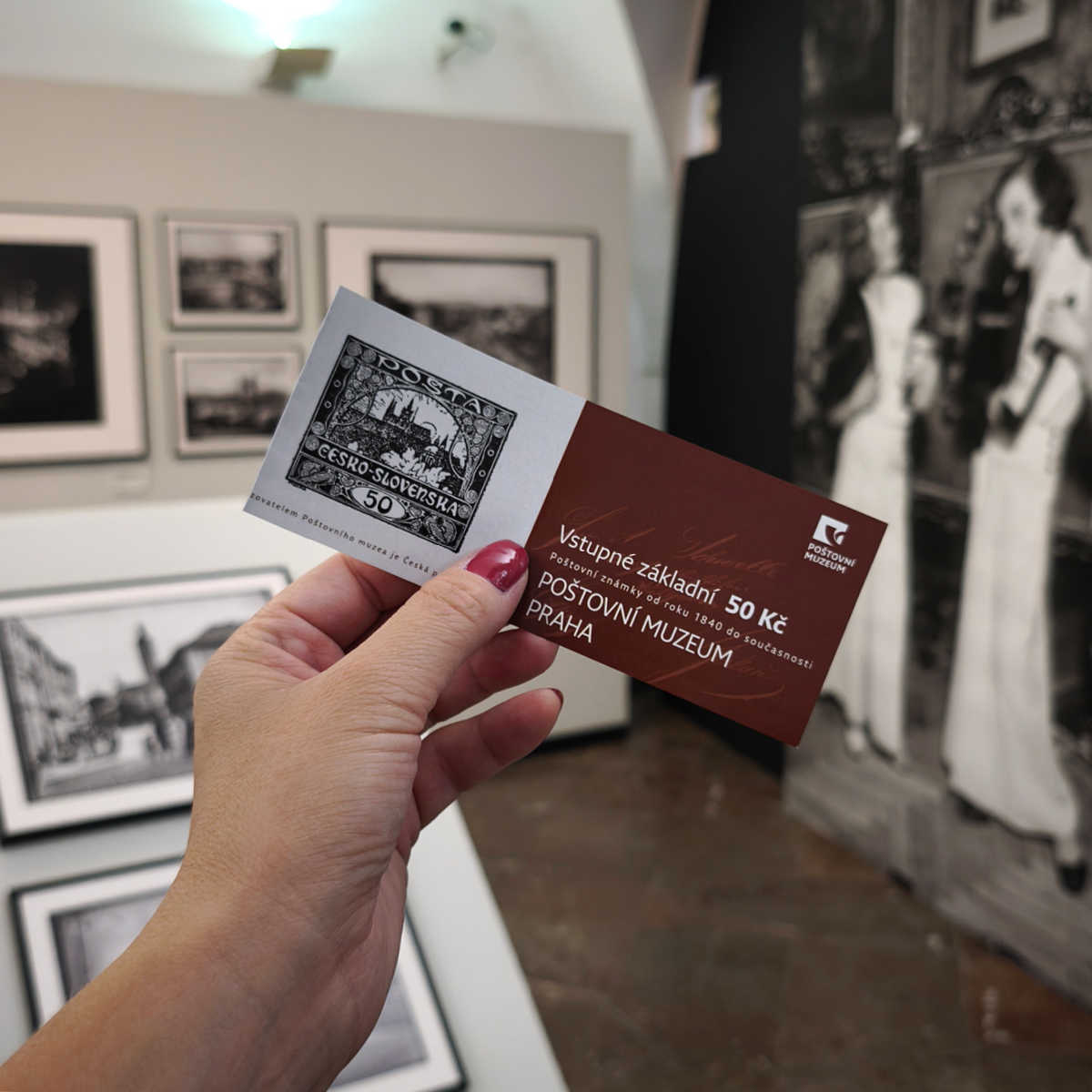
The ticket cost less than a cup of coffee and the permanent exhibition of postal stamps and a short introduction to the history of postal service in the Czech Republic is pretty interesting too.
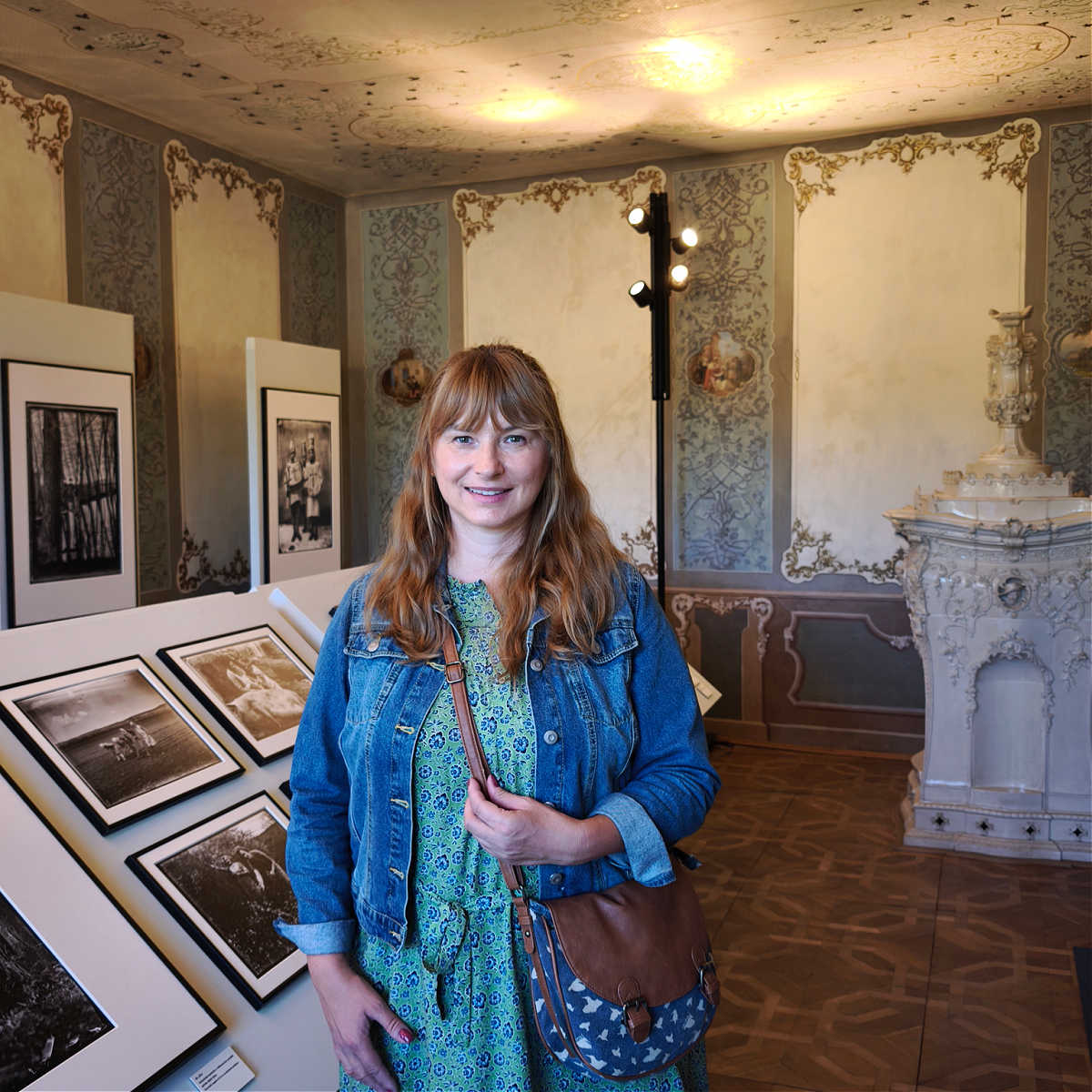
My favourite reasons for visiting the Postal Museum
I like any kind of industrial heritage and like to learn about the history of postal service, but can’t quite get excited about the postage stamps. And that’s what this museum is mainly about…
But, what I love about this museum are the regular exhibitions, which are always interesting and most of all I really like to interior of the house. I mean there are not a lot of regular people’s houses, where you can see wall paintings like from a chateau! I always say to people, come and visit the house as I think that, that’s a good enough reason to make a detour from the busy Prague centre.
Also quite selfishly I like that every time I visit, there is hardly anyone there and the museum staff usually matches the number of visitors!
MORE MUSEUMS IN PRAGUE

What can you see inside the museum
The Postal Museum in Prague concentrates mainly on stamps and you can see permanent exhibition of postage stamps of the Czech Republic and Czechoslovakia, including First Day Covers (FDC), philatelic rarities, and forgeries.
The exhibitions also include some of the oldest stamps from European and non-European countries and UN stamps.
There is also a specialized stamp collections, including Hradčany, Russian Zemstvo stamps, classic Austrian postage stamps up to 1918 and Old German states up to 1871.
There is a brief exhibition about the history of postal service and the history of the postal museum, including pre-stamp letters, postmarks and the world’s first newspaper stamps.
MORE MUSEUMS IN PRAGUE
Regular exhibitions
I’ve visited the Postal Museum a couple of times now and what I really liked, is that every time they had a different exhibition on which was displayed in all the rooms apart from the permanent exhibition. The last exhibition, which continues until the end of 2025, was absolutely amazing!
Moments of Life – Negatives from the Bin 1900–1945 – photographs from the collection of Martin Wágner
The displayed photographs were collected by a photographer Martin Wágner, who over nearly three decades gathered more than a million old negatives— found at flea markets, rescued from garbage bins or given by a relatives when clearing out houses.
I love the idea behind the exhibition of displaying photos that were taken by untrained photographers in the first half of the 20th century and showing everyday life.
The exhibition shows about one hundred photographs divided into eight thematic sections—ranging from rural and urban life, work activities, children’s games, festivals, and portraits, to leisure and travel.
Originally these were a private snapshots, never intended for the public, but here you can see families celebrating birthdays, going on a Sunday trip in a car, bathing in a river or just sitting in their kitchen.
Wall paintings by Josef Navratil
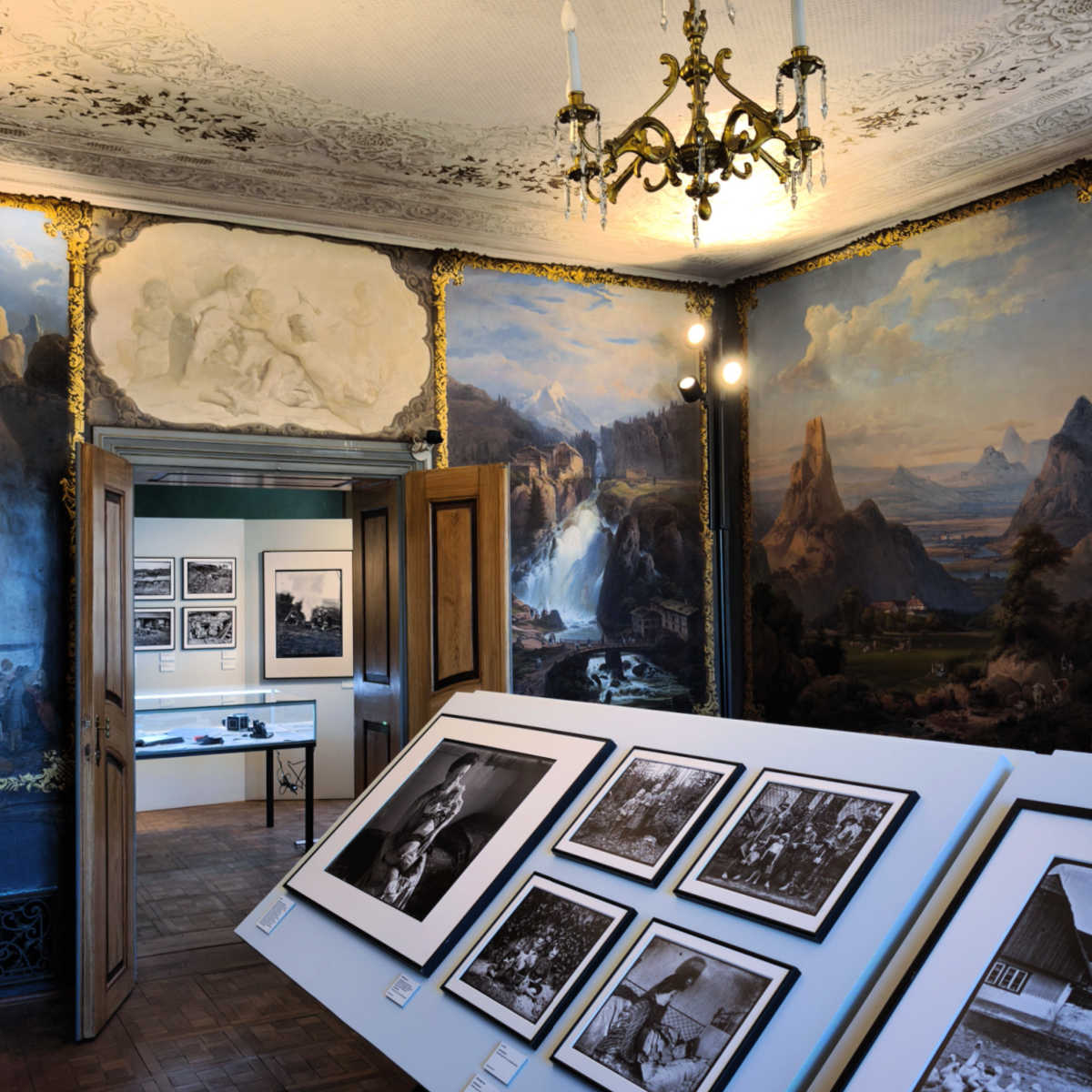
The wall paintings in the house were created in 1847 by the painter and decorator Josef Navrátil, commissioned by the wealthy miller Václav Michalovic, who was the artist’s friend, an art lover, collector, and fellow member of the long-defunct social club at the brewery U Kléblatů.
The original landscape paintings with figures and medallions have been preserved almost completely on the first floor of the northern wing of the house, particularly in the corner Alpine Salon, less so in the dining room, and better in the Theatre Salon. All paintings were directly painted on the wall with oil tempera.
Josef Matěj Navrátil (1798–1865) was a Czech painter and decorator, regarded as one of the most important artists of the 19th century in Bohemia.
He was born in Slaný town and later worked mainly in Prague. He trained under his father as a decorator and studied at the Academy of Fine Arts with Josef Bergler. His style combined elements of Rococo, Biedermeier, Romanticism, and Realism, and in some of his works he even anticipated Impressionism.
Navrátil was a versatile artist, producing landscapes, still lifes, and figurative works, as well as extensive wall paintings and interior decorations. Apart from the Postal Museum, you can also see his work at Prague Castle, the imperial castle in Zákupy and other chateaus such as Liběchov, Ploskovice, and Jirny. Several of his easel paintings and sketches are displayed in the National Gallery in Prague.
Although Josef Navrátil’s paintings were restored back in the 1950s by Professor Bohuslav Slánský, the house deteriorated and the local council started to look for a more suitable use for it than a residential property. The entire building was reconstructed between 1986 and 1988, and since then it has housed the Prague Postal Museum.
MORE MUSEUMS IN PRAGUE
The history of the museum house – Vavra’s Water Mill
Although the house is called ‘mill’ it was never an actual water mill, because the Nové mlýny (New Mills) stood much closer to the Vltava River. Instead, the house was used as a miller’s residence.
On the site of today’s Vávra’s House there used to be smaller houses where fishermen, bath attendants, and millers had lived since the 13th century. In the Middle Ages, there were ponds here, and their water was used for the baths of St. Clement Church nearby.
Development on the site dates back to the last quarter of the 14th century; the exact location of house No. 1239/II was originally either a mill of Fance Norimberger (from 1380) or house of a local fisherman called Machsant (from 1379).
The owners changed frequently, and in the mid-16th century, the house passed into the ownership of the New Town municipality. During the great fire of 1689, the building was largely destroyed (as it was mainly wooden), but what has survived was the Renaissance cellar walls with a later Baroque vault.
Afterwards the Prague’s New Town municipal council decided to re-build the Nové Mlýny (New Mills) on the river and the house at 1239/II building plot was also completely rebuilt in 1689–1690. The house, as you see it now is pretty much from that time and hasn’t been altered.
In the first half of the 18th century, the city began to lease the mills on a long-term basis. In 1750, the New Mill near the Church of St. Clement, together with the residential building, was acquired by the miller František Klika.
After his death, the mill was inherited by his widow and her descendants. In 1788, Josefa Vorlová purchased the mill ‘on behalf of’ her underage son (apparently from her first marriage), Václav Michalovic.
The house during the Michalovic family ownership
In 1788, the mill was taken over by Václav Michalovic (1768–1840), together with his wife Magdaléna, née Kuršová (1776–1816). In 1800, Michalovic definitively purchased the mill along with the residence from Prague’s New Town council.
His son, Václav Karel Michalovic (1798–1851), attended the social club Nimrodi in the Old Town brewery U Kléblatů, whose members included, among others, writer Josef Jungmann and the painter Josef Navrátil.
In 1847, Michalovic commissioned Navrátil to decorate the house. I guess, it helped that Navrátil was also Michalovic’s neighbour, living on Truhlářská Street, No. 1118/II.
The Michalovic family retained ownership of the house until the late 1880s, when it was purchased by businessman Dr. Václav Cicvárek, co-owner of the mills in Čejetice and Vinci.
The last owners – the Vávra Family
Since 1890, this house has been listed in the Prague register of residents as the home of master baker Zdeněk Vávra and his wife Marie, née Labutková. The record of the property transfer to the Vávra couple dates only from the early 1900s. The new owners purchased the house from Dr. Václav Cicvárek for 45,000 golden coins.
The property remained in the possession of the Vávra family until 1948, when it was nationalized and handed over to OPBH (District Enterprise for Housing Management). The owners’ family continued to live in the house even into the 1970s.
Sadly, the water mills on the river disappeared during the time when the water corridor become regulated, but the house remained and later become the Prague Postal Museum.
MORE MUSEUMS IN PRAGUE
Practical information for visiting the Postal Museum in Prague
Location: Nove Mlyny 2, Prague 1
Opening Times: Tuesday – Sunday 9 am – 5 pm (Monday’s closed)
Ticket Prices: Adults 50 CZK, Students, Children (over 6 years) and seniors 20 CZK
Facilities at the museum: None
How to get to the museum from the centre of Prague
The easiest way to get to the museum from Old Town Square (Staroměstské náměstí) in the center of Prague is to walk. It’s about a 15 minute walk from Old Town Square via Dlouha Street, crossing the busy Revolucni Street with trams, then taking the Klimentska Street to pass the church of St. Kliment and arriving to the back of the museum, right next to the New Town Water Tower.
This blog post was originally written on 2 September 2025 and last updated on 2 September 2025


