
New Town Prague: 14 Best Attractions & Things To Do
The New Town (Nové Město) is one of Prague’s most underrated quarters. Most people rush through on their way to Wenceslas Square, but there’s so much more here than department stores and hotels. Founded in 1348 by Holy Roman Emperor Charles IV, this isn’t actually “new” town at all, it’s a medieval district that’s been part of Prague for nearly 700 years!
I always enjoy exploring the New Town, mainly because it’s not as touristy as the Old Town, but also because there so many interesting attractions and museums here. You’ll also find beautiful theatres, grand squares, peaceful parks and some of Prague’s best Art Nouveau architecture here.
Here is my pick of the 14 best attractions you absolutely shouldn’t miss in Prague’s New Town.

1. Wenceslas Square
This isn’t actually a square, it’s more like a large boulevard stretching 750 metres long and 60 metres wide. Wenceslas Square has been at the heart of Czech history for centuries. This is where the Velvet Revolution protests happened in 1989, where Jan Palach set himself on fire in 1969 to protest the Soviet invasion and where Czechoslovakia’s independence was declared in 1918.
At the top of the square, you’ll find the National Museum with the statue of St. Wenceslas on horseback right in front. The square itself is lined with hotels, shops, and restaurants, and yes, it can feel quite touristy, but that doesn’t make it any less significant.
The upper part of Wenceslas Square is currently being re-designed and getting ready for return of the trams, which will connect the square with Vinohrady area.
I often walk through Wenceslas Square at night on my way from the State Opera, when it’s all lit up. The National Museum glows beautifully, and there’s something quite magical about standing where so much history happened. During Christmas, there’s also a market here, though I think the one at Old Town Square is better.
Location: Václavské náměstí, Prague 1
Opening times: Open 24/7 (it’s a public square)
Tickets: Free
2. National Museum (Národní muzeum)
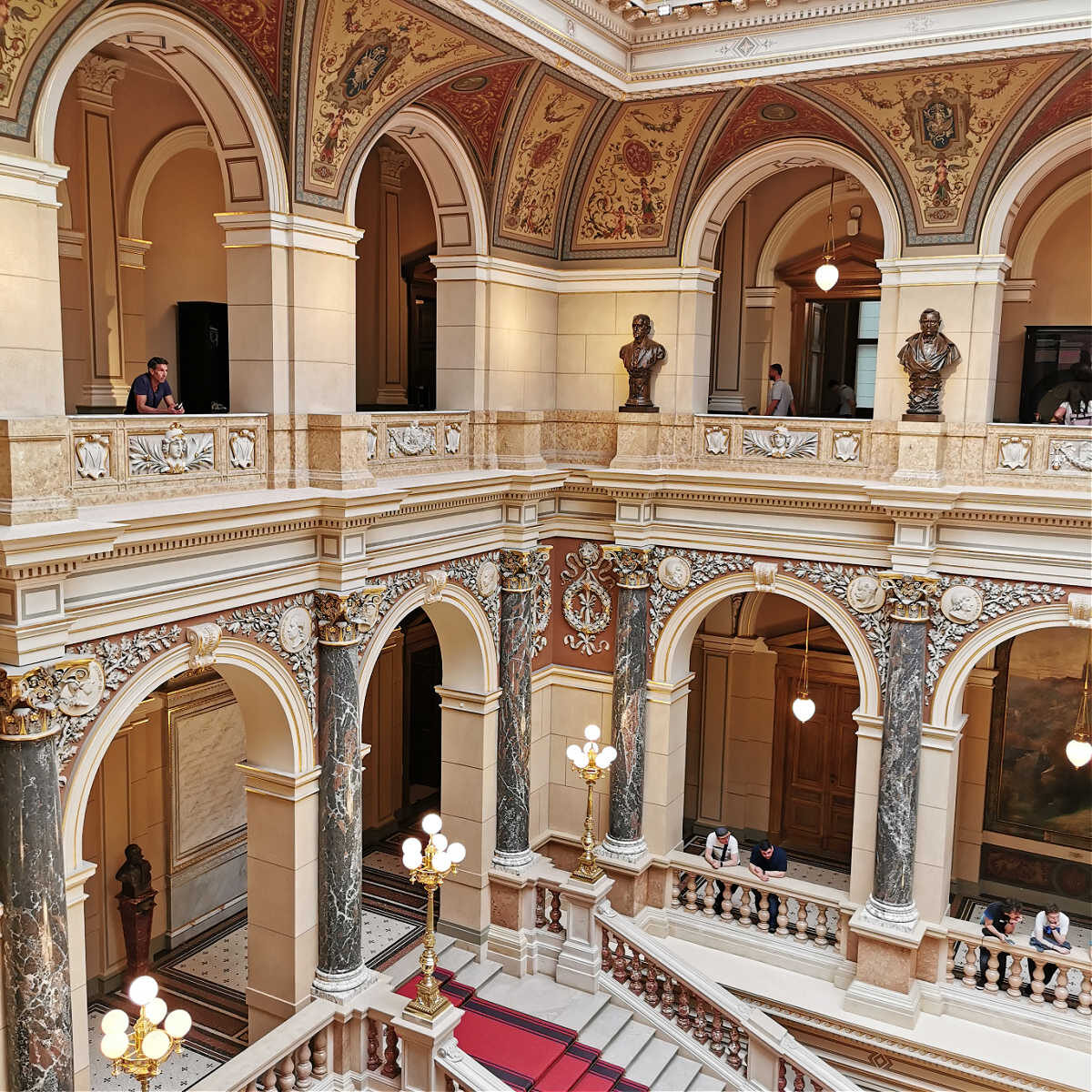
The large Neo-Renaissance building sitting at the top of Wenceslas Square is impossible to miss. Built between 1885 and 1891, the National Museum was closed for renovation for years and when it reopened in 2018, it was absolutely stunning. The building itself is enough to be the main attraction, really, the grand entrance hall, the Pantheon with its painted ceiling and that spectacular staircase.
The museum has permanent exhibitions about local history and natural history. But there are also regular temporary exhibitions, which I always find very interesting and well put together. All the exhibitions are now described in Czech and English, which is great for anyone visiting from abroad. I also like to walk up to the dome on the top of the building, where you get the most amazing views of Wenceslas Square.
Location: Václavské náměstí 68, Prague 1
Opening times: Daily 10:00–18:00
Tickets: 350 CZK adults, concessions and family tickets available
3. The Dancing House (Tančící dům)
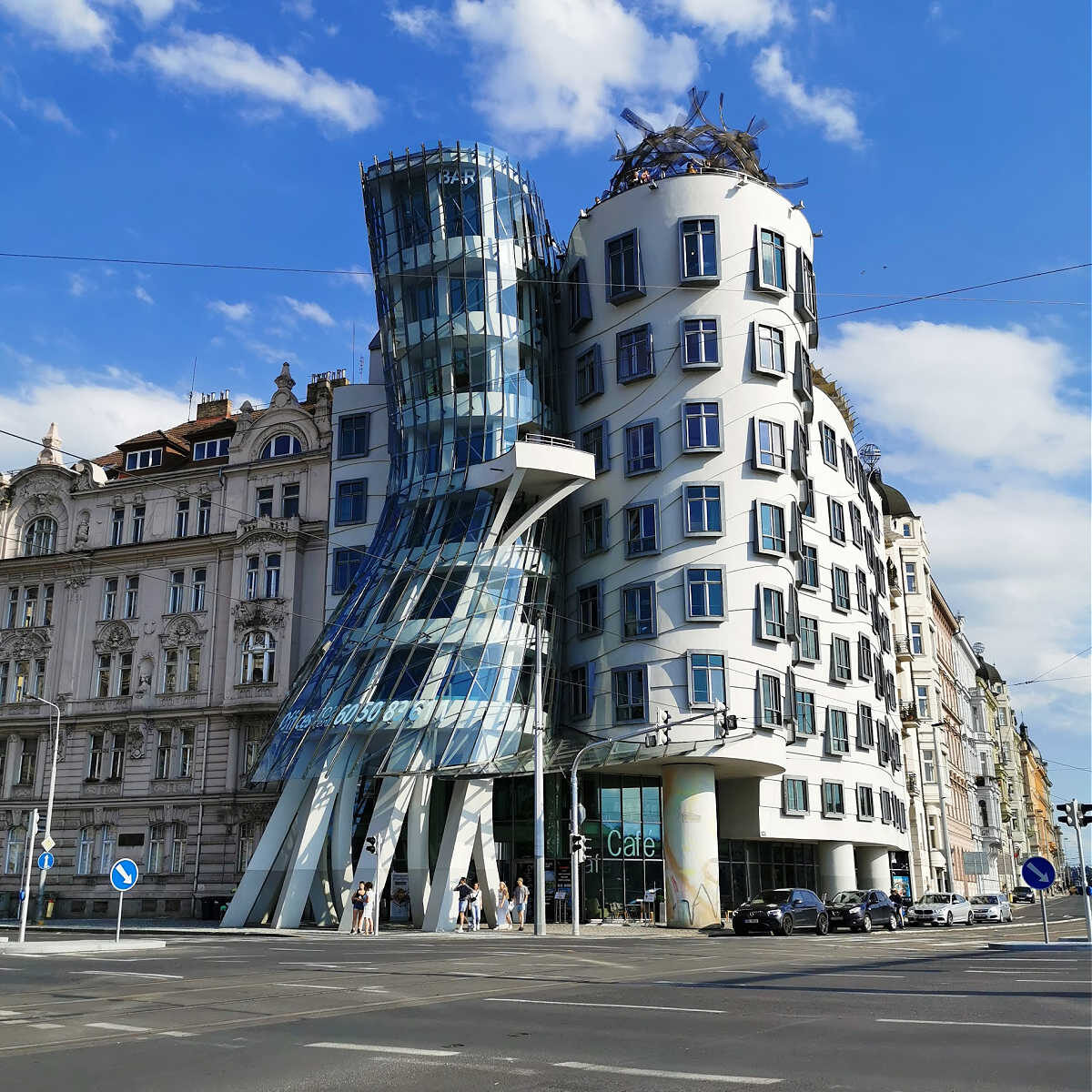
Also called “Fred and Ginger” after the famous dancers, this deconstructivist building designed by Vlado Milunić and Frank Gehry is one of Prague’s most controversial pieces of architecture. Built in 1996, it sits right on the riverbank next to beautiful 19th-century buildings and honestly, it looks like two dancers swaying together, one building is curved and dynamic, the other straight and stable.
Some people absolutely hate it because it doesn’t fit with Prague’s historic architecture. I quite like it. It’s different, and it shows that Prague isn’t just a museum city stuck in the past. There’s a gallery inside, offices and a restaurant on the top floor called Ginger & Fred with a rooftop terrace.
I usually just admire the Dancing House from the outside whilst walking along the river, but if you want fantastic views across the Vltava towards Prague Castle, go up to the restaurant or the viewing gallery on the 7th floor.
Location: Jiráskovo náměstí 1981/6, Prague 2
Opening times: Gallery daily 09:00–20:00
Tickets: Art gallery 280 CZK, Viewing gallery 150 CZK

4. Church of Our Lady of the Snows (Kostel Panny Marie Sněžné)
Hidden behind Wenceslas Square down a little passage, this Gothic church was meant to be the largest in Prague when Charles IV founded it in 1347. They only built the chancel, though, the rest was never finished. Even incomplete, it has the highest nave vault in Prague at 34 metres, which is absolutely breathtaking when you walk inside.
The interior is Baroque, absolutely covered in gold and ornate decorations. It feels much grander than you’d expect from the rather modest exterior. There’s also a lovely peaceful garden courtyard (Franciscan Garden) right next to it, which is one of my favourite places to escape the crowds in the city centre.
I stumbled upon this church by accident years ago and now I always pop in when I’m near Wenceslas Square. It’s never crowded and sitting in the garden afterwards with a coffee or a local ice-cream is always a real treat. Very few tourists seem to find it, even though it’s literally steps away from the busiest part of Prague.
Location: Jungmannovo náměstí 18, Prague 1
Opening times: Daily, usually 09:00–18:00 (times may vary)
Tickets: Free entry, donations welcome
5. National Theatre (Národní divadlo)
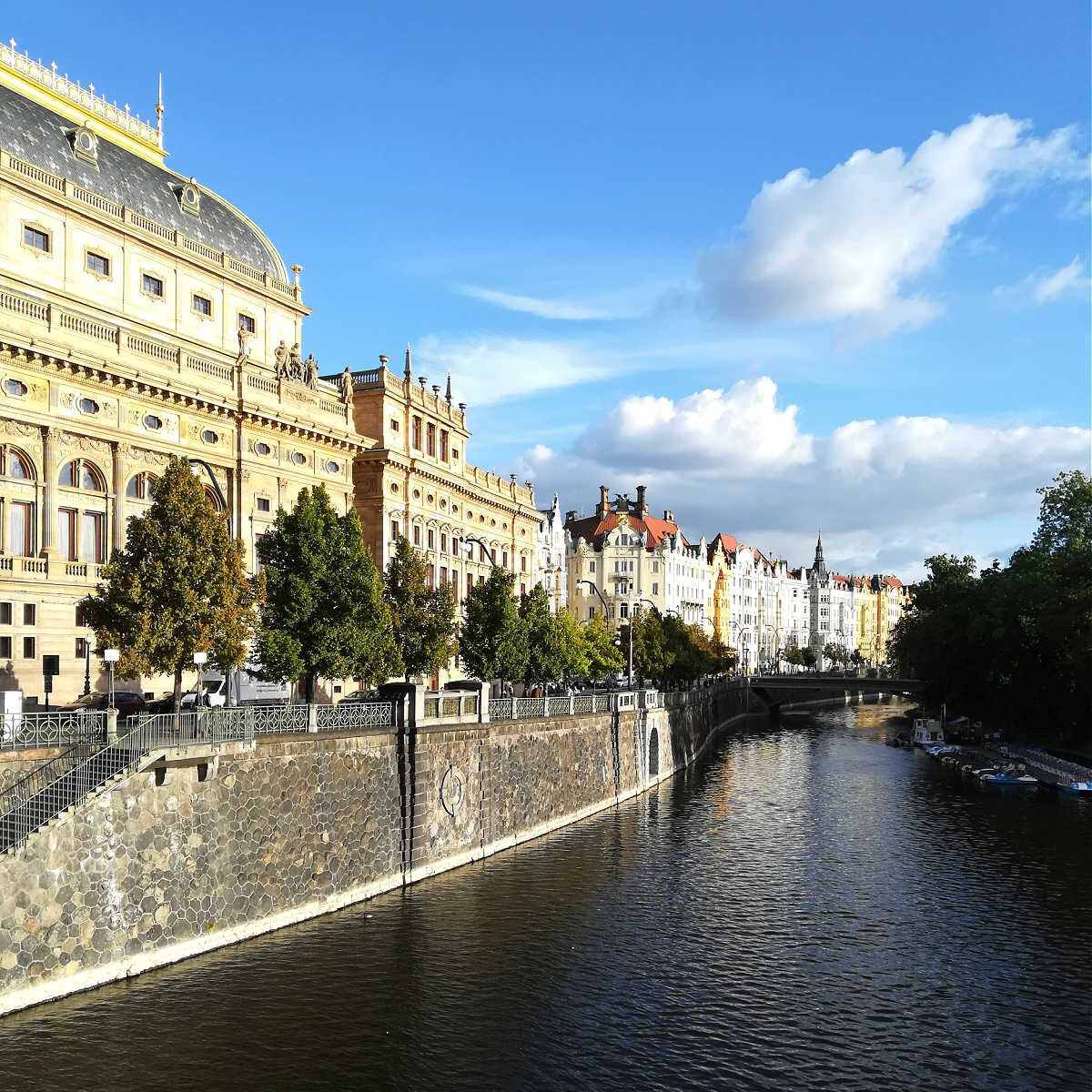
The golden roof of the National Theatre is one of Prague’s most recognisable buildings. This Neo-Renaissance building opened in 1881, burned down two months later, but was rebuilt and reopened in 1883 and entirely funded by public donations. The Czechs were so determined to have their own theatre for Czech-language performances (rather than German) that people from all walks of life contributed.
The interior is absolutely stunning. The ceiling in the auditorium was painted by František Ženíšek, the stage curtain by Vojtěch Hynais and there’s beautiful gilding and decoration everywhere.
I’ve been going to the National Theatre ever since I was a student at the Charles University and still visit regularly. My favourites are operas, but most performances have now English subtitles, so anyone can visit and enjoy this theatre. There are also regular guided tours of the building when there are no performances.
Location: Národní třída 2, Prague 1
Opening times: Box office Monday–Friday 10:00–18:00
Tickets: Performances from 190 – 1500 CZK, tours around 350 CZK

6. State Opera (Státní opera)
Less famous than the National Theatre but equally beautiful, the State Opera is a Neo-Renaissance and Neo-Rococo gem from 1888. Originally called the New German Theatre (because Prague had separate Czech and German cultural institutions), this theatre is where most of the opera and ballet performances take place.
After the war, it was briefly known as the May the Fifth Theatre, then later as the Smetana Theatre from 1949 to 1989. Now it’s part of the National Theatre complex, which means the same company performs at both venues.
The exterior is gorgeous with its sculptures and decorations, but the interior is what really takes your breath away. The auditorium is all gold, red velvet, and ornate details. I think, the acoustics are slightly better here than at the National Theatre, the music is always very clear listening to it.
If you love opera, definitely try to see a performance here. The tickets are very affordable and the atmosphere is wonderful.
Location: Wilsonova 4, Prague 1
Opening times: Box office Monday–Friday 10:00–17:30, Saturday–Sunday 10:00–12:00 and 13:00–17:30
Tickets: Performances from 190 -1500 CZK, guided tours available (from 350 CZK)
7. Lucerna Shopping Passage (Palác Lucerna)
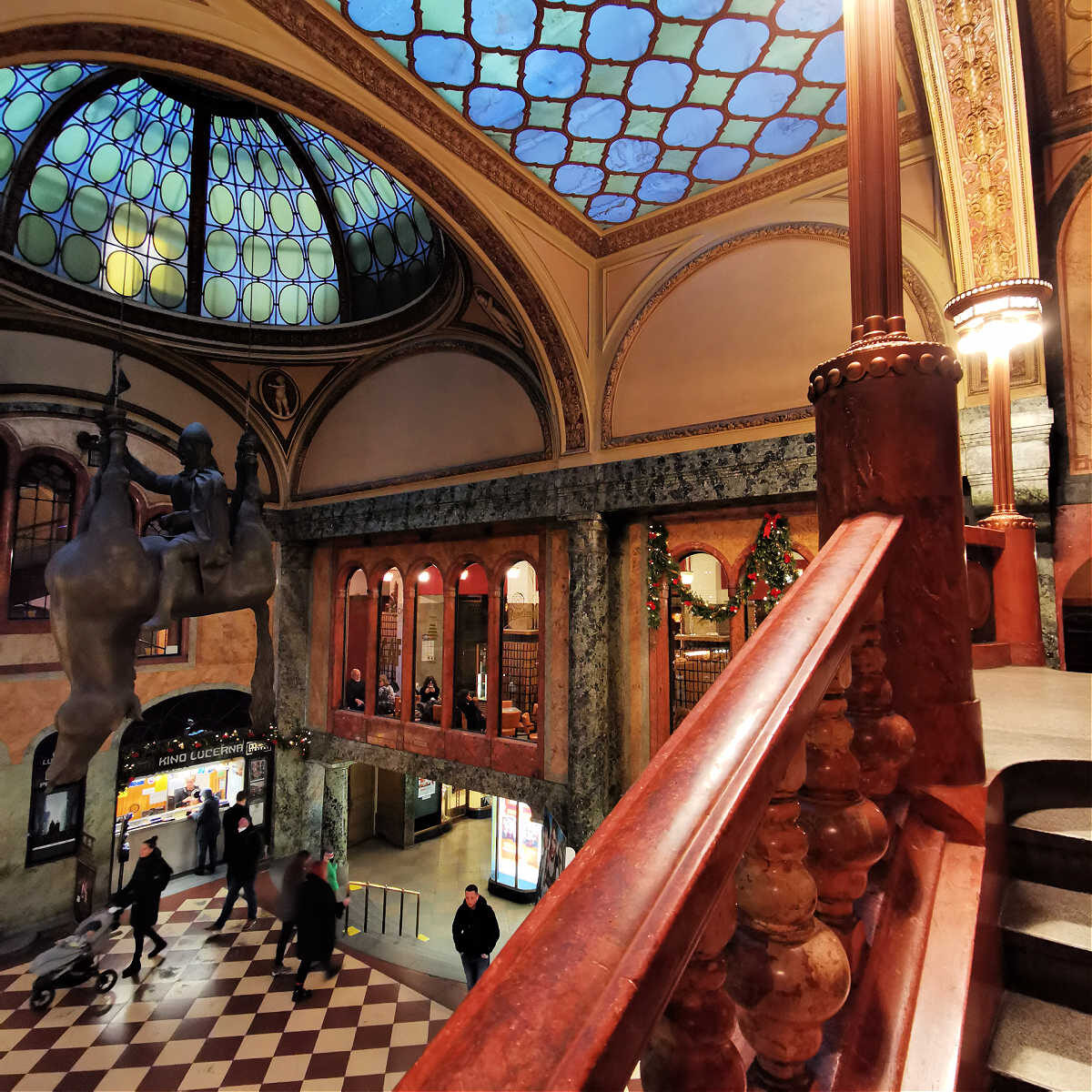
I’m very fond of Lucerna shopping passage. This oldfashioned arcade is a genuine maze of corridors lined with independent shops, vintage stores, cafés, and businesses that have been there for decades. Hanging from the ceiling of the main hall is David Černý’s infamous sculpture “Kůň” (Horse), an upside-down horse with Saint Wenceslas sitting on its belly, a cheeky take on the famous equestrian statue at the top of Wenceslas Square.
There is also one of my favourite art cinemas, founded 1909 with a spectacular Art Nouveau hall, the legendary Lucerna Music Bar in the basement (famous for its 80s/90s nights and live concerts) and the magnificent Great Hall ballroom, where I used to go for ballroom dances and folk music concerts.
The fact that Lucerna was built by Václav Havel’s grandfather, confiscated by communists in 1948, and returned to the Havel family after 1989 makes it even more interesting piece of Czech 20th-century history.
Location: Štěpánská 61 (entrances also from Vodičkova and Wenceslas Square), Prague 1
Opening times: Passages generally Monday–Saturday 09:00–20:00, Sunday 10:00–19:00 (individual shops vary); Cinema and Music Bar have separate schedules
Tickets: Free to walk through passages; cinema tickets around 150–200 CZK; club entry varies by event
8. Náplavka Farmers’ Market
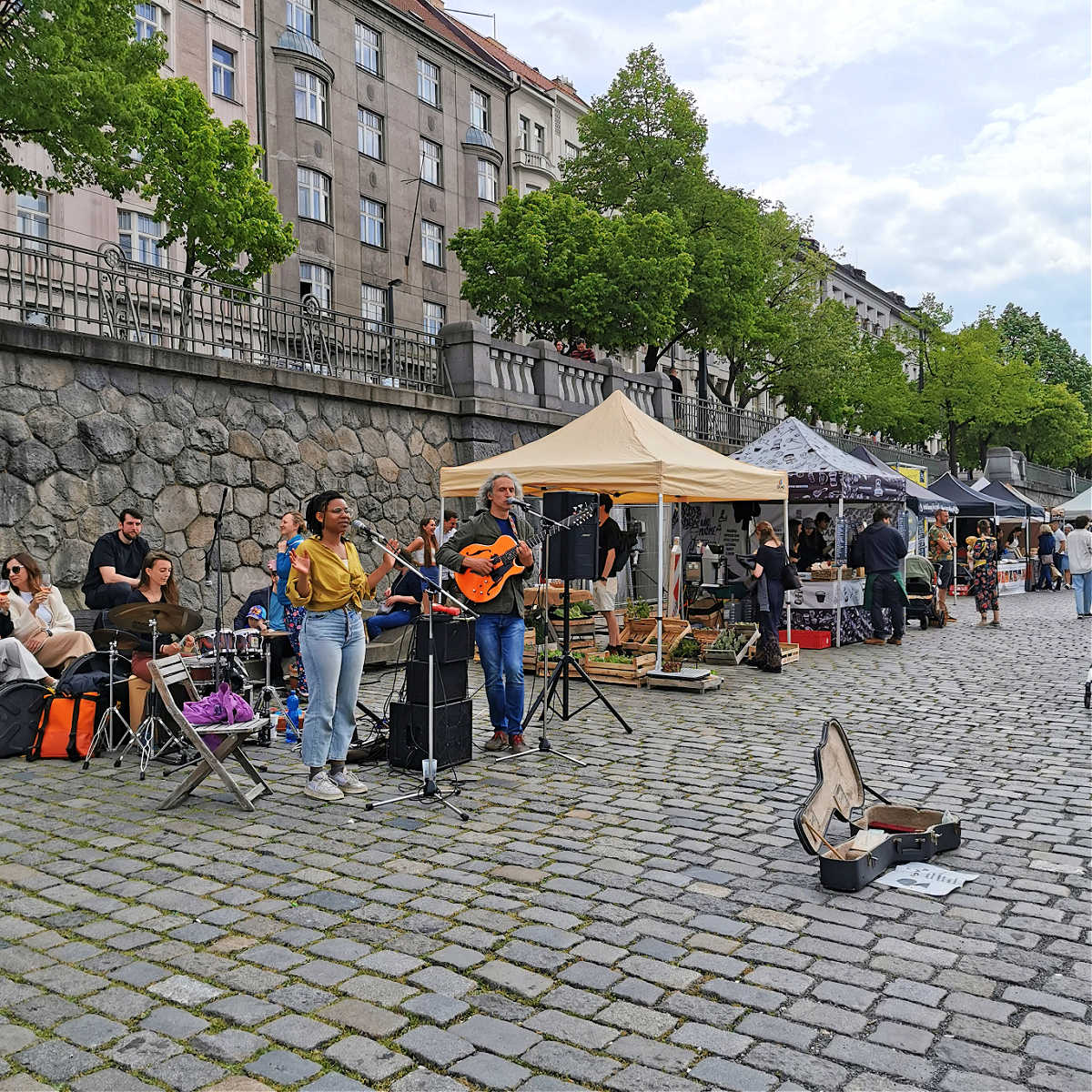
Every Saturday from April through October, the riverbank along Rašínovo nábřeží transforms into one of the best farmers’ markets in Prague. This isn’t just any market, it’s absolutely huge event with more than 90 stalls selling everything from fresh vegetables and artisan cheeses to smoked meats, fresh fish, homemade pastries and jars of pickled everything.
The market started in 2009, organised by the Archetyp association, and it was one of the first proper farmers’ markets in Prague. What I love about it is that it’s not touristy at all, locals come here to do their actual shopping.
You’ll find quality products directly from Czech growers, breeders, and small producers, which means the vegetables still have dirt on them, the bread is still warm and the people selling actually know where everything came from.
I usually pop in early in the morning to grab a pastry and coffee on the go and stay to listen to the live music for a bit.
But, the Smichovska Náplavka Embankment is brilliant any time, really, during summer evenings, there are pop-up bars, food trucks and people just hanging out by the river.
Location: Rašínovo nábřeží (Náplavka), Prague 2
Opening times: Saturdays 08:00–14:00, April–October
Tickets: Free to browse

9. National Memorial to the Heroes of the Heydrich Terror
The National Memorial to the Heroes of the Heydrich Terror is one of the most moving places in Prague, which I think everyone should visit. In 1942, seven Czech paratroopers who had assassinated Reinhard Heydrich (the Nazi “Protector” of Bohemia and Moravia and one of the main architects of the Holocaust) hid in the crypt of the Church of Saints Cyril and Methodius on Resslova Street.
After being betrayed, they were surrounded by hundreds of SS soldiers. The paratroopers fought for hours before they were either killed or took their own lives rather than surrender. You can still see bullet holes in the wall outside the church where the Nazis tried to flush them out. Inside the crypt, which is now a memorial and museum, you can see exactly where it happened, the tiny windows they shot from, the spot where they made their last stand, everything.
The exhibition tells the whole story of Operation Anthropoid, the paratroopers’ training in Britain, the attack itself and the horrific Nazi reprisals afterwards, including the complete destruction of the villages of Lidice and Ležáky. There are personal belongings, photographs and you’re standing in the actual space where these men died.
I find it absolutely heartbreaking every time I visit, but it’s such an important piece of Czech history. The bravery of those seven men, Jozef Gabčík, Jan Kubiš, Josef Valčík, Adolf Opálka, Josef Bublík, Jan Hrubý and Jaroslav Švarc, is extraordinary. Outside the church, there’s a memorial plaque and the bullet holes are still visible in the wall.
Location: Resslova 9a, Prague 2 (Church of Saints Cyril and Methodius)
Opening times: Tuesday–Sunday 09:00–17:00 (closed Mondays)
Tickets: Free

10. Jerusalem Synagogue (Jeruzalémská synagoga)
I think, that this is the most beautiful synagogue in Prague that isn’t in the Jewish Quarter. Built between 1905 and 1906, the Jerusalem Synagogue (also called the Jubilee Synagogue) is a Moorish Revival masterpiece with the most incredible colourful interior you can imagine.
From outside, it’s already impressive with its two towers and distinctive facade decorated in Islamic-inspired patterns. But when you step inside, it’s breathtaking, the walls and ceiling are covered in intricate geometric patterns and arabesques in vibrant colours: blues, reds, golds, and greens. The central chandelier hangs from a star-patterned dome and there’s beautiful stained glass everywhere. It feels more like you’ve walked into a palace than a synagogue.
The Jerusalem Synagogue was built for Prague’s growing Jewish community who couldn’t fit into the synagogues in Josefov (the Jewish Quarter). The architect, Wilhelm Stiassny, designed it in the Moorish style that was popular for synagogues across Europe at the time, inspired by the Alhambra in Spain. During the Nazi occupation, the synagogue was used as a storage facility, but thankfully it survived and was beautifully restored.
Location: Jeruzalémská 1310/7, Prague 1
Opening times: Sunday–Friday 10:00–17:00 (closed Saturdays and Jewish holidays)
Tickets: Around 150 CZK adults, 100 CZK students
11. Museum of Prague (Muzeum hlavního města Prahy)
The main building of the Museum of Prague sits at Florenc has recently re-opened after a long five-year reconstruction, looking absolutely magnificent. The building itself is a Neo-Renaissance style design from 1896–1898, by Antonín Balšánek built specifically to house the museum.
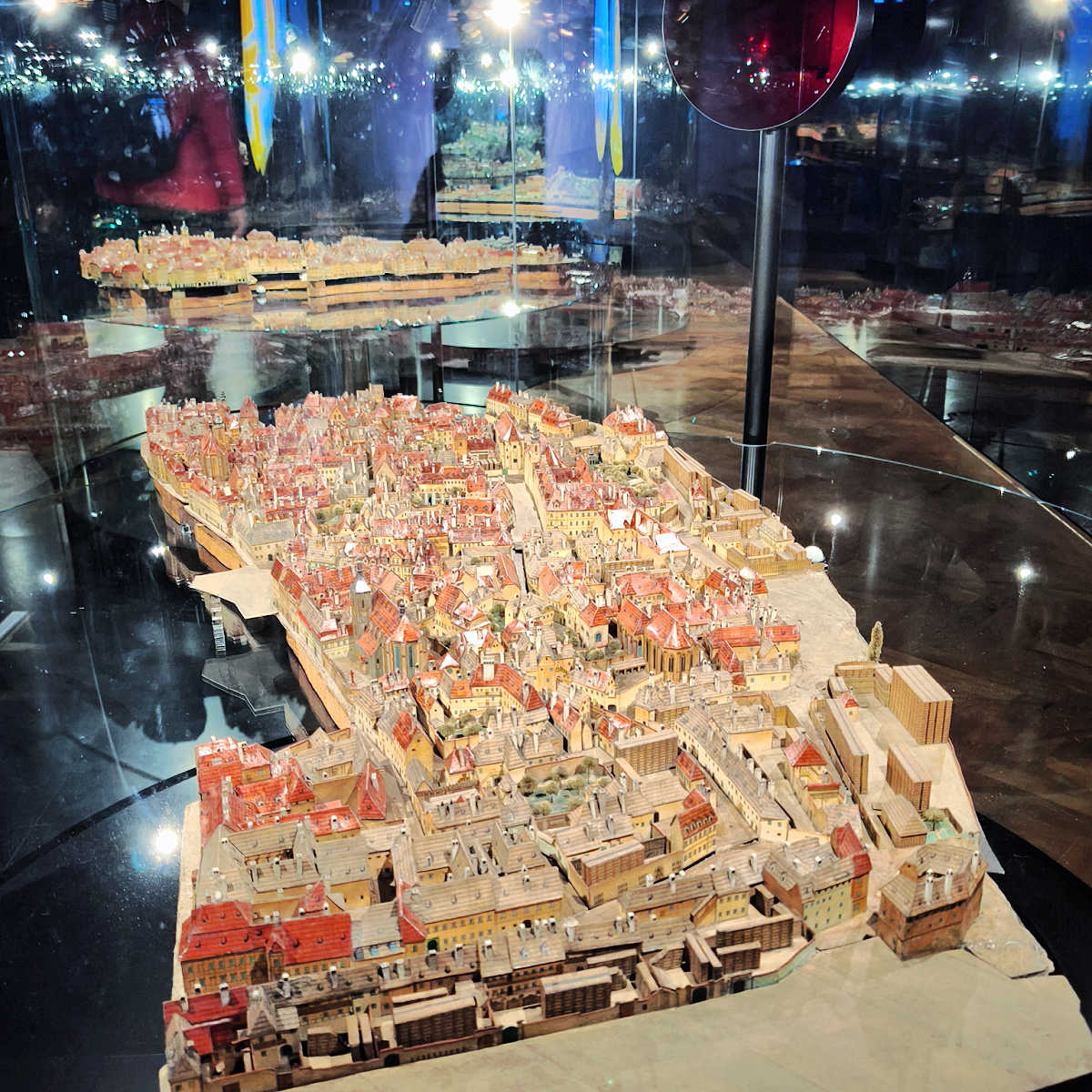
The star attraction is definitely the Langweil Model, an incredibly detailed scale model of Prague created between 1826 and 1837 by Antonín Langweil. It shows what the city looked like before all the 19th-century modernisation and you can spend ages just looking at the tiny buildings and streets. It’s one of the largest historical city models in Europe.
The museum has a new interactive exhibition about history of Prague, but parts of the building are still closed of to public as they museum is preparing more permanent exhibitions. For the time being, I think it will be until 2026, the museum is open for free.
Location: Na Poříčí 1554/52, Prague 8 (Florenc)
Opening times: Tuesday–Sunday 09:00–18:00 (closed Mondays)
Tickets: Free

12. Žofín Island & Žofín Palace (Slovanský ostrov)
Slovanský Island or as we call it Žofín Island, is one of Prague’s most romantic places. This small island in the Vltava river sits right next to the National Theatre and it’s connected by elegant iron bridge. The island was originally two separate sandbars that were joined together in the 16th century and it became a popular leisure destination from the 19th century onwards.
My grandmother and her sisters used to go dancing to Žofín Palace, which is a stunning Neo-Renaissance building build in 1884-1885. The palace was named after Archduchess Sophie (Žofie in Czech), mother of Emperor Franz Joseph I and from the moment it opened, it became one of Prague’s premier cultural venues. The list of musicians who performed here reads like a Who’s Who of classical music, Wagner, Liszt, Berlioz, Dvořák, and Tchaikovsky all gave concerts at Žofín.
But even if you’re not attending an event, the island itself is worth visiting. There are beautiful tree-lined paths perfect for strolling and wonderful views of the river, the embankments and Prague Castle in the distance.
During the main tourist season, you can borrow little pedal boats and take them on the river and in the summer there are outdoor concerts and events on the island.
Location: Slovanský ostrov (Žofín), Prague 1
Opening times: Island accessible 24/7; Žofín Palace during events
Tickets: Island free; Palace tickets depend on events
13. Masaryk Railway Station (Masarykovo nádraží)
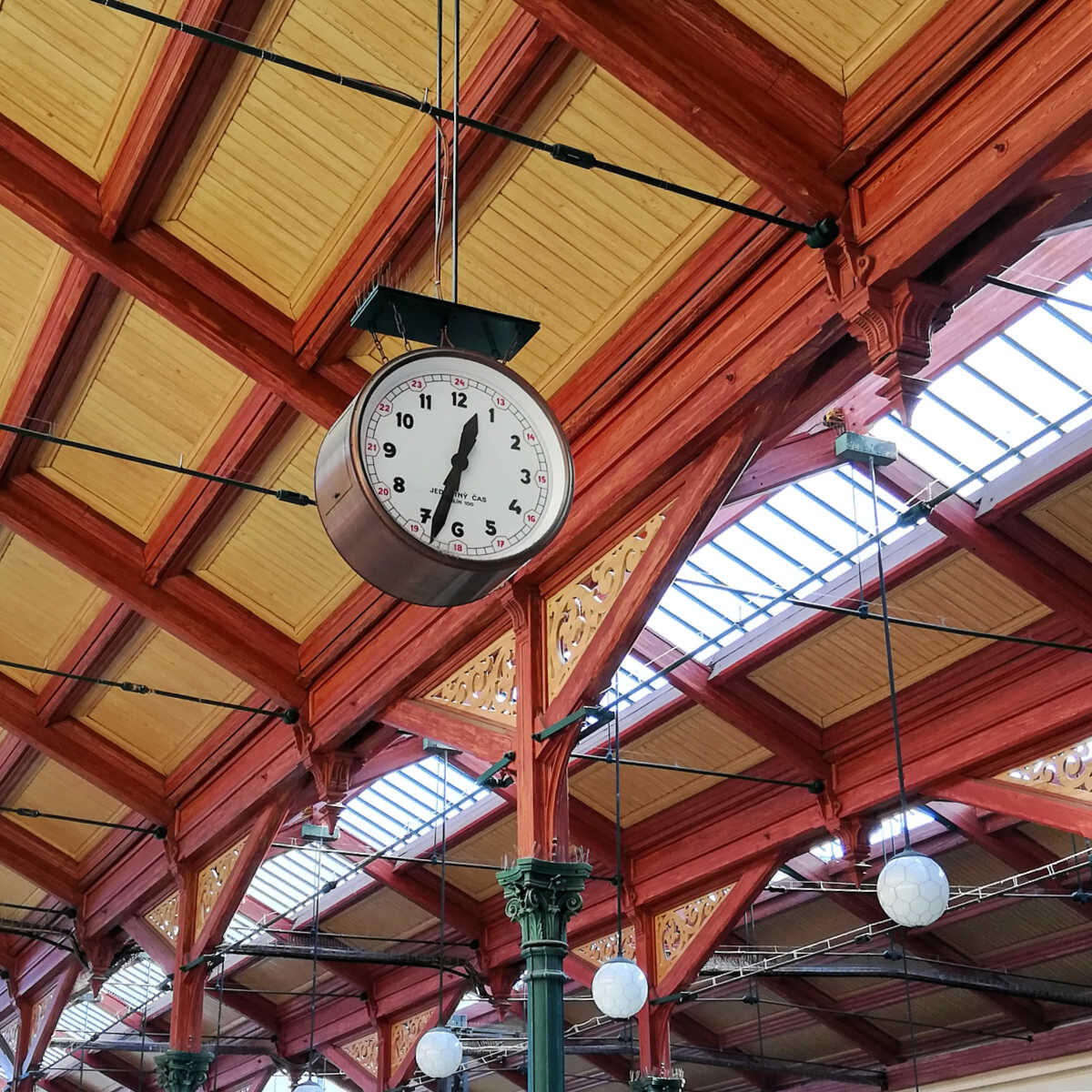
I’m very fond of Masaryk Station, because it is Prague’s oldest railway station and the second oldest railway station in the city overall (the first was Praha-Dejvice, formerly Bruska on the Lány Horse-drawn Railway).
Masaryk Station opened in 1845 and connected Prague with the imperial capital Vienna. The building you see today is actually Art Nouveau, rebuilt in 1901-1909 by architect Josef Fanta (the same architect who designed the Main Railway Station).
The station was renamed in honour of Tomáš Garrigue Masaryk, Czechoslovakia’s first president, in 1919. For most of the 20th century, it was one of Prague’s main stations, but it’s less prominent now, mainly being used by regional and suburban routes rather than international trains.
What’s really exciting is the large regeneration happening around Masaryk Station right now. The whole area, called Masaryčka, is being completely transformed with new office buildings, retail spaces, public plazas and improved transport connections. There are also plans for a dedicated railway museum at the back of the station.
The new Masaryčka office building designed by Zaha Hadid Architects opened in 2023. The 28,000 square metre building accommodates Prague’s growing corporate sector with 21st-century office spaces and there are shops and restaurants on the ground floor.
Location: Hybernská 1003/42, Prague 1
Opening times: 24/7 (it’s a railway station)
Tickets: Free to enter

14. Palác Adria (Adria Palace)
This beautiful building is one of the finest examples of Rondocubism, which is a uniquely Czech architectural style that blends Cubist geometry with rounded, baroque-inspired forms.
Rondocubism was a local architectural style that existed for only a brief period in the 1920s, trying to create something modern that still connected to national traditions. You won’t see buildings like this anywhere else in the world, which is why I’ve also put together self-guided tour of cubist style buildings in Prague, that you can follow any time.
Designed by architects Pavel Janák and Josef Zasche and built in 1923-1925, the Adria Palace was the Prague headquarters of the Italian insurance company Riunione Adriatica di Sicurtà (hence the name “Adria”).
The building had shops on the ground floor, large cinema, restaurants and other commercial spaces, it was designed as a multi-functional modern palace for the new Czechoslovak Republic, it was quite forward-thinking.
During the communist era, the building became rather run-down and various tenants came and went. After 1989, there were attempts at restoration and renovation. These days, the ground floor has shops and a theatre (currently Divadlo Adria), and the building has been partially restored, though not everything has returned to its original 1920s glory.
Location: Jungmannovo náměstí 31, Prague 1
Opening times: Exterior viewable anytime; theatre/shops have varying hours
Tickets: Free to view exterior; theatre tickets sold separately
This blog post was originally written on 6 July 2026 and last updated on 6 July 2026


