
Prague Tram History: From Horse-Drawn Carriages to Modern Air-Conditioned Trams
Trams are my favourite way to explore Prague and since I really like industrial history, I thought I’d find out more about the history of trams in Prague. I just love how at the end of the 19th century everything was possible and the amazing inventions that were created then and one of them being a tram!

The beginnings of trams in Prague
Like with other inventions, there were first few attempts to start tram lines in Prague, but much success. In 1873, Bernhard Kollmann and Count Zdeněk Kinský founded the Anglo-Czech Tramway Company, which received permission on March 5, 1873, to construct and operate a horse-drawn street railway. But, because of financial reasons, the project was ultimately not implemented.
A couple of interesting points there – Kollmann becomes a director of the first actual tram railway and is also involved in running trams in Brno. And as for the ‘English-Czech tramway company’ – I have no idea why. Kollmann was Austrian and Jewish and Kinsky was Czech, so unless they had an English backing, who knows (more research is required, me things…)
The first tram route
The tram history goes back to 23 September 1875 when the first tram (drawn by a horse) started to run. It was set up by a Belgium businessman man Eduard Otlet, who was a banker by profession but became the ‘king of tramways’ across whole of Europe. Apart from Prague, he also founded trams in other major cities such as Hague, Munich, Florence, Naples and Moscow.
The first short horse-drawn tram route was from today’s Legion Bridge to Karlin. The reason why this route was chosen, was probably because at the time a lot of workers lived in Karlin and needed to commute to the central – main Prague.
The original signs on the trams included the names of the tram company and simple coloured squares or circles to indicate the tram route.
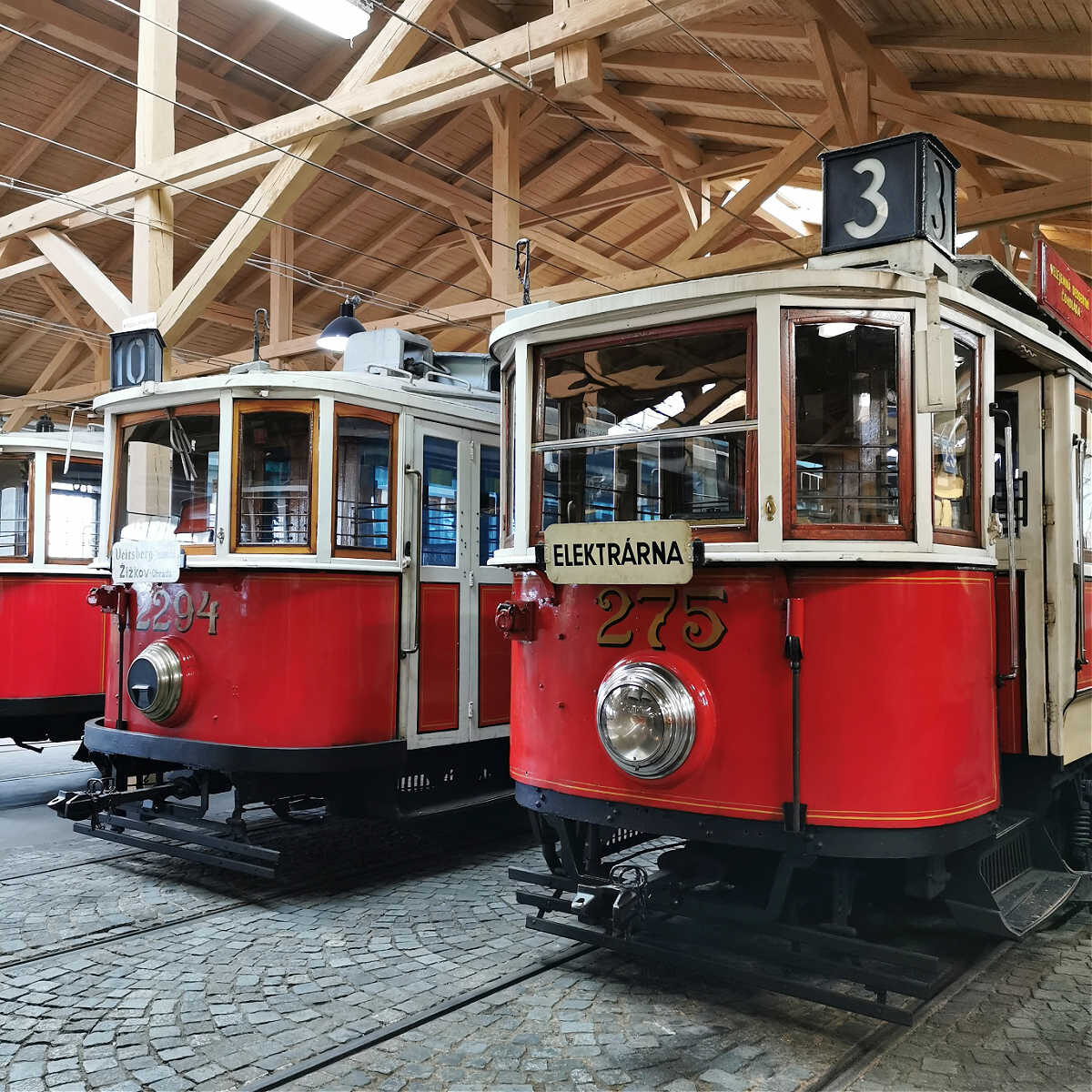
When I visited the Public Transport Museum in Stresovice I red few old newspaper cuttings from the times of the first horse drawn trams. There was an incident when a tram came off the rails and ended up in a baker’s shop.
Another time, the newspaper reported that the trams come off the rails so often that what should be a short journey turns into a much longer one. Trams also wait at the tram stops for more than the advertised time (apparently anything up to 15 minutes as they need to wait for the trams coming the opposite direction). And the newspaper reporter goes on to comment that one should take a whole day off to travel to Karlin because the journey takes so long!

First electrical tram to Karlin
After that, the first electrical tram was trialled by inventor Krizik at the National Exhibition in 1891 close to the Stromovka Park and later the tram line was extended to Letna Park.
In 1896, Krizik’s tram company started to run from Florence (Prague) to Liben and Vysocany. This was again to connect the suburbs where a lot of workers lived to the main town.

Smichov – Kosire Tram Line
Another private tram line, was built in Smichov (from Andel to Kosire), by a Kosire town’s own mayor Matej Hlavacek. The tram line run from today’s Andel station to Klamovka. Interestingly, the electrical trolley wasn’t placed above the tram but next to it. Sadly, the running of the tram was very expensive and Hlavacek fell into debt and ended up committing suicide.
The Royal Vinohrady – Prague tram line
The Royal Vinohrady town also wanted to have their connection to the central Prague and originally proposed to built trams powered by steam! This wasn’t approved by the Prague committee and eventually, in 1897 trams started to run from Vinohrady to Zizkov and central Prague. This tram line was quite long, nearly 6 km and had 17 stops.
To link the Vinohrady line to the central Prague, the town started to run in 1898 a tram line from New Town (Spalena Street) to Karlovo Namesti (Charles Square) and up to the Namesti Miru (Peace Square) where the tram line linked to the Vinohrady line.
Tram electrification & difficulties on the Charles Bridge
Electrification of the tram system happened on 18 July 1891 and by 1905 the horse drawn carriages were replaced by electric ones. At the time, the horse drawn trams also run across the historic Charles Bridge and when it got to the electrification of the trams, they tried to run the electricity via rails (rather than above the trams, as this would be difficult if impossible to build on a long bridge).
This system, whilst quite modern was also very error-prone, so it only lasted three years. Later on, the trams were replaced by buses on the bridge, which were eventually also stopped.
Prague town bought out it’s competitors
Prague as a town started to operate it’s own trams from 1897 and by 1907 bought out all the other private companies to run the trams in Prague exclusively. Because of this, it was easier to extend the tram lines and by the end of 1907, the tram lines were 55 km long and had 17 different routes.
The headquarters of the Electric Companies were from the 1930s at their new building at Bubenecska Street in Prague 7, which had the first ever airconditioning installed in the whole Czech Republic.
Tram Line numbering
Once the tram lines were under one company the numbering of each tram line (as we know it now) started. As a fun fact, the first number wasn’t 1 but 5 from 24 October 1907.
The first 10 numbers were given to the tram routes in order of their original start date. Number 1 was the original Vinohrady – Prague line, number 10 was the cable car to Letna (which doesn’t exist anymore). Number 12 was the original Smichov – Kosire line and number 14 Prague – Liben line. As you can see, the numbers have changed over the years and are completely different to the original numbers.
The food tax on the trams
At the time areas such as Smichov, Vinohrady, Karlin, Zizkov and other Prague districts were separate towns there was a complex border control to collect taxes from food brought into Prague (at the time Prague was just what’s nowadays the Old Town area and part of the New Town Area – Prague 1).
This meant that every passenger had to declare if they had any food on them and had to pay if they brought any food into the town. The way how this worked was, that the tram stopped at each town border and the tram cars and passengers were inspected. One such stop was close to the current bus terminal at Florenc, others at Namesti Miru (Peace Square), Hybernska Street or Charles Square.
Passengers who had items to declare got off at this point and, after paying their food taxes they could continue on the same ticket on the next tram. Otherwise, boarding and alighting at these stops were prohibited.
The travelling on the tram system was simplified when the food tax was abolished in 1942.
Trams during the First Republic
After the first world war the tram system reached it’s 100 km of tram tracks in 1927. There was only a further 43 km built between then and current times.
Since 1925, the Electric Companies began to supplement tram transportation with bus services, and since 1936, with trolleybus services as well. Because of that the centre of Prague started to get quite congested and the first plans for some type of underground transport were suggested. This is where the history of Prague Metro starts, but because of the beginning of the 2WW the plans were put on hold.
Trams history during the Second World War
As a result of the German occupation, right-hand traffic was hastily introduced on March 26, 1939, which Czechoslovakia had already committed to in 1926. The entrances to trams and individual stops had to be quickly modified. The Electric Enterprises of the City of Prague also issued a regulation that excluded Jews from tram transportation from Saturday afternoon until late Sunday night.
In 1942, all-night tram service was introduced. However, due to the threat of bombing by Allied aircraft, the trams had to be well blacked out. Despite all these difficulties, the entire network operated relatively reliably, and transportation performance even exceeded pre-war levels. Allied bombing disrupted tram service only towards the end of the war. On January 18, 1945, the night service was cancelled due to wartime emergencies, and from May 5 to May 16, 1945, tram service was completely suspended. Gradual resumption of service began on December 17, 1945.
Trams in Modern times
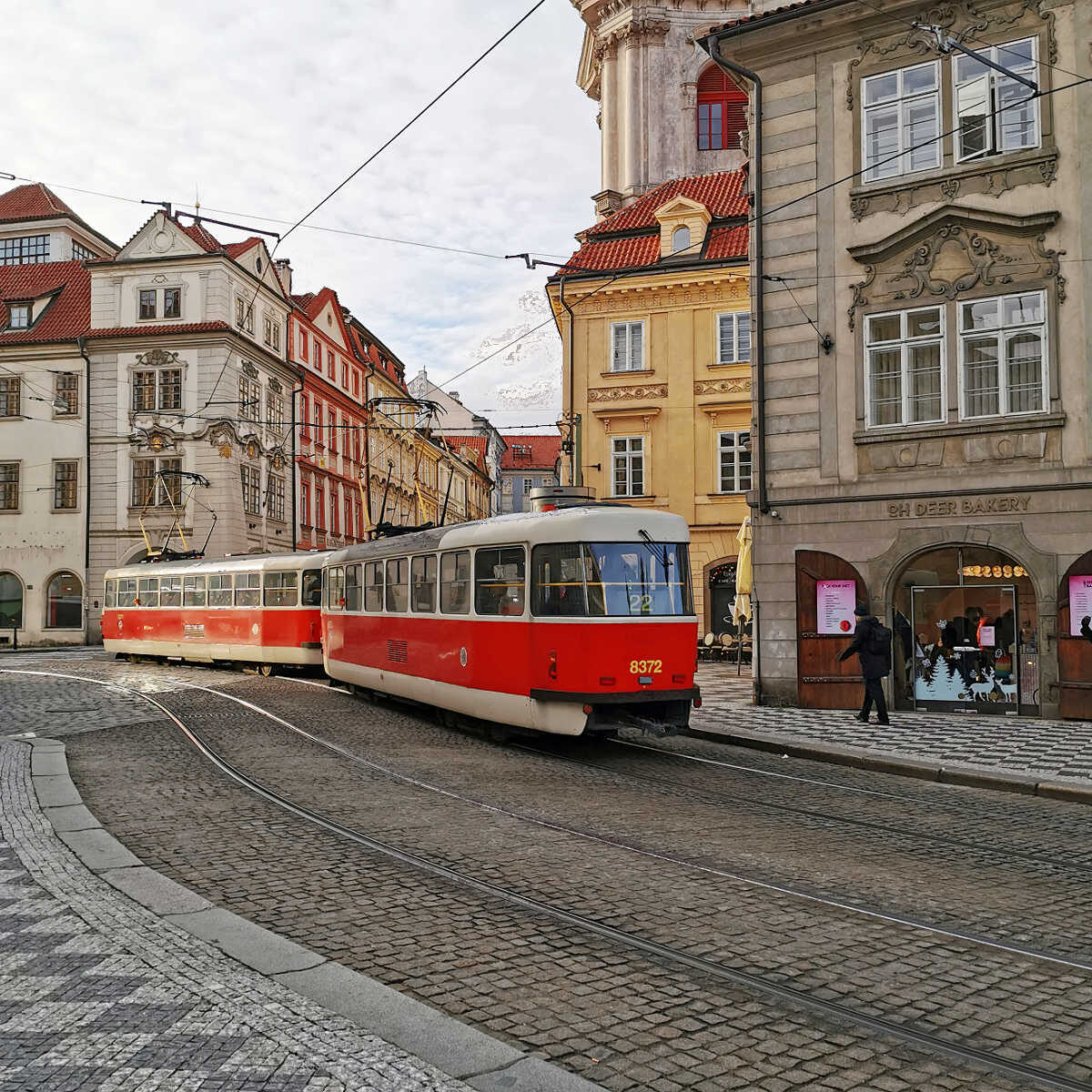
On January 1, 1960, the first tram line in the historic city centre was closed: the single-track section running through Pařížská Street, Old Town Square, and the narrow Celetná Street, where it was no longer possible to operate fast and modern transportation.
Some of the tram lines have also changed once the Prague underground was built in the 70s – 80 s and it replaced some of the tram connections.
In 1974 the role of tram ticket inspector on each tram was retired and replaced by self-service ticket machines.
Between 1974 – 1984 the tram lines were removed from Pankrac, Wenceslas Square and Na Prikope (the wide pedestrian street between the Powder Tower and the bottom of Wenceslas Square).
The tram lines were extended to Repy in 1988, Palmovka 1990 and Modrany 1995.
One of the newer tram tracks opened this century include Hlubocepy – Sidliste Barandov in 2003 (to see this part take any tram from Andel towards Smichovske Nadrazi, no 5, 4, 12 or 20). The number 5 tram line was extended to Slivenec and Holyne in 2023.
Future of Prague trams in 2024/25
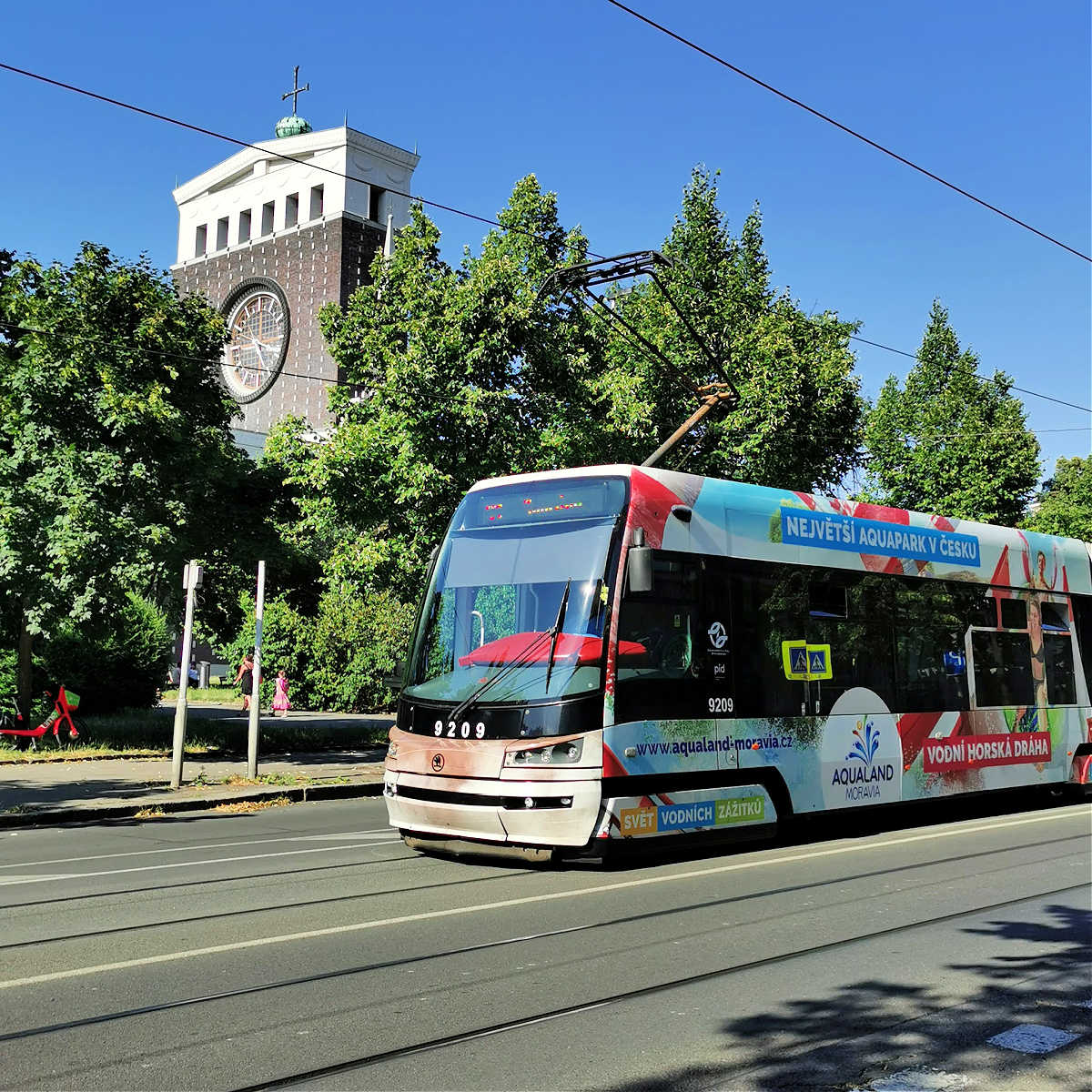
New plans have been recently passed to return trams back to Wenceslas Square and extend the routes back to the Main Train Station and beyond.
The argument for this, is that the original reason for making Wenceslas Square fully pedestrianised hasn’t quite worked, and the trams will return the flow of traffic and visitors back to the square.
Few extra fun facts from the history of trams in Prague
Until the 1980s each name of the tram stop was announced by the tram driver. Only after that time, pre-recorded cassettes were used.
There were 21 tram terminals in the whole history of the trams, but today, we only have 8 main ones with Stresovice terminal changed over to the museum in 1990s. These 7 tram terminals have the capacity to park all trams indoors during the night, apart from the night trams.
Until May 8, 1974, tickets were sold by conductors on the trams. Inspectors had been operating in Prague trams since the beginning of service in 1897, initially in service uniforms and later in prescribed civilian attire, which included a hard hat.
From October 1, 1904, they had service badges. On July 1, 1914, fines for fare evasion were introduced, following the example of Vienna, where they had been in place since 1912.
Explore Prague on the historic tram no 42 & 23
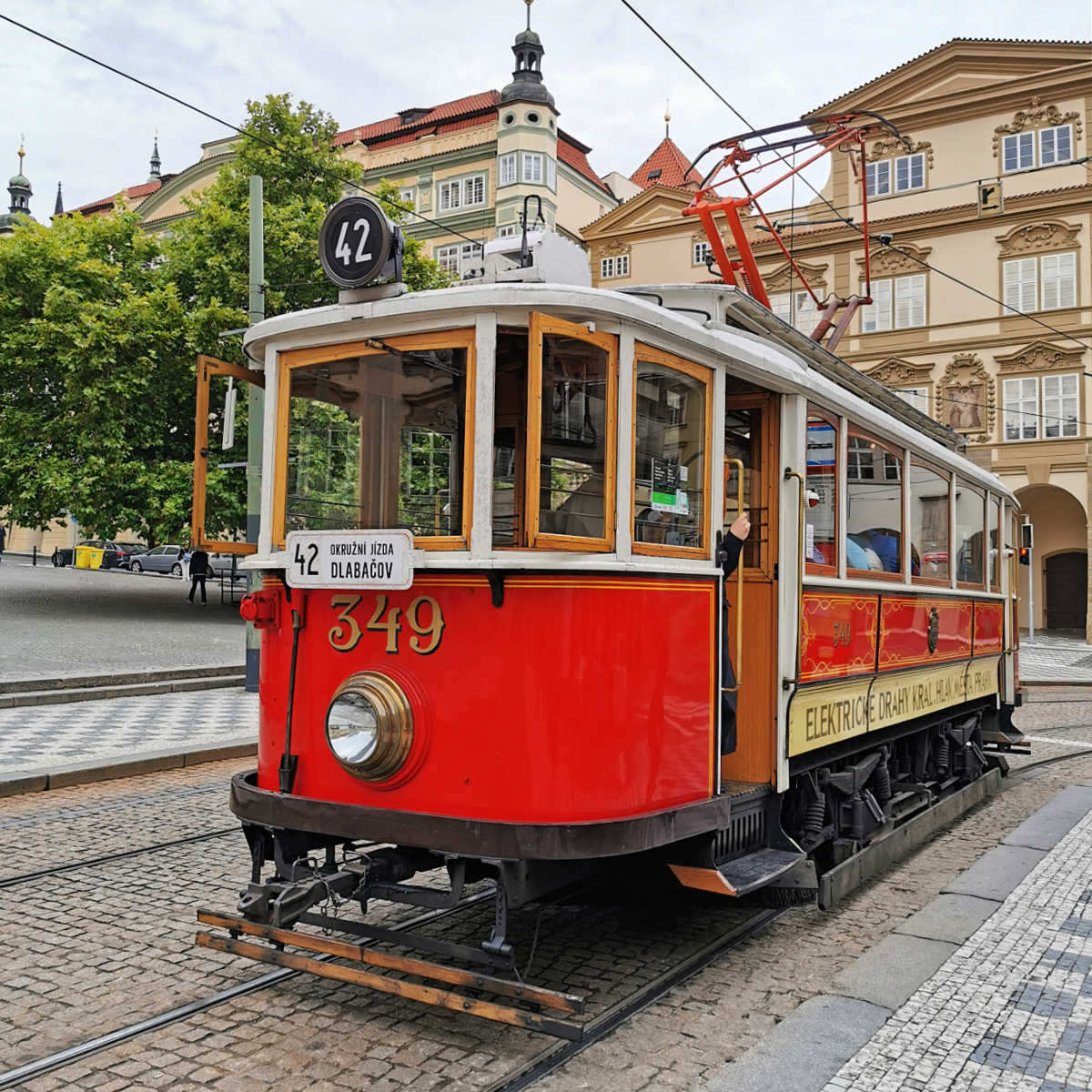
If you like the history of trams in Prague and fancy exploring Prague in style, you can ride on the historic tram no. 42 which runs every weekend during the main tourist season. The tram no. 23 uses more vintage and retro style trams and runs every day (and has a similar route to the tram no. 22). I also like tram line number 9 to explore the little unknown parts of Prague.
READ MORE:
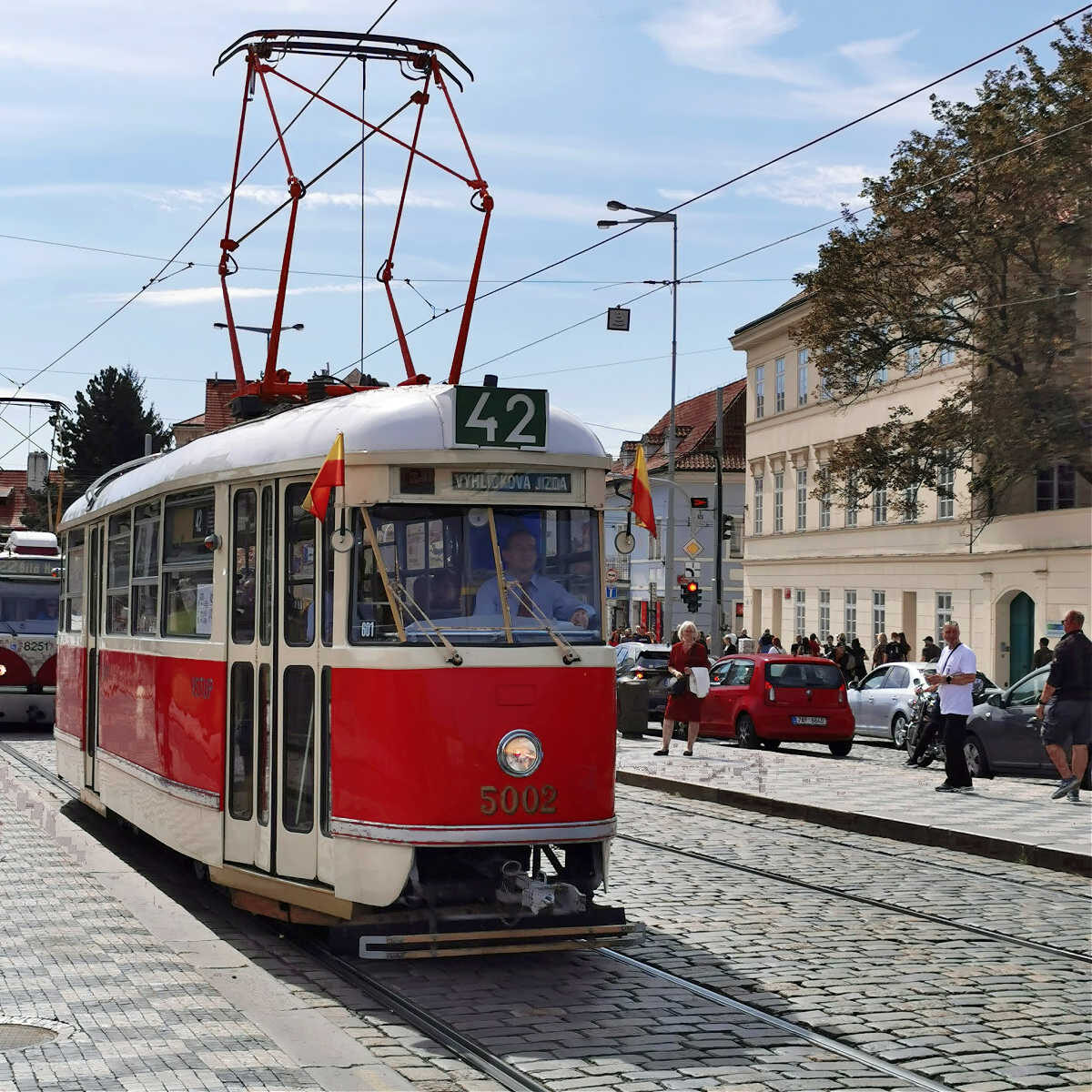
See the historic trams at the Prague tram museum
The Tram Museum is one of my favourite museums in Prague and it’s also a great one to visit with children.
The ticket cost 100 CZK and children under 6 years go free. The museum is open all year round, but usually just at the weekends.
The museum has over 50 different trams, buses and trolleybuses and a lot of comprehensive displays. Most of these displays are only in Czech, but you can scan the text into google translate and get an instant translation into your own language.
Location: Patočkova 132/2, 162 00 Praha 6-Střešovice, nearest tram stop Vozovna Stresovice tram no 1, 2, 22, 25
When you look on the map, the museum is kind of behind Prague Castle, which means that you can start your day with a museum and then continue walk through the New World Town and then to the rest of the Prague Castle and down to the centre (like my suggestion for one day in Prague itinerary).
This blog post was originally written on 18 July 2024 and last updated on 18 July 2024
PIN TO KEEP FOR LATER


