
A complete guide to weather in January 2026 + What to wear
My detailed guide to January weather in Prague, including snow and rainy days, temperatures, daylight and practical tips on what to wear for your visit to Prague in 2026.
When we get the snow, January in Prague can be really beautiful, but that’s not always the case and the average January is just fairly cold with not a lot of sun and getting dark quite early in the afternoon. The weather in January is usually a bit cooler than weather in December and it usually consists of snowy showers, sleet and the occasional snow that might stay for a day or two.
But, if you are still thinking of visiting Prague in January, I hope my weather guide will help you to plan the perfect winter trip to this beautiful city.

What’s the January weather like?
Most years, Prague and Czech Republic’s January weather is very cold with temperatures dropping well below 0 C.
One important thing to mention about the cold in Prague. It might be below zero, but because this cold is ‘dry’ it doesn’t feel as cold as if it was 0 or even 2-3 C in London or UK. This is because of relatively low humidity.
The reason why I’m saying this is, as long as you are sufficiently wrapped in good warm clothes and have decent winter shoes, you don’t have to worry that you’ll be cold!
Prague is very quiet during January, especially as most people leave at the beginning of January, after the New Year’s Celebrations.
When I visit Prague in January or in February, I usually spend a lot of time re-visiting museums, art galleries, reading books in cosy cafes and going to the theatre or seeing the latest movie in my favourite independent cinemas.
On a bright sunny day, I also love getting out of Prague for a day trip (like my recent trip to Pardubice) and a long walk in the countryside.
If you want to plan any day drips, it’s worth getting up earlier in the morning as by 3 pm it can be virtually dark or very grey.
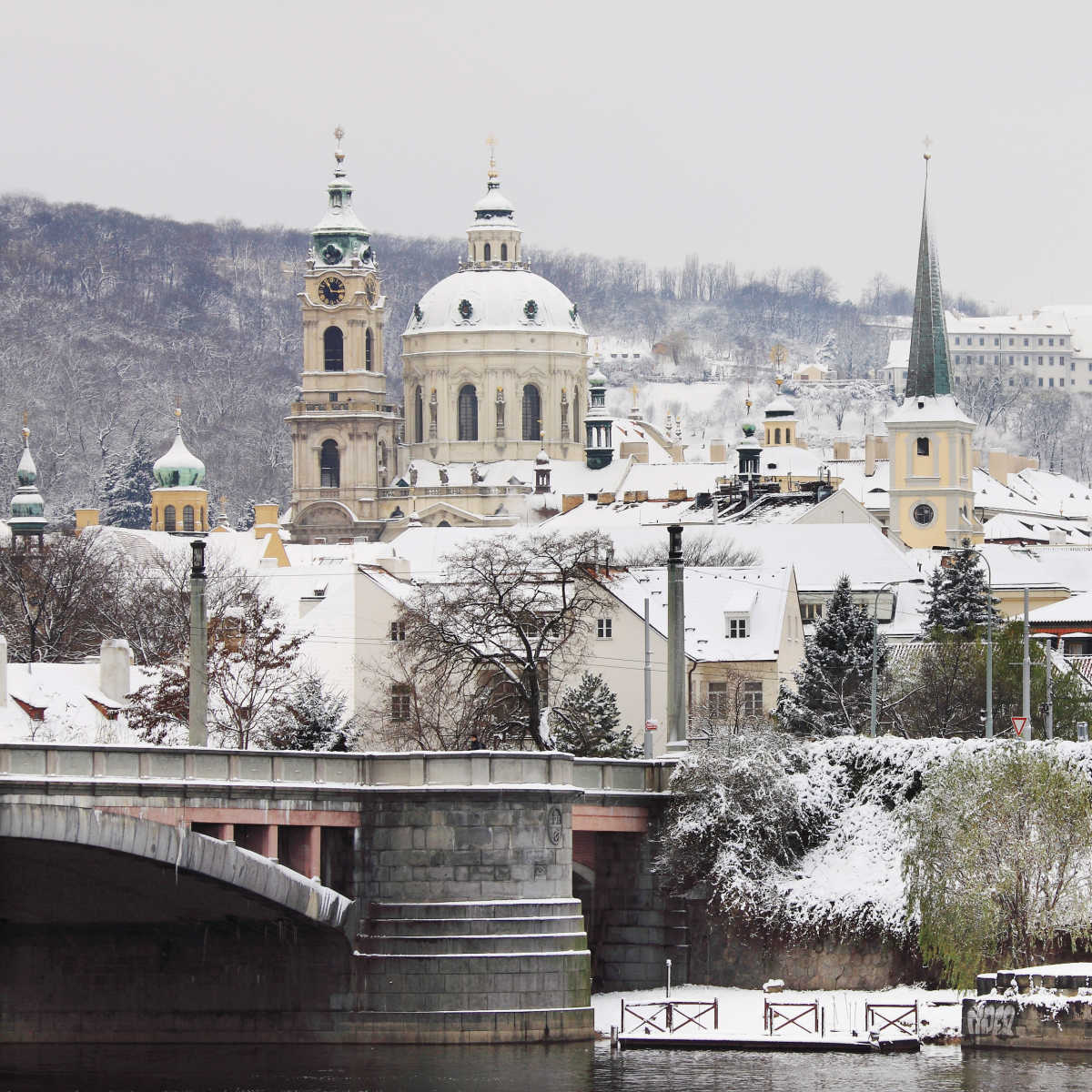
What is the January temperature in Prague ?
January in Prague is the coldest month of the year, bringing true Central European winter conditions.
Average daytime temperatures typically range between 0°C and 3°C (32–37°F), while nighttime lows often drop to around −4°C to −6°C (21–25°F).
Frost in the morning is quite normal and and there is the occasional snowfall which all creates a picturesque photos of Prague.
The cold is often made worse by overcast skies and occasional fog, especially along the Vltava River. Despite the wintry chill, there are occasional milder days when temperatures rise slightly above freezing, though these are usually short-lived.
You might get lovely sunny days in January, but it will feel chilly at the same time and especially when the sun comes down in the afternoon.

January day light
The daylight is from about 8 am to 4 pm with light visibility until about 4.30 pm. Whilst the day light is getting longer in January, we tend to get quite a lot of over casted days, so don’t read into it that it will be nice a sunny all that time.
If you are unlucky you might get days when the sky will be grey and permanently cloudy. It will feel like it’s getting darker even sooner than 2-3 pm if it’s cloudy and raining, so definitely plan some indoor activities.
Prague Daylight Breakdown — January 2025
| Week | Date | Sunrise | Sunset | Day Length |
|---|---|---|---|---|
| Week 1 | Jan 1, 2025 (Wed) | 08:00 | 16:07 | 8h 07m |
| Week 2 | Jan 6, 2025 (Mon) | 08:00 | 16:13 | 8h 13m |
| Week 3 | Jan 13, 2025 (Mon) | 07:57 | 16:23 | 8h 26m |
| Week 4 | Jan 20, 2025 (Mon) | 07:50 | 16:36 | 8h 46m |
| Week 5 | Jan 27, 2025 (Mon) | 07:41 | 16:50 | 9h 09m |
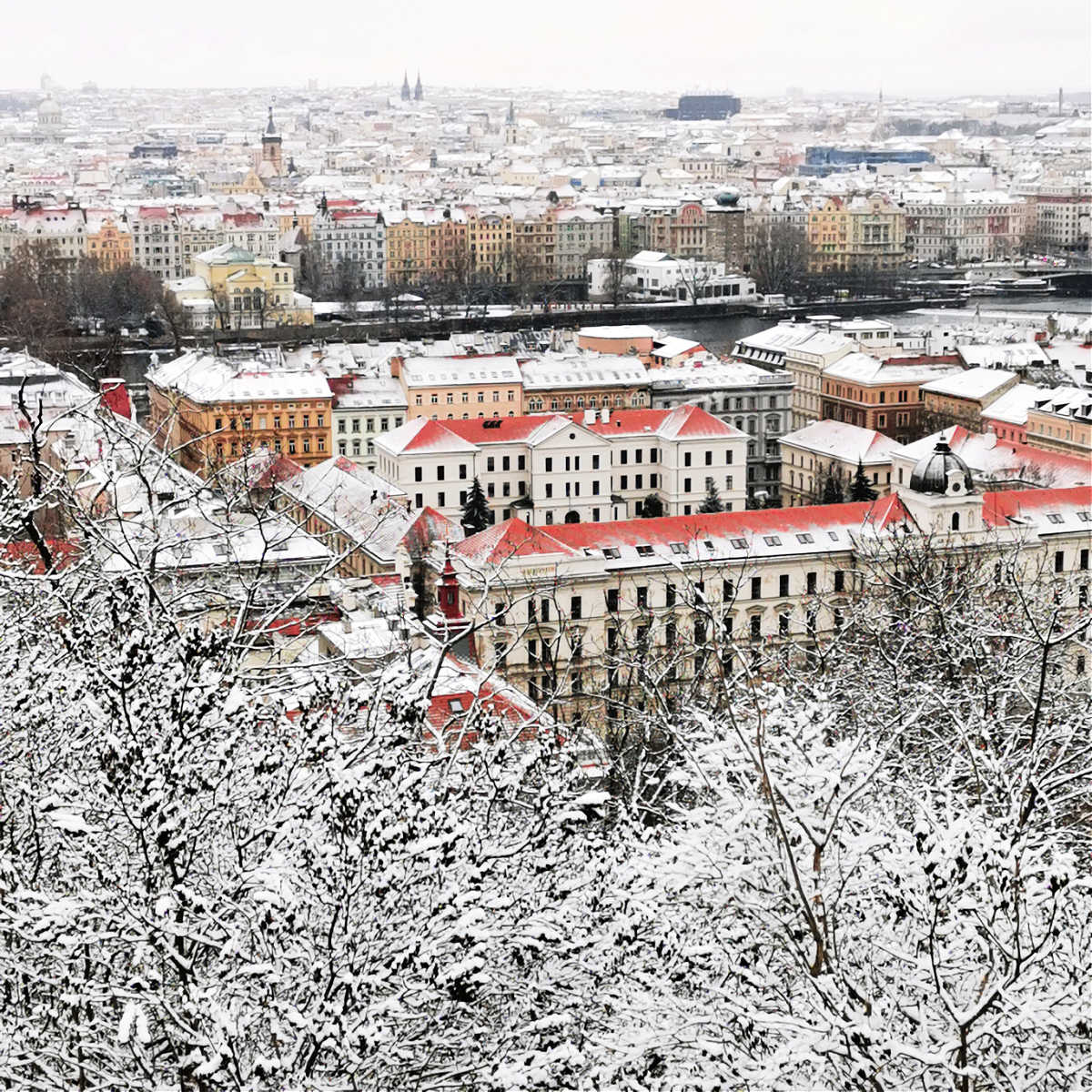
The average snow weather forecast for January
You are more likely to see snow in Prague in January than in early part of the winter. This is because traditionally January is the coldest month of the winter season and when the temperature drops to 0-2 Celsius, it often snows.
By this time, winter is in full swing, and light to moderate snowfalls are fairly common throughout the month. While heavy snowstorms are not guaranteed, it’s typical to see several snow events, often separated by cold, dry days or brief thaws.
The snow often doesn’t stay for very long, especially in the centre of Prague. If you visit the outskirts of Prague (or Prague parks) you will see that the snow stays there for much longer.
In my experience, you either get a fine, powdery snowfall or light flurries that linger for hours (easy to handle with a good weatherproof jacket and hood), or a short but heavier burst of snow that passes quickly — perfect for ducking into a cozy café or a museum for an hour.
If you venture for a day trip to the mountains, you are pretty much guarantee to get snow on the ground and the skiing slopes.
On average, Prague gets between 4 to 5 centimetres (1.5 to 2 inches) of new snow over the course of the month.
This makes it a total monthly snow depth of around 179 millimeters (7 inches) when accounting for all snow events.
Snow typically falls on 5 to 8 days in January, but it rarely stays on the ground for long unless temperatures remain below freezing. The result is a light dusting that transforms Prague’s historic rooftops and cobblestone streets into a scenic winter setting, especially in the early mornings after fresh snowfall.
Snow often stays on the ground for a couple of days, especially when nighttime temperatures drop below freezing — which they frequently do. However, milder daytime highs near 1–3°C (34–37°F) can cause snow to melt between falls, so the city rarely stays snow-covered for long stretches.
If you’re planning to visit areas outside the city, particularly the Krkonoše or Šumava mountains, expect much heavier and more consistent snow cover. These regions typically have deep snow throughout January, making them perfect for skiing, snowshoeing, or a scenic winter day trip from Prague.

Average temperatures in Prague in January
Generally speaking, January is the coldest month of the year in Prague, with consistently freezing conditions and frequent frost.
During early January, the average high temperature is around 1°C (34°F) with lows of about −4°C (25°F).
By mid-January, temperatures can dip slightly lower, with average highs near 0°C (32°F) and lows around −5°C (23°F).
In late January, it may become marginally milder, with average highs of 2–3°C (36–37°F) and lows around −3°C (27°F).
Humidity
January in Prague tends to be quite humid, with average humidity levels around 85–87%. The combination of cold air and high humidity can make it feel colder than it actually is, so dressing in layers is essential.
Good walking shoes with thick, insulating socks help a lot, as the cold from the cobblestones seeps through thin soles quickly. If you wear lightweight shoes, like canvas ones, you’ll likely feel cold no matter how many upper layers you put on.
Fog
Fog remains fairly common in Prague during January, especially in the early mornings and late evenings. It can make the whole town look quite mystical, although if you happen to catch several days of persistent “white sky,” it can start to feel a bit gloomy.
Wind
The average wind speed in January is around 15 km/h (9 mph), though it can occasionally be stronger during cold fronts or snow showers. The wind chill can make temperatures feel several degrees colder — for instance, 0°C can feel more like −5°C (23°F) in breezy conditions.

Average rain weather forecast in January in Prague
January in Prague is generally cold and relatively dry, though you can still expect some rain — most often in the form of light snow, occasional sleet, or freezing rain. On average, there are about 10 to 13 days of measurable rain during the month.
While January isn’t one of Prague’s wettest months, the combination of frequent overcast skies, high humidity, and freezing temperatures can make it feel damp and very chilly — especially in the mornings and evenings.
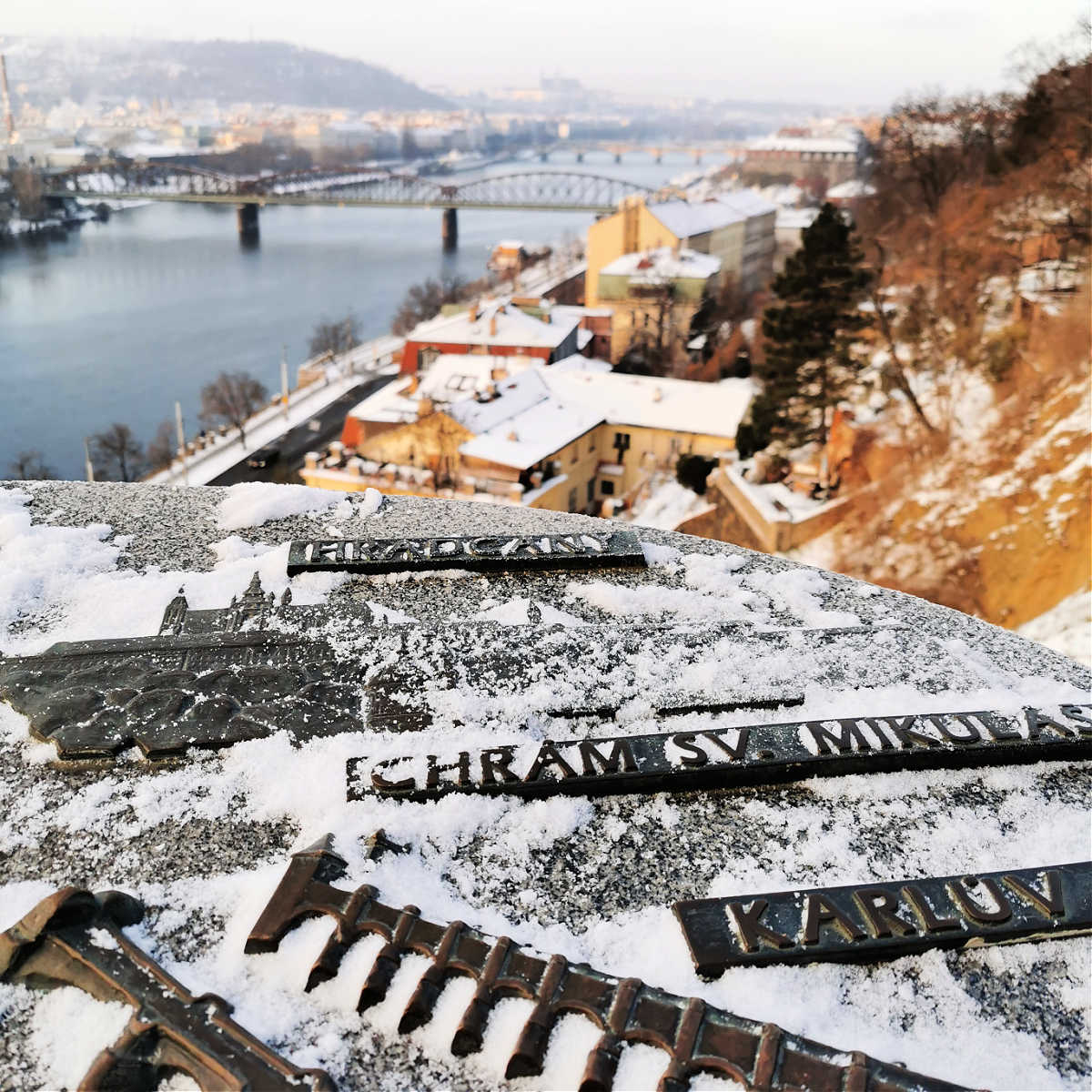
Average sun days in January
Sadly, January doesn’t bring many sunny days to Prague either. The city often remains under a blanket of grey clouds, with fog and low overcast skies being common throughout the month.
Even when the sun does manage to break through, it usually shines only for a short while before the clouds return. On average, Prague receives just 1.5 to 2 hours of sunshine per day in January — making it one of the darkest months of the year.
During early January, you can expect around 2–3 sunny days. By mid-January, that number typically stays about the same, though sunshine tends to be brief and low on the horizon.
Toward late January, as daylight hours slowly increase, Prague might see 3–4 clearer days, especially when cold, dry air moves in after snowfall. Still, it’s common to go several days in a row without seeing the sun at all, giving the city its distinct winter atmosphere of misty mornings and softly lit afternoons.

How to read the local weather forecast
The weather is forecasted in Celsius and the temperatures are given in the shade.
This means, that if the mid day temperature is given as 2 C and it’s forecasted to be sunny, it’s a fair chance that the air will feel much warmer (because of the sun) than 2 C. It can be easily 5 C or little more in the direct sun, and starts to feel warmer as the day progresses.
Quite often, the weather forecast will mention something like ‘3’ C feels like 1 C’, this means that the humidity is much higher than normal and that although the temperature is 3 Celsius it will feel a bit colder than that – so dress for the colder temperature.
Another thing that I always pay attention to, is the hourly temperature forecasts.
It’s all very well knowing that during day it will be 2 C , but if I’m going on a day trip outside Prague and getting up at 5 am, I need to also know that at that time it will be about -8 Celsius and that this temperature will only slowly go up during the day and it will take up to mid day to get to 2 C.
So, again I need to dress for -8 C (and not just for 2 C).

What to Wear in Prague in January
January in Prague is proper winter. Think freezing mornings, icy cobblestones, and that crisp air that makes your breath visible. Average temperatures hover around −4°C to +2°C (25°F–36°F), and while snow isn’t guaranteed every day, it’s common enough that you’ll want to be ready for it.
The key is layering — you’ll be walking a lot, going in and out of cozy cafés, trams, and museums, so you need clothes that can handle both the cold outdoors and the warmth indoors.
If you feel the cold, I really recommend walking shoes with thick rubber soles (that keep your feet off the ground), thick socks (or two pairs of socks), leggings or thick tights under good warm trousers, long winter feather down jacket, scarf, gloves and a winter hat that covers your forehead.
I find by that stopping the cold from getting into my body through thin shoes and stopping it from escaping by wearing a winter beanie hat, I feel always nice and toasty!

What to pack for your visit
Winter Coat
Bring an insulated coat or parka — ideally something windproof and water-resistant. A down or synthetic puffer works perfectly. If you prefer something more stylish, a wool coat will also do the trick, but these tend to be quite heavy (if you are thinking of doing a lot of walking and staying out all day).
Gilet (Vest):
A feather-down gilet is great for layering — you can wear it under your coat for extra warmth or over a fleece on milder days.
Thermal Layers
Thermal underwear or long-sleeved base layers are your best friends. Wear them under sweaters or shirts to keep the warmth in without adding bulk.
Sweaters & Mid-Layers
Pack a wool jumper or warm fleece. They’ll keep you warm and are easy to wear with layers underneath. Prague’s cafés and restaurants are well-heated, so you can take off your coat and still feel warm enough.
Trousers
Jeans are fine, but you’ll be probably quite cold just in these. Consider packing lined trousers, corduroys, or at least bring thermal leggings (or any kind of leggings or thick tights) to wear underneath.
Footwear
You’ll be walking a lot, often on wet or icy cobblestones, so bring waterproof boots with good grip and warm lining. Avoid sneakers unless they’re insulated and weatherproof — your feet will freeze otherwise. When it’s snowing or icy, I wear my hiking boots as they have the best grip and are waterproof. When it gets to that stage in the winter, I really don’t care how I look as long as I’m warm and don’t slip when I’m walking on the pavement!
Accessories (Non-Negotiable!)
- Warm hat — you’ll need it; it gets windy.
- Scarf — something thick that covers your neck and part of your face.
- Gloves — insulated ones, ideally touchscreen-friendly so you can still take photos.
Socks
Pack thick wool socks or thermal ones. Bring a few extra pairs — Prague in January can be damp, and nothing ruins a day faster than cold, wet feet.
Extras
- Umbrella or compact rain poncho — for those sleety days.
- Sunglasses — surprisingly useful on bright, snowy mornings when the light reflects off the snow.
- Lip balm and moisturizer — the cold, dry air can be brutal on skin and lips.
READ MORE

What does Prague’s nature look like in January?
Most trees are bare, their branches dark and skeletal against the pale winter sky. Frost and occasional snow give the city’s parks and riverbanks a quiet, subdued look. Average daytime temperatures hover around 0°C (32°F), so expect crisp air, frozen paths, and the occasional dusting of snow that transforms the city into a soft white landscape.
If you want to experience Prague’s winter nature, start with Letná Park, which has some of the best panoramic views of the city and the Vltava River. The park’s wide paths are easy to walk even in cold weather, and the view of the bridges lined up across the river is especially striking on clear winter days.
Nearby, Stromovka Park — Prague’s largest green space — is a great spot for a relaxed winter walk. Its frozen ponds, quiet trails, and snow-covered lawns show a different side of the city’s nature, far from the tourist crowds.
To get a great view of Prague Castle and the Old Town below, you can climb the Petřín Hill where you get some fantastic views through the bare tree branches. On frosty mornings, you might see thin mist rising from the Vltava River, especially around Charles Bridge and Kampa Island, where ducks and swans gather in the unfrozen water.
If you prefer a local park vibe, Riegrovy Sady offers open spaces and a great sunset view over Prague Castle — even in winter, it’s a favourite spot for photographers. On rare sunny days, the low afternoon light gives the city a golden glow, reflecting off the rooftops and river.
You’ll also often notice beautiful hoarfrost on cold mornings — delicate ice crystals forming on rooftops, trees, and railings after subzero nights. It’s one of the most enchanting sights of a Prague winter, especially in the early morning light.
Prague’s natural areas in January may not be green, but they’re atmospheric and peaceful. The lack of leaves reveals details you might miss in summer — the shapes of old trees, the architecture beyond the parks, and the quiet rhythm of the city in its calmest season.
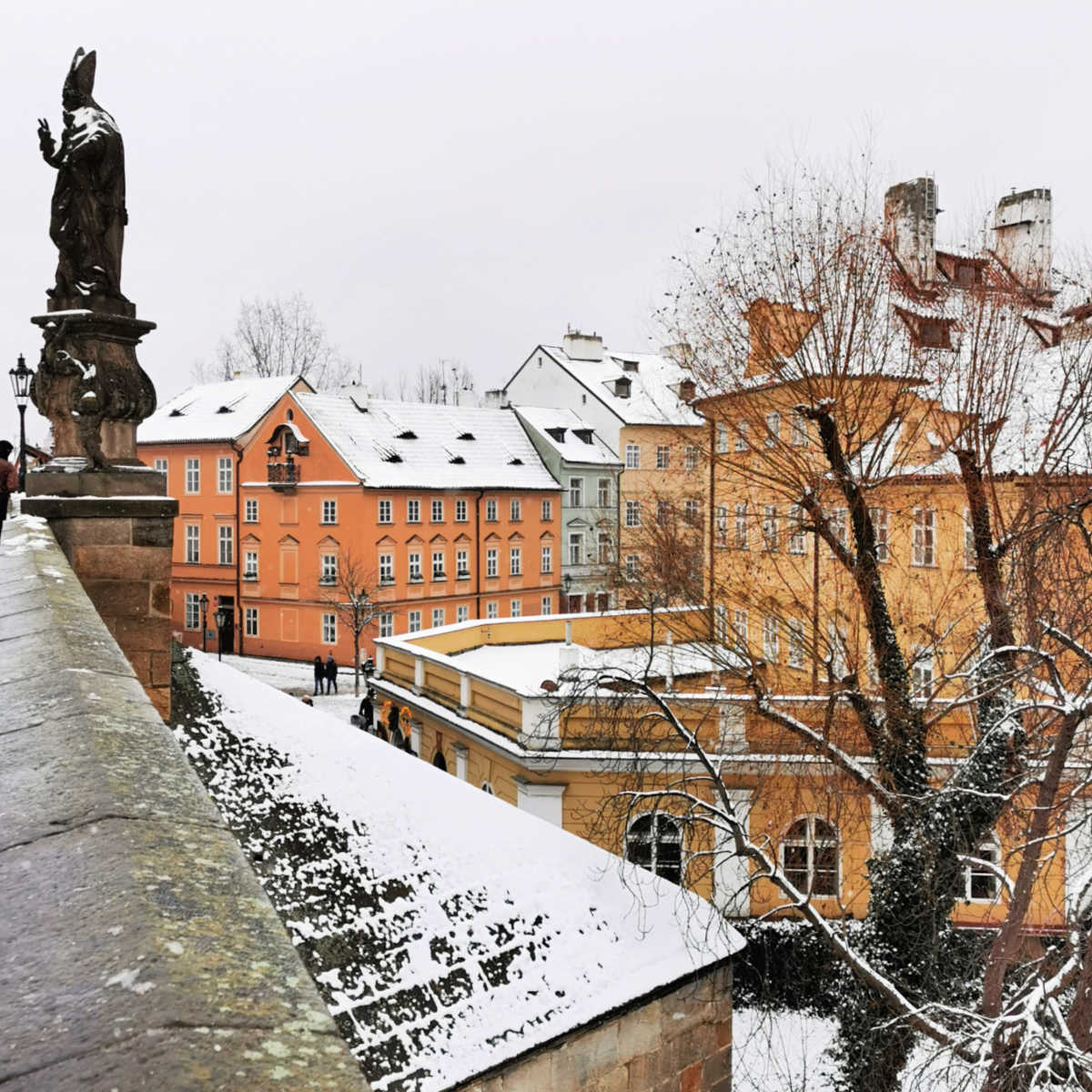
historic weather data in January
Temperature Records
Coldest January temperature
January 1838, with an average monthly temperature of −10.6°C (13°F). Several nights dropped below −25°C, making it one of the harshest winters ever observed in Prague.
Coldest single day:
−27.6°C (−17.7°F) on January 27, 1838, still the lowest temperature ever recorded in Prague.
Warmest January on record:
January 2007, with an average temperature of +5.8°C (42°F) — more than 6°C above the long-term average.
Warmest single January day
+17.4°C (63°F) on January 10, 1991 (modern record), but older unverified reports mention +15°C readings as early as January 1899.
Long-term January average (1775–2025):
Around −1.3°C (29.7°F), though modern averages (1991–2020) are closer to 0°C (32°F) due to climate warming.
Snow & Rain Records
Snowiest January on record:
January 1901, with over 45 cm (18 inches) of snow accumulation recorded at Klementinum. Snow cover lasted for 26 consecutive days.
Earliest snow in January (historically):
January 1, 1829, when snow fell continuously for 48 hours, marking the start of one of the longest cold spells of the 19th century.
Wettest January:
January 1915, with 78 mm (3.1 inches) of precipitation — unusually high for winter.
Driest January:
January 1858, with only 2 mm (0.08 inches) of total precipitation.
Wind & Storm Records
Strongest recorded January wind:
January 11, 2007, gusts up to 90 km/h (56 mph) during storm Kyrill.
Historical records from the 1890s mention strong “Böhmischer Wind” (Bohemian wind) events, but exact speeds weren’t measured until the 20th century.
Average January wind speed (long term):
About 14 km/h (9 mph), typically from the west or northwest.
Sunshine & Daylight Records
Least sunshine in a January:
January 1956, with only 12 hours of recorded sunshine for the entire month.
Most sunshine in a January:
January 2022, with 85 hours of sunshine — exceptionally bright for this time of year.
Average sunshine (1775–2025):
Around 45 hours per month, or 1.5 hours per day.
Other historical weather events
- January 1784: The Vltava River froze completely, and people walked across the ice between Old Town and Malá Strana.
- January 1838: The coldest winter in Prague’s recorded history — the Vltava froze solid for nearly a month.
- January 1929: Another historic freeze — temperatures stayed below −15°C for over two weeks.
- January 1987: Heavy snow and persistent frost caused major transport delays; snow depths exceeded 25 cm.
- January 2007: The warmest January on record, with no lasting snow and spring-like conditions.
This blog post was originally written on 22 October 2025 and last updated on 22 October 2025
PIN TO KEEP FOR LATER


