
12 historic squares you need to see in Prague + things to do
12 historic town squares that you need to see in Prague and things to do and see on each square as recommended by a local! Prague is a city full of amazing squares, each with its own special story and interesting buildings to see and cool things to do.
From the busy Wenceslas Square with its shops, restaurants and hotels, to the historic Old Town Square with its famous Astronomical Clock or Charles Square – the largest square in the Czech Republic, there is something for everyone and lots to explore.
I wanted to include the twelve most important squares in the centre (or close to centre) of Prague and share with you my favourite places I visit on each square, hidden gems, restaurants and cafes.

1. Old Town Square
The most famous square in Prague is the Old Town Square. It’s right in the centre of Old Town and it goes back to the 12th century. Take any street from the square and you can start exploring the Old Town and you’ll always find something interesting. I’ve been doing a bit of research into the famous writer Franz Kafka, who lived in quite a few different houses around the square. You can start my self-guided tour of Kafka straight from the town square.
You can find here one of the most visited attractions in the whole Prague, the Old Town Hall, which dates back to 1338 and people always wait around to see the apostols figures appearing in the windows above the historic astrological clock.
I also like to visit the Church of Our Lady before Týn, which is one of the most beautiful churches in Prague and you can see it’s spires from a long way away.
The square was a witness to many historical events, including the execution of 27 Czech noblemen in 1621 following the Battle of White Mountain. I like to sit on the bench around the Jan Hus Memorial, which was built in 1915 to commemorate the 15th-century religious reformer Jan Hus.
If you are traveling to Prague on a budget, I’d suggest that you avoid eating out around the Old Town Square as the restaurants and cafes are amongs the most expensive in Prague and often the quality doesn’t match the high price.
Old Town Square is always super busy with people, so if you want to get a good photo with empty square you have to come here really early in the morning (like just before the sunrise!). I’ve done that several times and it’s a certainly a very special experience.
Location & How to get there
Staroměstské nám., 110 00 Staré Město
- Metro Station: Staroměstská (Line A), which is about a 5-minute walk from the square
- Tram Stop: Staromestska – trams no. 17, 18, 3 or Dlouhá Třída – trams 9, 22, 18 which is approximately a 15 minute walk away
2. Lesser Town Square
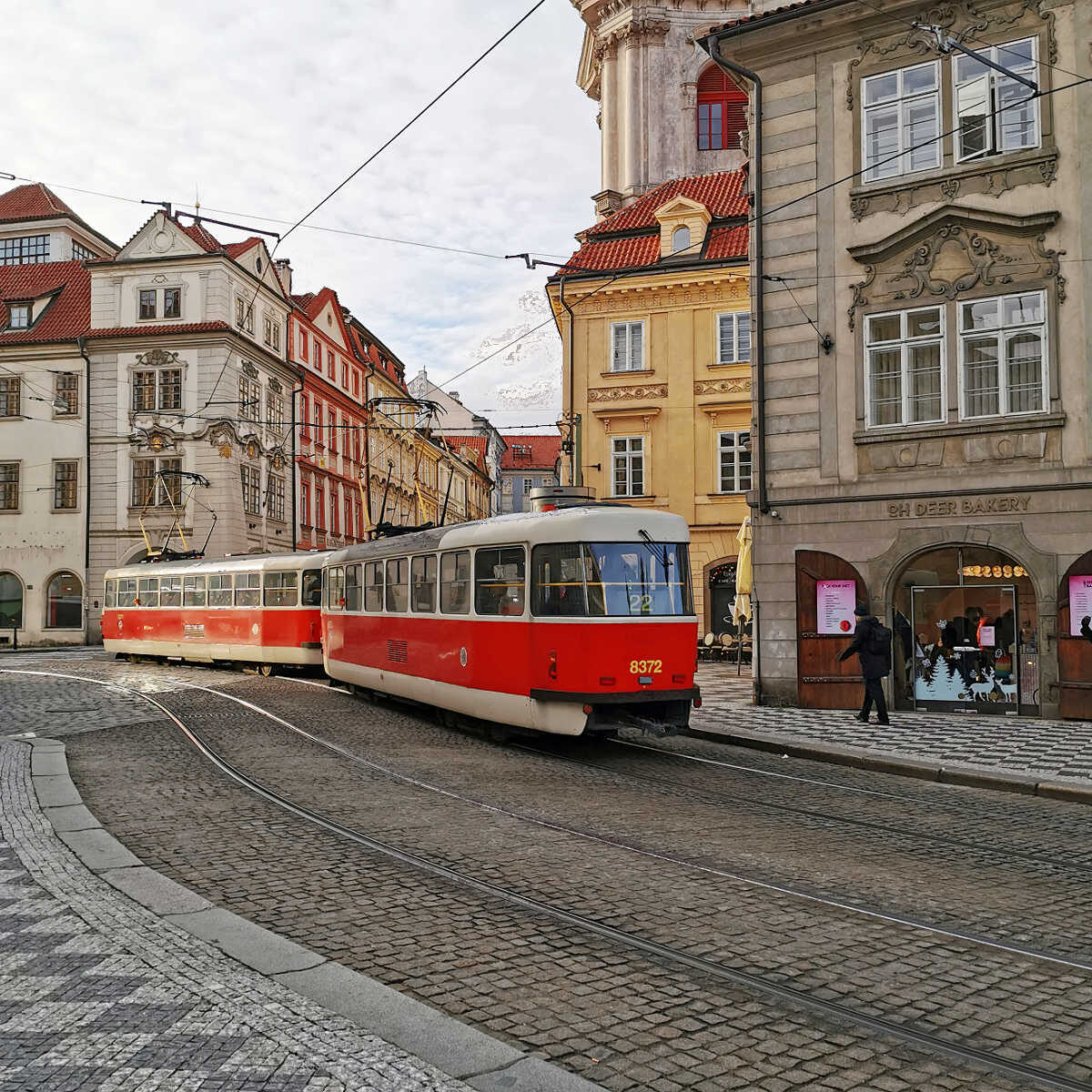
Lesser Town Square has a picture perfect houses around and it’s my favourite place to take photos of Prague trams as they ride across the square. Malostranské náměstí (Lesser Town Square) dates back to 1257 and the layout has been changed several times, especially after the square was plundered by Swedish troops during the Thirty Years’ War in the 17th century.
If you walk up the Nerudova Street, you get to the Prague Castle in about 20 minutes and see more beautiful houses, cosy cafes, restaurants and independent art shops along the way.
I’ve been completely blown away by the amazing decoration and paintings inside the St. Nicholas Church, it really is worth seeing if you like Baroque architecture. The church’s tower has a great views of the square and the Prague Castle. It also has a bit of a sinister history as during the cold war it was used by Czech secret police to spy on nearby American Embassy.
It might look strange today, but the smaller area behind the St. Nicholas church is also part of the main square as originally the church wasn’t there.
I also like the former city hall, Malostranská Beseda, built originally in 1478 and nowadays being used as a concert venue, restaurant and a caffe. For somewhere that’s in the centre of Prague, the prices are still fairly decent and the food and the cafe is really good. The concert venue is being used often for folk, rock and also it’s one of the jazz and blues clubs in Prague where you can listen to a good music and drink local beer.
Location & How to get there
Malostranské náměstí, 118 00 Malá Strana
- Tram Stop: Malostranské náměstí, trams 12, 15, 20, and 22 (also historic 42 tram)
- Metro Station: Malostranská (Line A), which is about a 10-minute walk from the square
3. Hradcanske Square
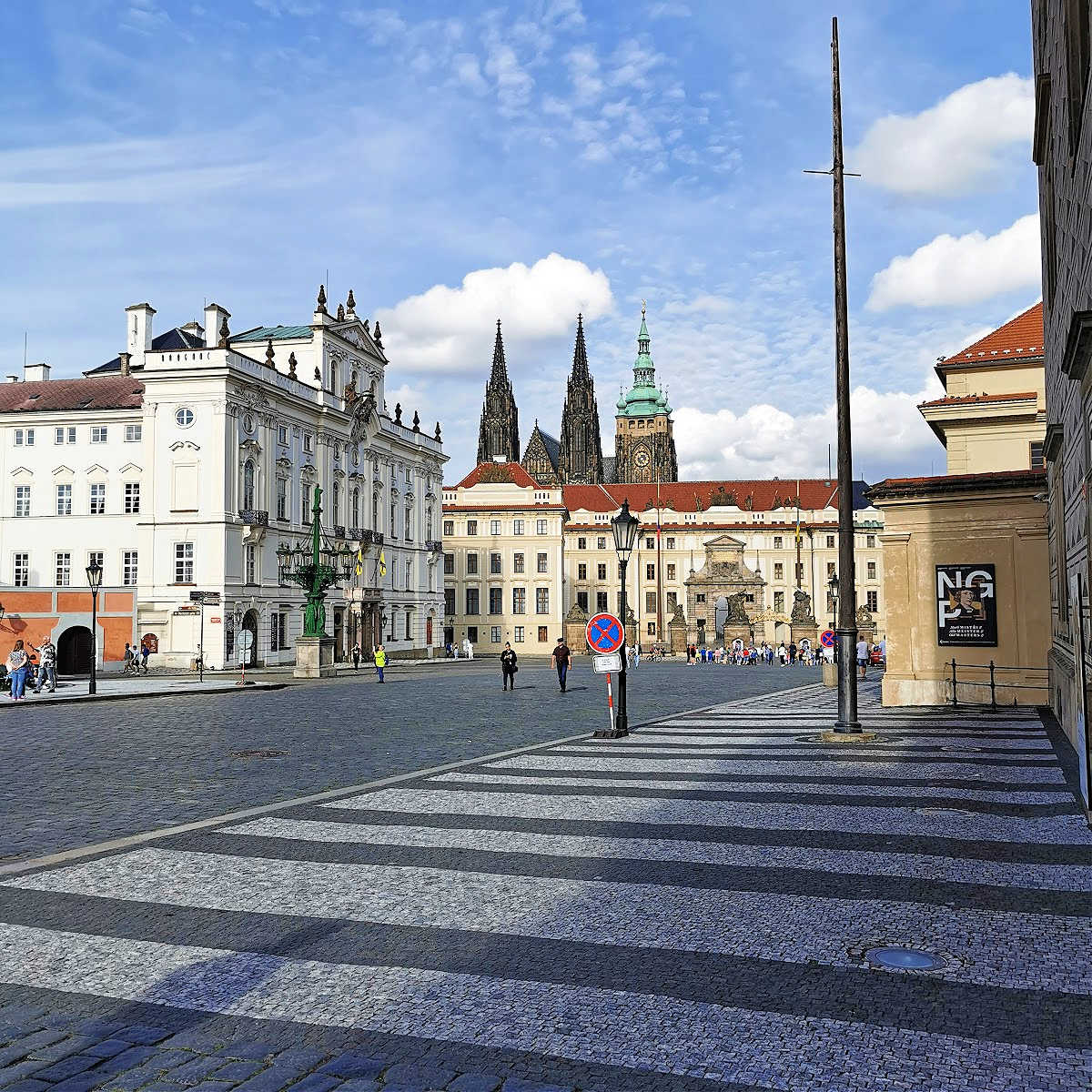
Hradčanské Square is probably the only square in Prague, that doesn’t have any shops around it. But it does have some lovely historic houses all round including the Archbishop’s Palace, built in the 16th century, the Schwarzenberg Palace, completed in 1567 or the beautiful Tuscany Palace, constructed between 1689 and 1691 by architect Jean Baptiste Mathey.
The Schwarzenberg Palace and the Sternberg Palace are part of the National Gallery in Prague and have a permanent paintings exhibitions (mainly Renesaince and Barogue paintings).
But the main reason, why I’m mentioning this square, is that it’s the main entrance to the Prague Castle. From the lower part of the square, you can get the most beautiful view of Prague with the pretty red and dark orange teracota tiles houses, churches and green gardens bellow.
Location & How to get there
Hradčanské náměstí, 118 00 Praha 1-Hradčany
- Tram Stop: Pražský hrad, tram lines 22 and 23 (or historic 42 tram) and then about a 10 minute walk
- Metro Station: Malostranská (Line A), which is approximately a 20 minute walk up the steep steps
4. Bethlehem Square
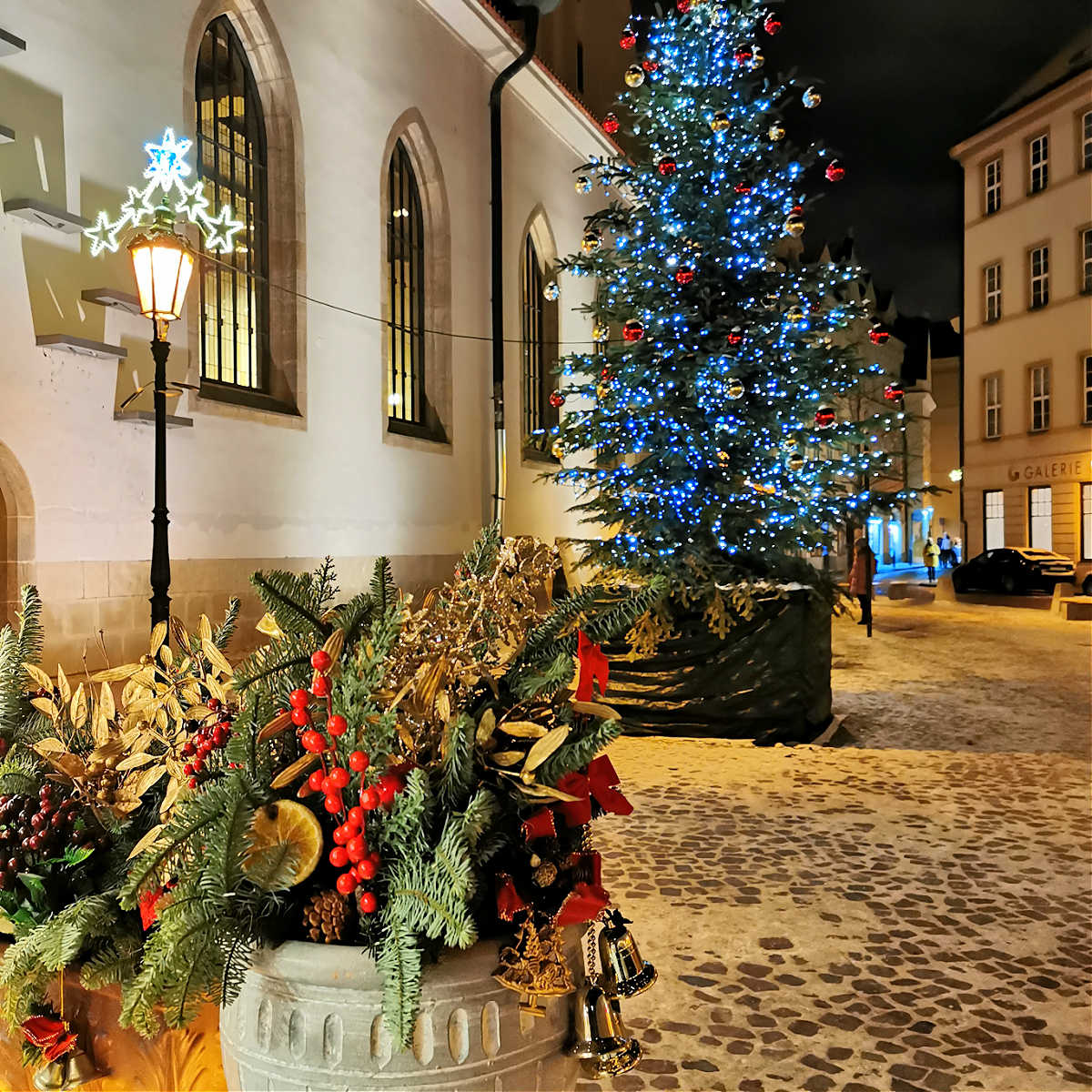
Bethlehem Square (Betlémské náměstí) might be one of the smaller squares, but it has a reall fell of how Prague used to look like. It was formed in early 15th century and named after the Bethlehem Chapel, which was originally founded in 1391 by Hanuš of Mühlheim and Jan Kříž. The chapel became a centrum of the Bohemian Reformation, where the reformer Jan Hus was giving sermons from 1402 until his excommunication in 1412.
I always visit the Bethlehem Chapel before Christmas, for their long standing Christmas Nativity Scenes Exhibition – it’s definitely one of my favourite things to do at Christmas in Prague. As a child my favourite museum was the Naprstkovo Museum, which has native American culture exhibitions collected by Mr. Naprstek in 19th century.
Just around the corner in Liliova, you can find the amazing Chocolate Cafe, which has the largest selection of different types of cocoa to make hot chocolate with. A little hidden gem is the Dorado Cafe at the Naprstkovo Museum and I also really like the bistro cafe on the corner with Betlemska Street (Vypecena Mama).
Location & How to get there
Betlémské náměstí, 110 00 Staré Město
- Metro Station: Můstek (Lines A & B) or Narodni Trida (line B) which is about a 10 minute walk from the square.
- Tram Stop: Karlovy lázně, served by tram lines 17 and 18, which is approximately a 5-minute walk from the square or Narodni Trida, trams 9, 22, 42

5. Jan Palach Square
Jan Palach Square (Náměstí Jana Palacha) is on the right bank of the Vltava River and it’s quite a new square only going back to the late 19th century. It was originally called Rejdiště Square, but it was renamed in 1919 to honor famous Czech composer Bedřich Smetana.
In 1969, after the student Jan Palach burned himself in protest against the Soviet invasion, the square was temporarily renamed after him and officially adopted as the square’s name in 1990.
To me, it’s slightly strange square as it’s mainly intersection of tram lines and two busy streets with large buildings all around it. But, you can find here the Rudolfinum concert hall, the Gallery of Faculty of Arts and Charles University buildings. There are often local markets in front of Rudolfinum and the park along the Vltava river has a great views of Prague Castle and the river.
There are no shops on this square or cafes on this square and even the cafes are slightly hidden! During the main tourist season, you have cafe with tables straight next to the Vltava River. When it’s a bit colder, you can head over to the Rudolfinum Art Gallery, one of the many great art galleries in Prague, where you can find a really lovely cafe called ‘Rudolf’. The Gallery of Arts also has a cafe and a bistro on the ground floor.
Location & How to get there
Náměstí Jana Palacha, 110 00 Staré Město
- Metro Station: Staroměstská (Line A), which is about a 2-minute walk from the square.
- Tram Stop: Staroměstská, served by tram lines 2, 17, and 18, which is also approximately a 2-minute walk from the square .
6. Republic Square
You can find the Republic Square (Náměstí Republiky) at the boundary of the Old Town and the New Town. This square’s history goes back as far as the 14th century. Originally, it was the site of the Royal Court, a medieval palace that was a temporary residence for Bohemian kings.
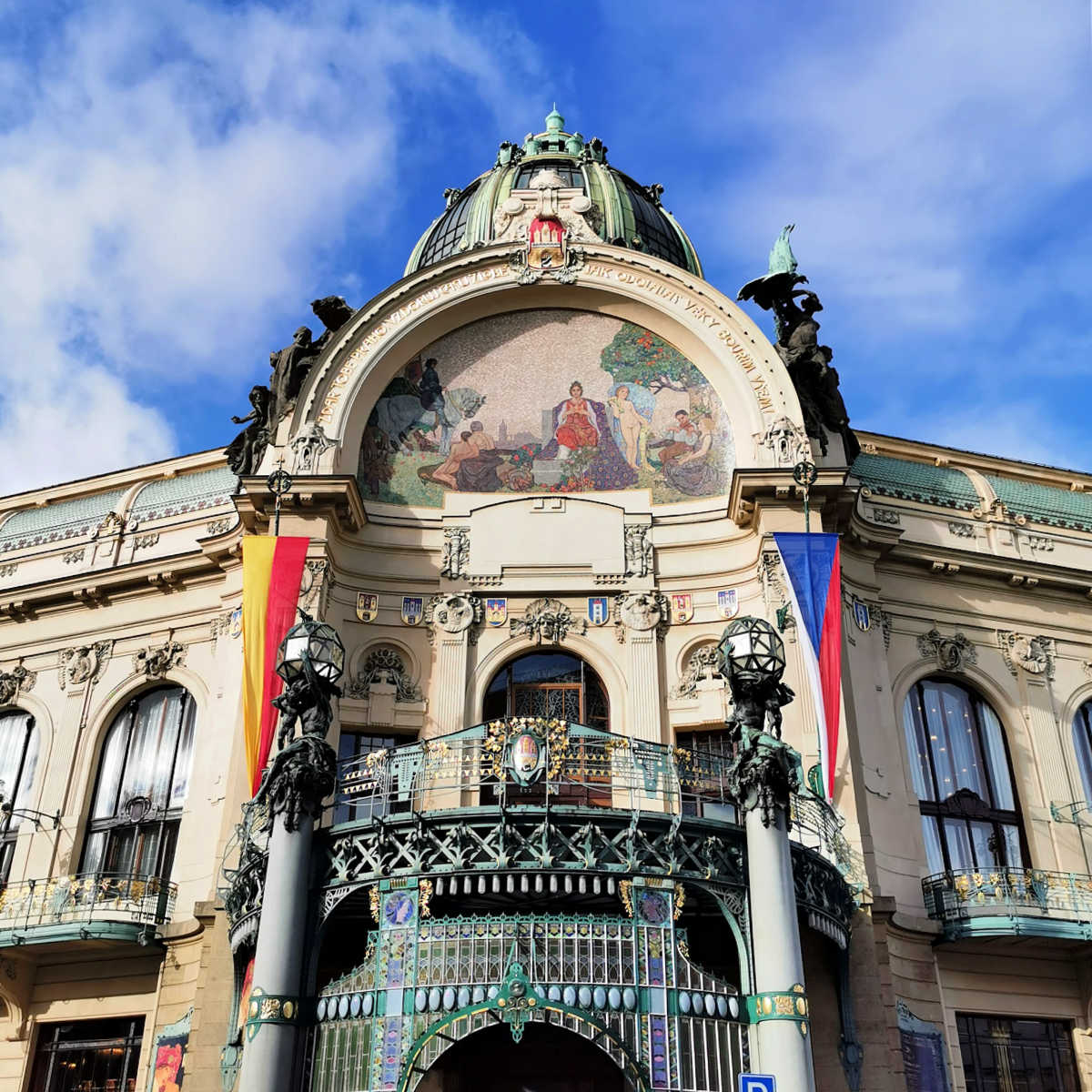
The square was officially named Republic Square in 1918 to commemorate the establishment of the Czechoslovak Republic. The most colourful building is the beautiful Municipal House, which is a great example of Art Nouveau architecture completed in 1912, and the Powder Tower, a Gothic tower dating back to the 15th century.
On the more modern side of the square you can also find one of the best shopping centres in Prague, called Palladium, which was originally an army baracks building. The area in front of the shopping centre has often local markets and food markets.
Location & How to get there
Náměstí Republiky, 110 00 Praha 1
- Metro Station: Náměstí Republiky (Line B), which is directly at the square.
- Tram Stop: Náměstí Republiky, served by tram lines 6, 8, 15, and 26, also located at the square.
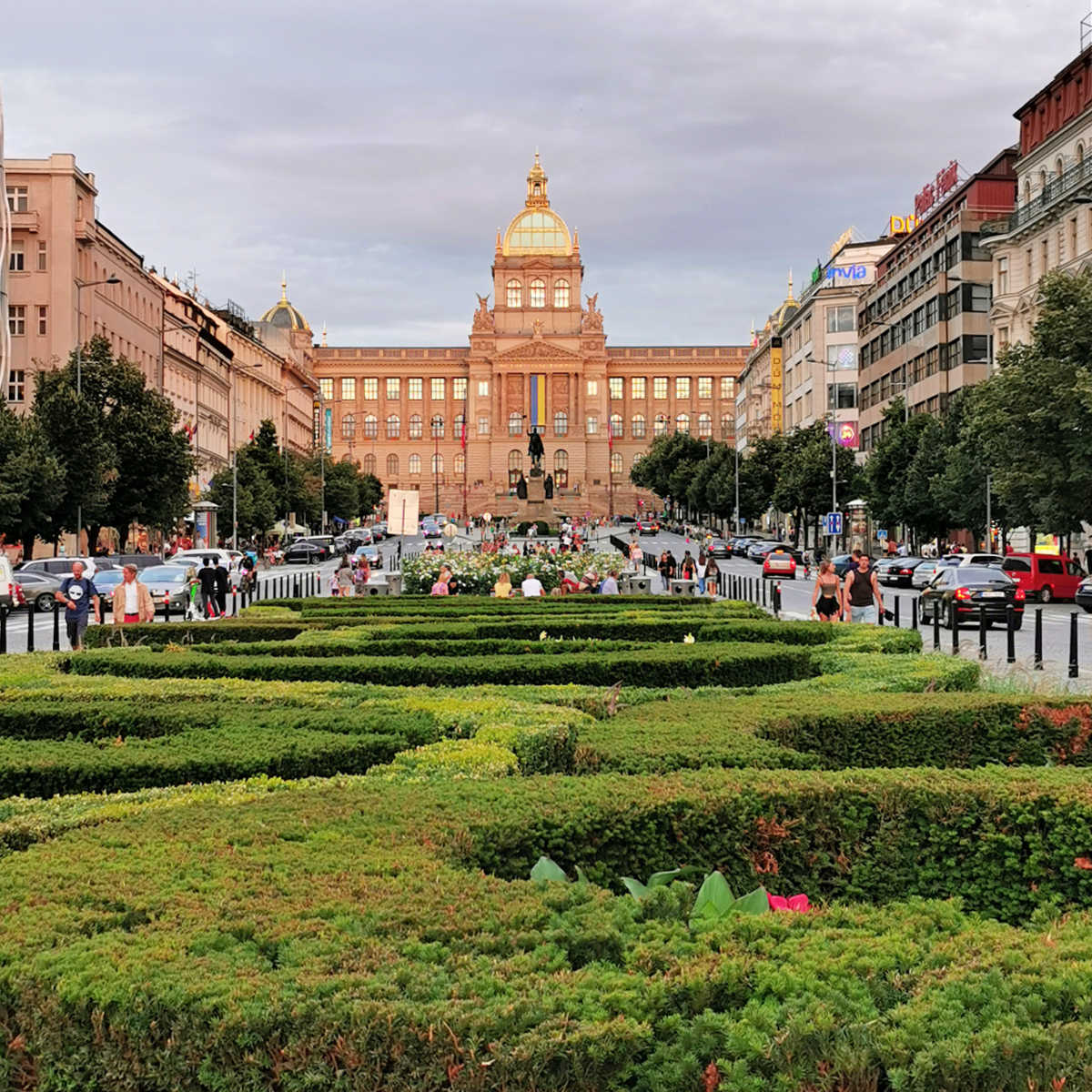
7. Wenceslas Square
Wenceslas Square (Václavské náměstí) was founded in 1348 by the Bohemian King Charles IV as part of the New Town and is one of the city’s main squares and also a traditional setting for demonstrations, celebrations, and public gatherings, including the Velvet Revolution in 1989.
The square was originally called Horse Market, because that’s what it was in the medieval period, but it was renamed in the 19th century to honour Saint Wenceslas, the patron saint of Bohemia.
You can’t miss the large building of the National Museum at its upper end, built between 1885 and 1891 and the large statue of Saint Wenceslas on horseback from 1912.
The square is lined with pretty buildings with shops at the ground floor, restaurants, hotels and also night clubs (which only become visible after dark). There is currently quite a lot of building work going on at the upper part of the square as the town has decided to put the trams back to the top part of the square and link the square to the nearby Vinohrady.
Location & How to get there
Václavské náměstí, 110 00 Praha 1
- Metro Stations: Můstek (Lines A and B) – lower part of the square and Muzeum (Lines A and C) top of the square, both of which are directly accessible from the square.
- Tram Stops: Václavské náměstí, served by tram lines 3, 5, 6, 9, 14, and 24 .

8. Peace Square
Peace Square (Náměstí Míru) is slightly outside the centre of Prague in Vinohrady district and it was established in the late 19th century. My favourite building is the neo-Gothic Cathedral of St. Ludmila, built between 1888 and 1893 by architect Josef Mocker.
The square was originally called Purkyně Square, but it was renamed Peace Square in 1926, although it was also temporarily renamed Imperial Square during World War II.
I think, that Peace Square has one of the best Christmas Markets and Easter Markets in the whole of Prague and you can also find outdoor exhibitions in front of the cathedral.
But, my favourite thing about this square has to be the traditional hot dog stall, which has different types of hot dogs for a very reasonable price. And for afters, you can get ice-cream from one of my favourite ice-cream places called Vanille right opposite.
I also often go to the Vinohrady Theatre, but unfortunately, this theatre doesn’t include English subtitles with their plays. They do however put on occassional musicals and ballet shows, which I think are great to watch even if you don’t understand the Czech language. The theatre inside is like a much smaller version of the Estate Opera or National Theatre and tickets start from 190 CZK.
Location & How to get there
Náměstí Míru, 120 00 Praha 2, Vinohrady
- Metro Station: Náměstí Míru (Line A), which is directly at the square
- Tram Stop: Náměstí Míru, served by tram lines 4, 10, 13, 16, and 22, also located at the square
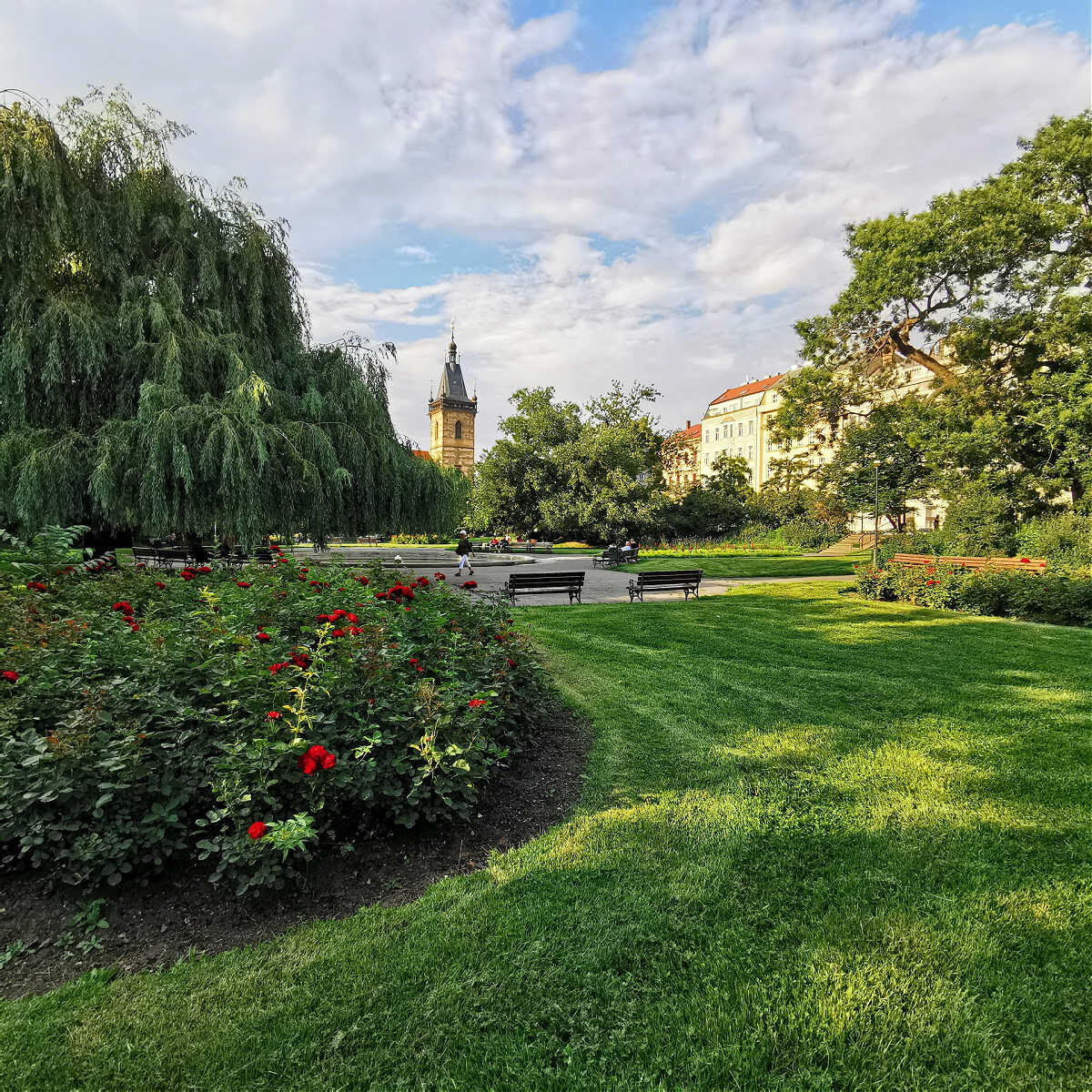
9. Charles Square
Charles Square (Karlovo náměstí) was founded in 1348 by the Bohemian King Charles IV and is the largest square in the Czech Republic and one of the largest ones in Europe. It was originally called Cattle Market, because of regular markets with cattle and other animals.
It became a central part of the Prague New Town and it was renamed in honour of king Charles IV in 1848. Around that time, most houses around the square were re-built in 19 century style and more affluent people started to move in. Somehow the old square with its smelly and noisy animal market wasn’t that appealing and the space started to change to what you can see today – a park with trees, grass and flower beds. The last part of the old square disappeared (small church) when the tram line separated the square in half.
The best way to see the square is to climb the tower of the New Town Hall, which dates back to the 14th century and has a small museum and art gallery. The cafe in the courtyard is great too and overlooked by most people passing by.
I also like the large Baroque Church of St. Ignatius from 1678, which is lavishly decorated inside and opened most days during working hours.
There is usually an outdoor exhibition, market or some entertainment most weekends in the central park area, so it’s always worth looking around. The more modern side of the square (opposite the church) has a shopping centre, shopping passages with independent shops and you can also find here Vaclavske Bistro, which is one of the self-service canteens in Prague serving traditional Czech food.
There is also one of my favourite independent cinemas in Prague – Kino Mat, where you can see the latest films, but also retro films and Czech films with English subtitles.
Another house that’s worth seeing, although you can’t go inside is the Faust House, or “Faustův dům,”. This house has many spooky stories and legends to tell and you can find it on the far side of the square next to the hospital buildings.
One famous person who lived there was Edward Kelley, who was an alchemist in the 16th century and he tried to make gold for the king Rudolf II. Another legend says that Doctor Faust, a man who made a deal with the devil, also lived there and there is still a hole in the ceiling as the devil escaped. This is why the house is called Faust House.
Location & How to get there
Karlovo náměstí, 120 00 Praha 2
- Metro Station: Karlovo náměstí (Line B), which is directly at the square.
- Tram Stop: Karlovo náměstí, served by tram lines 2, 3, 4, 6, 10, 14, 16, 18, 22, and 24, also located at the square.

10. Jungmannovo Square
Jungmannovo Square (Jungmannovo náměstí) feels quite small, because it was originally part of the old Horse Market Square founded in the 14th century as part of king Charles IV’s urban development. The square is named after Josef Jungmann, a famous Czech poet and linguist, in the 19th century and you can see his statue in the middle of the square.
The square is full of interesting buildings, including the Church of Our Lady of the Snows from 1347, the rondo cubism styled Adria Palace or the former department store Archa. You can also find the entrance to the peaceful Franciscan Garden and the only cubism styled lamp in the whole world here.
Location & How to get there
Jungmannovo náměstí, 110 00 Praha 1
- Metro Station: Můstek (Lines A and B), one entrance to the underground is directly on the square.
- Tram Stop: Vodičkova or Narodni Trida, served by tram lines 3, 5, 6, 9, 14, and 24, which is approximately a 5-7 minute walk from the square.

11. Palackeho Square
Palackého Square (Palackého náměstí) is just round the corner from Charles Square and much more modern square from the late 19th century, when the old houses close to the Vltava river were taken down and large town houses were built instead. This square is named after František Palacký, who was a Czech historian, writer and politician.
I always get off here, when I’m going to the Saturday’s farmer’s market at the Smichovska Naplavka on the Vltava riverbank.
Right opposite the tram stops, you can also get a great coffee at ‘I need coffee’ cafe. It’s very small, but they do take takaways. It’s run by the same company that used to have the well know SuperTramp Cafe at the nearby former printing factory, which had to close down as the buildings are being converted to a hotel.
I’d also recommend to visit the Emauzy Monastery, which was founded in 1347 but has modern roof spires as it was hit during the last days of Second World War. It’s a complete hidden gem, but totally worth the visit.
For a light lunch, you can pop in to CAMP (Prague Institute of Planning and Development) which has a great coffees, homemade cakes and delicious soups with local bread. The cafe is part of a gallery, exhibition area and library for students, so it’s has a great cool vibe.
Location & How to get there
Palackého náměstí, 120 00 Praha 2
- Metro Station: Karlovo náměstí (Line B), one entrance to the underground is directly on the square.
- Tram Stop: Palackého náměstí, served by tram lines 2, 3, 4, 7, 10, 16, 17, and 21, located directly at the square

12. Marianske Square
Mariánské Square (Mariánské náměstí) is named after a Church of the Virgin Mary ‘Na louži’, which used to stood nearby and it’s one of my favourite squares in the Old Town.
You can visit the The Prague City Hall during Czech public holidays and they also do guided tours of the paternoster lift. The largest building is the National Library, where you can find the social media famous Idiom book instalation.
There is also an entrance to the Clementinum complex with a beautiful baroque library. The middle of the square usually has exhibition panels or art displays and there are charity stalls during the Christmas Markets in Prague and also at Easter time.
The beautiful Clam Gallas Palace has been recently opened to public for the first time and I’ve really enjoyed looking around and learning more about it’s history.
Location & How to get there
Mariánské náměstí, 110 00 Praha 1
- Metro Station: Staroměstská (Line A), which is about a 3-minute walk from the square.
- Tram Stop: Staroměstská, served by tram lines 2, 17, and 18, also about a 3-minute walk from the square.
This blog post was originally written on 7 October 2024 and last updated on 7 October 2024
PIN TO KEEP FOR LATER


