Best vineyards in Prague to taste locally produced wine
My friends are always surprised when I tell them there are vineyards in Prague and yet, there are quite a few to see and most even produce their own wine.
Back in the day, vineyards covered over 700 hectares of hilly slopes of Prague. Today, there are about twenty vineyards in Prague covering roughly 20 hectares with some re-established in the last 30 years or so.
Although vineyards in Bohemia existed as early as the Middle Ages, the greatest boom in grapevine planting happened under the Bohemian King Charles IV in 1358. At that time, the king ordered vineyards to be planted near the city centre and had thousands of vine plants brought from Austria, the Rhineland, and France. These new vineyards were established mainly in Vyšehrad, Letná, Troja, Libeň, above Smíchov, and in Vinohrady.
After that the winemaking in Prague became very popular, so much so that during the reign of Rudolf II in 16th and beginning of 17th century, Prague was called the “city of wine.”

My favourite places to taste locally grown wine in Prague
Whilst there are over 20 different vineyards in Prague, not all are open to general public and not all produce wine that can be tasted when you visit.
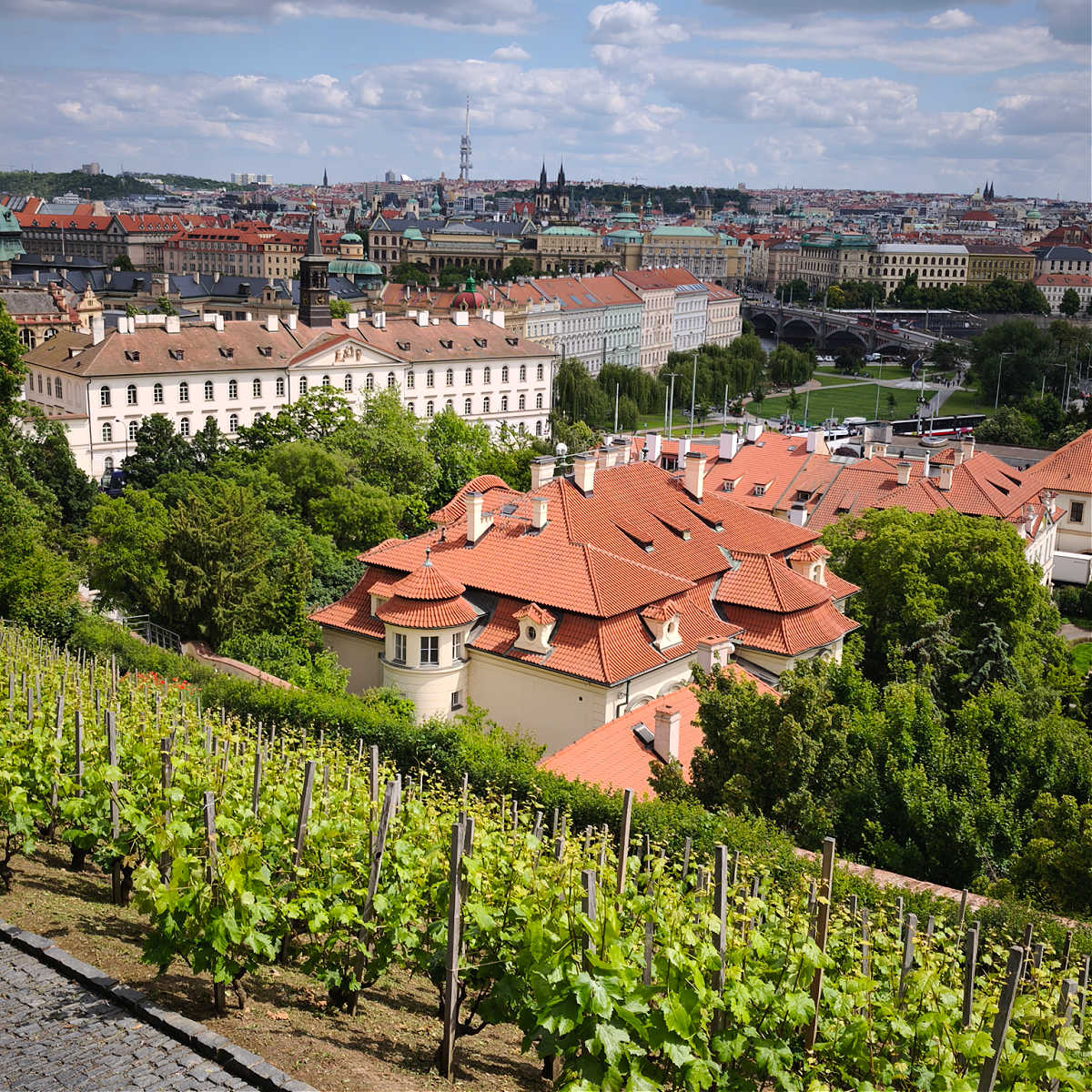
I find that the easiest place to taste Prague grown wine is in St. Wenceslas Vineyard, which is open all year round and it’s on most people’s route when walking down from Prague Castle.
The next vineyard close enough to the centre is Grebovka in Prague 2, where the wooden pavilion cafe stocks Grebovka Vineyard wine all year round and during the main season you can also visit the Grebovka cellars.
My other favourite place is the St.Clara’s Vineyard in Troja Botanical Garden, because it’s open nearly all year round and apart from the vine tasting, you can also learn a lot about vine growing and wine making.
And finally Machalka vineyard at Vysocany, Prague 8 is open during the main tourist season at the weekends and you can taste and buy wine there too.
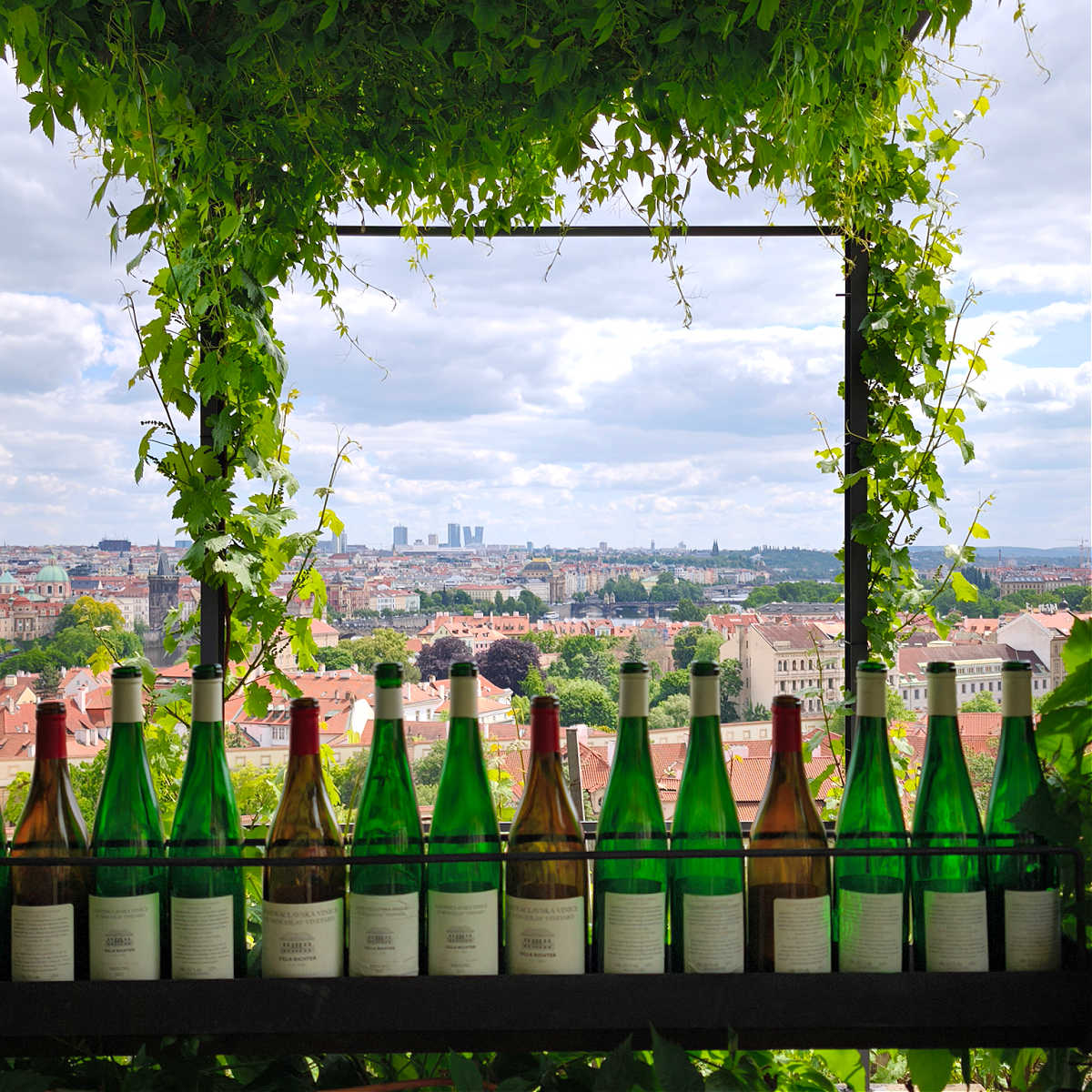
Once a year, I also attend the Prague vineyard festival, where most vineyards are open to general public (even when they are normally closed) and you can taste their wine. This is usually the last weekend in May (this year it was 31. 5-1.6. 2025) and the event is free (you just pay for your wine or guided tour if the vineyard offers it).
If you can’t time your Prague visit to the end of May, it’s best to visit during the main tourist season (and up to september), when most of the vineyards are open at the weekend or have a special open days.
There are also many wine events during the main tourist seasons (like a specialist wine festival at Holesovice Market or Jirak Farmer’s Markets) where you can taste wine not just from Prague, but also from the rest of the Czech Republic.
St. Wenceslas Vineyard
- Location: Old Castle Stairs 6/251, Prague 1, Lesser Town
- Opening Times: 9 am -5 pm most days (longer during summer) – the lower cellar bar with views is open during main tourist season
- Wine: 140 -190 CZK per 100 ml or 890 to 1290 CZK per bottle
This vineyard has a thousand-year history as it is the oldest vineyard in Bohemia named after its founder—St. Wenceslas. The vineyard was established on well-exposed southern slope, in very close proximity to Prague Castle and founded by Prince Wenceslas at the beginning of the 10th century (and yes, that’s the well know ‘king Wenceslas’ from the Christmas Carol song).
In 2008, the vineyard was renewed with planting of new vines and after a complete reconstruction of the entire area, it was for the first time in more than thousand years, opened to the public.
Two main grape varieties are planted here: Riesling (Ryzlink rýnský) and Pinot Noir (Rulandské modré)—the two best varieties of northern wine regions. There are also 35 different grape varieties registered in the Czech Variety Book planted along the scenic path as you walk down to the cellar seating with the great views.
My local tip: Great for a special occasion (or if you are short of time when visiting Prague), the views from the cellar bar are amazing, but the prices are quite high. I really enjoyed the wine (very easy to drink, nice taste with a bit of bite and full of flavour). If you are visiting as a group, it’s worth buying a bottle and share, rather than individual glasses as it can get quite pricey this way.

Grebovka Vineyard
- Location: Havlickovy Sady (Grebovka Park), Vinohrady, Prague 2
- Opening Times: Cafe Pavilion open all year round (11 or 12 am – 10 pm daily), Grebovka cellar open on Fridays during main tourist season
- Wine: from 100 CZK per 100 ml or bottle from 450-850 CZK
Back in medieval times, the Grebovka park area was one large vineyard, which was founded by the king Charles IV. Over the years the park area had different owners and by the end of the Second World War the vineyard was badly damaged and then it fell into neglect.
In 1992–1993, the Prague 2 district council had it restored and started to produce it’s own wine. The vineyard now covers an area of 1.7 hectares and produces about 4,000 liters of wine annually.
You can find eight different types of grape varieties grown here (traditional: Müller Thurgau, Pinot Gris, Riesling, Blauer Portugieser, Pinot Noir, and modern: Dornfelder, Hibernal, Neronet).
My local tip: It’s worth visiting both the cafe (for a great views) and the cellar for the amazing atmosphere (and more great views). I noticed that the Grebovka Cafe has the Grebovka wine only seasonally, but they do have some other amazing Czech and Moravian wine. The Grebovka Cellar (entrance from the side of the park on the top) is open only during the main summer season and only on Fridays from 2 pm – 10 pm. The wine prices are very reasonable, but bring cash, as the wine cellar doesn’t accept cards.
St. Claire’s Vineyard
- Location: Troja, Prague 7
- Opening Times: March – October, Mon – Fri – 1 pm – 7.30 pm, Sa +Sun 11 am – 7.30 pm, Nov- Dec, Mon-Fri 1 pm – 4.30 pm, Sat + Sun 11 am – 4.30 pm, 180 CZK entrance fee (to the whole Botanical Garden), special guided tours can be also booked 1 week in advance
- Wine: from 100 CZK per 100 ml, bottles available to purchase at the vineyard only from 500-1000 CZK
The St. Claire’s Vineyard is part of Prague Botanical Garden, which is one of the few botanical gardens in the world that has such an extensive production vineyard.
It is not known exactly when the vineyard was founded, but it is certain that the warm southern slope was used by Charles IV when he ordered to have it planted with vines in 1358.
This vineyard is also a great place to learn more about winemaking. You can see all the grape varieties that are currently grown in the Czech Republic. You will also learn about pests, disease protection, and grape processing. The vineyard also has historical winemaking tools, such as old presses, vats, and barrels.
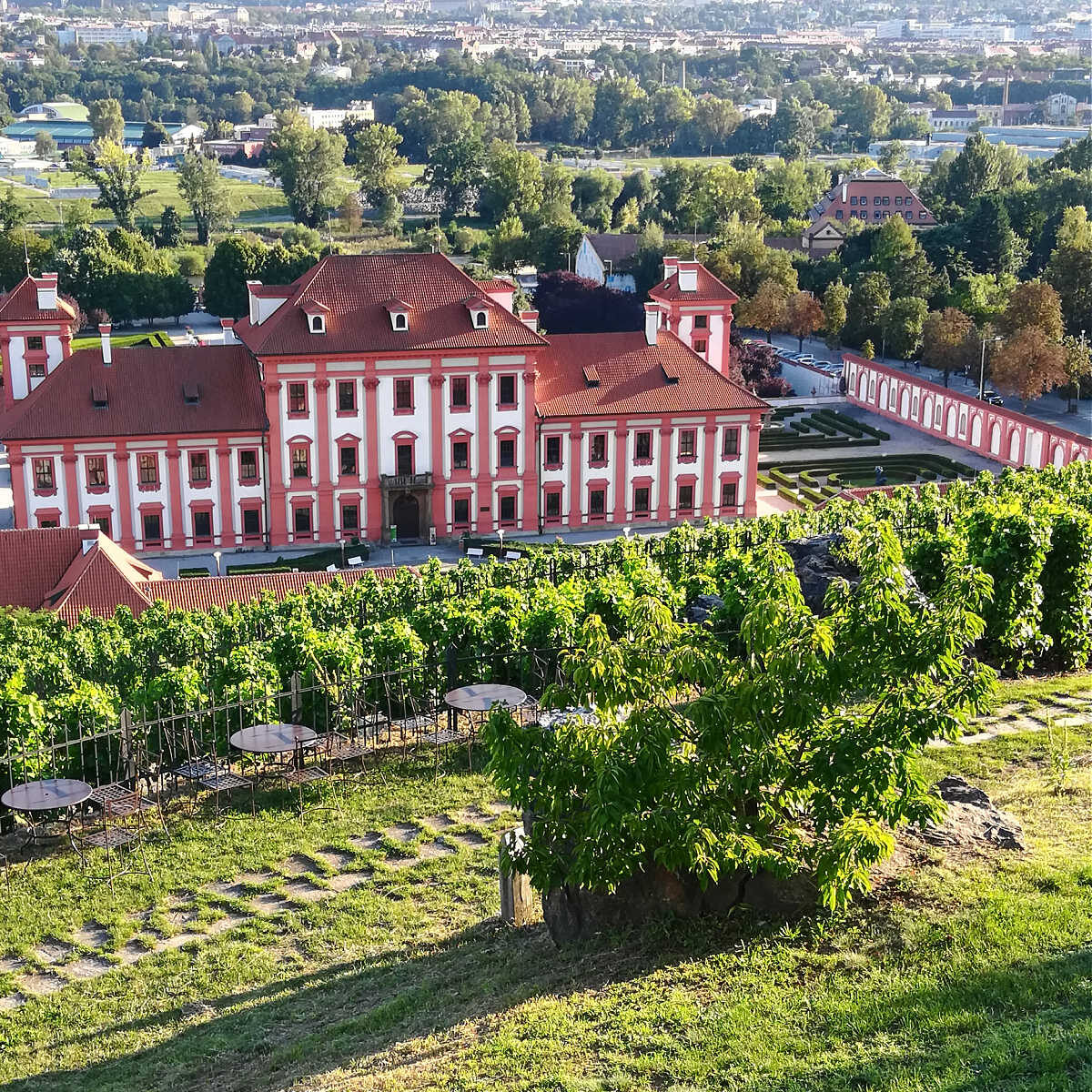
My local tip: The vineyard, cellar and tasting rooms are only accessible when purchasing a ticket to the Botanical Garden, so buy it online to save 30 CZK. I usually plan to visit the whole Botanical Garden to make the most of my day. The views from the vineyard are beautiful and you can see the Troja Chateau and Stromovka Park. The Botanical Garden is huge, so if you want to start at the St. Claire’s Vineyard, use the ‘Kovarna ticket office entrance’ at the Kovarna bus stop.
Machalka Vineyard
- Location: Prosecka 430/36, Prosek, Prague 9
- Opening Times: Thu + Fri 4 – 6 pm, Sat 2 -6 pm (April – Sept), Sat 2-5 pm only (Oct – March)
- Wine: from 40 CZK for 150 ml or bottles from 180 CZK – 200 CZK
The Machalka Vineyard is in area of Prague called Prosek, where vineyards have been documented there since the early 12th century, especially between the district of Vysočany and Prosek, in a locality called “Pod Prosíkem.” The vineyards have been slowly disappearing and in the 20th century, the last vineyard was replaced by an apricot orchard.
The new Machalka Vineyard was established in 1996, when the local amateur vine growers established a cooperative and together with the with the Prague 9 district help replanted the 1.8 hectares with new vines.
The vineyard is named after its founder and owner, Josef Máchal. There are all together nine different types of vine growing here, including Chardonnay, Muller Thurgau, Blue Portugal or Moravian Muscat Wine.
My local tip: Whilst not in the centre, this is one of the best combinations of pretty vineyard, cosy atmosphere, regular opening hours, local people and great wine prices I’ve come across. I love that the vineyard stays open slightly longer during summer if there is enough demand. It’s a 15 minutes stroll down the hill from Prosek Underground Station (and then further 20 minutes down the hill to Ceskomoravska Underground Station) after you’ve tasted all the wine!
Salabka Vineyard
- Location: K Bohnicím 2, Troja, Prague 7
- Opening Times: By appointment only, guided tour with vine tasting for two starts from 2000 CZK
- Wine: Available online via vineyard own website from 490 CZK per bottle
The Salabka vineyard, first mentioned as early as 1226, is an ideal place for growing grapevines thanks to its location on the hilly slopes of Troja. The vineyard covers 4.5 hectares on a southwest-facing slope, which guarantees generous sunlight.
The vineyard is named after one of it’s owners – Jan Kašpar Salaba, who owned the property in 18th century. By the 19th century, the vineyard started to get neglected and then was just left unused for many years.
Its restoration and the planting of new grapevines began only in 1955 and to this day, several rows of the original Rhine Riesling vines from the 1950s have survived. These sixty-year-old grapevines are among the oldest of their kind in Bohemia and still produce a great wine.
The new chapter of Prague’s largest vineyard began in 2000, when the estate underwent extensive reconstruction using a lot of the reclaimed and original materials from the local vineyards and old buildings on the site.
My local tip: The easiest way to taste the Salabka wine is to buy a bottle from their website or to book a tasting dinner menu with their own wine. You can also stay at the vineyard hotel and choose a package with wine tasting and vineyard tour (which is a luxury treat since it’s starts from 17 000 CZK for 2). There are no regular wine tours available and whilst you can buy a tasting & tour for 2 people gift vouchers, I’d recommend to check with the vineyard when the next available dates are to make sure they fit with your Prague visit.
Modrany Vineyard
- Location: Chuchelska 1, Modrany, Prague 4
- Opening Times: Cafe & access garden to the vineyard open during the main tourist season daily
- Wine: Privately made by the individual owners, usually not for sale
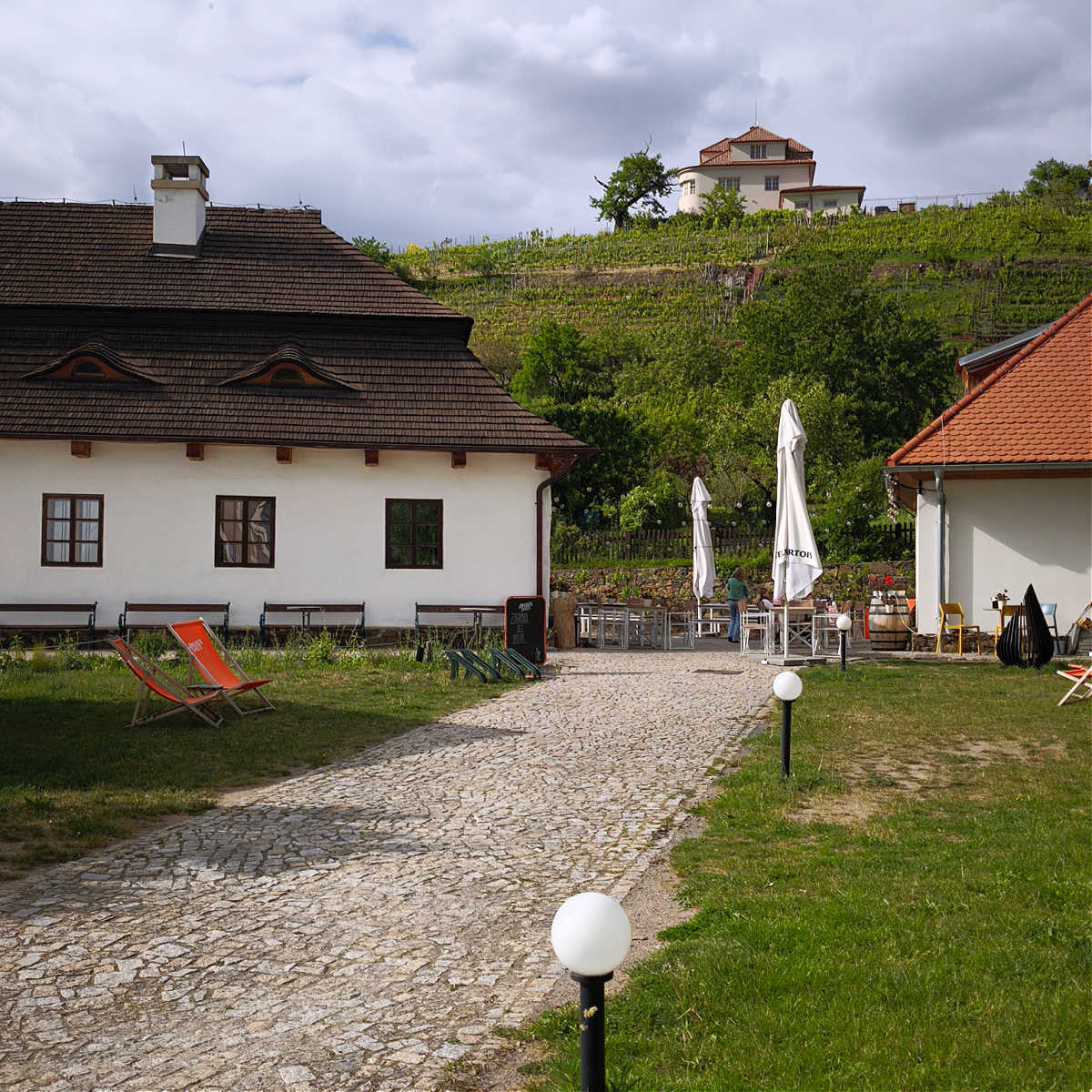
This is a heritage-protected vineyard, which was originally called the Archbishop’s Vineyard. You can find it on the steep terraces above the Vltava River bank in Prague’s Modřany district. It’s quite a special vineyard as it’s being looked after by local enthusiasts—winegrowers and gardeners.
Historical sources first document the existence of the Modřany Vineyard in 1178, when Bohemian King Soběslav II donated it to the Vyšehrad Chapter. The name “Archbishop’s” comes from the period when it was owned by the Prague Archbishop Office (from 1717 to 1921).
In 1929, the vineyard was sadly destroyed by frost and fruit trees were planted on the terraces instead. In 1987 the local Gardeners’ Association managed to get the land for use and started to clear the slope, began to restore the terraces and eventually re-planted the vines.
They have chosen mainly traditional varieties such as Riesling, Pinot Blanc, Gewürztraminer, Pinot Noir, and Blauer Portugieser, which have been cultivated here since the 19th century.
Further phases of vine planting took place in 2004 and 2008–2009 thanks to grants provided by the Prague City Council.
Not all parts of the vineyard have been replanted with vines, so you can still see fruit trees and beds of vegetables and flowers in the lower part of what used to be the vineyard.
The vineyard is individually managed by members of the Czech Gardeners’ Association, who also make their wines individually. Bottled wines are produced in batches of up to one hundred liters, often even less than twenty liters, making them a rarity mainly for their closest circle of friends and usually not available for sale.
My local tip: Whilst you can’t normally taste the vineyard’s wine here, you can spend a relaxing time in the cafe garden next to the vineyard old house building. You can also see the vineyeard from the bottom of the slope, although you can’t walk inside the rows of vine.
St. John Vineyard at Petrin Hill
- Location: Strahov Monastery, Hradcany, Prague 1
- Opening Times: Any time
- Wine: N/A
Grapevines were cultivated in the area of the Strahov Garden below Petřín even before 1143, when the Strahov Monastery of the Premonstratensians was founded. From the 12th century, the vineyards were expanded and part of them were looked after by the Strahov Monastery and part was rented out to local tenants.
During the war years (the Hussite Wars, the Thirty Years’ War, the War of Austrian Succession), the vineyards and orchards were completely destroyed, but each time they were successfully restored again. They disappeared completely during the 19th century, with only the vineyard press in the Úvoz wall remaining.
The parks department of the Prague City Hall restored part of the vineyard around the press in 2011 and carries on looking after the vineyard.
My local tip: Whilst this is a very small vineyard with grapes not intended for wine making, the spot is the perfect place to get the best views of Prague, especially at sunrise. It’s my favourite spot (and many other’s too) so come here early in the morning for the perfect view without the crowds.

Vysehrad Vineyards (Old Burgrave’s House, Vysehrad Chapter & Vineyard under Vysehrad)
- Location: Vysehrad, Prague 2
- Opening Times: Any time
- Wine: N/A
In 2006, three small vineyards were established in the southwestern part of Vyšehrad, near the Old Burgrave’s House, after nearly three centuries since the last vineyard flourished there.
Vyšehrad was an early medieval fortified settlement, which used to be the seat of the Bohemian Kings, such as the first Czech king, Vratislav I in the 11th century. Charles IV had vineyards planted here and grapevines were cultivated here until the end of the 17th century, when the area of the royal palace was transformed into a Baroque military fortress.
The second vineyard at Vysehrad is in the garden of the New Deanery, which has 162 grapevines planted in 8 rows. The third vineyard is planted under the Vysehrad (hence it’s name).
My local tip: I always like visiting Vysehrad as it’s free to enter and you can see the vineyards as you walk around. I’m yet to taste any wine produced at these vineyards as I think these are just for show (but happy to be proven wrong).
Vitkov Vineyard
- Location: Tachovske Namesti 290/5, Zizkov, Prague 3
- Opening Times: Any time
- Wine: not used for wine production
The new vineyard was re-planted in 2024 to commemorate the previous use of the southern slopes of Vítkov Hill for grapevine cultivation since the time of Charles IV. There are just under 700 grapevines here, with three varieties planted, so there will be white, red, and blue grapes.
The vineyard is on a slope above the path rising from the underpass of the former railway line towards the Vítkov Memorial on the top of the hill.
My local tip: The grapes here are not for wine production, but you can find plenty of cafes, pubs and restaurants along the old railway line, where you can try Czech and Moravian wine.
Albertov Vineyard
- Location: Na Slupi 2103/2c, New Town, Prague 2
- Opening Times: Any time
- Wine: N/A
The Albertov slopes below Větrov Hill are on the edge of Prague’s New Town, which was founded by Charles IV in 1348. The southern slope of the Nusle Valley, opposite Vyšehrad, has the perfect conditions for growing grapevines. Even the local stream Botič was called the ‘Wine Stream’ in the past.
The Albertov vineyard was restored in 2009. The vineyard has about 850 vines of three varieties: Riesling, Fénix, and Pinot Noir. The vines are trained in the traditional “goblet” style, which produces higher-quality grapes and is more attractive visually, but is more demanding to maintain.
Baba Vineyard
- Location: Patanka 200/4, Dejvice, Prague 6
- Opening Times: Not usually open to public
- Wine: Available from the vineyard only
The rocky Baba (Grandmother) hill, rising on the left bank of the Vltava, has been inhabited since the Neolithic period. The vineyard sits on the slate rock soil formation and was established in 1562.
The vineyard is privately owned and certified for organic wine production. It was once called Magurka after one of its owners, and later Majorka.
Wine is produced here in a purely traditional way, as in earlier times, i.e., by fermenting in open stoneware vats (some batches with long-term maceration on the grape’s skins), then maturing in wooden barrels, and finally being stored in glass or ceramic containers.
This blog post was originally written on 3 June 2025 and last updated on 3 June 2025