
Nutria in Prague: The Adorable River Rats You Shouldn’t Feed (2026 Guide)
You’ve probably seen them if you’ve wandered along Prague’s rivers – large furry aquatic rodents lounging by the water’s edge, looking utterly unbothered by the tourists snapping photos just metres away. These are nutria (also called coypu), and whilst they might look like oversized guinea pigs crossed with beavers, they’re actually causing quite a bit of trouble in the Czech capital.
I remember when nutria were a rare sight in Prague, but now you’ll find them absolutely everywhere along the Vltava. They’ve become something of an unexpected attraction, and honestly, they are pretty cute. But there’s a lot more to the story than their adorable faces suggest.

What Are Nutria?
Nutria (Myocastor coypus) are semi-aquatic rodents that look like a cross between a beaver and a rat – though calling them “river rats” does them a bit of a disservice, even if it’s technically accurate. They’re actually much larger than you might expect, weighing anywhere from 5 to 9 kilograms when fully grown, with distinctive orange teeth and webbed back feet.
You’ll recognise them by their stocky bodies covered in dense brown fur, long round tails (not flat like beavers), and those characteristic long whiskers. They’re brilliant swimmers and you can often spot them paddling along the river or munching on vegetation along the banks. They’re great fun to watch as they run from the water up the river banks and back to the river, especially when there are babies following their mothers in a little furry procession.

Where Did Prague’s Nutria Come From?
Here’s where the story gets interesting. Nutria aren’t native to Prague – or anywhere in Europe, for that matter. They originally come from South America, specifically from the wetlands of countries like Argentina, Chile, and Brazil.
These creatures were brought to Czechoslovakia (that’s how we used to be called back then) in the 19th century for one reason only – fashion! Their dense, soft underfur was highly prized for making fur coats and accessories. By the early-to-mid 20th century, nutria farming was actually quite a substantial industry across Europe. The Czech lands were no exception – there were numerous nutria farms where the animals were bred specifically for their fur.
The farmers were carefully tracking effective population sizes and fertility rates to keep their stocks healthy and in manageable numbers. This wasn’t just a small cottage industry, it was proper commercial farming although mainly nationalised after 1948 and owned by the Czech state.
But then fashion changed. As fur coats fell out of favour and the market collapsed, many of these farms shut down. Some nutria escaped during floods, others were deliberately released by farmers who could no longer afford to keep them, and some were even set free by animal rights activists. Without natural predators in the Czech countryside and with plenty of suitable habitat along Prague’s rivers, the nutria population absolutely exploded.
What started as a handful of escapees has now turned into a full-blown population boom. The nutria adapted remarkably well to their new home, and Prague’s relatively mild winters meant they could survive and breed year-round.
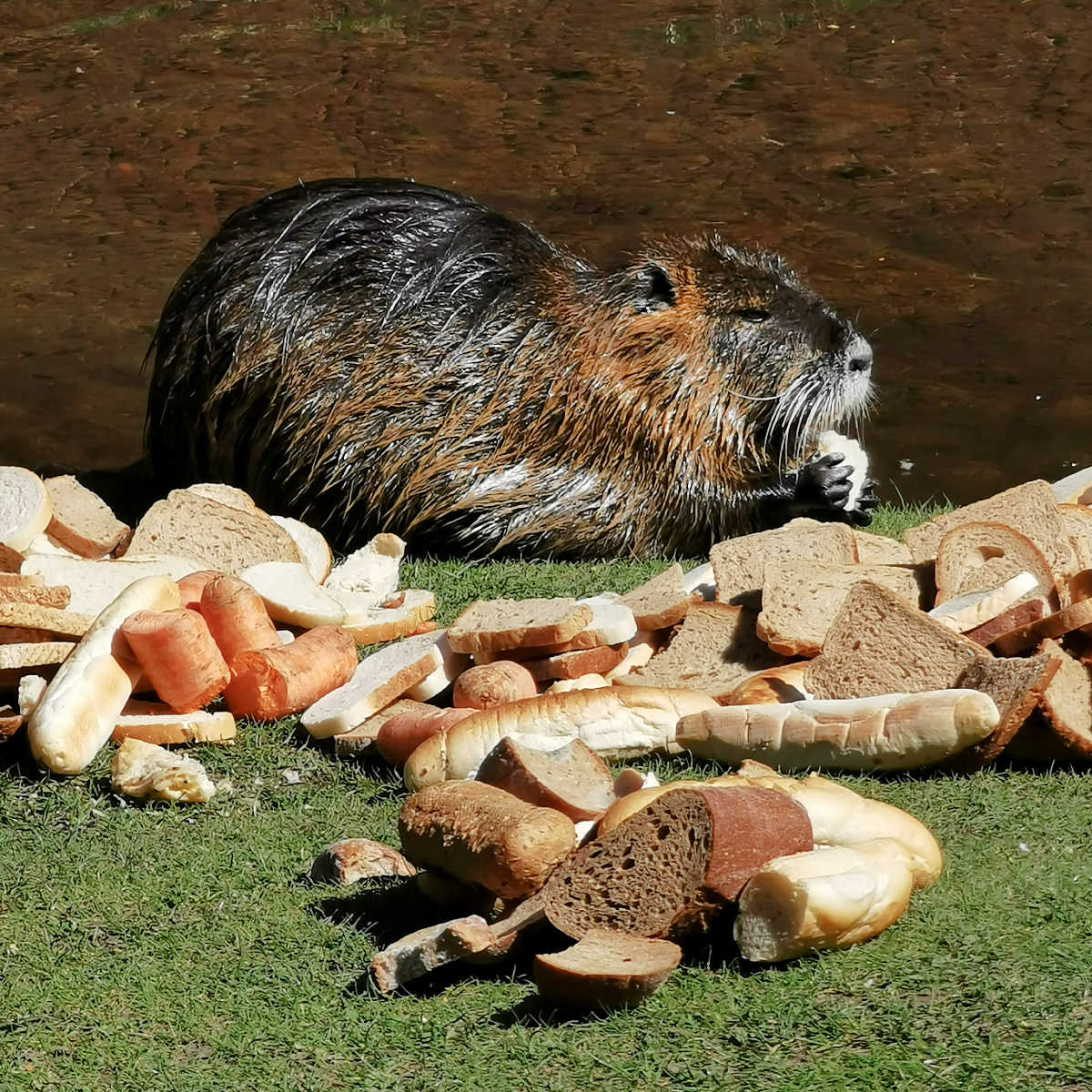
Why You Shouldn’t Feed Prague’s Nutria
I know, I know – they’re adorable, and when they waddle up to you with those little paws and hopeful eyes, it’s incredibly tempting to toss them a bit of bread or some vegetables. But please, please don’t feed them. Here’s why:
They Become Aggressive
Nutria that are regularly fed by humans lose their natural wariness. They start to expect food, and when they don’t get it, they can actually become quite aggressive. Those long front teeth aren’t just for show – they’re designed for gnawing through tough vegetation and they can deliver a nasty bite. There have been several incidents of nutria biting tourists who approached too closely, especially when people try to take selfies with them or hand-feed them.
It Makes the Population Problem Worse
When nutria have easy access to food from humans, they breed even more successfully than they already do. A well-fed female nutria can produce multiple litters per year, with up to nine babies each time. By feeding them, you’re essentially contributing to an already out-of-control population explosion.
They Carry Diseases
Nutria are known carriers of various diseases and parasites that can be transmitted to humans and domestic animals. These include leptospirosis (which can cause serious illness), intestinal parasites, and tularemia. When nutria gather in large groups around feeding spots, the concentration of their waste creates an even greater health risk.
They’re Destroying the Ecosystem
This is the big one. Nutria are voracious eaters – an adult can consume up to 25% of its body weight in vegetation every day. They’re not picky eaters either, munching through aquatic plants, grasses, and crops indiscriminately. This has several knock-on effects:
They’re displacing native species of animals by outcompeting them for food and habitat. The water voles and other native rodents that used to live along Prague’s rivers are increasingly rare because the nutria have taken over their territory.
They’re causing serious damage to riverbanks by digging extensive burrow systems. These burrows can be several metres long, and they destabilise the banks, leading to erosion and even collapse. This is particularly problematic in Prague, where many historic buildings and paths sit right along the water’s edge.
The vegetation they destroy is important for maintaining healthy river ecosystems. When they strip away all the plants, it affects water quality, removes habitat for fish and insects, and increases erosion.
What the Experts Say
Local wildlife experts and organisations are really quite concerned about the situation. The Mendel University of Agriculture and Forestry in Brno has been particularly vocal about the problem, noting that feeding contributes directly to the escalation of what they consider one of the most serious invasive species issues in the Czech countryside.
The trouble is that people generally consider nutria to be harmless creatures. They see them near large settlements, think they’re cute (which, to be fair, they are), and assume that feeding them is a kind thing to do. But actually, it’s making a serious environmental problem much, much worse.

Where to See Nutria in Prague
If you do want to observe these fascinating (if problematic) creatures – and honestly, they are quite entertaining to watch – there are several spots where you’ll almost certainly find them:
Libeňský Island (Libeňský ostrov)
This is probably the most reliable spot for nutria-watching in Prague. The island, located in the Libeň district, has become absolutely overrun with them. You’ll find nutria lounging on the banks, swimming in the channels, and generally treating the place like their personal kingdom. It’s actually become a bit of an unofficial tourist attraction, though locals are decidedly less thrilled about it.
To get there, take the metro to Palmovka (line B) and walk towards the river, or take tram 3, 10, 12, or 17 to Libeňský ostrov.
Střelecký Island (Shooter’s Island)
Right in the heart of Prague, this small island between the Vltava’s main channel and the Devil’s Stream (Čertovka) is another nutria hotspot. What makes Shooter’s Island particularly popular is that it’s already a lovely place to visit – there are cafés, outdoor seating areas, and beautiful views of the National Theatre, Charles Bridge and Prague Castle complex. The nutria add an unexpected wildlife element to your city centre experience.
You’ll find the island just south of the Legion Bridge (Most Legií), easily accessible on foot from the city centre.

Kampa Island
The picturesque Kampa Island, with its charming parks and the famous Čertovka (Devil’s Stream), is another spot where nutria have made themselves thoroughly at home. You can often spot them along the narrow stream, especially early in the morning or at dusk when there are fewer people about.
This is a beautiful area to explore anyway, with the Kampa Museum, John Lennon Wall nearby, and lovely little streets to wander (don’t miss the latest David Cerny’s sculpture ‘Vera’ at the back of the Sokol buildings). The nutria are just an added (if controversial) bonus.
Along the Vltava Riverbanks
Really, you can spot nutria along almost any stretch of the Vltava as it flows through Prague, particularly in the quieter sections away from the busiest tourist areas. The stretch near the Výtoň embankment, around Náplavka, and up near Troja all have established nutria populations.
Best Times for Spotting Nutria
Nutria are most active during dawn and dusk, so if you’re an early riser (and if you’ve read my tip about getting up super early to photograph Prague without crowds), you might spot even more of them during your morning wanderings. They do come out during the day, especially in areas where they’re used to people, but they’re generally more relaxed and easier to observe in the softer light of early morning or evening.

The Current Situation and What’s Being Done
The nutria population in Prague and throughout the Czech Republic has reached what experts are calling a crisis level. These animals are now considered among the most invasive species on the planet, and their impact on the Czech landscape is significant and growing.
The Scale of the Problem
It’s difficult to get exact numbers (nutria aren’t particularly easy to count), but wildlife experts estimate that there are tens of thousands of nutria living in the Czech Republic, with a substantial concentration in Prague. The population has been growing exponentially, particularly in the last decade or so.
Management Efforts
The Czech authorities are in a bit of a difficult position. Nutria are classified as an invasive species, and there are programmes aimed at controlling their numbers, but these efforts are complicated by public sentiment. Many people have become quite attached to the nutria and oppose culling programmes, even though wildlife management experts insist it’s necessary.
Some areas have implemented trapping programmes, and hunting is permitted in certain zones outside the city centre. However, these efforts have had limited success in actually reducing the overall population – nutria breed too quickly for current control methods to keep pace.
The Feeding Problem
One of the biggest obstacles to managing the nutria population is the continued feeding by well-meaning members of the public. Despite public awareness campaigns and signs in some areas asking people not to feed the nutria, you’ll still see tourists (and locals) regularly tossing food to them.
This is why education is so important. If you’re reading this, you now know better – and maybe you can gently inform other visitors you see why feeding these adorable rodents isn’t actually helping them or Prague’s ecosystem.
A Balanced Perspective
Look, I understand the appeal. When you’re wandering along Prague’s beautiful riverbanks and you encounter a family of nutria going about their business, it’s a charming and unexpected bit of wildlife in the middle of a major European city. There’s something quite magical about seeing wild animals thriving in an urban environment.
And it’s not the nutria’s fault that they’re here. They didn’t ask to be brought to Europe, farmed for their fur, and then released into an ecosystem where they have no natural predators. They’re just doing what nutria do – eating, swimming, and making more nutria.
But the reality is that their presence is causing real problems. The damage to riverbanks isn’t just an aesthetic issue – it’s a genuine safety and infrastructure concern. The displacement of native species is changing Prague’s ecosystem in ways that may be difficult or impossible to reverse. And the health risks, whilst not enormous, are real enough to warrant caution.
So, Should You Go See Them?
Absolutely. I think it’s actually quite interesting to observe nutria if you’re in Prague, particularly if you’re interested in wildlife or environmental issues. They’re genuinely fascinating animals, and watching them swim and interact is actually pretty entertaining.
Just remember:
- Look, but don’t feed
- Keep a respectful distance (at least a few metres)
- Don’t try to touch them or take selfies with them
- If you see others feeding them, you might gently mention that it’s not recommended (though I’ll leave that to your discretion)
- Enjoy them as part of Prague’s complex urban ecosystem, but understand that they’re part of a larger environmental challenge
What To Do If You’re Bitten or Feel Threatened
If a nutria approaches you aggressively (usually because it’s expecting food), the best thing to do is simply back away slowly. Don’t run – they’re not going to chase you down, but sudden movements might startle them into defensive behaviour.
If you do get bitten, wash the wound immediately with soap and water, and honestly, you should seek medical attention. I know it might seem like overkill for a rodent bite, but because of the diseases they can carry, it’s really worth getting it checked out.
There are several hospitals with emergency departments in Prague that can help – Na Homolce Hospital and the Faculty Hospital in Motol both have English-speaking staff.
The Nutria impact on Native Wildlife: What Prague Lost
You know what’s quite sad? Most visitors (and even some locals) don’t realise what used to live along these riverbanks before the nutria took over. European water voles, which are actually protected in many parts of Europe, have virtually disappeared from Prague’s waterways. These little creatures, which look a bit like chubby hamsters, used to be common along the Vltava.
You’ll also find fewer water birds nesting along the banks now. The nutria’s burrowing destroys the vegetation that birds like moorhens and little grebes need for nesting. Kingfishers, which used to be spotted regularly along quieter stretches of the river, are increasingly rare because the nutria compete for the same fish-rich areas.
I think it’s worth mentioning this because when you understand what’s been displaced, the cute factor of nutria becomes a bit more complicated.
The Economic Impact of nutrias in Prague
Something that doesn’t get talked about much is what all this is costing. Prague spends a considerable amount each year on riverbank repairs and stabilisation work, much of which is directly related to nutria damage. The burrows they create can undermine historic walls and embankments that are hundreds of years old.
There’s also the cost of the control programmes themselves – trapping, monitoring, and managing the population isn’t cheap. Some estimates suggest Prague and surrounding municipalities spend hundreds of thousands of euros annually on nutria-related issues.
On the flip side (and this is a bit controversial), some people argue that nutria have become a minor tourist attraction. You’ll see them featured in “unusual things to see in Prague” lists, and there are even guided walks that specifically include nutria-spotting. I’m not entirely sure how I feel about marketing an invasive species as a tourist draw, but there you go.
Photography Tips (Because I know you’ll Want Photos)
Look, I know that you are absolutely going to photograph them, so I might as well give you some guidance on doing it responsibly:
Use a zoom lens or your phone’s zoom function rather than approaching too closely. A good distance is at least 3-4 metres – close enough to get a decent shot, but far enough that you’re not stressing the animal or putting yourself at risk.
Early morning light along the Vltava is absolutely gorgeous for photography anyway, and this is when nutria are most active and relaxed. The softer light also helps because nutria are quite dark-furred and can photograph as brown blobs in harsh midday sun.
If you’re photographing them, try to capture the context too – show them in their (adopted) environment along Prague’s historic riverbanks. These photos tell a more complete story than just close-ups of cute furry faces.
And please, please don’t use food to lure them closer for a better shot. I’ve seen this happen, and it’s exactly the problem behaviour that’s making the situation worse.
What You Can Do To Actually Help
If you’re the sort of person who genuinely cares about Prague’s environment (and if you’re still reading this far, you probably are), here are some practical ways you can help:
Support local conservation organisations. Groups like the Czech Society for Ornithology (CSO) and local environmental charities are working on habitat restoration and native species protection. Even small donations help.
If you see someone feeding nutria, you might consider having a polite word. I know confronting strangers isn’t very comfortable (and very un-British!), but sometimes people genuinely don’t know it’s problematic. A friendly “I learned recently that feeding them actually causes health problems for the animals” can be more effective than you’d think.
Report large concentrations or unusual behaviour. If you spot a particularly large group of nutria or notice them behaving aggressively, you can report it to Prague’s municipal environmental department. They do monitor hotspots for potential intervention.
Share accurate information on social media. If you post photos of Prague’s nutria (which, let’s be honest, you probably will because they are photogenic), maybe include a little note about why feeding them isn’t recommended. Education really is one of the most effective tools we have.
Local Perspectives: What Prague Residents Actually Think
This varies quite a lot, actually. Some locals I know are absolutely fed up with the nutria – particularly those who live right along the river and deal with the damage and mess they create. Gardeners in riverside areas often wage ongoing battles with nutria eating their plants.
But there are also Prague residents who’ve become quite fond of them. There’s a sort of resigned affection – “Well, they’re here now, aren’t they?” I’ve heard people defend them by pointing out that they’re less troublesome than drunk tourists (though I’m not sure that’s saying much!).
The divide often falls along generational lines. Older Czechs who remember the fur farming industry tend to have less romantic views of nutria, whilst younger people who’ve only known them as part of Prague’s urban wildlife are more likely to see them as harmless and cute.
This blog post was originally written on 18 March 2026 and last updated on 18 March 2026


