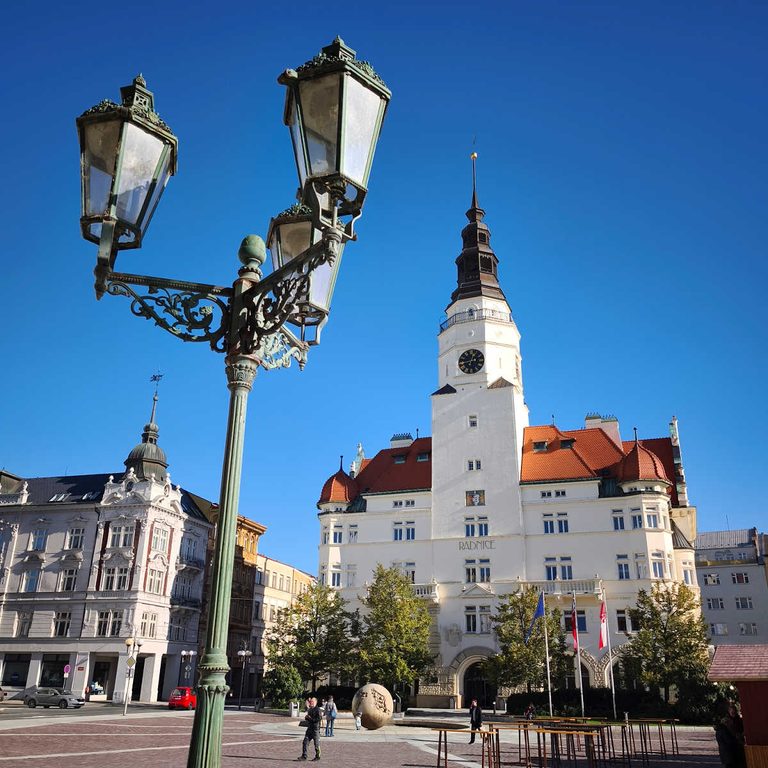
14 things to see & do in Františkovy Lázně: Guide to the spa town my grandmother loved
I’ve visited Františkovy Lázně several times over the years and it always held a special place in my heart, though, for reasons that go beyond the colonnades and the yellow-painted façades.
A while ago I read through my grandmother’s old letters. She used to visit Františkovy Lázně and other local spas quite regularly. Back then it was quite normal to go to a spa for a month or even six weeks during the summer, all on a doctor’s note. She wrote about walking in the park with other guests, chatting over coffee in the local cafés, and taking the local springs! Reading them made me want to go back and see the town through her eyes.
What I love most about Františkovy Lázně is how quiet it is. Its perfect if you want a slower, calmer alternative to the bigger spa towns. Most cafes close by 5 pm, the local church service is at 4.15 pm and don’t expect to find a loud pub or clubs here – there aren’t any! Walk the park, visit the museum, try the water, and then sit in a café the way my grandmother did. Some things don’t need improving.
The town is compact and the walks are all level, so you can see everything in a single day without rushing. Within a short stroll you’re already in the park, and a few minutes further on you reach beautiful open countryside. The town was founded in 1793 and named after Emperor Franz I. Since 2021 it has been part of the UNESCO-listed Great Spa Towns of Europe, which I think is well deserved.
1. The Spa Buildings
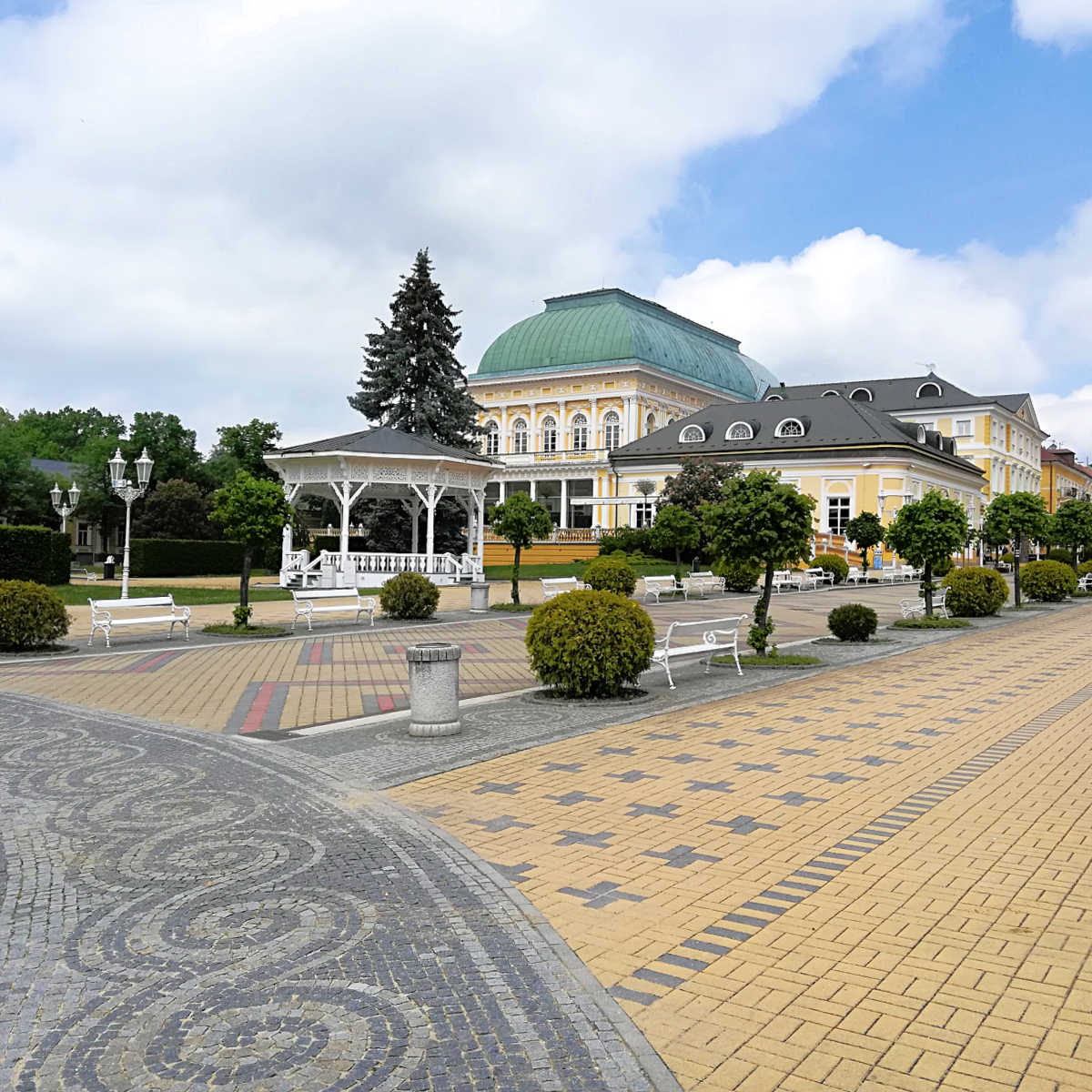
One of the best things about Františkovy Lázně is that the whole town feels like a pretty model of a historic town. Most of the spa buildings went up in the 19th century in Classical and Empire styles, painted in that famous soft yellow known locally as “Franzensbad yellow”. Strict building rules kept everything in harmony, and I think that’s why the town feels so calm compared with other spa towns.
One of my favourite buildings is the Imperial Spa Hotel, which is also one of the grandest building in town. It was built between 1878 and 1880 for Anton Singer, a millionaire of Austro-Hungarian origin who had made his fortune in St Petersburg.
He clearly wanted the best: the Neo-Renaissance design was by Gustav Wiedermann, who later became the town’s mayor. Inside were luxurious bathing cabins for carbonic and peat baths, aimed at the wealthiest guests in Europe.
Around 1909, the young Archduke Charles, the future and last Emperor Charles I of Austria, met Princess Zita of Bourbon-Parma again here. They had known each other as children, but in Františkovy Lázně, where Zita was staying with her aunt, the two fell in love. They married in 1911, and Charles became emperor in 1916.
2. Spa Wafers
I think, that no visit to a Czech spa town is complete without spa wafers. They’re large, paper-thin round wafers, about the size of a saucer, with a light sweet filling between two layers. The classic flavours are vanilla, chocolate, hazelnut and almond.
The tradition goes back to the late 18th century, when the wafers were thought to go well with the mineral water. They were invented as light snack, that spa visitors could eat in between their meals and were thought to be a healthier and lighter snack option for the patients, than traditional cakes.
I love to try different flavours and they are great warm. You’ll find little stalls and bakeries along Národní street and around the spa park. I always buy a box of the packaged ones to take home to Prague too, because they keep for weeks and make a great little gift.
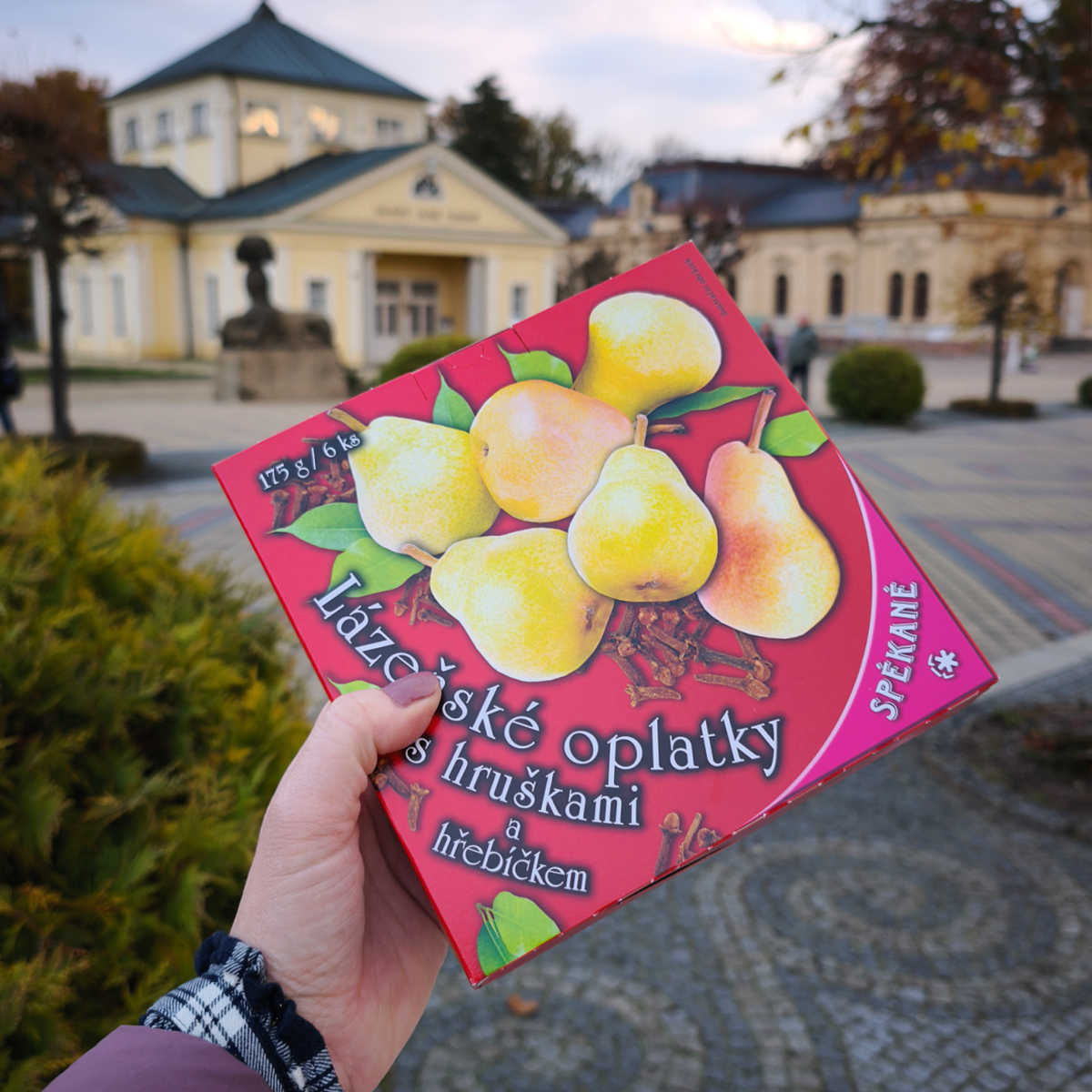
This time I bought Pear & Cloves, Plum & Cinnamon and ‘Spicka’ flavour based on a traditional Czech patisserie cake that has eggnog filling and chocolate on the outside. The shop had more than 50 different flavours, so it was pretty hard to choose!
- Location: Stalls and shops along Národní street and around the spa park
- Opening Times: Usually daily from morning until late afternoon or early evening, with fewer stalls open in winter
- Cost: Warm wafers are 20 CZK each; boxes of packaged wafers are around 75 CZK
3. Town Museum
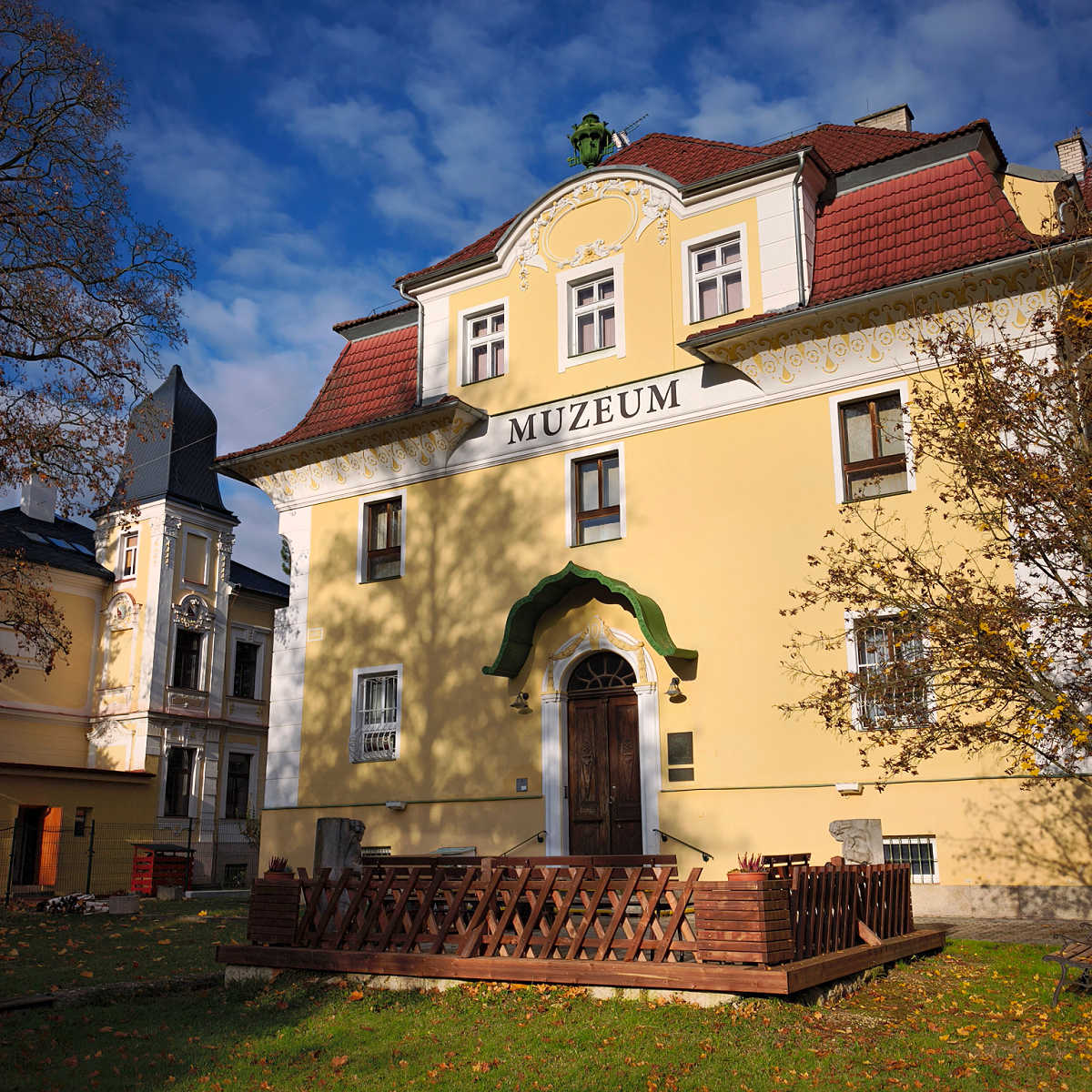
If you only go indoors once during your visit, make it here. I loved learning more about the local spa history and the displays are genuinely interesting.
The story of the town really starts with the springs. People from nearby Cheb were drinking and selling the mineral water from here long before there was a town at all. The water was carried in jugs to Cheb and sold, and the trade became so important that the local women who sold it actually protested when the spa was officially established!
The physician Dr Bernhard Adler was one of the people who pushed for a proper spa town and in 1793 Františkovy Lázně (Franzensbad in German) was born. The town also became known for its peat (mud) treatments, which were used here from the early 19th century and made the town famous across the whole Europe.
The best thing about the museum, for me, is how lovely it is to go back to the beginning of the 20th century. There are old bathing tubs, medical instruments, guest lists, postcards and photographs of elegant ladies and gentlemen promenading.
It’s such a great era to imagine, especially when I found out that in 1912 over 65,000 people visited the spa in a single year! For a town this size, that’s really high number.
It’s not a huge museum, so give yourself about 30 to 45 minutes. Signage is mostly in Czech and German, with only some English, so it helps to ask at the desk whether they have an English text to borrow.
- Location: Dlouha 194/4 (of Ruska street)
- Opening Times: Tuesday to Sunday, 10:00–17:00 (closed Mondays during summer) and Tuesday – Saturday, 10:00–17:00 during winter season (closed Mondays & Sundays)
- Tickets: 70 CZK for adults, with reduced prices for children, students and seniors

4. Church of the Exaltation of the Holy Cross
The town’s main Catholic church is a calm, classical building that suits Františkovy Lázně perfectly. It was built between 1815 and 1820 in the Empire style, at a time when the young spa was growing fast and needed a proper church for both residents and guests.
From the outside it’s pretty and well proportioned rather than grand. Inside, it’s simple and bright. It’s a quiet place to sit for ten minutes, and the light through the windows on a sunny morning is beautiful.
It’s closed for visitors during the mass, which takes place every day at 4.15 pm, but of course you are welcome to join.
- Location: Ruská Street 3
- Opening Times: Mostly open around Mass times, especially on weekends. Outside these hours you may only be able to look through the entrance grille
- Tickets: Free (donations welcome)
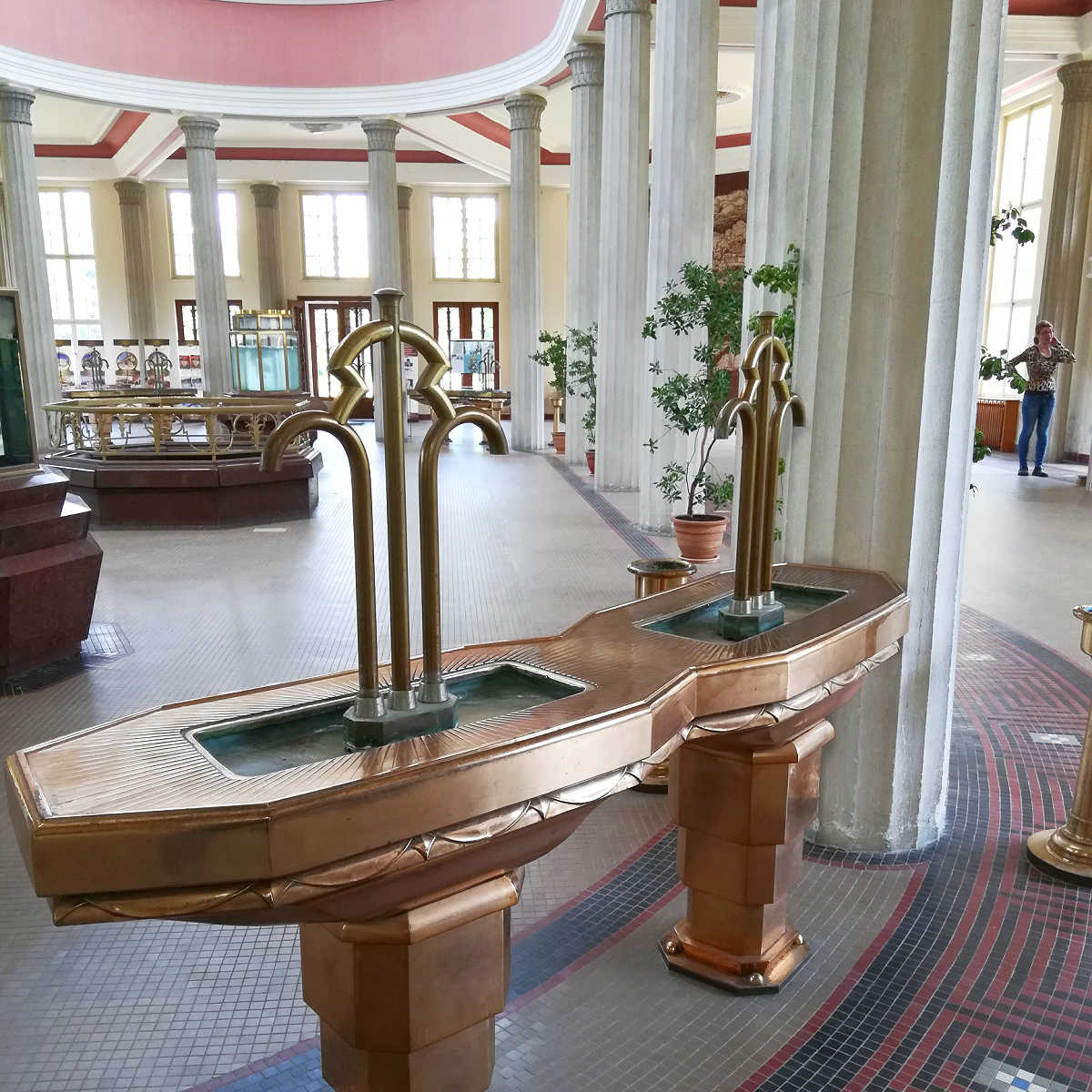
5. Franz’s Spring & Little Franz
This is the spring that started it all and the one the town is named after. If you walk down Národní street you can’t miss the white classical pavilion with its circle of columns.
The current pavilion dates from 1832, though the spring itself was known for centuries before that. It was this water that Cheb’s locals carried into town and sold long before anyone thought of building a spa.
Inside the pavilion you’ll find the water flowing from taps, and you’re welcome to try it. I think it’s one of the more pleasant mineral waters in the region. It’s lightly fizzy and slightly salty, but not nearly as strong as some of the springs in Karlovy Vary.
What most visitors come for, though, is Little Franz (František). He’s a small bronze statue of a cherub-like boy holding a fish and he’s been standing near the spring since the late 1970s.
Local legend says that women who touch him will soon become pregnant, and if you look closely you’ll see certain parts of him have been polished to a golden shine by thousands of hopeful hands. It’s a bit cheeky and great fun.
- Location: Národní street, in the heart of the spa zone
- Opening Times: Open daily 6:00–18:00, with shorter hours in winter. The statue is outside and can be seen at any time
- Tickets: Free
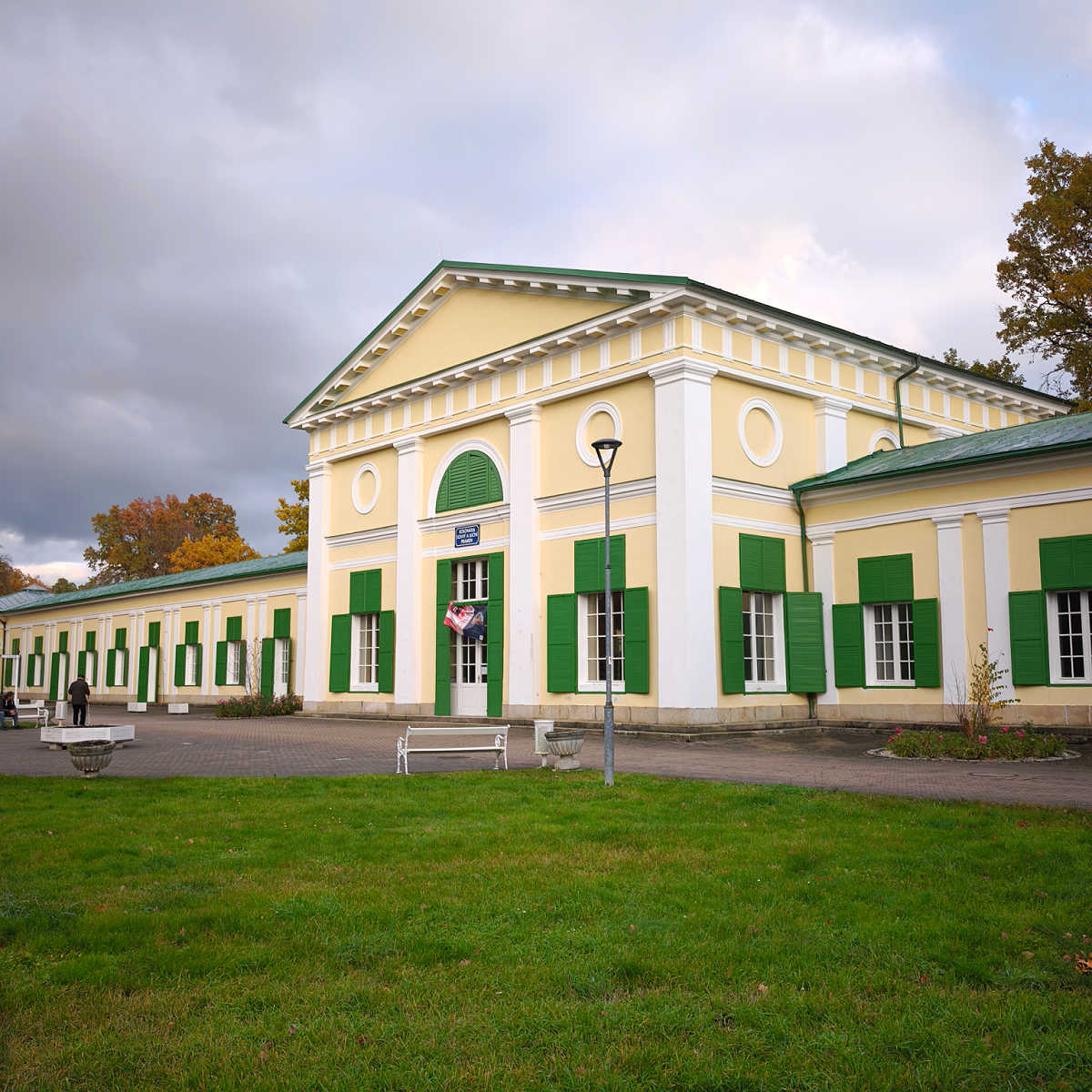
6. Colonnade of the Salt & Meadow Springs
I really like this colonnade, mainly because it feels so peaceful. It’s a long, elegant walkway with columns, painted in the soft cream and yellow tones you see everywhere in town.
It was built in the mid-19th century, when Františkovy Lázně was at its most fashionable and guests needed somewhere sheltered to stroll between drinking their spring water.
Two springs are inside this colonnade: the Salt Spring and the Meadow Spring. Back in my grandmother’s time, patients followed strict drinking routines prescribed by their doctors, sipping slowly from special spa cups while walking up and down the colonnade. That walking was considered just as important as the water itself.
The Salt Spring water is quite salty, as the name suggests, so be warned. The Meadow Spring is much milder, so probably the better of the two. Bring a spa cup if you have one; you can buy them in the souvenir shops around town, and they make a lovely keepsake.
The colonnade is currently being repaired and when I visited only the Meadow Spring was accessible.
- Location: In the spa park, a short walk from Franz’s Spring
- Opening Times: Open daily from morning until early evening, with seasonal changes
- Tickets: Free

7. The Spa Springs
There are 24 mineral springs in and around Františkovy Lázně and around a dozen are open for everyone to enjoy.
As I already mentioned, the most famous include Franz’s Spring, the Salt Spring and the Meadow Spring, but other springs such as Louisa’s Spring, Natalie Spring and the Glauber Springs are also very popular. Each has a slightly different mix of minerals, so they taste different and were traditionally prescribed for different ilnesses.
The Glauber Springs are named after Glauber’s salt (sodium sulphate), identified by the 17th-century chemist Johann Rudolf Glauber. Františkovy Lázně’s Glauber waters are some of the most mineral-rich in Europe, and that’s exactly why you need to be careful with them.
The traditional way is to take small sips while walking up and down the colonnade, rather than gulping a full cup at once. I’d suggest to start with a small amount and see how you get on. Locals and doctors usually recommend drinking before meals, a few times a day, rather than sampling every spring in one go.
If you’re here for treatment, the spa doctor will tell you exactly which spring to drink and how much depending on your illness, but for us, day visitors, it’s fine to just sample the spring few sips at the time.
They’re strong mineral solutions, and some of them, the Glauber springs in particular, have a noticeable laxative effect. Drink too much and you may find yourself spending more time looking for a toilet than admiring the colonnades.
I like to taste each spring by drinking just a few sips and then take a whole water bottle of the one I like the most to take home with me.
- Location: Spread across the spa park and along Národní street, all within an easy walk of each other. Natalie Spring is a little further out
- Opening Times: Most spring pavilions are open daily from early morning until early evening, with shorter hours in winter. Some outdoor springs can be accessed at any time
- Tickets: Free. Spa cups cost roughly 150–400 CZK depending on design, and they make a lovely souvenir
8. Aquaforum
Aquaforum is the town’s modern indoor water park, with pools, slides and saunas. It’s not historic, but if you’re travelling with children or you’re visiting on a rainy day, it’s a great option to ad to your itinerary.
There is also a sauna area, which is a nice way to relax in a spa town if you’re not staying in one of the spa hotels. On weekends and school holidays it can get quite busy, so go early or on a weekday if you can.
- Location: 5. Kvetna Street no 19 (if you are travelling on a local train, there is a dedicated train stop there)
- Opening Times: Daily from around 9:00/10:00 until 21:00, with variations on weekends and holidays
- Tickets: Prices vary depending on time spent and which zones you use; expect roughly 150–300 CZK for adults, with family tickets available

9. Natalie Spring & the Peat Lakes
Once you’ve seen the centre of Frantiskovy Lazne, you might be ready for a little stroll. And for that the walk to Natalie Spring is perfect.
The Natalie Spring is about 2 km away from the main promenade, but the path is flat and easy, and it takes you through a really pretty mix of park and local forest.
The spring is named after Queen Natalie of Serbia, who came here for treatment in the 19th century. It’s interesting to think how many European royals and aristocrats walked these same paths; Františkovy Lázně was a fashionable place to be seen as well as to be healed.
What I really like about this walk is that you can still see the peat lakes and remains of a little railway that was connecting the lakes with the peat packing warehouse and the peat treatment spa. The local peat is still used today for spa treatments.
- Location: A short walk from the town centre; follow the signs from the spa park
- Opening Times: Open all year, at any reasonable time of day. The pavilion area is outdoors
- Tickets: Free
10. Lake Amerika
Lake Amerika is a small lake on the edge of town, surrounded by trees and walking paths. It’s a lovely place for a stroll and in summer there’s a small beach area and boats to hire. In autumn the trees around the lake turn amazing shades of orange and gold.
- Location: On the southern edge of town, around 20 minutes’ walk from the spa centre
- Opening Times: Open all year; boat hire and refreshments are usually summer only
- Tickets: Free to walk around; small fees for boat hire and some summer facilities
11. Salingburg Viewing Tower & the Deer Enclosure
If you fancy a bit of a view after all that flat walking, head up to Salingburg Tower. It’s a gentle walk through the woods on the edge of town, nothing strenuous and the reward at the top is a lovely panorama over Františkovy Lázně and the surrounding countryside.
The tower, which looks like a small castle, was built in 1906 and it’s only about 10 metres heigh with 52 steps. It was build at the time, when walking for health was taken very seriously and doctors encouraged guests to take daily strolls out into the forest.
Viewing points and woodland paths were created to give patients somewhere to aim for on their walks, and the hill became a popular excursion for spa guests. I like imagining ladies in long skirts and gentlemen with walking canes making their way up the same path. There has been a restaurant here for much of its history, and it’s still a great place to stop for a drink before heading back.
On a clear day you can see across the Cheb basin and towards the hills on the German border, although some of that view has been blocked off with more modern hotels and tall trees.
Right next to the tower is the deer enclosure and you can watch the deer wandering among the trees, and they’re often surprisingly close to the fence.
- Location: On Salingburg hill, on the edge of the forest, about 20 minutes’ walk from the spa centre on marked paths
- Opening Times: Open during the main season (April to October), during daytime hours, the deer enclosure can be seen from the path all year
- Tickets: Both tower & deer enclosure are free
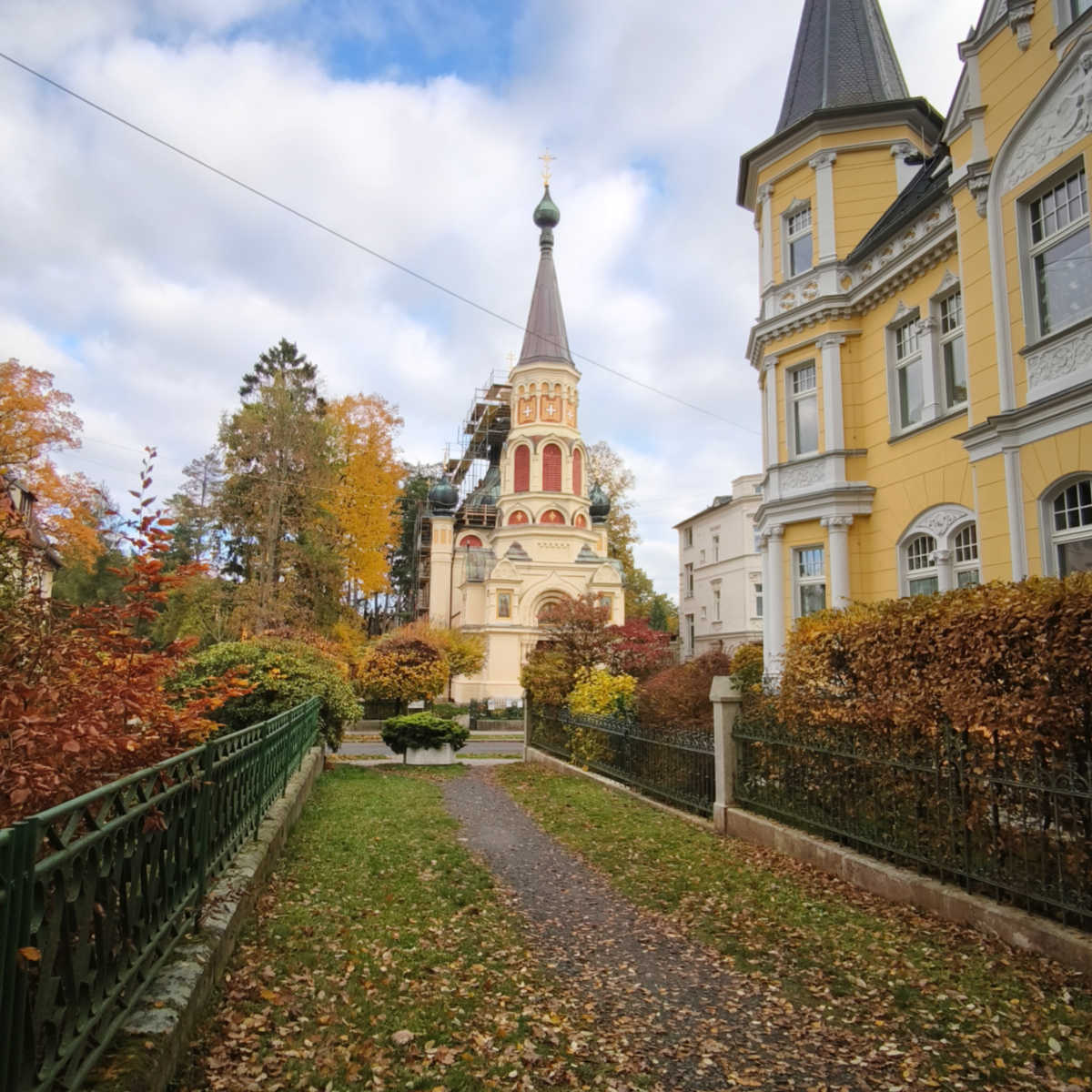
12. Orthodox Church of St Olga
This small church is one of the most unusual buildings in town, because it has quite different architectural style. It was consecrated in 1889 for the many Russian aristocrats who came here for treatment. In the 19th century Russian nobility were among the spa’s most loyal guests, and they wanted a place to worship in their own tradition while they spent their long summers here.
The church has the onion-shaped dome you’d expect, but it’s much more modest than the Orthodox church you see in Karlovy Vary.
Opening hours are unpredictable, so I’d treat this as something to admire from the outside while you’re walking past, and a bonus if you get to go in.
- Location: Kollarova 165
- Opening Times: Irregular; usually open around Orthodox services
- Tickets: Free (donations welcome)
13. Car &Motorcycle Museum
This is a great little museum, if you are, like me, into cars and industrial heritage history.
The collection focuses on historic vehicles, with over 100 of Czech and Czechoslovak cars alongside motorcycles and other memorabilia, including Škoda, Mercedes and Tatra cars and Jawa motorbikes.
Tatra, by the way, is one of the oldest car manufacturers in the world, with roots going back to 1850, and Czechoslovakia had a seriously impressive car industry before and between the wars. Those pre-war models are the ones I like most; they’re beautiful, elegant machines that make modern cars look rather dull.
My great grandfather was one of the first people owning a car in his street (he needed it for his little business) and he later gifted the car to my dad. It was a little Praga Piccolo, which at the time was the most popular and affordable type of car that looked like a Ford model T. I remember, dad still had the car when I was little and we used to go on a day trips in it.
I also think the museum fits the town surprisingly well. The early 20th century, when the spa was at its busiest, was exactly the time when wealthy guests began arriving by motor car rather than horse-drawn carriage.
You won’t need more than an hour to see this museum as it’s fairly compact. If you have absolutely no interest in cars, I’d prioritise the Spa Museum instead, but if you’re travelling with someone who does, they’ll love it.
- Location: Klostermannova 65/4
- Opening Times: Daily, 10:00–18:00, with 2 hrs for lunch break (12 – 2 pm)
- Tickets: 100–150 CZK for adults, with reduced prices for children and family tickets available
14. Komorní hůrka Volcano
If you still have some time left and want to top up your daily steps, you can walk to Komorní hůrka, which is the youngest volcano in the Czech Republic. It’s still somewhere between a few hundred thousand and a million years old. Don’t expect lava or a dramatic crater, though. It’s a gentle, wooded hill, and you could easily walk past without realising what it is.
But the history is fascinating. In the early 19th century, scientists were arguing fiercely about how the Earth’s rocks were formed. One camp believed everything came from water, the other from volcanic fire.
The poet Johann Wolfgang von Goethe, who was also a keen naturalist, visited this hill several times between 1808 and 1823 and studied it closely.
Later, the scientist Count Kaspar Sternberg had a tunnel dug into the hill between 1834 and 1837 to settle the debate once and for all. It proved the hill really was a volcano. Goethe, sadly, died in 1832 and never got to see the answer.
Today there’s a small memorial to Goethe, an information board and a viewing area over the old quarry, where you can see the layers of volcanic rock. The walk from town takes about an hour each way through fields and woodland.
- Location: Between Františkovy Lázně and Cheb, roughly 3 km from the town centre, reachable on a marked walking path
- Opening Times: Open all year, at any time of day
- Tickets: Free
This blog post was originally written on 1 November 2026 and last updated on 1 November 2026